Learning Objective 5.1.A: Explain how health psychology addresses issues of physical health and wellness as they apply to behavior and mental processes.
Learning Objective 5.1.B: Explain how stress applies to behavior and mental processes.
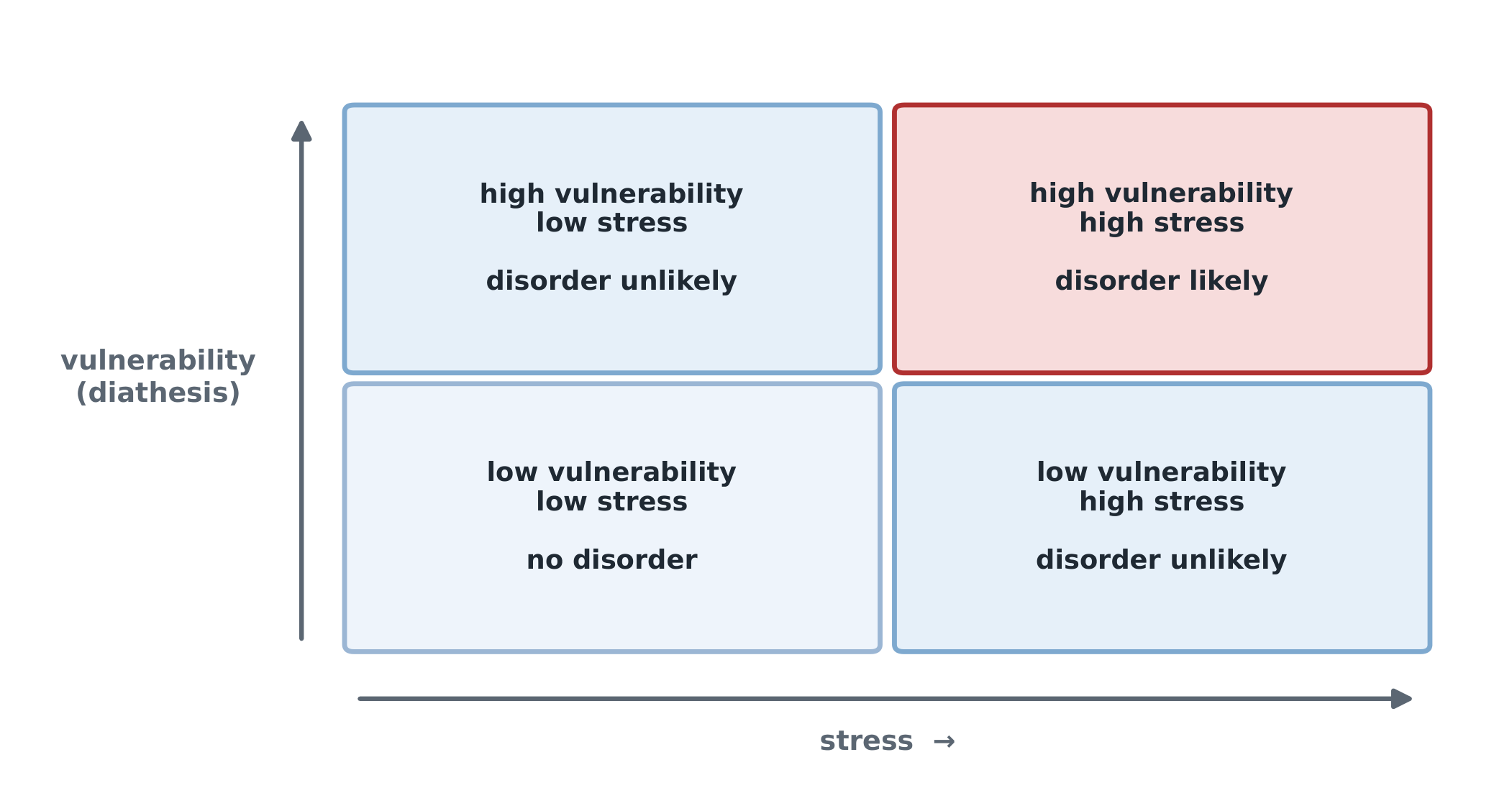
- 5.1.B.1 Stress is a factor in heightened susceptibility to disorders and disease. Stress has been linked to physiological issues such as hypertension, headaches, and immune suppression.
- 5.1.B.2 Stressors can be viewed as motivating (eustress) or debilitating (distress). Stressors can be experienced as traumatic or as daily hassles that can build up over time. Adverse childhood experiences (ACEs) are sources of stress that can affect a person throughout the lifespan.
Learning Objective 5.1.C: Explain how reactions to stress apply to behavior and mental processes.
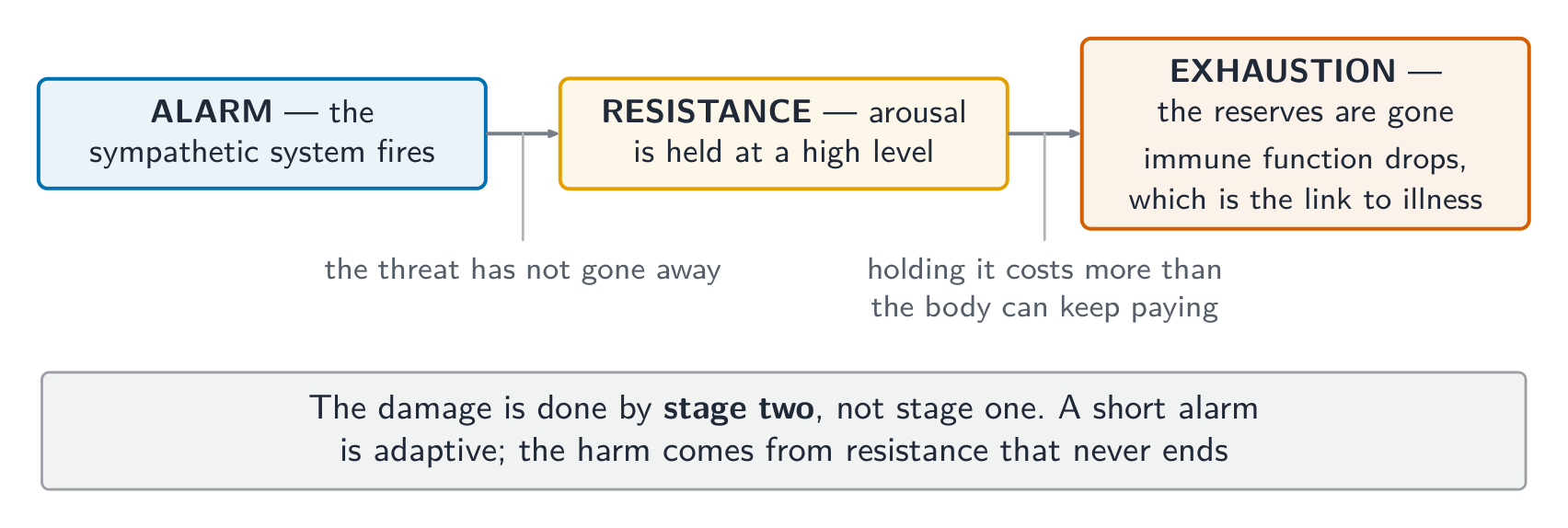
- 5.1.C.1 The general adaptation syndrome (GAS) describes the process of experiencing stress. Initially, alarm reaction occurs when the stress is encountered (via a fight-flight-freeze response). Then, a resistance phase occurs as the stress is confronted. Finally, an exhaustion phase occurs when the stress subsides, or resources are spent. The greatest susceptibility to illness occurs during the exhaustion phase.
- 5.1.C.2 The tend-and-befriend theory proposes that some people react to stress by tending to their own needs and/or the needs of others and seeking connection with others. This phenomenon seems to occur mostly in women.
Learning Objective 5.1.D: Explain how the ways that people cope with stress applies to behavior and mental processes.
- 5.1.D.1 Problem-focused coping involves seeing stress as a problem to be solved and working solutions until a solution is found.
- 5.1.D.2 Emotion-focused coping involves managing emotional reactions to stress as a means of coping. Strategies that are emotion-focused may include deep breathing, meditation, or taking medication aimed at reducing stressful emotional responses.
מטרה לימודית 5.1.A: הסבר כיצד פסיכולוגיה של בריאות עוסקת בנושאי בריאות פיזית ורווחה כפי שהם חלים על התנהגות ותהליכים מנטליים.
מטרה לימודית 5.1.B: הסבר כיצד מתח חל על התנהגות ותהליכים מנטליים.
- 5.1.B.1 מתח הוא גורם בהגברת הרגישות להפרעות ומחלות. מתח נקשר לבעיות פיזיולוגיות כמו היפרטנזיה, כאבי ראש ודיכוי חיסוני.
- 5.1.B.2 גורמי מתח ניתן לתאר כמעוררים (eustress) או כמגבילים (distress). גורמי מתח עשויים להתחווה כתורמטיים או כעייפות יומיומיות שיכולות להצטבר לאורך זמן. חוויות ילדותיות פוגעניות (ACEs) הן מקורות מתח שיכולים להשפיע על אדם לאורך כל חיי היום.
מטרה לימודית 5.1.C: הסבר כיצד תגובות למתח חלות על התנהגות ותהליכים מנטליים.
- 5.1.C.1 סיndrome ההסתגלות הכללית (GAS) מתארת את תהליך חוויית המתח. בתחילה, מתרחשת תגובת איתור כאשר נפגשים עם המתח (באמצעות תגובת קרב/בריחה/הקפאה). לאחר מכן, מתרחשת שלב התנגדות כאשר המתח מתמודדים איתו. בסוף, מתרחשת שלב עייפות כאשר המתח דועה, או כשהמשאבים נגמרים. ההרגישות הגבוהה ביותר למחלות מתרחשת במהלך שלב העייפות.
- 5.1.C.2 תיאוריית הטיפול-וחיבור (tend-and-befriend theory) מציעה שחלק מהאנשים מגיבים למתח על ידי טיפול בצרכים שלהם ו/או צרכים של אחרים וחפץ בחיבור עם אחרים. תופעה זו נראית מתרחשת בעיקר בקרב נשים.
מטרה לימודית 5.1.D: הסבר כיצד הדרכים שבהם אנשים מתמודדים עם מתח חלות על התנהגות ותהליכים מנטליים.
- 5.1.D.1 התמודדות הממוקדת בבעיה (problem-focused coping) מעורבת ראיית המתח כבעיה שפתרון עליה ועבודה על פתרונות עד שמצוי פתרון.
- 5.1.D.2 התמודדות הממוקדת ברגש (emotion-focused coping) מעורבת ניהול תגובות רגשיות למתח כדרך להתמודד. אסטרטגיות הממוקדות ברגש עשויות לכלול נשימות עמוקות, מדיטציה או לקיחת תרופות המכוונות להפחתת תגובות רגשיות מתוחות.