Enduring Understanding (POL-2): Perfectly competitive markets allocate resources efficiently, but imperfect competition often results in market inefficiencies.
Learning Objective POL-2.A: a. Define social efficiency. b. Explain (using graphs where appropriate) why resource allocation in perfectly competitive markets is socially efficient.
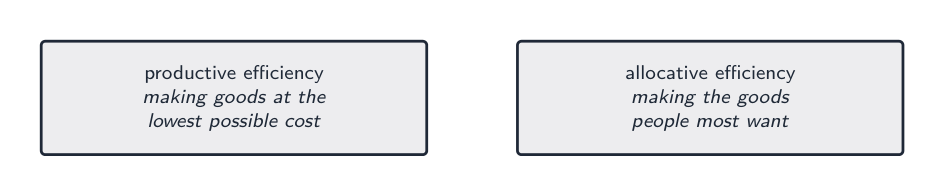
- POL-2.A.1 The optimal quantity of a good occurs where the marginal benefit of consuming the last unit equals the marginal cost of producing that last unit, thus maximizing total economic surplus.
- POL-2.A.2 The market equilibrium quantity is equal to the socially optimal quantity only when all social benefits and costs are internalized by individuals in the market. Total economic surplus is maximized at that quantity. [See also PRD-3 and POL-3.]
Learning Objective POL-2.B: Explain (using graphs where appropriate) how private incentives can lead to actions by rational agents that are socially undesirable (inefficient) market outcomes.
- POL-2.B.1 Rational agents can pursue private actions to exploit or exercise market characteristics known as market power.
- POL-2.B.2 Rational agents make optimal decisions by equating private marginal benefits and private marginal costs that can result in market inefficiencies.
- POL-2.B.3 Policymakers use cost-benefit analysis to evaluate different actions to reduce or eliminate market inefficiencies.
- POL-2.B.4 Market inefficiencies can be eliminated by designing policies that equate marginal social benefit with marginal social cost.
Learning Objective POL-2.C: a. Explain equilibrium allocations in imperfect markets relative to efficient allocations (using graphs where appropriate) and why these markets are inefficient. b. Calculate (using graphs where appropriate) the deadweight loss resulting from the production of a non-efficient quantity.
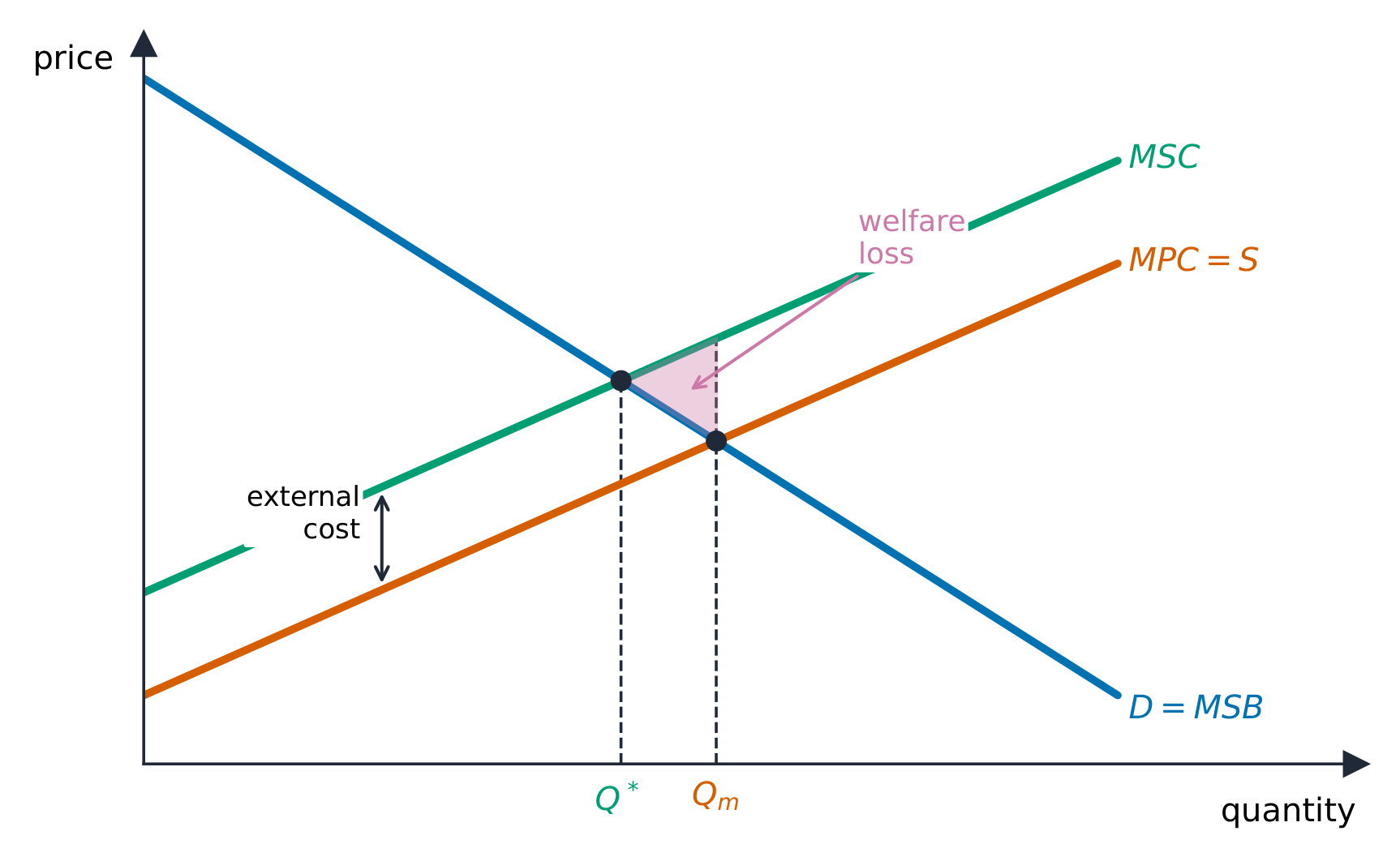
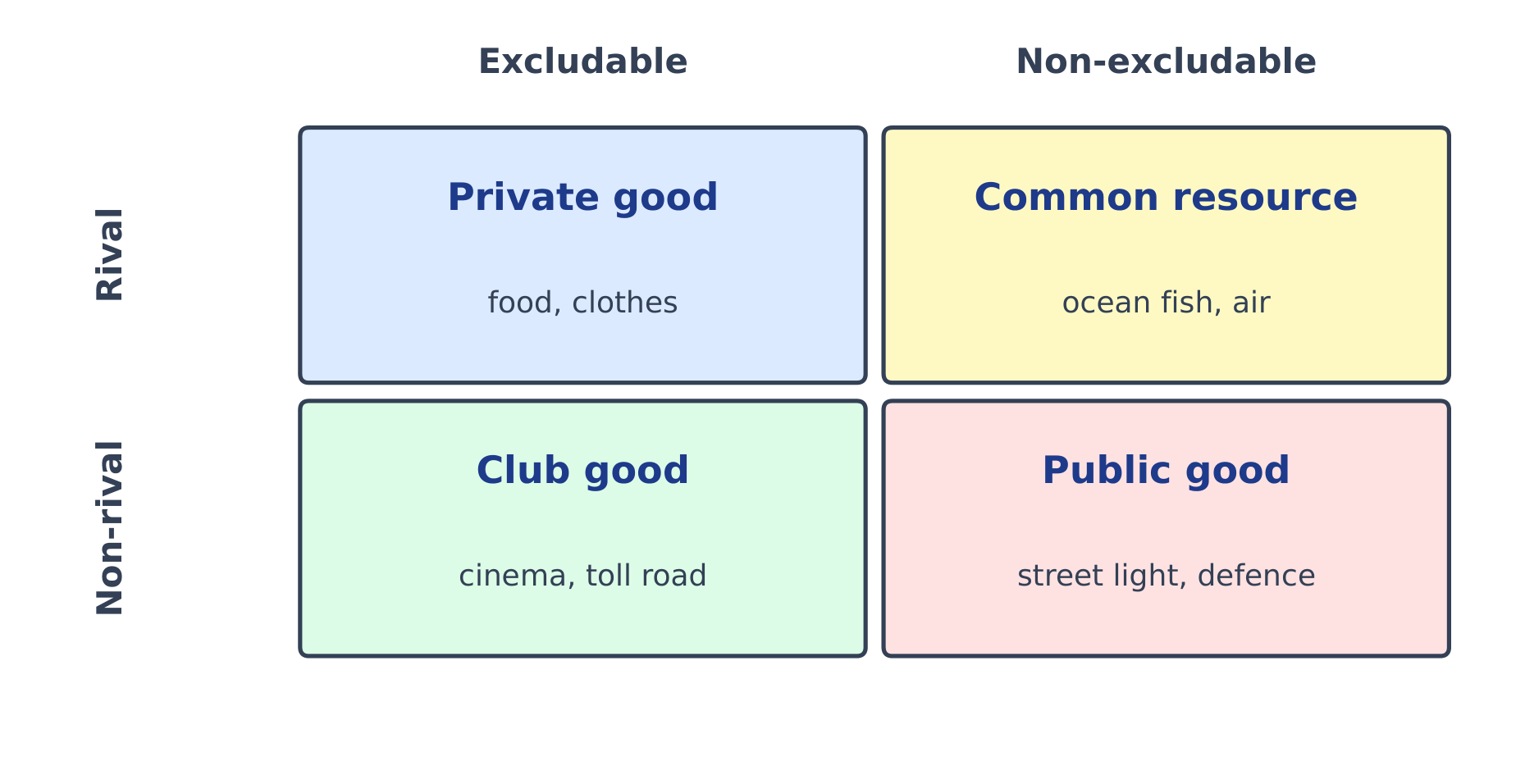
- POL-2.C.1 Equilibrium allocations can deviate from efficient allocations due to situations such as monopoly; oligopoly; monopolistic competition; negative and positive externalities in production or consumption; asymmetric information; and insufficient production of public goods.
- POL-2.C.2 Producing any non-efficient quantity results in deadweight loss.
הבנה מתמשכת (POL-2): שווקים תחרותיים מושלמים מקצים משאבים ביעילות, אך תחרות לא מושלמת מובילה לעיתים ליעילות שוק נמוכה.
מטרות למידה POL-2.A: א. הגדר יעילות חברתית. ב. הסבר (בעזרת גרפים כשמתאים) מדוע הקצאת משאבים בשווקים תחרותיים מושלמת היא יעילה בחברתית.
- POL-2.A.1 הכמות האידיאלית של מוצר מתקבלת כאשר התועלת המרגלית מצריכת היחידה האחרונה שווה לעלות המרגלית לייצור היחידה האחרונה, ובכך מקסימה את הסכום הכלכלי הכולל.
- POL-2.A.2 כמות איזון השוק שווה לכמות האופטימלית החברתית רק כאשר כל התועלות והעלויות החברתיות פנימיים על ידי פרטים בשוק. הסכום הכלכלי הכולל מקסימה בכמות זו. [ראה גם PRD-3 ו-POL-3.]
מטרת לימוד POL-2.B: הסבר (בעזרת גרפים כשמתאים) כיצד תמרוצים פרטיים יכולים להוביל לפעולות של סוכנים רציונליים שמובילות לתוצאות שוק לא רצויות (לא יעילות) בחברתית.
- POL-2.B.1 סוכנים רציונליים יכולים לבצע פעולות פרטיות כדי לנצל או להפעיל מאפייני שוק הנקראים כוח שוק.
- POL-2.B.2 סוכנים רציונליים קובעים החלטות מיטביות על ידי השוואת התועלת המרז'ינלית הפרטית לעלות המרז'ינלית הפרטית, מה שיכול להוביל לחוסר יעילות בשוק.
- POL-2.B.3 קובעי מדיניות משתמשים בניתוח עלות-תועלת כדי להעריך פעולות שונות למטרת הפחתה או ביטול חוסרי יעילות בשוק.
- POL-2.B.4 חוסרי יעילות בשוק יכולים להיות מבטלים על ידי עיצוב מדיניות המשווה בין התועלת המרז'ינלית החברתית לעלות המרז'ינלית החברתית.
מטרות למידה POL-2.C: א. הסבר את הקצאות האיזון בשווקים לא מושלמים בהשוואה לקצאות יעילות (בשימוש בגרפים כאשר מתאים) ולמה שווקים אלו אינם יעילים. ב. חשב (בשימוש בגרפים כאשר מתאים) את ההפסד הנשאר כתוצאה מייצור כמות שאינה יעילה.
- POL-2.C.1 הקצאות איזון יכולות לסט מקצאות יעילות בשל מצבים כמו מונופול; אוליגופול; תחרות מונופוליסטית; חיצוניות שלילית וחיובית בייצור או בצריכה; מידע אסימטרי; וייצור בלתי מספק של טובות ציבור.
- POL-2.C.2 ייצור כל כמות שאינה יעילה גורם להפסד נשאר.