| Enduring Understanding | Learning Objective | Essential Knowledge |
|---|---|---|
PRD-3 | PRD-3.B |
|
Imperfect Competition
AP Microeconomics · Topic 4
 8:32
8:32
Imperfect Competition
Look outside the textbook. A car company sets its own price. Your city has one water supplier, and no second one to choose. These firms do not take the price…
English narration · English + 中文 subtitles burned in
4.1
Imperfect Competition and Market Power
Syllabus
Source: College Board AP Course and Exam Description
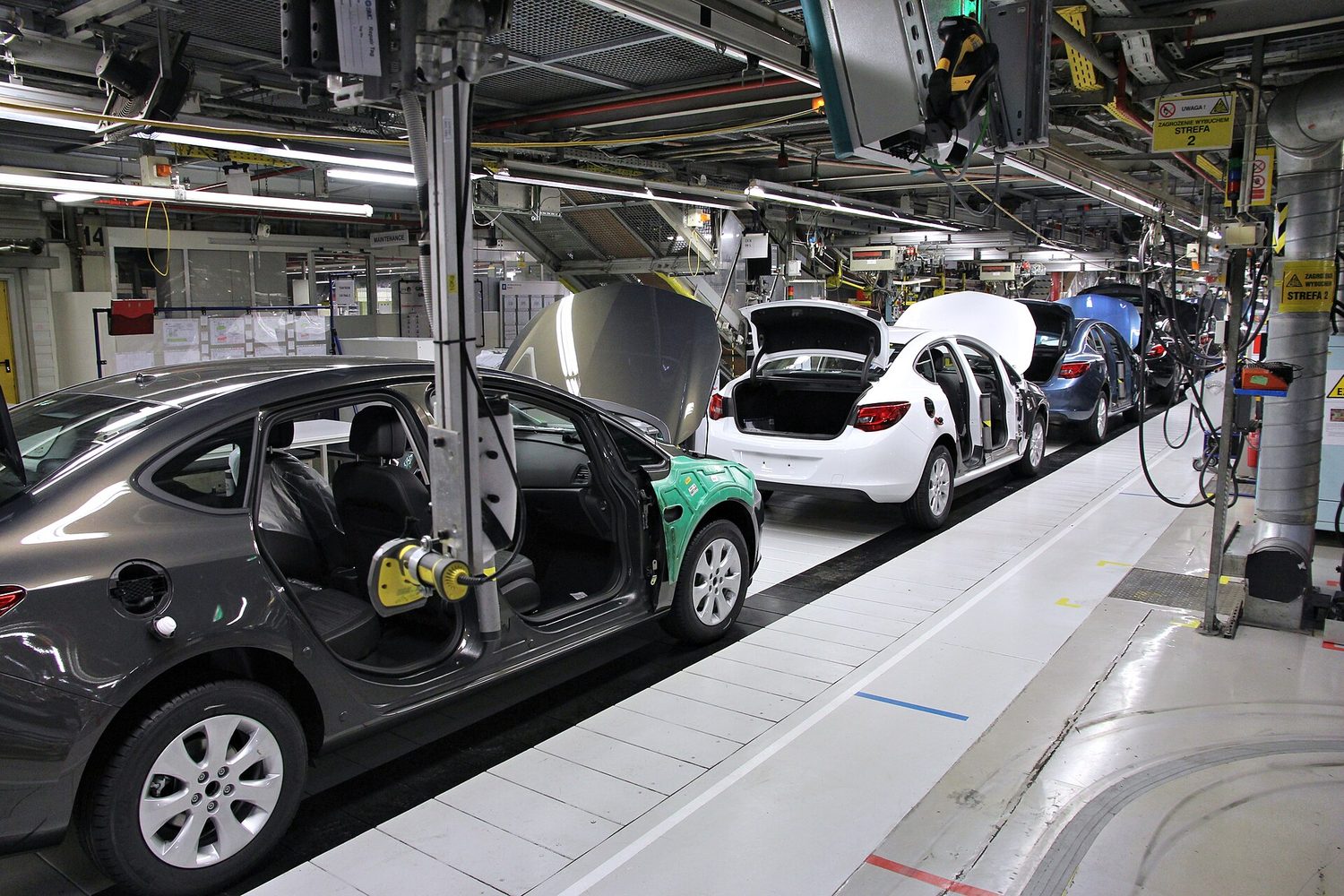
A car maker can offer a different design from its rivals. A patent can stop rivals from copying a product. These are possible sources of market power 市场势力: some ability to choose price, subject to buyers' demand. A large factory alone does not prove that the firm has market power. We must identify the market, substitutes and entry conditions.
In an imperfectly competitive 不完全竞争 product market, the firm faces downward-sloping demand. Under uniform pricing, every buyer pays the same price. To sell more, the firm cuts the price of all units. The revenue lost on earlier units makes marginal revenue lower than price. This statement concerns uniform pricing; perfect price discrimination works differently.
Worked example: extra revenue. Demand is $P=110-Q$, with price in dollars per unit and $Q$ in units per period. At $Q=1$, $P=\$109$; at $Q=2$, $P=\$108$.
$$TR=P\times Q=\$109\times1=\$109$$
$$TR=P\times Q=\$108\times2=\$216$$
$$MR=\Delta TR/\Delta Q=(\$216-\$109)/(2-1)=\$107\text{ per unit}$$
The extra unit brings $\$108$, but the price cut loses $\$1$ on the first unit. Net extra revenue is $\$107$, below the new price. For this linear demand, the continuous marginal revenue curve is $MR=110-2Q$: the same intercept and twice the slope. The discrete second-unit revenue is measured over an interval; do not substitute $Q=2$ into the continuous curve and expect the interval average.

| Structure | Sellers and product | Entry |
|---|---|---|
| Perfect competition | Many; identical product | Free |
| Monopolistic competition | Many; different products | Easy |
| Oligopoly | Few major sellers | Barriers |
| Monopoly | One seller; no close substitutes | Barriers |
The spectrum is a guide, not evidence that every industry fits perfectly. Barriers to entry 进入壁垒 include patents, control of key resources and large economies of scale. They can protect economic profit; they do not guarantee it. Monopsony is buyer power and belongs to factor-market analysis in Unit 5.
Vocabulary
Train
| English |
|---|
| imperfectly competitive/ɪmˈpɜːfektlɪ kəmˈpetɪtɪv/ |
| market power/ˈmɑːkɪt ˈpaʊə/ |
| barriers to entry/ˈbærɪəz tʊ ˈentri/ |
4.2
Monopoly
Syllabus
| Enduring Understanding | Learning Objective | Essential Knowledge |
|---|---|---|
PRD-3 | PRD-3.B |
|
Source: College Board AP Course and Exam Description
A monopoly 垄断 is one seller of a product with no close substitutes, protected by entry barriers. It chooses quantity using marginal revenue and marginal cost, then reads the price buyers will pay from demand. It cannot choose any price and quantity independently.
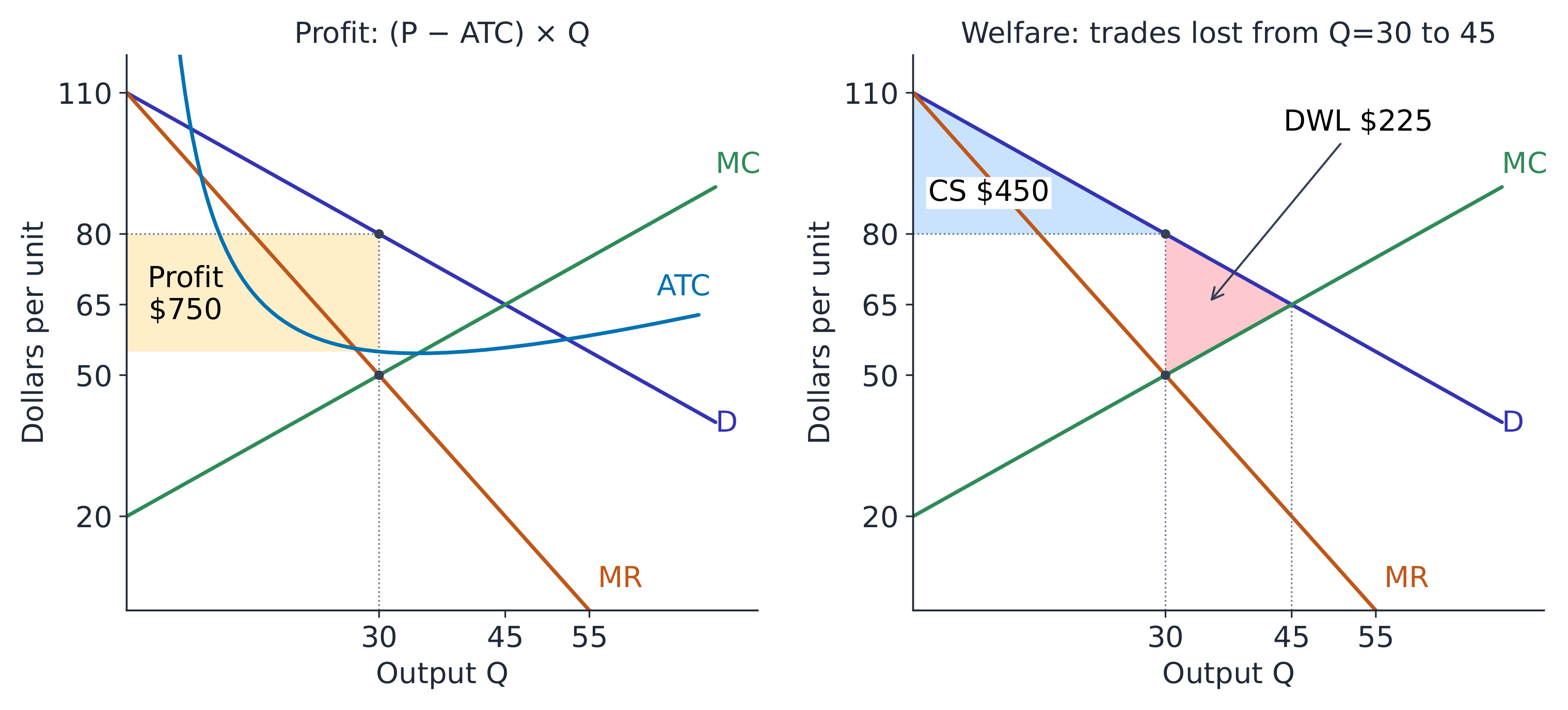
One model for output, profit and welfare. Demand is $P=110-Q$, $MR=110-2Q$, and $MC=20+Q$. Total cost is $TC=600+20Q+0.5Q^2$, so $ATC=600/Q+20+0.5Q$. Money is in dollars; output is units per period. Fixed cost $\$600$ is unavoidable this period. There are no external costs or benefits. The rising MC crosses falling MR, so their intersection is the profit maximum for this model.
$$MR=MC\quad\Rightarrow\quad110-2Q=20+Q$$
$$Q_M=(110-20)/3=30\text{ units}$$
$$P_M=110-Q_M=110-30=\$80\text{ per unit}$$
Profit needs average total cost, not marginal cost. Read ATC at the chosen output, rather than its minimum unless those happen to coincide.
$$ATC=600/Q+20+0.5Q=600/30+20+0.5(30)=\$55\text{ per unit}$$
$$\pi=(P-ATC)Q=(80-55)\times30=\$750$$
Here $P-MC=80-50=\$30$, while $P-ATC=80-55=\$25$. Profit is the rectangle of height $P-ATC$ and width $Q_M$, not a rectangle using MC. A price–MC gap alone does not tell us total profit.
Consumer surplus and deadweight loss. Consumer surplus is buyers' willingness to pay above the uniform price. Efficient output equates demand (marginal benefit) to MC, given the no-externality assumption.
$$CS=\tfrac12(P_{\text{intercept}}-P_M)Q_M=\tfrac12(110-80)\times30=\$450$$
$$P=MC\quad\Rightarrow\quad110-Q=20+Q$$
$$Q_E=(110-20)/2=45\text{ units}$$
$$DWL=\tfrac12(Q_E-Q_M)(P_M-MC_M)=\tfrac12(45-30)(80-50)=\$225$$
Deadweight loss 无谓损失 is lost gains from trades between 30 and 45 units. For these units buyers' willingness to pay exceeds MC, but a uniform-price monopolist does not sell them. The $\$30$ price–MC gap is the triangle's height, not its area. The triangle formula applies here because both curves are straight lines.
Producer surplus is revenue less variable cost; economic profit also subtracts fixed cost. In this model:
$$VC=20Q+0.5Q^2=20(30)+0.5(30)^2=\$1,050$$
$$PS=TR-VC=80(30)-1,050=\$1,350$$
$$\pi=PS-FC=1,350-600=\$750$$
Profit is not the same as producer surplus when fixed cost is positive. Adding CS and PS gives total surplus of $\$1,800$; the $\$225$ loss is surplus that no buyer or seller receives.
A monopoly can make a loss. Raise this model's fixed cost to $\$1,500$, leaving demand, MR and MC unchanged. Its profit-maximizing output is still 30 and price still $\$80$.
$$ATC=1,500/Q+20+0.5Q=1,500/30+20+0.5(30)=\$85$$
$$\pi=(P-ATC)Q=(80-85)\times30=-\$150$$
It still operates this period because revenue $\$2,400$ covers variable cost $\$1,050$ and contributes to unavoidable fixed cost. Barriers stop entry; they do not create enough demand to guarantee profit.
Revenue maximization is a different objective. For the original model, total revenue is maximized where MR reaches zero:
$$MR=0\quad\Rightarrow\quad110-2Q=0$$
$$Q_R=110/2=55\text{ units};\qquad P_R=110-Q_R=\$55$$
Demand is unit elastic at this revenue maximum. Above it on the linear demand curve demand is elastic and MR positive; below it demand is inelastic and MR negative. With positive MC, profit maximization occurs in the elastic portion, at a smaller output than revenue maximization. Do not label the MR-zero quantity as the profit maximum.
Changing entry conditions. If a patent expires and close substitutes enter, demand facing the original firm becomes more elastic. This is a statement about that firm's demand, not a claim that total market demand must fall by the same amount.
Natural monopoly and regulation
A natural monopoly 自然垄断 occurs when one firm can supply the market at lower average cost than multiple firms: long-run average cost falls across the relevant market demand. A utility photograph does not establish this cost condition.
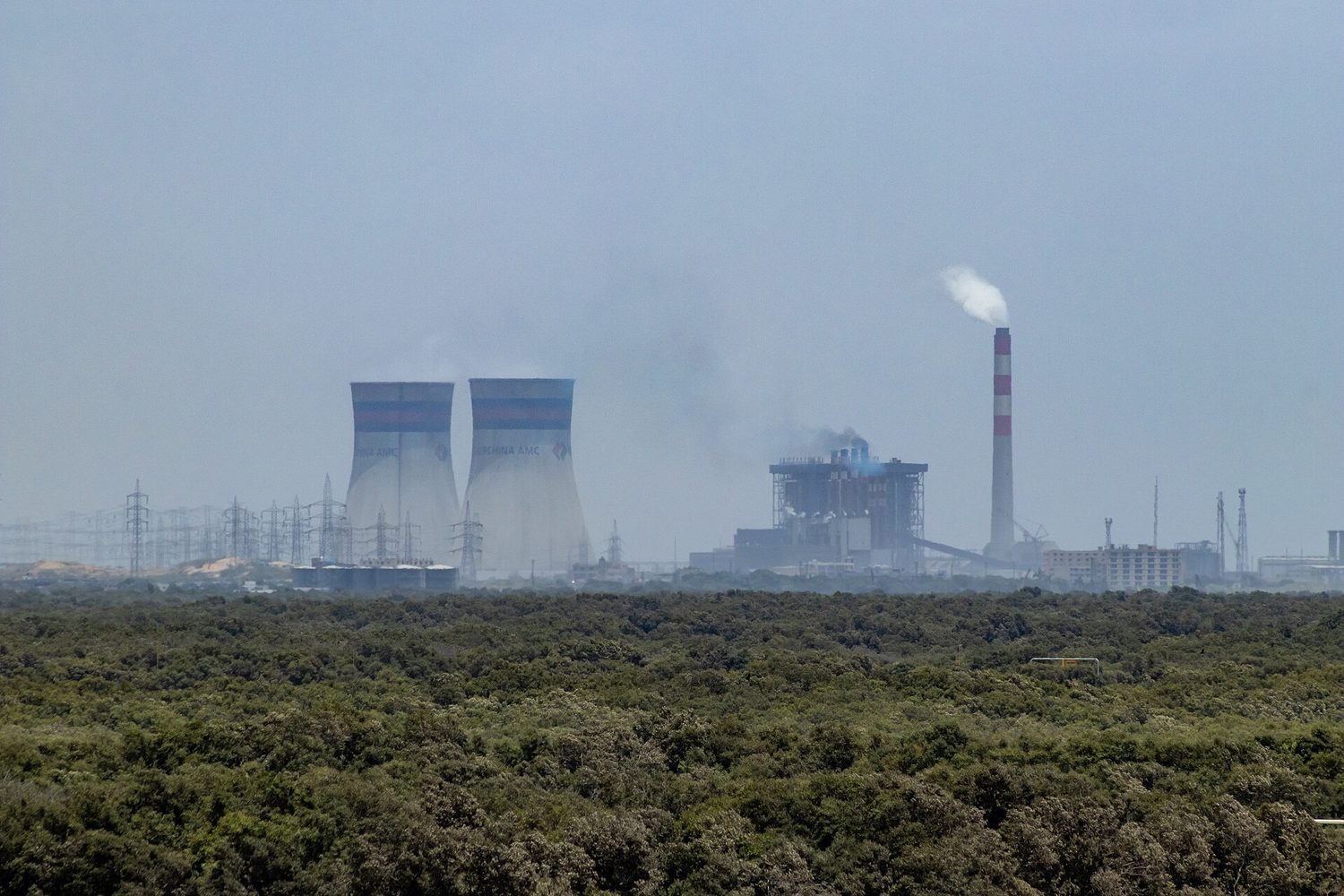
Use a separate simplified utility model: $TC=1,200+20Q$, $MC=20$, $ATC=1,200/Q+20$, demand $P=100-Q$. Treat this as its relevant long-run cost schedule. Fixed network cost makes average cost fall as output expands.
| Pricing rule | Output Q | Price | ATC | Economic profit |
|---|---|---|---|---|
| Unregulated MR=MC | 40 | $60 | $50 | $400 |
| Marginal-cost pricing | 80 | $20 | $35 | −$1,200 |
| Fair-return P=ATC | 60 | $40 | $40 | $0 |
At $P=MC=\$20$, efficient output is 80, but price does not cover average cost. The loss is $\$1,200$, requiring a subsidy or another funding method if supply continues. Fair-return pricing at the larger-output demand–ATC intersection covers costs, including normal return, but output 60 remains below efficient output 80. $P=ATC$ does not mean productive efficiency: ATC is still falling. Antitrust 反垄断 policy addresses competition and entry; natural-monopoly price regulation is a distinct policy choice.
Explore
Review average and marginal costs
Compare MC and ATC at a chosen output. This cost-only tool does not plot monopoly demand or MR; use the lesson diagram for monopoly output and pricing.
Vocabulary
Train
| English |
|---|
| monopoly/məˈnɒpəli/ |
| natural monopoly/ˈnætʃərəl məˈnɒpəli/ |
| deadweight loss/ˈdedweɪt lɒs/ |
| antitrust/ˌæntɪˈtrʌst/ |
4.3
Price Discrimination
Syllabus
| Enduring Understanding | Learning Objective | Essential Knowledge |
|---|---|---|
PRD-3 | PRD-3.B |
|
Source: College Board AP Course and Exam Description
Price discrimination 价格歧视 means different prices for the same good that are not explained by differences in supply cost. The seller needs market power, a way to identify willingness to pay, and limits on resale. A cheaper student ticket with the same seat and service is a possible example; a higher price for a more costly premium service alone is not proof.
Test the conditions. A cinema can check student identification and make tickets personal. It can keep the lower-price group separate. If discounted tickets can be freely resold, buyers can avoid the higher price and the separation breaks down. Differences in demand elasticity can support group pricing; student discounts do not reveal every buyer's exact willingness to pay.
Under perfect price discrimination, each unit sells for its buyer's maximum willingness to pay. There is no uniform price cut on earlier units, so marginal revenue for the next unit follows demand. With no externalities, the firm sells all units for which willingness to pay covers MC.
For the original monopoly model, set demand equal to MC: $110-Q=20+Q$, giving $Q=45$ and the lowest price $P=110-45=\$65$. Earlier units sell at higher prices along demand. Consumer surplus becomes zero because each buyer pays their maximum willingness to pay; the $\$225$ deadweight loss disappears. Producer surplus is now the whole triangle between demand and MC, from zero to 45 units.
$$PS=\tfrac12(P_{\text{intercept}}-MC_{\text{intercept}})Q_E=\tfrac12(110-20)\times45=\$2,025$$
$$\pi=PS-FC=2,025-600=\$1,425$$
Capturing consumer surplus is not the same as making every dollar of revenue profit.
Explore
Review demand elasticity
Compare responsiveness along a demand curve. Group price discrimination also requires market power, identifiable groups and limits on resale; this tool does not calculate group prices.
Vocabulary
Train
| English |
|---|
| Price discrimination/praɪs dɪˌskrɪmɪˈneɪʃn/ |
4.4
Monopolistic Competition

Syllabus
| Enduring Understanding | Learning Objective | Essential Knowledge |
|---|---|---|
PRD-3 | PRD-3.B |
|
Source: College Board AP Course and Exam Description
Monopolistic competition 垄断竞争 has many firms selling differentiated 差异化 products, with easy entry and exit. A restaurant can offer different food or service from its neighbours, so its own demand slopes down. Advertising and product design are forms of non-price competition.
In the short run, choose output where MR crosses MC, then read price and ATC at that output. Profit, loss or zero economic profit are all possible. Positive economic profit attracts entry. More substitutes reduce demand facing each existing firm and tend to make it more elastic. Losses lead to exit, increasing demand for remaining firms. In the long-run model, this process ends at zero economic profit: demand is tangent to ATC at the MR=MC output.
Read the long-run graph. The firm produces 10 units at $P=ATC=\$32.50$. MC there is $\$25$. Minimum ATC is $\$30$ at 20 units.
$$\pi=(P-ATC)q=(32.50-32.50)\times10=\$0$$
$$\text{Excess capacity}=q_{\min ATC}-q_{\text{actual}}=20-10=10\text{ units}$$
Excess capacity 过剩产能 means producing below the quantity that minimizes ATC, not necessarily shelves of unsold stock. The firm is not productively efficient and, with no externalities, $P>MC$ means allocative inefficiency. Zero economic profit includes a normal return; it does not mean owners receive no income. Product variety is a benefit outside these simple cost-efficiency comparisons.
For a reproducible graph, $D: P=40-0.75q$, $MR=40-1.5q$, $MC=20+0.5q$, $ATC=100/q+20+0.25q$. At $q=10$, MR=MC=25 and demand touches ATC at 32.50. MC crosses minimum ATC at $q=20$. Do not draw D tangent at minimum ATC while also showing a downward-sloping firm demand and MR=MC to its left.
Vocabulary
Train
| English |
|---|
| Monopolistic competition/məˈnɒpəlɪstɪk ˌkɒmpəˈtɪʃn/ |
| differentiated/ˌdɪfəˈrenʃɪeɪtɪd/ |
| excess capacity/ekˈses kəˈpæsɪti/ |
4.5
Oligopoly and Game Theory
Syllabus
| Enduring Understanding | Learning Objective | Essential Knowledge |
|---|---|---|
PRD-3 | PRD-3.C |
|
Source: College Board AP Course and Exam Description
An oligopoly 寡头垄断 has a few major sellers and entry barriers. Firms are interdependent 相互依存: each firm's profit depends on its own decision and rivals' decisions. Game theory 博弈论 studies such choices. Colluding 勾结 means cooperating to raise joint profit; cartels 卡特尔 coordinate members' prices or output. A member may gain from cheating, but this incentive does not prove every cartel immediately collapses.
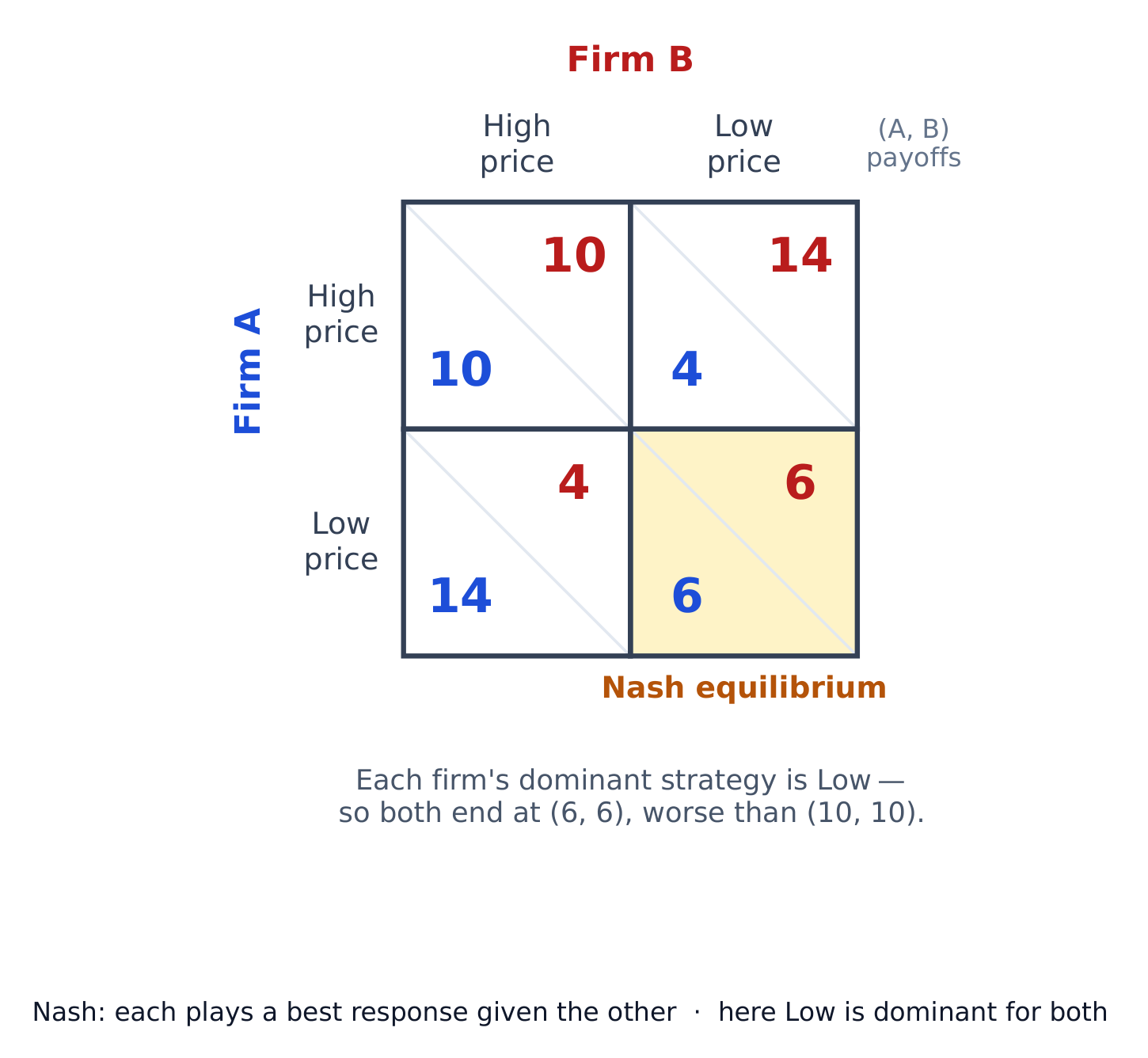
A payoff matrix 收益矩阵 shows the result of every combination of choices. In the following games, firms choose independently and simultaneously, know the table, and do not cooperate. Entries are profits in millions of dollars, with A first and B second. Compare only the deciding firm's payoff, holding the other firm's choice fixed.
Game 1: cooperation and individual incentives
| A's choice | B: High price | B: Low price |
|---|---|---|
| High price | (10, 10) | (4, 14) |
| Low price | (14, 4) | (6, 6) |
Try first. Does A prefer Low for each possible B choice? Check B separately. Can either firm gain by switching alone from (Low, Low)? Which combination maximizes combined profit?
A dominant strategy 优势策略 is better regardless of the rival's choice. For A, if B chooses High, Low gives 14 rather than 10. If B chooses Low, Low gives 6 rather than 4. Thus Low is A's dominant strategy. For B, if A chooses High, Low gives 14 rather than 10; if A chooses Low, Low gives 6 rather than 4. Low is also B's dominant strategy.
At (Low, Low), A switching alone gets 4 instead of 6; B switching alone also gets 4 instead of 6. Neither benefits. This is a Nash equilibrium 纳什均衡. Both would prefer (High, High), which gives 10 each and combined profit 20. But at that cooperative outcome each can raise its own profit to 14 by switching alone. This is a prisoners' dilemma 囚徒困境. The largest total payoff is not automatically a Nash equilibrium.
Game 2: a Nash equilibrium without A having a dominant strategy
| A's choice | B: Reliability | B: Power |
|---|---|---|
| Safety | (12, 18) | (24, 25) |
| Comfort | (22, 30) | (20, 15) |
These are new illustrative numbers, not a copied past-paper table. If B chooses Reliability, A prefers Comfort: 22>12. If B chooses Power, A prefers Safety: 24>20. A has no dominant strategy. B also has no dominant strategy: Power gives 25>18 when A chooses Safety, but Reliability gives 30>15 when A chooses Comfort.
Check both players at each outcome. (Safety, Power) is Nash: A switching gets 20 instead of 24, B switching gets 18 instead of 25. (Comfort, Reliability) is also Nash: A switching gets 12 instead of 22, B switching gets 15 instead of 30. The other cells each allow a profitable switch. A game can therefore have more than one pure-strategy Nash equilibrium even though neither player has a dominant strategy. Mixed strategies are outside this unit.
Change an incentive. Reduce B's profit from choosing Power by $\$10$ million in both Power cells. These become (24, 15) and (20, 5); A's payoffs and the Reliability column stay unchanged. B now prefers Reliability for either A choice: 18>15 and 30>5. A's best response is Comfort, so the unique Nash equilibrium becomes (Comfort, Reliability), paying (22, 30).
Incentive threshold and joint profit
Let the Power penalty be $t$. For Reliability to be strictly dominant for B, it must beat Power in both rows: $18>25-t$ requires $t>7$, and $30>15-t$ requires $t>-15$. A nonnegative penalty must therefore exceed $\$7$ million. At exactly 7, B is indifferent in the Safety row; that is not strict dominance. If restricted to whole millions, 8 is the smallest sufficient penalty.
A merger maximizing combined profit in the original Game 2 chooses (Comfort, Reliability): $22+30=\$52$ million. The other totals are 30, 49 and 35. Always use the original or changed table specified by the question.
Vocabulary
Train
| English |
|---|
| oligopoly/ˌɒlɪˈɡɒpəli/ |
| interdependent/ˌɪntədɪˈpendənt/ |
| game theory/ɡeɪm ˈθɪəri/ |
| payoff matrix/ˈpeɪɒf ˈmeɪtrɪks/ |
| dominant strategy/ˈdɒmɪnənt ˈstrætədʒi/ |
| Nash equilibrium/næʃ ˌiːkwɪˈlɪbrɪəm/ |
| prisoners' dilemma/ˈprɪzənəz daɪˈlemə/ |
| colluding/kəˈluːdɪŋ/ |
| cartels/kɑːˈtelz/ |
4.5
Exam tips
- For a uniform-price monopoly, label D, MR, MC and ATC; find MR=MC, then read price on D and ATC at the same output. Shade profit separately from CS and DWL.
- Revenue maximization uses MR=0. Perfect price discrimination uses demand=MC to find the final unit and its lowest price.
- Zero long-run economic profit in monopolistic competition means P=ATC, not P=MC or minimum ATC.
- In a payoff matrix, show both comparisons for dominance and each player's possible unilateral switch for Nash. Recheck every changed payoff before finding a new equilibrium.
Interactive lessons on this topic
Work through it step by step, with instant-check exercises.