لا أحد في العالم مسؤول عن تحديد كمية حبوب القهوة المزروعة. لا لجنة تجتمع. لا خطة تُكتب. ومع ذلك، في معظم الصباحات، يكون هناك قهوة.…
English narration · English + 中文 subtitles burned in · سرد باللغة الإنجليزية · ترجمة مدمجة بالإنجليزية + الصينية
2.1
Markets and the price mechanism · الأسواق وآلية السعر
Syllabus · المنهج
English
define microeconomics and macroeconomics
explain how the market (price mechanism) allocates resources through the signalling, incentive and rationing functions of price
العربية
عرّف الاقتصاد الجزئي والاقتصاد الكلي
اشرح كيف تخصص السوق (آلية السعر) الموارد من خلال وظائف الإشارة، والحوافز، والتوزيع للسعر
Source: Cambridge International syllabus · المصدر: منهج كامبريدج الدولي
English
Economics is split into two parts:
microeconomics 微观经济学 — the study of single parts of the economy, such as one industry or one product.
macroeconomics 宏观经济学 — the study of the whole economy, like total jobs, prices, and growth.
A market 市场 is any place or system where buyers and sellers meet to trade. It does not need a building — it can be online or over the phone.
When a market is free, no one is in charge of deciding what to make. Instead, the price mechanism 价格机制 (the free movement of prices) allocates 配置resources 资源 — it decides what is made, how, and for whom. Price does three jobs:
the signalling 信号 function — a price change tells buyers and sellers what is happening. A rising price signals "make more"; a falling price signals "make less".
the incentive 激励 function — a higher price gives firms 企业 a reason to produce more, because they can earn more.
the rationing 配给 function — when a product is scarce, its price rises. The high price shares out the limited amount to those willing to pay.
العربية
ينقسم الاقتصاد إلى جزئين:
الاقتصاد الجزئي — دراسة أجزاء فردية من الاقتصاد، مثل صناعة واحدة أو منتج واحد.
الاقتصاد الكلي — دراسة الاقتصاد ككل، مثل إجمالي الوظائف والأسعار والنمو.
السوق هو أي مكان أو نظام يلتقي فيه المشترون والبائعون للتجارة. لا يحتاج لمبنى — يمكن أن يكون عبر الإنترنت أو الهاتف.
بورصة الأسهم سوق: حيث يقوم المشترون والبائعون بالتجارة، وتحدد عروضهم سعر السهم.
عندما يكون السوق حراً، لا أحد مسؤول عن تحديد ما يجب إنتاجه. بدلاً من ذلك، آلية السعر (الحركة الحرة للأسعار) توزعالموارد — فتقرر ما يُنتج، وكيف، ولمن. للسعر ثلاثة وظائف:
وظيفة الإشارة — تغير السعر يخبر المشترين والبائعين بما يحدث. ارتفاع السعر يشير إلى "انتج أكثر"؛ انخفاض السعر يشير إلى "انتج أقل".
وظيفة الحوافز — السعر الأعلى يمنح الشركات دافعاً لإنتاج المزيد، لأنها يمكنها تحقيق أرباح أكبر.
وظيفة التوزيع — عندما تكون السلعة نادرة، يرتفع سعرها. السعر العالي يقسم الكمية المحددة على أولئك القادرين على الدفع.
Explore · استكشف
How markets allocate resources · كيف تخصص الأسواق الموارد
Price moves to where demand meets supply. That equilibrium price signals firms what to produce and rations goods to buyers. · السعر يتحرك إلى حيث يلتقي الطلب والعرض. ذلك سعر التوازن يُشير للشركات بما يجب إنتاجه ويوزع السلع على المشترين.
2.2
Demand · الطلب
Syllabus · المنهج
English
define demand and explain the law of demand (inverse relationship with price), ceteris paribus
draw demand curves and distinguish a movement along (change in price) from a shift (change in conditions of demand)
list the conditions of demand (income, tastes, price of substitutes and complements, population, advertising)
العربية
عرّف الطلب واشرح قانون الطلب (العلاقة العكسية مع السعر)، مع بقاء العوامل الأخرى ثابتة
ارسم منحنيات الطلب وميّز بين الحركة على طول المنحنى (تغير السعر) والانزياح (تغير ظروف الطلب)
اذكر ظروف الطلب (الدخل، الأذواق، أسعار البديلات والمكمّلات، السكان، الإعلانات)
Source: Cambridge International syllabus · المصدر: منهج كامبريدج الدولي
English
Demand 需求 is the amount of a good 物品 that consumers 消费者 (buyers) are willing and able to buy at each price, in a period of time.
The law of demand 需求定律 says: when the price of a good rises, the quantity demanded falls; when the price falls, the quantity demanded rises. Price and quantity move in opposite directions — an inverse relationship 反向关系. This is true ceteris paribus 其他条件不变 (a Latin phrase meaning "all other things stay the same").
Movements and shifts
It helps to separate two ideas:
quantity demanded 需求量 — the amount bought at one price.
demand — the whole pattern of buying at every price.
On a demand diagram, price is on the up axis and quantity on the across axis. The demand curve 需求曲线 slopes downward from left to right: high price, low quantity; low price, high quantity.
A change in the good's own price causes a movement along the demand curve. You slide to a new point on the same line.
A change in any other condition causes a shift 移动 of the whole curve. A rightward shift means more is demanded at every price; a leftward shift means less.
Conditions of demand
These are the things (other than the good's own price) that shift the demand curve:
income 收入 — more income usually means more demand.
tastes 偏好 — if a good becomes popular, demand rises.
price of substitutes 替代品 — goods used instead of each other (tea and coffee). If coffee gets dearer, demand for tea rises.
price of complements 互补品 — goods used together (cars and fuel). If cars get dearer, demand for fuel falls.
population 人口 — more people means more demand.
advertising 广告 — good adverts raise demand.
العربية
الطلب هو كمية سلعة معينة يرغب فيها المستهلكون (المشترون)并能 شراء عند كل سعر، خلال فترة زمنية.
ينص قانون الطلب على: عندما يرتفع سعر سلعة ما، تنخفض الكمية المطلوبة؛ وعندما ينخفض السعر، ترتفع الكمية المطلوبة. يتحرك السعر والكمية في اتجاهين متعاكسين — وهو علاقة عكسية. هذا صحيح مع بقاء باقي العوامل ثابتة (وهو تعبير لاتيني يعني "بقيت جميع العوامل الأخرى دون تغيير").
الحركات والانزلاقات
من المفيد الفصل بين مفهومين:
الكمية المطلوبة — الكمية المشتراة عند سعر واحد.
الطلب — النمط الكامل للشراء عند كل سعر.
في مخطط الطلب، يكون السعر على المحور الرأسي والكمية على المحور الأفقي. منحنى الطلب ينحدر من اليسار إلى اليمين: سعر مرتفع، كمية منخفضة؛ سعر منخفض، كمية عالية.
التغير في سعر السلعة الخاص بها يسبب حركة على طول منحنى الطلب. تتحرك إلى نقطة جديدة على نفس الخط.
التغير في أي شرط آخر يسبب انزلاقاً للمنحنى بأكمله. الانزلاق لليمين يعني زيادة الطلب عند كل سعر؛ والانزلاق لليسار يعني نقصانه.
شروط الطلب
هذه هي العوامل (غير سعر السلعة الخاص بها) التي تُزيح منحنى الطلب:
الدخل — زيادة الدخل تعني عادةً زيادة الطلب.
الأذواق — إذا أصبحت السلعة شائعة، يرتفع الطلب.
سعر البديلات — سلع تُستخدم بدلاً من بعضها البعض (الشاي والقهوة). إذا غلّت القهوة، يرتفع طلب الشاي.
سعر المكملات — سلع تُستخدم معاً (السيارات والوقود). إذا غلت السيارات، ينخفض طلب الوقود.
السكان — زيادة عدد السكان تعني زيادة الطلب.
الإعلانات — الإعلانات الجيدة ترفع الطلب.
ينحدر منحنى الطلب للأسفل. التغير في الدخل أو الأذواق أو السكان أو الأسعار ذات الصلة يُزيح المنحنى بأكمله؛ أما التغير في سعر السلعة الخاص بها فهو حركة على طوله.
Explore · استكشف
Demand & supply · الطلب والعرض
Demand slopes down — cheaper means more wanted. · الطلب ينحدر للأسفل — كلما انخفض السعر، زادت الرغبة في الشراء.
define supply and explain the law of supply (direct relationship with price)
draw supply curves and distinguish a movement along from a shift
list the conditions of supply (costs of production, technology, taxes/subsidies, weather, number of firms)
العربية
عرّف العرض واشرح قانون العرض (العلاقة الطردية مع السعر)
ارسم منحنيات العرض وميّز بين الحركة على طول المنحنى والانزياح
اذكر ظروف العرض (تكاليف الإنتاج، التكنولوجيا، الضرائب/الإعانات، الطقس، عدد الشركات)
Source: Cambridge International syllabus · المصدر: منهج كامبريدج الدولي
English
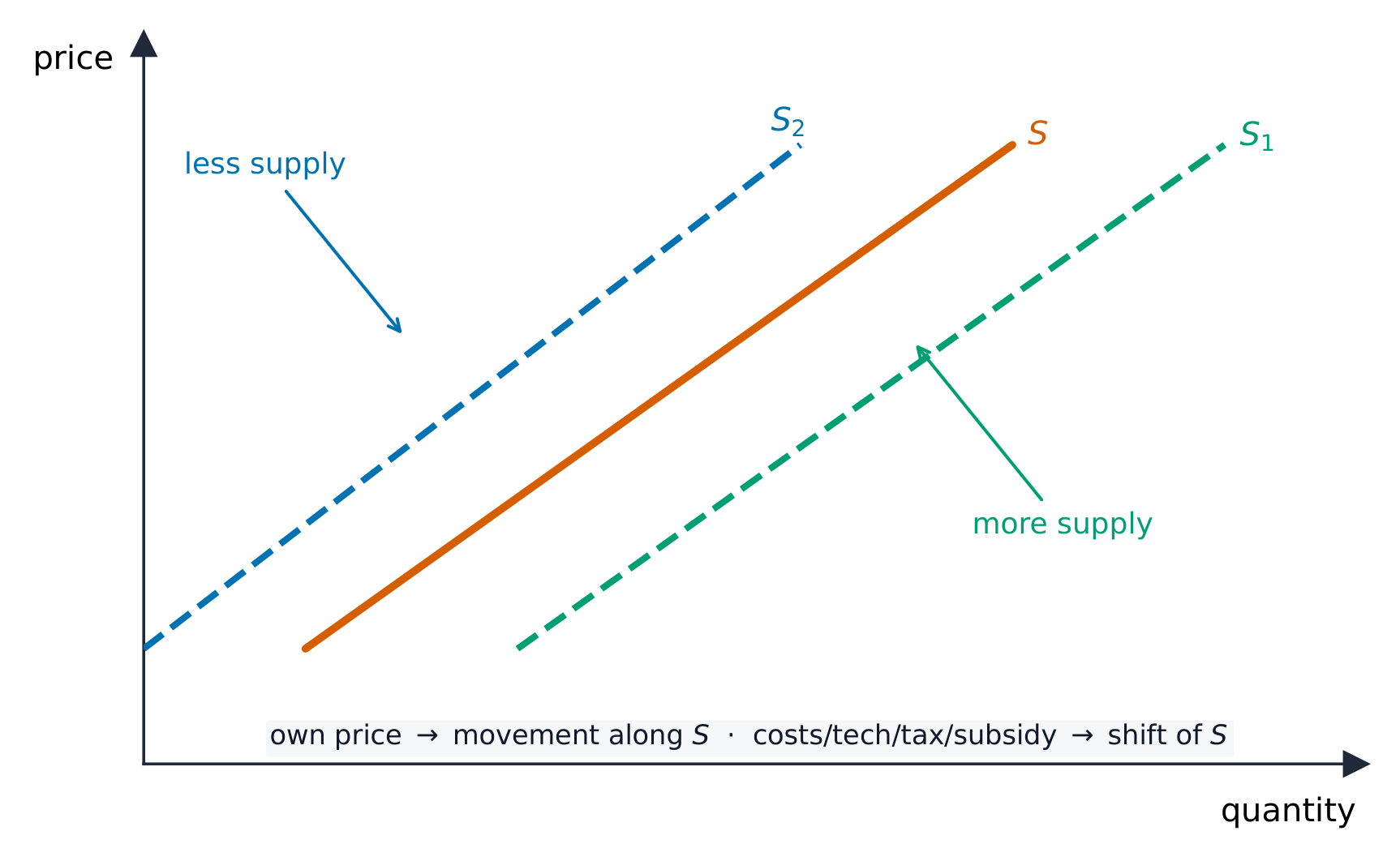
Supply shifts right: P falls, Q rises
Supply 供给 is the amount of a good that firms are willing and able to sell at each price, in a period of time.
The law of supply 供给定律 says: when the price rises, the quantity supplied rises too. Price and quantity move the same way — a direct relationship 正向关系. Firms supply more at a high price because they can earn more.
Movements and shifts
quantity supplied 供给量 — the amount offered at one price.
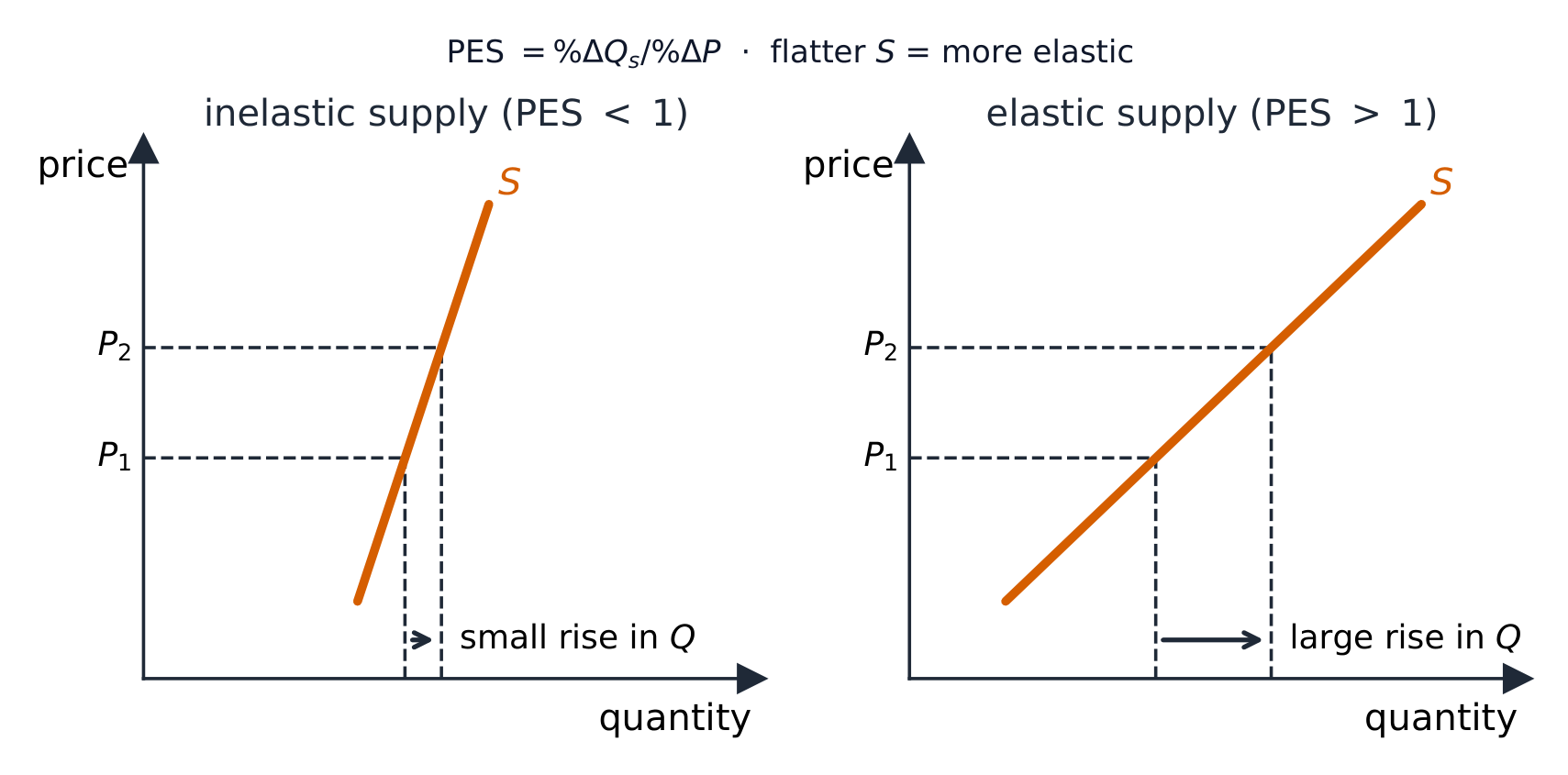
The supply curve 供给曲线 slopes upward from left to right.
A change in the good's own price → a movement along the curve.
A change in any other condition → a shift of the whole curve.
Conditions of supply
costs of production 生产成本 — if costs rise, firms supply less (curve shifts left).
technology 技术 — better technology lowers costs, so supply rises.
taxes and subsidies — a tax 税收 on a good raises firms' costs (supply falls); a subsidy 补贴 (money from the government) lowers costs (supply rises).
weather — important for farm goods.
number of firms — more firms means more supply.
العربية
انزياح العرض لليمين: انخفاض P، ارتفاع Q
العرض هو كمية السلعة التي تكون الشركات مستعدة وقادرة على بيعها عند كل سعر، خلال فترة زمنية معينة.
ينص قانون العرض على: عندما يرتفع السعر، ترتفع الكمية المعروضة أيضاً. يتحرك السعر والكمية في نفس الاتجاه — وهي علاقة طردية. تقدم الشركات كميات أكبر عند السعر المرتفع لأنها تستطيع تحقيق أرباح أعلى.
الحركات والانزلاقات
الكمية المعروضة — الكمية المعروضة عند سعر واحد.
منحنى العرض ينحدر للأعلى من اليسار إلى اليمين.
التغير في سعر السلعة الخاص بها → حركة على طول المنحنى.
التغير في أي شرط آخر → انزلاق المنحنى بأكمله.
شروط العرض
تكلفة الإنتاج — إذا ارتفعت التكاليف، تقل الشركات من العرض (ينزلق المنحنى لليسار).
التكنولوجيا — تحسين التكنولوجيا يقلل التكاليف، مما يزيد العرض.
الضرائب والإعانات — الضريبة على السلعة ترفع تكاليف الشركات (ينقص العرض)؛ بينما الإعانة (أموال من الحكومة) تخفض التكاليف (يزيد العرض).
الطقس — مهم للسلع الزراعية.
عدد الشركات — زيادة عدد الشركات تعني زيادة العرض.
ينحدر منحنى العرض للأعلى. انخفاض التكاليف، أو تحسين التكنولوجيا، أو الإعانات يُزيحه لليمين؛ ارتفاع التكاليف أو الضرائب يُزيحه لليسار.
Explore · استكشف
Demand & supply · الطلب والعرض
Supply slopes up — dearer means more made. · العرض يصعد للأعلى — كلما غلا الثمن، زاد الإنتاج.
explain how shifts in demand and supply cause changes in equilibrium price and quantity
explain the consequences of disequilibrium (excess demand/shortage, excess supply/surplus)
العربية
اشرح كيف تسبب انزياحات الطلب والعرض تغيرات في سعر التوازن والكمية
اشرح عواقب عدم التوازن (الطلب الزائد/نقص، العرض الزائد/فائض)
Source: Cambridge International syllabus · المصدر: منهج كامبريدج الدولي
English
When a curve shifts, the crossing point moves, so price and quantity change:
Demand rises (shifts right): price rises and quantity rises.
Demand falls (shifts left): price falls and quantity falls.
Supply rises (shifts right): price falls and quantity rises.
Supply falls (shifts left): price rises and quantity falls.
Disequilibrium
If the price is not at equilibrium, the market is in disequilibrium 非均衡:
If price is below equilibrium, buyers want more than firms supply. This is excess demand 超额需求, also called a shortage 短缺. Buyers compete, so the price is pushed up until equilibrium returns.
If price is above equilibrium, firms supply more than buyers want. This is excess supply 超额供给, also called a surplus 过剩. Sellers cut the price until equilibrium returns.
العربية
عندما يزداح منحنى، تتحرك نقطة التقاطع، وبالتالي يتغير السعر والكمية:
زيادة الطلب (انزلاق لليمين): يرتفع السعر وتزيد الكمية.
انخفاض الطلب (انزلاق لليسار): ينخفض السعر وتقل الكمية.
زيادة العرض (انزلاق لليمين): ينخفض السعر وتزيد الكمية.
انخفاض العرض (انزلاق لليسار): يرتفع السعر وتقل الكمية.
عدم التوازن
إذا كان السعر غير عند نقطة التوازن، فإن السوق في حالة عدم توازن:
إذا كان السعر أسفل من نقطة التوازن، يرغب المشترون في شراء أكثر مما توفره الشركات. هذا فائض الطلب، ويُعرف أيضاً بـ النقص. يتنافس المشترون، مما يدفع السعر للأعلى حتى يعود التوازن.
إذا كان السعر أعلى من نقطة التوازن، توفر الشركات كميات أكثر مما يرغب المشترون في شرائه. هذا فائض العرض، ويُعرف أيضاً بـ الفائض. يخفض البائعون السعر حتى يعود التوازن.
فوق سعر التوازن يكون هناك عرض زائد؛ وتحتَه يكون هناك طلب زائد (نقص). وفي كلتا الحالتين يُدفع السعر مجدداً نحو التوازن.
Explore · استكشف
Demand & supply · الطلب والعرض
A shift in demand or supply moves the equilibrium. · التحرك في الطلب أو العرض يُغيّر نقطة الاتزان.
Price elasticity of demand (PED) · مرونة الطلب السعري (PED)
Syllabus · المنهج
English
define and calculate PED (% change in quantity demanded ÷ % change in price)
interpret values (elastic, inelastic, unit) and the determinants of PED
explain the relationship between PED and total revenue and the usefulness of PED to firms and government
العربية
عرّف وحسب PED (% التغير في الكمية المطلوبة ÷ % التغير في السعر)
فسّر القيم (مرن، غير مرن، وحدة) وعوامل تحديد PED
اشرح العلاقة بين PED والإجمالي الإيرادات وأهمية PED للشركات والحكومة
Source: Cambridge International syllabus · المصدر: منهج كامبريدج الدولي
English
Elastic vs inelastic demand
Price elasticity of demand 需求价格弹性 measures how much the quantity demanded changes when the price changes.
PED = (% change in quantity demanded) ÷ (% change in price)
(We usually ignore the minus sign and read the size of the number.) The determinants 决定因素 (the things that decide PED) include whether the good has close substitutes, whether it is a need or a luxury, and what share of income it takes.
Worked example. When the price of a good rises by 20%, the quantity demanded falls by 10%. Find the PED.
PED = (% change in quantity demanded) ÷ (% change in price) = 10 ÷ 20 = 0.5.
Because 0.5 is less than 1, demand is inelastic — the quantity changed by a smaller percentage than the price.
Reading the value
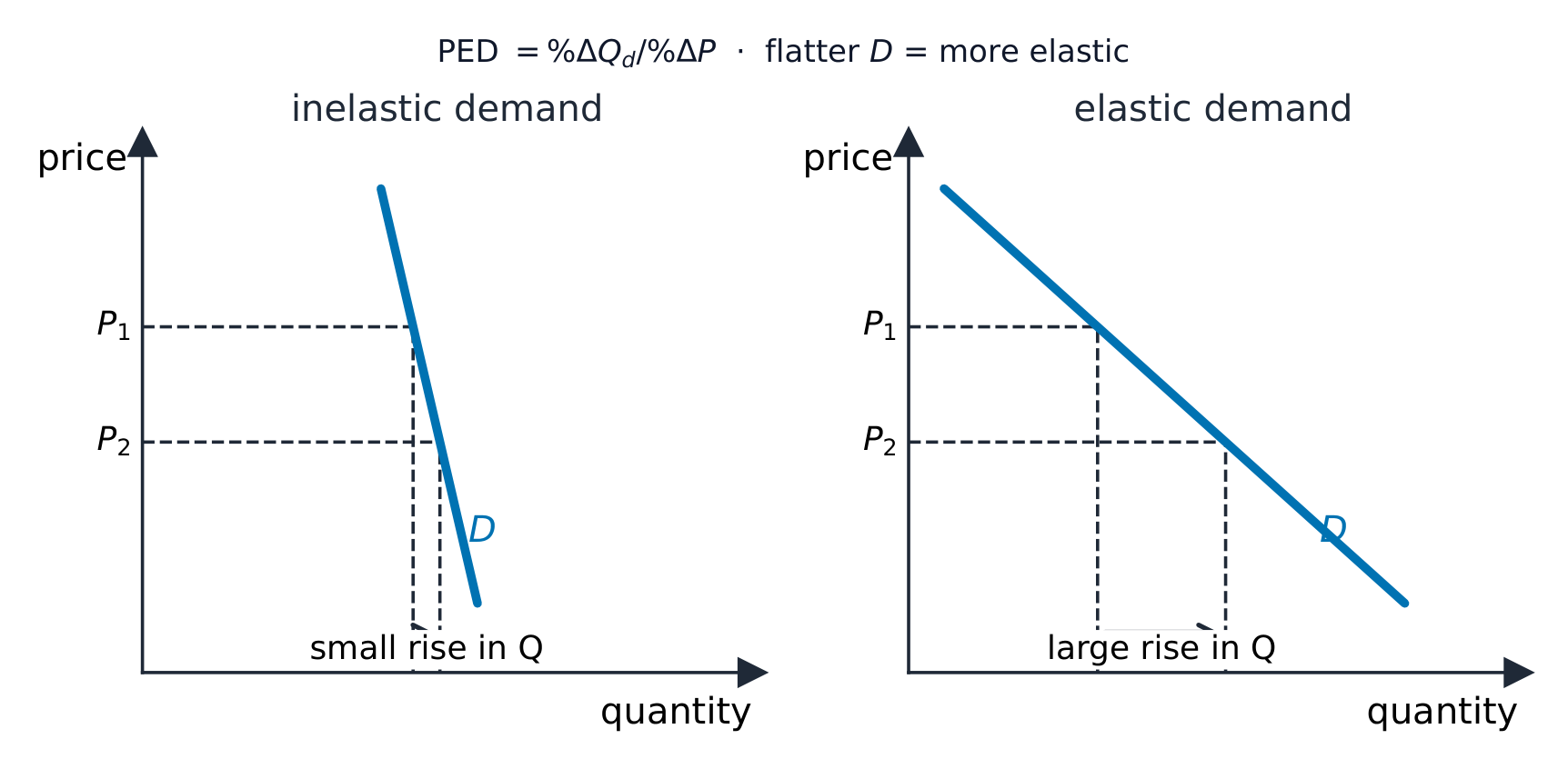
PED greater than 1: demand is elastic 富有弹性. Quantity changes by a large %. (Goods with many substitutes, like one brand of crisps.)
PED less than 1: demand is inelastic 缺乏弹性. Quantity changes by a small %. (Needs with few substitutes, like petrol or salt.)
PED equal to 1: unit elastic 单位弹性. Quantity changes by the same % as price.
PED and total revenue
Total revenue 总收益 is the money a firm gets from sales: price × quantity sold. (To the buyer, the same money is total expenditure 总支出.) PED tells a firm what happens to revenue if it changes its price:
If demand is inelastic, raising the price raises total revenue (quantity falls only a little).
If demand is elastic, raising the price lowers total revenue (quantity falls a lot).
This is useful. A firm sets prices knowing how buyers will react. A government taxes inelastic goods (like cigarettes) because people keep buying them, so the tax raises a lot of money.
Worked example. A bus company sells 1,000 tickets a day at £2 each. It raises the price by 10% to £2.20, and daily sales fall by 5% to 950. Find the PED and what happens to total revenue.
PED = 5 ÷ 10 = 0.5, so demand is inelastic (less than 1).
old revenue = £2 × 1,000 = £2,000.
new revenue = £2.20 × 950 = £2,090.
Total revenue rose by £90. Because demand is inelastic, the price rose by a bigger percentage than the quantity fell, so raising the price raised revenue.
العربية
الطلب المرن مقابل غير المرن
مرونة الطلب السعري تقيس مدى استجابة الكمية المطلوبة للتغير في السعر.
مرونة الطلب = (% التغير في الكمية المطلوبة) ÷ (% التغير في السعر)
(نتجاهل عادةً الإشارة السالبة ونقرأ حجم الرقم.) العوامل المحددة (والتي تحدد قيمة المرونة) تشمل وجود بدائل قريبة للسلعة، وما إذا كانت ضرورة أم بديعة، وما هي حصة الدخل التي تستهلكها.
مثال محلول. عندما يرتفع سعر سلعة بنسبة 20%، تنخفض الكمية المطلوبة بنسبة 10%. أوجد مرونة الطلب.
مرونة الطلب = (% التغير في الكمية المطلوبة) ÷ (% التغير في السعر) = 10 ÷ 20 = 0.5.
بما أن 0.5 أقل من 1، فإن الطلب غير مرن — حيث تغيرت الكمية بنسبة أصغر من تغير السعر.
قراءة القيمة
مرونة الطلب أكبر من 1: الطلب مرن. تتغير الكمية بنسبة كبيرة. (سلع有许多 بدائل، مثل نوع واحد من رقائق البطاطس).
مرونة الطلب أقل من 1: الطلب غير مرن. تتغير الكمية بنسبة صغيرة. (ضرورات few بدائل، مثل البنزين أو الملح).
عندما يكون الطلب غير مرن (حاد)، فإن تغير السعر لا يغير الكمية بشكل كبير؛ أما عندما يكون مرناً (مسطحاً)، فإن نفس التغير يؤدي إلى تغيير كبير في الكمية.
مرونة الطلب السعرية والإجمالي للدخل
إجمالي الإيرادات هو المال الذي تحصل عليه الشركة من المبيعات: السعر × الكمية المباعة. (بالنسبة للمشتري، يُسمى هذا المال إجمالي الإنفاق.) tells PED للشركة ما يحدث للإيرادات إذا غيرت سعرها:
إذا كان الطلب غير مرن، فإن رفع السعر يرفع إجمالي الإيرادات (تنخفض الكمية قليلاً فقط).
إذا كان الطلب مرناً، فإن رفع السعر يخفض إجمالي الإيرادات (تنخفض الكمية كثيراً).
هذا مفيد. تحدد الشركات الأسعار بناءً على توقعاتها لردود فعل المشترين. تفرض الحكومات ضرائب على سلع ذات طلب غير مرن (مثل السجائر) لأن الناس يستمرون في شرائها، مما يرفع إيرادات الضريبة بشكل كبير.
مثال محلول. تبيع شركة حافلات 1,000 تذكرة يومياً بسعر £2 لكل منها. رفعت السعر بنسبة 10% ليصبح £2.20، وانخفضت المبيعات اليومية بنسبة 5% لتصل إلى 950. أوجد PED وماذا يحدث لإجمالي الإيرادات.
PED = 5 ÷ 10 = 0.5، إذن الطلب غير مرن (أقل من 1).
الإيرادات القديمة = £2 × 1,000 = £2,000.
الإيرادات الجديدة = £2.20 × 950 = £2,090.
ارتفع إجمالي الإيرادات بمقدار £90. وبسبب عدم مرونة الطلب، ارتفع السعر بنسبة أكبر مما انخفضت به الكمية، لذا أدى رفع السعر إلى زيادة الإيرادات.
نفس ارتفاع السعر يرفع الإيرادات عندما يكون الطلب غير مرن، لكن يخفضه عندما يكون الطلب مرناً
Explore · استكشف
Elasticity & total revenue · المرونة والإيراد الكلي
PED is the % change in quantity over the % change in price; whether it is above or below 1 decides how total revenue moves. · PED هي النسبة المئوية للتغير في الكمية مقسومة على النسبة المئوية للتغير في السعر؛ ما إذا كانت أعلى أو أقل من 1 يحدد كيف يتحرك الإيراد الكلي.
Explore · استكشف
Demand & supply · الطلب والعرض
Elasticity of demand is the steepness of the curve. · المرونة في الطلب هي ميلان المنحنى.
The market economic system · النظام الاقتصادي للسوق
Syllabus · المنهج
English
explain how a market economy allocates resources through the price mechanism
explain the advantages and disadvantages of the market economic system
العربية
اشرح كيف يخصص الاقتصاد السوقي الموارد من خلال آلية السعر
اشرح مزايا وعيوب النظام الاقتصادي السوقي
Source: Cambridge International syllabus · المصدر: منهج كامبريدج الدولي
English
In a market economy 市场经济, the price mechanism makes all the choices. There is no government planning. (The opposite is a planned economy 计划经济, where the government makes the choices.)
Advantages of the market system:
Prices guide resources to where they are wanted, without anyone planning.
Firms compete, so they cut costs and create new and better goods.
Consumers have wide choice.
Disadvantages:
Some useful goods are not made because they earn no profit.
The strong (rich firms and people) do well; the weak may be left with nothing.
Markets can fail (see below).
العربية
في الاقتصاد السوقي، آلية السعر تتخذ جميع القرارات. لا يوجد تخطيط حكومي. (العكس هو اقتصاد مخطط، حيث تتخذ الحكومة القرارات.)
مزايا نظام السوق:
توجه الأسعار الموارد إلى الأماكن المطلوبة، دون أي تخطيط.
تتنافس الشركات، لذا تقوم بخفض التكاليف وإنتاج سلع جديدة وأفضل.
للمستهلكين خيارات واسعة.
عيوب:
بعض السلع المفيدة لا تُنتج لأنها لا تحقق أرباحاً.
الأقوياء (الشركات والأشخاص الأثرياء) يتفوقون؛ قد يترك الضعفاء بلا شيء.
يمكن أن تفشل الأسواق (انظر أدناه).
Explore · استكشف
How a market allocates · كيف يوزع السوق
In a market system, price moves to where demand meets supply — that price signal decides what gets made. Shift the curves and watch it settle. · في النظام السوقي، يتحرك السعر نحو نقطة التقاء الطلب والعرض — هذا الإشارة السعرية تحدد ما يتم إنتاجه. غير المنحنيات ولاحظ الاستقرار.
define market failure as the inefficient allocation of resources
explain the causes: external costs and external benefits (social vs private costs/benefits), merit and demerit goods, public goods and the abuse of monopoly power
العربية
عرّف فشل السوق على أنه تخصيص غير فعال للموارد
اشرح الأسباب: التكاليف والفوائد الخارجية (اجتماعية مقابل خاصة)، والسلع الصالحة وغير الصالحة، والسلع العامة، وإساءة استغلال السلطة الاحتكارية
Source: Cambridge International syllabus · المصدر: منهج كامبريدج الدولي
English
Market failure 市场失灵 happens when the price mechanism leads to an inefficient 低效率 use of resources — resources are not shared out in the best way for society. The main causes:
External costs and benefits
When you produce or consume something, the cost or benefit to you is not always the cost or benefit to everyone.
a private cost 私人成本 is the cost to the person doing the activity.
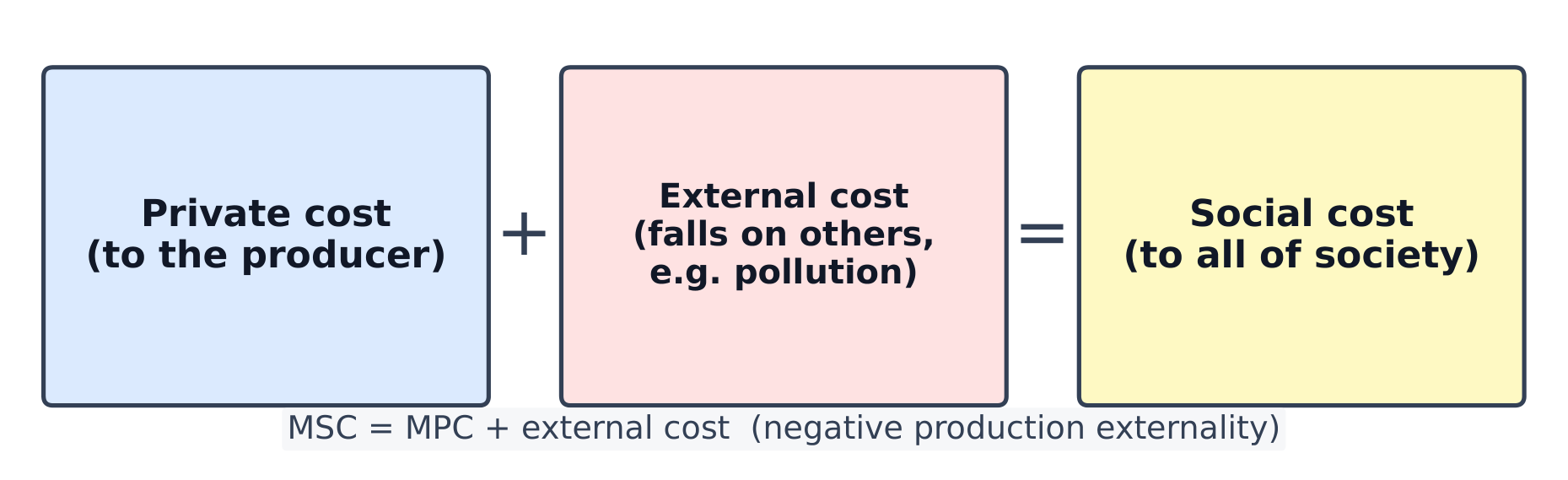
an external cost 外部成本 is a cost paid by other people — for example, smoke from a factory harms nearby families.
the social cost 社会成本 is the private cost plus the external cost (the cost to the whole of society).
In the same way:
a private benefit 私人效益 is the benefit to the person doing the activity.
an external benefit 外部效益 is a benefit that others get for free — for example, your neighbour's tidy garden is nice for you too.
the social benefit 社会效益 is the private benefit plus the external benefit.
Markets fail because firms and consumers only think about their private costs and benefits, not the external ones.
Merit, demerit and public goods
merit goods 有益物品 are better for you than you realise, so the market makes too few (education, healthcare).
demerit goods 有害物品 are worse for you than you realise, so the market makes too many (cigarettes, alcohol).
public goods 公共物品 are things everyone can use and no one can be stopped from using, like street lights or national defence. The market makes none, because firms cannot charge for them.
Abuse of monopoly power
A monopoly 垄断 is a single firm that controls a market. With no competition, it can charge high prices and make poor-quality goods. This is another market failure.
العربية
فشل السوق يحدث عندما تؤدي آلية السعر إلى استخدام غير كفء للموارد — أي أن الموارد لا يتم توزيعها بأفضل طريقة للمجتمع. الأسباب الرئيسية:
التكاليف والفوائد الخارجية
التلوث الصادر عن محطة توليد الكهرباء هو تكلفة خارجية — ينصب على أطراف ثالثة، وليس على المنتج وحده
عندما تنتج أو تستهلك شيئاً، فإن التكلفة أو الفائدة بالنسبة لك ليست بالضرورة التكلفة أو الفائدة بالنسبة للجميع.
التكلفة الخاصة هي التكلفة التي يتحملها الشخص الذي يقوم بالنشاط.
التكلفة الخارجية هي تكلفة يتحملها أشخاص آخرون — على سبيل المثال، دخان المصنع يضر العائلات القريبة.
التكلفة الاجتماعية هي التكلفة الخاصة زائد التكلفة الخارجية (التكلفة على المجتمع بأكمله).
وبالمثل:
الفائدة الخاصة هي الفائدة التي يحصل عليها الشخص الذي يقوم بالنشاط.
الفائدة الخارجية هي فائدة يحصل عليها الآخرون مجاناً — على سبيل المثال، حديقة جارك المرتبة جميلة لك أيضاً.
الفائدة الاجتماعية هي الفائدة الخاصة زائد الفائدة الخارجية.
تفشل الأسواق لأن الشركات والمستهلكين يفكرون فقط في تكاليفهم وفوائدهم الخاصة، وليس الخارجية.
تكلفة خارجية (مثل التلوث) تنصب على أطراف ثالثة، لذا فإن التكلفة الاجتماعية أكبر من التكلفة الخاصة للمنتج
السلع النفعية والضرورية والسلع العامة
السلع النفعية أفضل لك مما تدرك، لذا ينتج السوق عدداً قليلاً منها (التعليم، الرعاية الصحية).
السلع الضارة أسوأ عليك مما تدرك، لذا ينتج السوق عدداً كبيراً منها (السجائر، الكحول).
السلع العامة هي أشياء يمكن للجميع استخدامها ولا يمكن منع أحد من استخدامها، مثل أضواء الشوارع أو الدفاع الوطني. لا ينتجها السوق، لأن الشركات لا تستطيع فرض رسوم عليها.
السلعة الخاصة منافسة وقابلة للاستبعاد (توفرها الشركات)؛ السلعة العامة غير منافسة وغير قابلة للاستبعاد (يجب أن توفرها الحكومة)سلع المنفعة والإضرار يتم الحكم عليها بشكل خاطئ بسبب فشل المعلومات
إساءة استخدام السلطة الاحتكارية
الاحتكار هو شركة واحدة تسيطر على سوق ما. وبغياب المنافسة، يمكنها فرض أسعار مرتفعة وإنتاج سلع ذات جودة رديئة. وهذا يمثل فشلًا آخر في السوق.
Explore · استكشف
Demand & supply · الطلب والعرض
Market failure: the free-market crossing isn't always best for society. · فشل السوق: التقاطع السوقي الحر ليس دائمًا الأفضل للمجتمع.
The mixed economic system · النظام الاقتصادي المختلط
Syllabus · المنهج
English
explain the features of a mixed economy (private sector and public sector)
explain methods of government intervention to address market failure: maximum and minimum prices, indirect taxes, subsidies, regulation and direct provision
evaluate the effects of intervention
العربية
اشرح خصائص الاقتصاد المختلط (القانون الخاص والقانون العام)
اشرح أساليب تدخل الحكومة لمعالجة فشل السوق: الأسعار القصوى والحد الأدنى، الضرائب غير المباشرة، الإعانات، التنظيم، والتوفير المباشر
قيّم تأثيرات التدخل
Source: Cambridge International syllabus · المصدر: منهج كامبريدج الدولي
English
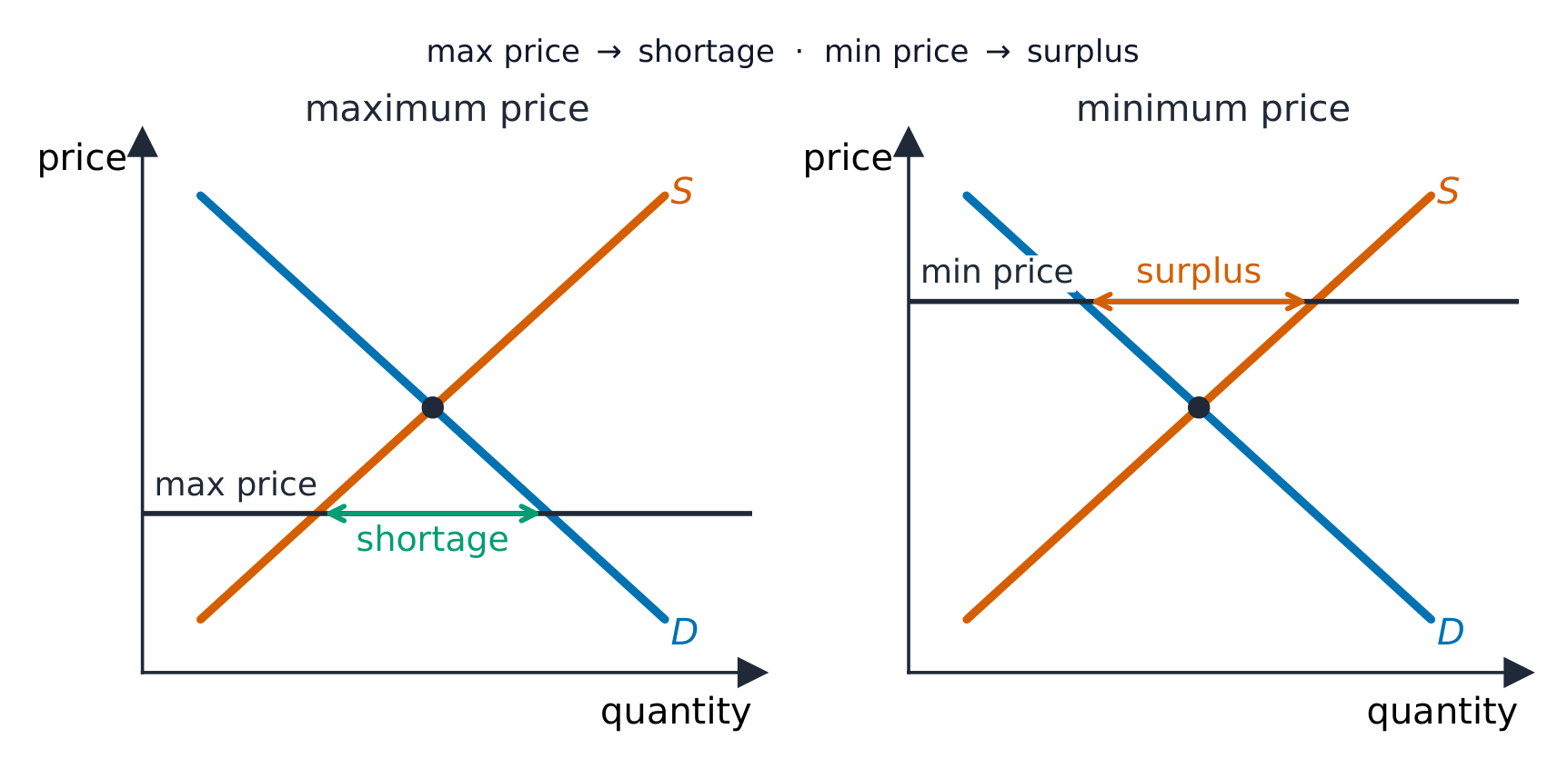
A maximum price creates a shortage
A mixed economy 混合经济 has both:
a private sector 私营部门 — firms owned by people, guided by the price mechanism.
a public sector 公共部门 — activity run by the government.
Most real economies are mixed; China's, for example, is a socialist market economy. The government steps in to correct market failure. This is government intervention 干预. The main methods:
Method
What it does
maximum price 最高价格
a price ceiling, set below equilibrium, to keep a good (like rent) cheap — but it causes a shortage
minimum price 最低价格
a price floor, set above equilibrium, to keep a price up (like a fair wage) — but it causes a surplus
indirect tax 间接税
a tax on a good (added to its price) to cut demand for demerit goods
subsidy
money paid to firms to cut the price and raise output of merit goods
regulation 监管
rules and laws, like banning smoking in public
direct provision 直接提供
the government makes and gives out goods itself, like state schools
Judging intervention
Intervention can fix market failure, but it has costs. Taxes and rules cost money to collect and check. Governments can get things wrong too (this is called government failure). So you should always weigh the good effects against the bad ones before deciding.
العربية
السعر الأقصى يسبب نقصًا
الاقتصاد المختلط يتضمن:
قطاع خاص — شركات مملوكة للأفراد وتوجهها آلية الأسعار.
قطاع عام — أنشطة يديرها الحكومة.
معظم الاقتصادات الحقيقية مختلطة؛ فمثلاً اقتصاد الصين هو اقتصاد سوق اشتراكي. تتدخل الحكومة لتصحيح فشل السوق. هذا هو التدخل الحكومي. الطرق الرئيسية:
الطريقة
ما تفعله
السعر الأقصى
سقف سعري يُحدد أقل من نقطة التوازن لإبقاء سعر سلعة معينة (مثل الإيجار) منخفضاً — لكنه يسبب نقصاً
السعر الأدنى
أرضية سعرية تُحدد أعلى من نقطة التوازن للحفاظ على سعر معين (مثل الأجر العادل) — لكنه يسبب فائضاً
الضريبة غير المباشرة
ضريبة على سلعة (تُضاف إلى سعرها) لتقليل الطلب على سلع الإضرار
الإعانة
أموال تُدفع للشركات لخفض السعر وزيادة إنتاج سلع المنفعة
التنظيم
قواعد وقوانين، مثل منع التدخين في الأماكن العامة
التوفير المباشر
الحكومة تصنع السلعة وتوزعها بنفسها، كالمدارس الحكومية
السعر الأقصى المحدد أقل من التوازن يسبب نقصاً؛ والسعر الأدنى المحدد فوق التوازن يسبب فائضاً.
تقييم التدخل
يمكن للتدخل إصلاح فشل السوق، لكنه له تكاليف. جمع الضرائب والقواعد يتطلب مالاً ومراجعة. الحكومات قد ترتكب أخطاء أيضاً (وهذا يسمى فشل الحكومة). لذا يجب عليك دائماً الموازنة بين الآثار الجيدة والسيئة قبل اتخاذ القرار.
Explore · استكشف
Economics case lab · مختبر حالات الاقتصاد
Classify real examples by the economic idea they show. · صنف الأمثلة الحقيقية حسب الفكرة الاقتصادية التي تمثلها.
A change in a good's own price is a movement along the curve; a change in anything else (income, tastes, related prices) shifts the whole curve.
Equilibrium is where demand meets supply. Below it there is excess demand (a shortage, so price rises); above it there is excess supply (a surplus, so price falls).
PED = %ΔQ ÷ %ΔP. Demand is inelastic if PED < 1 (raising price raises revenue) and elastic if PED > 1 (raising price lowers revenue).
Market failure (external costs, merit/demerit/public goods, monopoly) means resources are used badly; the government corrects it with taxes, subsidies, rules and direct provision.
العربية
تغير سعر السلعة نفسه هو حركة على طول المنحنى؛ بينما تغير أي عامل آخر (الدخل، الأذواق، الأسعار المتعلقة) يُزيح المنحنى بالكامل.
التوازن هو حيث يتقاطع العرض والطلب. أسفله يكون هناك طلب زائد (نقص، مما يرفع السعر)؛ وفوقه يكون هناك عرض زائد (فائض، مما يخفض السعر).
PED = %ΔQ ÷ %ΔP. الطلب يكون مرناً إذا كان PED < 1 (raising price raises revenue) and elastic if PED > 1 (ارتفاع السعر يقلل الإيرادات).
فشل السوق (التكاليف الخارجية، سلع المنفعة/الإضرار/العامة، الاحتكار) يعني سوء تخصيص الموارد؛ وتصححه الحكومة عبر الضرائب والإعانات والقوانين والتوفير المباشر.
Interactive lessons on this topic · دروس تفاعلية حول هذا الموضوع
Work through it step by step, with instant-check exercises. · ا-working عليه خطوة بخطوة، مع تمارين تحقق فوري.
Pick one and the site follows you — notes, papers, videos and practice all open on it. · اختر واحدًا وسيتبعك الموقع — الملاحظات، الأوراق، الفيديوهات والتدريب جميعها تفتح عليه.
Type to search notes, lessons, code, vocabulary and past-paper questions across every subject. · اكتب للبحث عن ملاحظات، دروس، أكواد، مفردات وأسئلة امتحانات سابقة عبر جميع المواد.