كانت هذه التجارة تسير بشكل جيد. كل شهر حققت ربحًا — المنتجات تُباع، والزبائن سعداء. لكن انظر إلى المال في البنك. المورّدون أرادوا…
English narration · English + 中文 subtitles burned in · سرد باللغة الإنجليزية · ترجمة مدمجة بالإنجليزية + الصينية
5.1
Why businesses need finance · لماذا تحتاج الشركات إلى التمويل
Syllabus · المنهج
English
explain why businesses need finance (start-up capital, expansion, working capital, cash-flow problems)
distinguish short-term and long-term finance and internal and external sources of finance
describe sources of finance (retained profit, sale of assets, owners' savings, bank loan/overdraft, share issue, debentures, leasing, hire purchase, trade credit, microfinance, crowdfunding, government grants)
explain the factors that influence the choice of source of finance
العربية
اشرح لماذا تحتاج الشركات إلى التمويل (رأس المال الأولي، التوسع، رأس المال العامل، مشاكل التدفق النقدي)
ميّز بين التمويل قصير وطويل الأجل والمصادر الداخلية والخارجية للتمويل
صف مصادر التمويل (الأرباح المحتجزة، بيع الأصول، مدخرات المالكين، القروض البنكية/التجاوز، إصدار الأسهم، السندات، التأجير، الشراء بالتقسيط، الائتمان التجاري، التمويل الصغير، التمويل الجماعي، منح الحكومة)
اشرح العوامل التي تؤثر على اختيار مصدر التمويل
Source: Cambridge International syllabus · المصدر: منهج كامبريدج الدولي
English
Finance 资金 means the money a business needs. A business needs finance to:
start up — start-up capital 启动资金 to buy equipment and stock before it earns anything,
grow — money for expansion 扩张, such as new shops or machines,
run day to day — working capital 营运资金 to pay wages and suppliers while waiting for customers to pay,
survive a cash-flow 现金流 problem, when more money is going out than is coming in.
Sources of finance
Finance can be short-term 短期 (paid back within a year) or long-term 长期 (over several years). It can come from inside the business (internal) or from outside (external).
Source
Internal / external
Notes
retained profit 留存利润
internal
profit kept in the business, not paid out
sale of assets 资产
internal
selling things the business no longer needs
owners' savings
internal
the owners' own money
bank loan 贷款
external
borrowed money, repaid with interest 利息 over time
bank overdraft 透支
external
the bank lets the account go below zero, for short-term needs
issuing new shares 股份
external
only for limited companies; raises money but shares out control
debentures 债券
external
long-term loans to a company that pay interest
leasing 租赁
external
renting equipment instead of buying it
hire purchase 分期付款
external
buy now and pay in monthly parts
trade credit 贸易信贷
external
pay suppliers later, for example after 30 days
microfinance 小额信贷
external
small loans for tiny businesses in poorer areas
crowdfunding 众筹
external
many people each give a small amount, often online
government grants 补助金
external
money from the government that need not be repaid
Choosing a source
The best source depends on how much money is needed and for how long, the cost (interest and fees), the size and legal type of the business (only companies can sell shares), and how much risk and control the owners will accept.
العربية
تُعدّ البنوك مصدراً خارجياً رئيسياً لتمويل الشركات، من خلال القروض والخصومات.يحتاج التمويل للتأسيس، للتشغيل اليومي، وللتوسع
التمويل يعني الأموال التي تحتاجها الشركة. تحتاج الشركة إلى التمويل لـ:
بدء النشاط — رأس المال الأولي لشراء المعدات والمخزون قبل تحقيق أي أرباح،
النمو — أموال لـ التوسع، كمتاجر جديدة أو آلات،
التشغيل اليومي — رأس المال العامل لسداد الأجور والموردين أثناء انتظار دفع العملاء،
البقاء على قيد الحياة أمام مشكلة تدفق النقد، عندما يكون الخرج النقدي أكبر من الداخل.
مصادر التمويل
يمكن أن يكون التمويل قصير الأجل (يُرد خلال عام) أو طويل الأجل (على مدى عدة سنوات). وقد يأتي من داخل الشركة (داخلي) أو من خارجها (خارجي).
المصدر
داخلي / خارجي
ملاحظات
الأرباح المحتجزة
داخلي
أرباح تُحتفظ بها في الشركة ولا تُوزع
بيع الأصول
داخلي
بيع أشياء لم تعد الشركة بحاجة إليها
مدخرات الملاك
داخلي
أموال الملاك الخاصة
قرض بنكي
خارجي
أموال مقترضة تُرد مع فوائد بمرور الوقت
خصم بنكي
خارجي
يسمح البنك للحساب بالذهاب تحت الصفر، للاحتياجات قصيرة الأجل
إصدار أسهم جديدة
خارجي
للشركات المحدودة فقط؛ يجمع المال لكن يوزع السيطرة
السندات
خارجي
قروض طويلة الأجل لشركة تدفع فوائد
التأجير
خارجي
تأجير المعدات بدلاً من شراؤها
الشراء بالتقسيط
خارجي
الشراء الآن والدفع على أقساط شهرية
الائتمان التجاري
خارجي
دفع الموردين لاحقاً، مثلاً بعد 30 يوماً
التمويل الجماعي الصغير
خارجي
قروض صغيرة للشركات الصغيرة في المناطق الفقيرة
التمويل الجماعي
خارجي
عدد كبير من الناس يمنح كل منهم مبلغاً صغيراً، غالباً عبر الإنترنت
منح حكومية
خارجي
أموال من الحكومة لا حاجة لإعادتها
مصادر التمويل تأتي من داخل العمل التجاري (داخلية) أو خارجه (خارجية)
اختيار المصدر
يعتمد أفضل مصدر على مقدار المال المطلوب ولمدة زمنية، والتكلفة (الفوائد والرسوم)، وحجم ونوع الشركة القانوني (الشركات فقط يمكنها بيع الأسهم)، ومقدار المخاطر والسيطرة الذين يقبلهم الملاك.
Explore · استكشف
Sources of finance lab · مختبر مصادر التمويل
Choose the best type of finance by time, risk and ownership. · اختر أفضل نوع من التمويل حسب الوقت والمخاطر والملكية.
اشرح رأس المال العامل وكيف يمكن للشركة التغلب على مشاكل التدفق النقدي
Source: Cambridge International syllabus · المصدر: منهج كامبريدج الدولي
English
Cash-flow forecast
Cash is not the same as profit
Cash 现金 is the money a business can use right now. Profit 利润 is revenue 收入 minus costs over a period. A business can be making a profit yet still run out of cash — for example, if customers have not paid yet. Running out of cash can force even a profitable business to close.
The cash-flow forecast
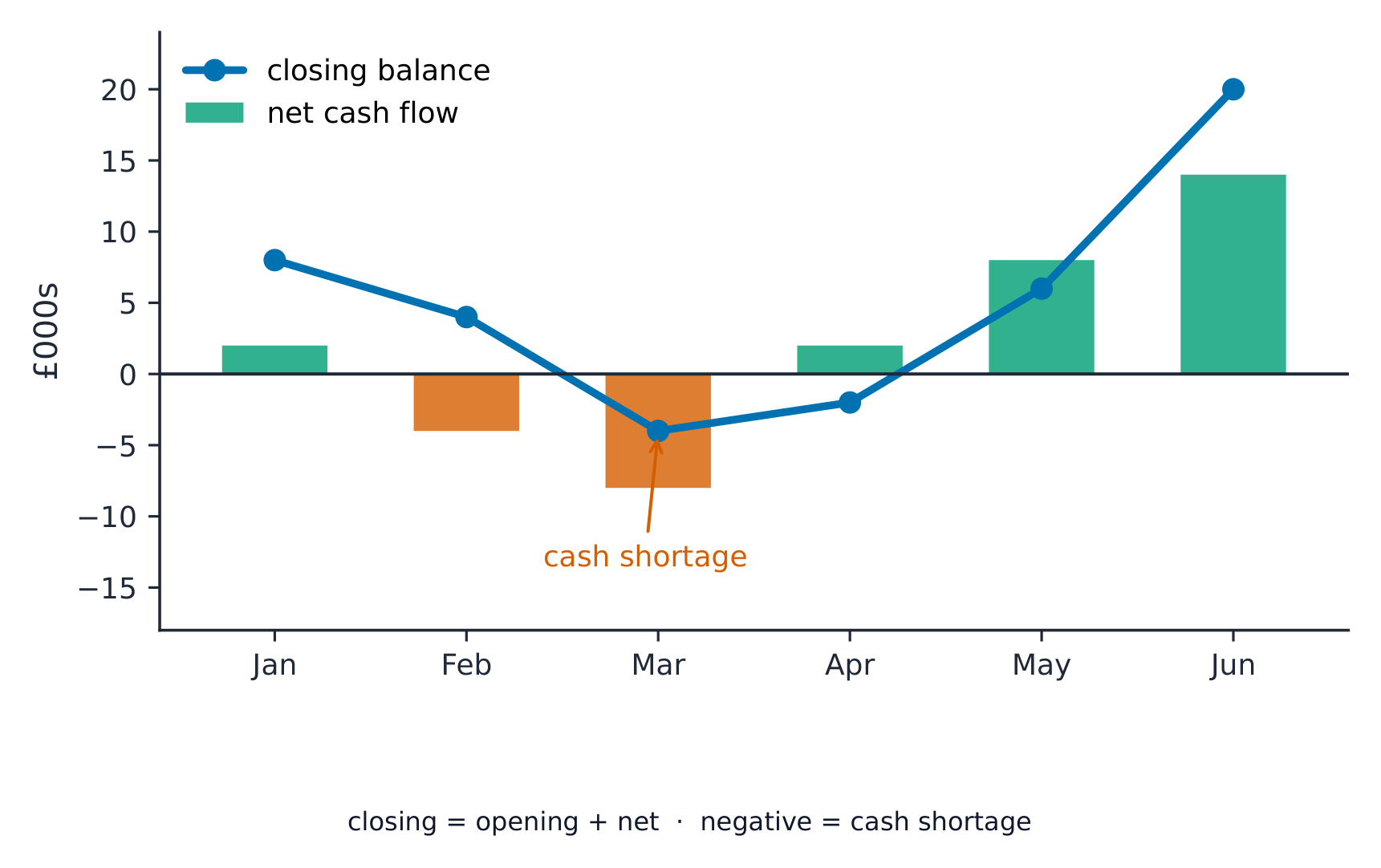
A cash-flow forecast 现金流预测 predicts the money coming in and going out each month. It uses:
inflows 流入 — money coming in (sales, loans),
outflows 流出 — money going out (wages, rent, materials),
net cash flow 净现金流 — inflows minus outflows,
opening balance 期初余额 — the cash held at the start of the month,
closing balance 期末余额 — the cash held at the end of the month.
Worked example. A shop expects inflows of £12,000 and outflows of £9,000 next month, and starts the month with £2,000 in the bank. Find the net cash flow and the closing balance.
Working capital is the money available for day-to-day running. It is the current assets 流动资产 (cash and things soon turned into cash) minus the current liabilities 流动负债 (debts due within a year).
To overcome cash-flow problems, a business can arrange an overdraft, delay paying suppliers, ask customers to pay sooner, sell spare assets, or cut spending.
العربية
توقع تدفق نقدي
النقد ليس هو نفسه الربح
النقد هو الأموال التي يمكن للشركة استخدامها فوراً. الربح هو الإيرادات مطروحاً منها التكاليف خلال فترة معينة. قد تحقق الشركة ربحاً ومع ذلك تنفد سيولتها — على سبيل المثال، إذا لم يدفع العملاء بعد. نفاد السيولة قد يجبر حتى شركة مربحة على الإغلاق.
المبيعات بالائتمان تحقق ربحاً على الورق الآن - بينما arrives النقد وقتاً طويلاً لاحقاً
توقع التدفق النقدي
توقع التدفق النقدي يتنبأ بالأموال الداخلة والخارجة كل شهر. يستخدم:
يتتبع توقع التدفق النقدي الرصيد الختامي كل شهر، وينبه من النقص مبكراً
رأس المال العامل
رأس المال العامل هو الأموال المتاحة للتشغيل اليومي. وهو الأصول المتداولة (النقد والأشياء التي تتحول قريباً إلى نقد) مطروحاً منها الخصوم المتداولة (الديون المستحقة خلال سنة).
لتجاوز مشاكل التدفق النقدي، يمكن للشركة ترتيب خصم بنكي، تأخير سداد الموردين، طلب دفع العملاء مبكراً، بيع أصول فائضة، أو削减 الإنفاق.
رأس المال العامل: الأصول المتداولة مطروحاً منها الخصوم المتداولة
Explore · استكشف
Cash-flow forecasting · التنبؤ بالتدفق النقدي
A forecast of cash in and out each month warns a business of a cash shortage before it strikes. · توقع التدفقات النقدية الداخلة والخارجة كل شهر يحذر الشركة من نقص السيولة قبل وقوعه.
Drag the monthly cash in, cash out and the one-off oven purchase — does the bakery stay out of the red all six months? · اسحب التدفق النقدي الشهري الداخل والخارج وشراء الفرن مرة واحدة — هل تظل المخبز خاليًا من الديون طوال الأشهر الستة؟
Source: Cambridge International syllabus · المصدر: منهج كامبريدج الدولي
English
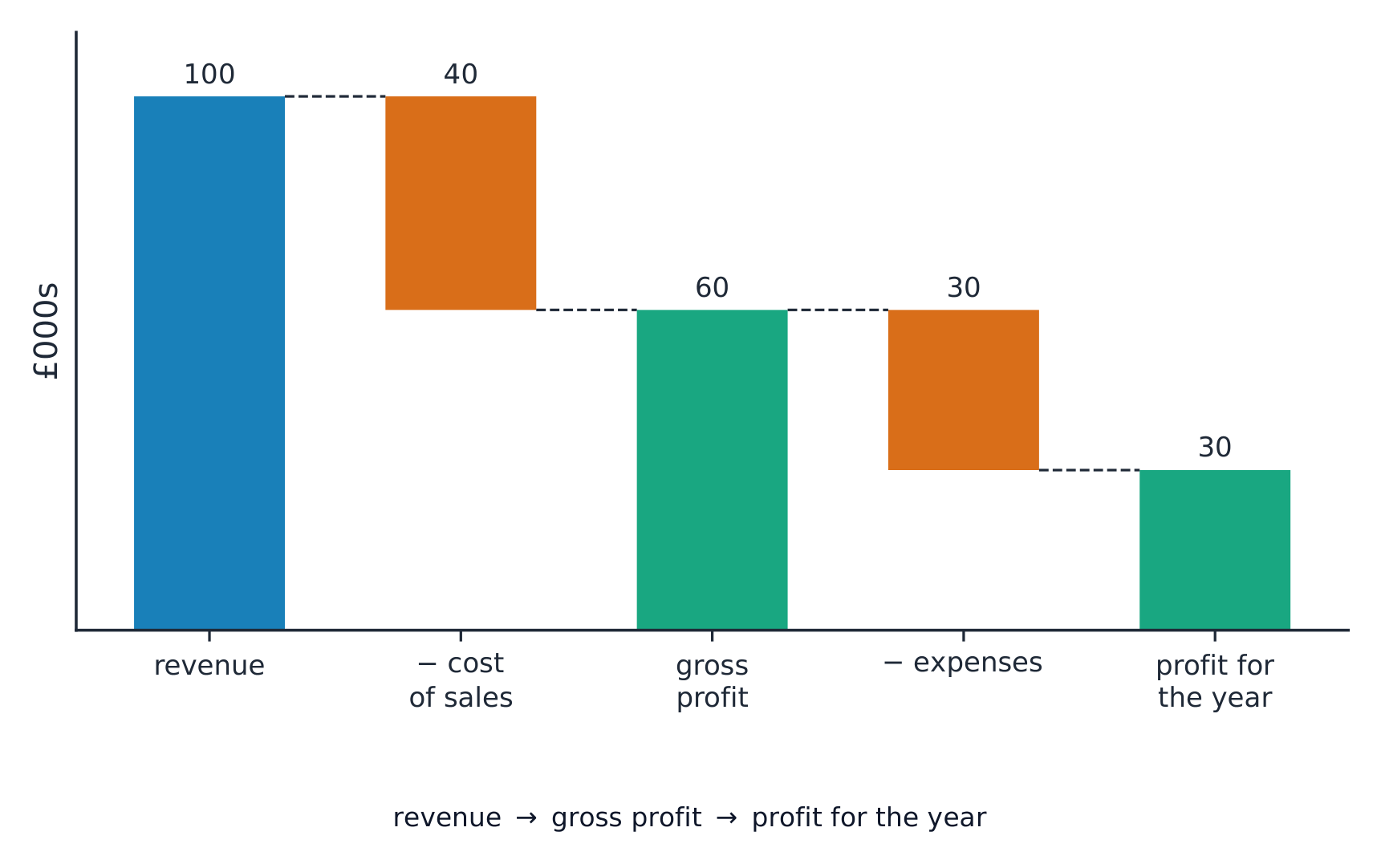
An income statement 损益表 shows how much profit a business made over a period, usually a year.
Line
Meaning
revenue
money from sales
cost of sales 销售成本
the cost of making or buying the goods that were sold
gross profit 毛利润
revenue minus cost of sales
expenses 费用
other running costs: rent, wages, advertising
profit for the year 年度利润
gross profit minus expenses
$$\text{gross profit} = \text{revenue} - \text{cost of sales}$$
$$\text{profit for the year} = \text{gross profit} - \text{expenses}$$
Worked example. A business has revenue of £200,000, cost of sales of £120,000 and expenses of £50,000. Find its gross profit and its profit for the year.
$$\text{profit for the year} = \text{\pounds} 80\,000 - \text{\pounds} 50\,000 = \text{\pounds} 30\,000$$
Income statements are used by stakeholders 利益相关者: owners check the profit, lenders check whether their loans are safe, and managers look for problems.
العربية
قائمة الدخل تُظهر مقدار الربح الذي حققته الشركة خلال فترة، عادةً سنة واحدة.
السطر
المعنى
الإيرادات
الأموال من المبيعات
تكلفة المبيعات
تكلفة صنع أو شراء البضائع التي تم بيعها
الربح الإجمالي
الإيرادات مطروحاً منها تكلفة المبيعات
المصروفات
تكاليف التشغيل الأخرى: الإيجار، الأجور، الإعلانات
الربح للعام
الربح الإجمالي مطروحاً منه المصروفات
$$\text{gross profit} = \text{revenue} - \text{cost of sales}$$
$$\text{profit for the year} = \text{gross profit} - \text{expenses}$$
مثال محلول. لدى شركة إيرادات بقيمة 200,000 جنيه إسترليني، وتكلفة مبيعات بقيمة 120,000 جنيه إسترليني، ومصروفات بقيمة 50,000 جنيه إسترليني. أوجد الربح الإجمالي والربح für the year (ربح السنة).
Statement of financial position · قائمة المركز المالي
Syllabus · المنهج
English
identify the main classifications in a statement of financial position: non-current and current assets, current and non-current liabilities, and owners' equity/capital
explain how the statement of financial position is used
العربية
تحديد التصنيفات الرئيسية في الميزانية العمومية: الأصول غير المتداولة والمتداولة، والالتزامات المتداولة وغير المتداولة، وحقوق الملكية/رأس المال
شرح كيفية استخدام الميزانية العمومية
Source: Cambridge International syllabus · المصدر: منهج كامبريدج الدولي
English
A statement of financial position 财务状况表 (also called a balance sheet) shows what a business owns and what it owes (its liabilities 负债) on one day.
non-current assets 非流动资产 — things kept for the long term: buildings, machines.
current assets — short-term items: inventory 库存, money owed by customers, and cash.
current liabilities — debts due within a year: an overdraft, money owed to suppliers.
non-current liabilities 非流动负债 — debts due after more than a year: a long-term loan.
owners' equity 所有者权益 — the money the owners put in, plus profit kept in the business.
It is used to check what the business is worth, how much it owes, and whether it can pay its debts.
العربية
بورصة الأسهم: ترفع الشركات المساهمة العامة رأس المال من خلال بيع الأسهم للمستثمرين.
قائمة المركز المالي (وتسمى أيضاً الميزانية العمومية) تُظهر ما تملكه الشركة وما عليها من التزامات (التزامات) في يوم واحد.
أصول غير متداولة — أشياء يتم الاحتفاظ بها على المدى الطويل: مباني، آلات.
أصول متداولة — عناصر قصيرة الأجل: المخزون، الأموال المستحقة من العملاء، والنقد.
التزامات متداولة — ديون مستحقة خلال سنة: عجز في الحساب البنكي، أموال مستحقة للموردين.
التزامات غير متداولة — ديون مستحقة بعد أكثر من سنة: قرض طويل الأمد.
حقوق الملكية — الأموال التي وضعها الملاك، زائد الربح المحتفظ به داخل الشركة.
تُستخدم للتحقق من قيمة الشركة، وكمية الديون عليها، وما إذا كانت قادرة على سداد ديونها.
الجانبان متوازنان دائمًا: الأصول تساوي الالتزامات زائد حقوق الملكية
gross profit margin 毛利率 — gross profit as a percentage of revenue.
profit margin 利润率 — profit for the year as a percentage of revenue.
return on capital employed 资本回报率 (ROCE) — profit as a percentage of the capital employed 所用资本 (money invested). It shows how well the investment is used.
A higher percentage is better for all three.
Worked example. The same business (revenue £200,000, gross profit £80,000, profit for the year £30,000) has capital employed of £150,000. Find its three profitability ratios.
$$\text{acid test ratio} = \frac{\text{current assets} - \text{inventory}}{\text{current liabilities}}$$
the current ratio 流动比率 compares current assets with current liabilities. Around 1.5 to 2 is healthy.
the acid test ratio 速动比率 is stricter: it leaves out inventory, because inventory is not yet sold.
Worked example. A business has current assets of £40,000 (including £10,000 of inventory) and current liabilities of £20,000. Find its current ratio and acid test ratio.
هامش الربح الإجمالي — الربح الإجمالي كنسبة مئوية من الإيرادات.
هامش الربح — ربح السنة كنسبة مئوية من الإيرادات.
العائد على رأس المال المشتغل (ROCE) — الربح كنسبة مئوية من رأس المال المشتغل (الأموال المستثمرة). يُظهر مدى كفاءة استخدام الاستثمار.
النسبة المئوية الأعلى أفضل لجميع النسب الثلاث.
مثال محلول. نفس الشركة (إيرادات 200,000 جنيه إسترليني، ربح إجمالي 80,000 جنيه إسترليني، ربح السنة 30,000 جنيه إسترليني) لديها رأس مال مشتغل قدره 150,000 جنيه إسترليني. أوجد نسب الربحية الثلاثة.
Cash is not profit: a profitable business can still run out of cash if customers pay late. Watch the closing balance on a cash-flow forecast.
Separate internal sources (retained profit, sale of assets, owners' savings) from external ones (bank loan, overdraft, shares, leasing, trade credit).
Key formulas: net cash flow = inflows − outflows; closing balance = opening balance + net cash flow; working capital = current assets − current liabilities.
Profitability ratios (gross margin, profit margin, ROCE) — higher is better. Liquidity: the current ratio (healthy ≈ 1.5–2) and the stricter acid test (which leaves out inventory).
Only limited companies can raise money by issuing shares; a sole trader or partnership cannot.
العربية
النقد ليس ربحاً: قد تكون الشركة مربحة لكن تنفد سيولتها إذا تأخر العملاء في الدفع. راقب الرصيد الختامي في توقع التدفق النقدي.
افصل بين المصادر الداخلية (الربح المحتفظ به، بيع الأصول، مدخرات الملاك) والمصادر الخارجية (القروض البنكية، العجز في الحساب، الأسهم، التأجير، الائتمان التجاري).
Pick one and the site follows you — notes, papers, videos and practice all open on it. · اختر واحدًا وسيتبعك الموقع — الملاحظات، الأوراق، الفيديوهات والتدريب جميعها تفتح عليه.
Type to search notes, lessons, code, vocabulary and past-paper questions across every subject. · اكتب للبحث عن ملاحظات، دروس، أكواد، مفردات وأسئلة امتحانات سابقة عبر جميع المواد.