انظر إلى أي شارع رئيسي. متجر تلو الآخر، جميعها تبيع شيئاً، جميعها追赶 نفس العملاء. كل واحد منهم هو شركة. ولكن ما هي الشركة حقاً…
English narration · English + 中文 subtitles burned in · سرد باللغة الإنجليزية · ترجمة مدمجة بالإنجليزية + الصينية
1.1
What business activity is for · ما نشاط الأعمال من أجله
Syllabus · المنهج
English
understand the purpose of business activity: combining factors of production (land, labour, capital, enterprise) to make goods and services that satisfy people's needs and wants
understand the economic problem: needs and wants are unlimited but resources are scarce, so choices must be made
understand opportunity cost: the next best alternative given up when a choice is made
explain the concept of added value (selling price minus cost of bought-in materials) and how a business can increase added value
افهم الغرض من النشاط التجاري: دمج عوامل الإنتاج (الأرض، العمل، رأس المال، المبادرة) لإنتاج سلع وخدمات تلبي احتياجات ورغبات الناس
افهم المشكلة الاقتصادية: الاحتياجات والرغبات لا حدود لها بينما الموارد نادرة، لذا يجب اتخاذ خيارات
افهم تكلفة الفرصة البديلة: أفضل بديل يُترك عند اتخاذ قرار ما
اشرح مفهوم القيمة المضافة (سعر البيع ناقص تكلفة المواد المشتراة) وكيفية أن تزيد الشركة التجارية قيمتها المضافة
افهم أسباب نجاح الشركات أو فشلها (مثل: مهارة الإدارة، التمويل، المنافسة)
Source: Cambridge International syllabus · المصدر: منهج كامبريدج الدولي
English
A business 企业 is an organisation that makes goods 商品 or provides services 服务 for customers 顾客.
Goods are physical things you can touch — bread, phones, cars.
Services are useful actions done for you — a haircut, a bus ride, a doctor's visit.
The purpose of business activity is to use resources 资源 to make goods and services, so that people's needs 需要 and wants 欲望 are met.
Needs are things you must have to live: food, water, shelter, clothes.
Wants are things you would like but can live without: a holiday, a games console.
Factors of production
To produce anything, a business brings together four factors of production 生产要素 — the resources needed to make goods and services.
Factor
What it means
Example
land 土地
natural resources
farmland, water, oil, minerals
labour 劳动力
the work of people
workers, managers
capital 资本
money and the man-made tools bought with it
machines, factories, vehicles
enterprise 企业家才能
the skill to bring the other three together and take risks
the owner's idea and effort
The economic problem
People's needs and wants are unlimited. But resources are scarce 稀缺 — there are not enough of them for everything. This is the economic problem 经济问题.
Because resources are scarce, you must always choose. You cannot have everything.
Opportunity cost
When you choose one thing, you give up the next best thing. The opportunity cost 机会成本 is the next best choice you give up.
Example: a business has some money and spends it on a new machine. Now it cannot also spend that money on a bigger shop. The bigger shop is the opportunity cost.
Added value
Added value 增值 is the difference between the price a business sells a product for and the cost of the raw materials 原材料 bought in to make it.
$$\text{added value} = \text{selling price} - \text{cost of bought-in materials}$$
A business can increase added value by:
raising the price, often through a strong brand 品牌 or better design,
lowering the cost of materials, for example by finding cheaper suppliers,
improving the product so customers will pay more.
Worked example. A furniture maker buys the wood and fabric for a chair for £40 and sells the chair for £110. The factory rent is £6,000 a month. Find the added value per chair.
The rent is a deliberate distractor. Added value counts only the cost of the bought-in materials, so rent, wages and other running costs stay out of it - they matter for profit, not for added value. Subtract only what was bought in to make the product, and never treat added value as if it were profit.
Why businesses succeed or fail
A business is more likely to succeed when it has:
good management 管理 — skilled leaders who plan well,
enough finance 资金 — money to pay bills while it grows,
a product customers want, and an edge over the competition 竞争 (the other businesses selling similar things).
A business may fail and close down when it runs out of cash, manages money badly, or cannot compete. Weak management and poor cash control are the most common causes.
العربية
المتاجر التنافسية في شارع تجاري: الشركات تصنع سلعاً وخدمات لتلبية رغبات الناس.الشركات تصنع سلع وخدمات لتلبية احتياجات ورغبات الناس
الشركة هي مؤسسة تصنع سلعاً أو تقدم خدمات لـالعملاء.
الإيجار هنا موجه كعامل مشتت مقصود. تحسب القيمة المضافة فقط تكلفة المواد المشتراة، لذا فإن الإيجار والأجور وبقية تكاليف التشغيل تُستبعد منها - فهي مهمة لـ الربح، وليس للقيمة المضافة. اطرح فقط ما تم شراؤه لإنتاج المنتج، ولا تعامل القيمة المضافة أبدًا وكأنها ربح.
لماذا تنجح الشركات أو تفشل
تكون الشركة أكثر احتمالية للنجاح عندما تمتلك:
إدارة جيدة - قادة ماهرون يخططون جيدًا،
تمويل كافٍ - مال لدفع الفواتير أثناء النمو،
منتج يرغب فيه العملاء، وميزة تنافسية على المنافسين (الشركات الأخرى التي تبيع منتجات مشابهة).
قد تفشل الشركة وتغلق عند نفاد النقدية، أو سوء إدارة الأموال، أو عدم القدرة على المنافسة. الإدارة الضعيفة وسوء التحكم في التدفق النقدي هما السببان الأكثر شيوعًا.
Explore · استكشف
Value added lab · مختبر إضافة القيمة
Change the bought-in cost, the selling price and other costs to see how business activity creates value added. · غيّر تكلفة المشتريات وسعر البيع والتكاليف الأخرى لرؤية كيف يخلق النشاط التجاري القيمة المضافة.
classify business activity into primary, secondary and tertiary sectors with examples
understand the changing importance of business sectors (de-industrialisation) in developed and developing economies
distinguish the private sector and the public sector and give the features of each
العربية
صنف النشاط التجاري إلى قطاعات أولية، ثانوية وثانوية مع أمثلة
افهم تغير أهمية القطاعات التجارية (إزالة الصناعة) في الاقتصادات المتقدمة والنامية
ميّز بين القطاع الخاص والقطاع العام وأجب عن ميزات كل منهما
Source: Cambridge International syllabus · المصدر: منهج كامبريدج الدولي
English
The three sectors
We sort all business activity into three groups, by how far the work is from the final customer.
Sector
What it does
Examples
primary sector 第一产业
takes natural resources from the earth
farming, fishing, mining, oil drilling
secondary sector 第二产业
makes goods from raw materials
building, manufacturing 制造业, food processing
tertiary sector 第三产业
provides services
shops, banks, transport, tourism
How the sectors change
The importance of each sector changes as a country grows richer.
In a developing economy 发展中经济体 (a poorer country building up its industry), the primary sector is often large — many people farm.
As the country grows, the secondary sector grows too.
In a developed economy 发达经济体 (a rich, industrialised country), most people work in the tertiary sector.
De-industrialisation 去工业化 is when the secondary sector shrinks and the tertiary sector grows. This has happened in many developed economies as factories move abroad.
Private sector and public sector
The private sector 私营部门 is made up of businesses owned by private people and groups. Most aim to make a profit 利润. The public sector 公共部门 is made up of organisations owned by the government, which aim to provide a service to the public.
Private sector
Public sector
Owner
private people and companies
the government
Main aim
usually profit
provide services to everyone
Examples
shops, factories, private firms
state schools, public hospitals, the army
العربية
القطاعات الثلاثة
نصنف جميع أنشطة الأعمال إلى ثلاث مجموعات، بناءً على مدى بُعد العمل عن العميل النهائي.
القطاع
ما يقوم به
أمثلة
القطاع الأولي
يستخرج الموارد الطبيعية من الأرض
الزراعة، الصيد، التعدين، حفر النفط
القطاع الثانوي
يصنع سلعًا من مواد خام
البناء، التصنيع، معالجة الأطعمة
القطاع الثالثي
يقدم الخدمات
المتاجر، البنوك، النقل، السياحة
تبدأ أنشطة الأعمال من القطاع الأولي حتى تصل إلى القطاع الثالثي
كيف تتغير القطاعات
يتغير أهمية كل قطاع كلما زادت ثروة البلاد.
في اقتصاد نامٍ (بلد أفقر يبني صناعته)، يكون القطاع الأولي كبيرًا غالبًا - الكثير من الناس يعملون في الزراعة.
مع نمو البلاد، ينمو القطاع الثانوي أيضًا.
في اقتصاد متطور (بلد غني وصناعي)، يعمل معظم الناس في القطاع الثالثي.
إزالة التصنيع هي انكماش القطاع الثانوي ونمو القطاع الثالثي. هذا قد حدث في许多 economies متطورة حيث انتقلت المصانع إلى الخارج.
القطاع الخاص والقطاع العام
القطاع الخاص يتكون من شركات يملكها أشخاص ومجموعات خاصة. معظمها يهدف إلى تحقيق ربح. القطاع العام يتكون من مؤسسات يملكها الحكومة، والتي تهدف إلى تقديم خدمة للجمهور.
القطاع الخاص
القطاع العام
المالك
أشخاص وشركات خاصة
الحكومة
الهدف الرئيسي
عادة الربح
تقديم الخدمات للجميع
أمثلة
متاجر، مصانع، شركات خاصة
مدارس حكومية، مستشفيات عامة، الجيش
Explore · استكشف
Classify business activity · تصنيف النشاط التجاري
Sort real firms by the sector they mainly belong to. · صنّف الشركات الحقيقية حسب القطاع الذي تنتمي إليه بشكل رئيسي.
1.3
Enterprise, business growth and size · الريادة، نمو الشركات وحجمها
Syllabus · المنهج
English
describe the characteristics of a successful entrepreneur (risk-taker, hard-working, innovative, confident, organised)
explain the contents and purpose of a business plan and how it helps a business raise finance
explain why and how governments support business start-ups (grants, loans, training, advice)
measure the size of a business (number of employees, revenue/sales, capital employed) and the limitations of each measure
explain why some businesses remain small and why/how businesses grow (internal/organic growth and external growth: mergers and takeovers, horizontal, vertical and conglomerate integration)
explain economies and diseconomies of scale (purchasing, financial, managerial, technical, marketing)
العربية
صف خصائص رائد الأعمال الناجح (متحمل للمخاطر، مجتهد، مبتكر، واثق، منظم)
اشرح محتويات وغرض خطة العمل وكيف تساعد الشركة التجارية على جلب التمويل
اشرح لماذا وكيف تدعم الحكومات بدء الشركات التجارية (منح، قروض، تدريب، استشارات)
قِس حجم الشركة التجارية (عدد الموظفين، الإيرادات/المبيعات، رأس المال المُستثمَر) ومحدوديات كل قياس
اشرح لماذا تبقى بعض الشركات صغيرة ولماذا/كيف تنمو الشركات (النمو الداخلي/العضوي والنمو الخارجي: الاندماجات والاستحواذات، التكامل الأفقي، العمودي والمختلط)
اشرح اقتصاديات وأدى عدم اقتصاديات الحجم (الشراء، المالية، الإدارية، التقنية، التسويقية)
Source: Cambridge International syllabus · المصدر: منهج كامبريدج الدولي
English
The entrepreneur
An entrepreneur 企业家 is a person who sets up a business and takes the risk of running it. Successful entrepreneurs usually:
are willing to take risk 风险 — to risk their own money on a new idea,
work hard and do not give up,
are innovative 创新 — full of new ideas,
are confident and good at making decisions,
are well organised, able to manage time, money and people.
The business plan
A business plan 商业计划书 is a document that describes the business and its future. It usually contains the business idea and objectives, the product, the market 市场 it will sell to, who will run it, and a plan for the money.
A business plan has two main uses:
it makes the owner think carefully and plan ahead,
it helps the business raise finance 筹集资金 — banks and investors want to see a plan before they lend or invest.
Government support for start-ups
A start-up 初创企业 is a brand-new business. New businesses create jobs and help the economy grow, so governments often support them with:
grants 补助金 — money given that does not have to be paid back,
low-interest loans 贷款 — money lent on easy terms,
training and advice for new owners,
lower taxes in the first years.
Measuring the size of a business
You can measure how big a business is in several ways. Each one has a weakness.
Measure
How it works
Limitation
number of employees 员工
count the staff
a high-tech firm can have few staff but large output 产量
revenue 收入 (sales)
the value of everything sold
a firm selling cheap goods may sell a lot yet be small
capital employed 所用资本
the total money invested in the business
hard to compare between different industries
Staying small or growing
Some businesses stay small on purpose: the owner wants to keep control, the market is small, or the product is specialised.
Businesses that want to grow bigger — to achieve growth 增长 — can do it in two ways.
Internal growth 内部增长 (also called organic growth): the business grows by itself, by selling more, opening new branches, or adding new products. It is slower but lower-risk.
External growth 外部增长: the business joins with another business. This is faster. It happens through a merger 合并 (two businesses agree to join into one) or a takeover 收购 (one business buys control of another).
External growth is classified by the kind of business that is joined.
Type
What joins
Example
horizontal integration 横向一体化
two firms at the same stage of the same business
two car makers join
vertical integration 纵向一体化
two firms at different stages of the same business
a car maker buys a tyre maker
conglomerate integration 混合一体化
two firms in completely different businesses
a car maker buys a food company
Economies and diseconomies of scale
As a business grows, its cost per unit can fall. These savings are called economies of scale 规模经济.
Type
How the cost per unit falls
purchasing
buying large amounts of materials brings a lower price
financial
large firms can borrow money more cheaply
managerial
the firm can afford expert managers
technical
the firm can use large, efficient machines
marketing 营销
the cost of advertising 广告 is spread over more goods
If a business grows too big, the cost per unit can start to rise again. These are diseconomies of scale 规模不经济. They happen because communication 沟通 in a huge firm gets worse, workers feel less important and work less hard, and managers find the firm hard to control.
العربية
رائد الأعمال
رائد الأعمال هو شخص يؤسس لشركة ويتحمل خطر تشغيلها. رواد الأعمال الناجحون عادة ما يكونون:
مستعدين لتحمّل المخاطر - المخاطرة بأموالهم الخاصة على فكرة جديدة،
يعملون بجد ولا يستسلمون،
مبتكرون - مليئون بالأفكار الجديدة،
واثقون من أنفسهم وجيدون في اتخاذ القرارات،
منظمين جيدًا، قادرين على إدارة الوقت والمال والناس.
ما يبدو عليه رواد الأعمال الناجحون عادةً
خطة العمل
خطة العمل هي وثيقة تصف الشركة ومستقبلها. تحتوي عادةً على فكرة العمل والأهداف، والمنتج، والسوق الذي سيبيع له، ومن سيرأسها، وخطة للأموال.
لخطة العمل استخدامان رئيسيان:
تجعل المالك يفكر بعناية ويخطط مسبقًا،
تساعد الشركة على جذب التمويل - تريد البنوك والمستثمرون رؤية خطة قبل المقترض أو الاستثمار.
دعم الحكومة للشركات الناشئة
الشركة الناشئة هي شركة جديدة تمامًا. الشركات الجديدة تخلق فرص عمل وتساهم في نمو الاقتصاد، لذلك تدعم الحكوماتها غالبًا من خلال:
منح - أموال تُمنح ولا يُطلب سدادها،
قروض بفائدة منخفضة - أموال تُقترض بشروط سهلة
التدريب والنصيحة للمالكين الجدد،
ضرائب أقل في السنوات الأولى.
قياس حجم المنشأة
يمكنك قياس حجم المنشأة بعدة طرق. لكل منها نقطة ضعف.
المقياس
كيفية العمل
القيد
عدد الموظفين
عدّ الموظفين
قد يكون للشركة عالية التقنية عدد قليل من الموظفين ولكن إنتاجية كبيرة
الإيرادات (المبيعات)
قيمة جميع ما تم بيعه
قد تبيع الشركة سلعاً رخيصة كمية كبيرة وتظل صغيرة
رأس المال المستخدم
إجمالي الأموال المستثمرة في المنشأة
صعوبة المقارنة بين الصناعات المختلفة
البقاء صغيراً أو النمو
بعض المنشآت تظل صغيرة عمداً: يريد المالك الحفاظ على السيطرة، أو السوق صغير، أو المنتج متخصص.
المنشآت التي ترغب في التكبير — لتحقيق النمو — يمكنها القيام بذلك بطريقتين.
النمو الداخلي (يُسمى أيضاً النمو العضوي): تنمو المنشأة بنفسها، عن طريق زيادة المبيعات، فتح فروع جديدة، أو إضافة منتجات جديدة. وهو أبطأ ولكنه أقل مخاطرة.
النمو الخارجي: تنضم المنشأة إلى منشأة أخرى. وهذا أسرع. ويحدث ذلك عبر دمج (اتفاق منشأتين للاندماج في واحدة) أو استحواذ (شراء إحدى المنشئات لسيطرة على الأخرى).
يتم تصنيف النمو الخارجي بناءً على نوع المنشأة المندمجة.
النوع
ما ينضم
مثال
التكامل الأفقي
شركتان في نفس المرحلة من نفس النشاط التجاري
اندماج منتجي سيارات
التكامل الرأسي
شركتان في مراحل مختلفة من نفس النشاط التجاري
شراء منتج سيارات لمصنع للإطارات
التكامل التكتلي
شركتان في قطاعات تجارية مختلفة تمامًا
شراء شركة سيارات لشركة للأغذية
اقتصاديات وغير اقتصاديات الحجم
مع نمو الأعمال التجارية، قد ينخفض التكلفة لكل وحدة. تُسمى هذه الوفورات بـ اقتصاديات الحجم.
النوع
كيفية انخفاض التكلفة لكل وحدة
الشراء
شراء كميات كبيرة من المواد يؤدي إلى سعر أقل
مالية
يمكن للشركات الكبيرة الاقتراض بتكاليف أقل
إدارية
تستطيع الشركة توظيف مديربين خبراء
تقنية
تستطيع الشركة استخدام آلات كبيرة وفعالة
تسويق
يتم توزيع تكاليف الإعلانات على عدد أكبر من البضائع
إذا كبرت الأعمال التجارية بشكل مفرط، فقد تبدأ التكلفة لكل الوحدة في الارتفاع مجددًا. وتُعرف هذه الظاهرة بـ غير اقتصاديات الحجم. تحدث بسبب سوء التواصل داخل الشركة الضخمة، وشعور العمال بأهمية أقل مما يؤدي إلى قلة الجهد في العمل، وصعوبة إدارة الشركة من قبل المديرين.
*التكلفة المتوسطة للوحدة تنخفض (وفورات الحجم) ثم ترتفع (عيوب الحجم) مع نمو الشركة
Explore · استكشف
Business case lab · مختبر الحالة التجارية
Classify real decisions so the main business concept becomes concrete. · صنّف القرارات الحقيقية حتى تصبح الفكرة التجارية الرئيسية ملموسة.
Types of business organisation · أنواع التنظيمات التجارية
Syllabus · المنهج
English
describe the features, advantages and disadvantages of sole traders, partnerships, private limited companies and public limited companies
explain the difference between unlimited and limited liability and between incorporated and unincorporated businesses
describe franchises, joint ventures and social enterprises and their advantages and disadvantages
explain the features of public sector business organisations (public corporations)
العربية
صف مميزات ومزايا وعيوب أصحاب الأعمال المستقلة، الشراكات، الشركات المحدودة الخاصة والشركات المساهمة العامة
اشرح الفرق بين المسؤولية اللامحدودة والمسؤولية المحدودة وبين الشركات المسجلة وغير المسجلة
صف الامتيازات، المشاريع المشتركة والشركات الاجتماعية ومزاياها وعيوبها
اشرح مميزات المنظمات التجارية للقطاع العام (الشركات العامة)
Source: Cambridge International syllabus · المصدر: منهج كامبريدج الدولي
English
Liability
Liability 责任 means who must pay the debts 债务 if a business cannot pay them itself.
With unlimited liability 无限责任, the owner is personally responsible for all the debts. If the business fails, the owner may lose personal things, like a house or car, to pay them.
With limited liability 有限责任, the owner can only lose the money they put into the business. Their personal things are safe.
Incorporated and unincorporated
An incorporated 法人 business has a separate legal identity from its owners. The business itself can own things and be taken to court. Its owners get limited liability. Companies are incorporated.
An unincorporated 非法人 business is not separate from its owner in law. Sole traders and partnerships are unincorporated.
The four main types
A sole trader 独资企业 is a business owned by one person.
Advantages
Disadvantages
easy and cheap to set up
unlimited liability
the owner keeps all the profit
hard to raise finance
the owner makes all decisions
long hours, no one to share the work
private (accounts stay secret)
the business ends if the owner stops
A partnership 合伙企业 is owned by two or more people who share the work, the decisions and the profit. They usually sign a written agreement.
Advantages
Disadvantages
more owners bring more capital
unlimited liability (in most cases)
work and ideas are shared
the profit is shared
easy to set up
partners can disagree
one partner's mistake affects everyone
A private limited company 私人有限公司 (often "Ltd") is owned by shareholders 股东, but its shares cannot be sold to the public. The owners are often family and friends.
Advantages
Disadvantages
limited liability
more legal rules and paperwork
easier to raise capital than a sole trader
shares cannot be sold to the public
control stays in a small group
accounts must be shared with the government
A public limited company 公众有限公司 (often "plc") is a large company whose shares 股份 can be bought by the public on the stock exchange 证券交易所.
Advantages
Disadvantages
can raise very large amounts of capital
expensive and complex to set up
limited liability
accounts are fully public
well known, so easy to borrow
anyone can buy shares, so there is a risk of takeover
the original owners may lose control
Shareholders may receive a share of the profit, called a dividend 股息.
Other forms of organisation
Franchise 特许经营: a person (the franchisee 加盟商) pays to use the name, products and methods of an existing successful business (the franchisor 授权商). The franchisee gets a known brand, training and lower risk, but must pay fees and a share of the profit and has less freedom. Many fast-food chains work this way.
Joint venture 合资企业: two businesses agree to share the cost, risk and profit of one project, while staying separate companies.
Social enterprise 社会企业: a business that trades to help society or the environment, not only to make profit. Most of its profit is put back into its social aims.
Public sector organisation
A public corporation 国有企业 is a business owned and run by the government, such as a national rail or postal service. Its aims include giving an important service to everyone, not only making a profit.
العربية
مقر شركة: تتراوح الأعمال من أصحاب الأعمال الفردية إلى الشركات المساهمة العملاقة.
المسؤولية
المسؤولية تعني تحديد من يتحمل سداد الديون إذا لم تستطع الشركة دفعها بنفسها.
مع المسؤولية غير المحدودة، يكون المالك مسؤولًا شخصيًا عن جميع الديون. وفي حالة إفلاس الشركة، قد يفقد المالك ممتلكاته الشخصية مثل منزل أو سيارة لسداد الديون.
مع المسؤولية المحدودة، يمكن للمالك خسارة فقط الأموال التي استثمرتها في الشركة، بينما تكون ممتلكاته الشخصية آمنة.
الشركات المسجلة وغير المسجلة
الشركة المسجلة لها هوية قانونية مستقلة عن مالكيها. يمكن للشركة نفسها امتلاك الممتلكات ومقاضاتها في المحكمة. ويستفيد أصحابها من المسؤولية المحدودة. الشركات مسجلة.
المؤسسة غير المسجلة ليست كياناً مستقلاً عن مالكها قانونياً. يُعد التجار الفرديون والشراكات أمثلة على المؤسسات غير المسجلة.
الأنواع الأربعة الرئيسية
التاجر الفردي هو مؤسسة يملكها شخص واحد.
مميزات
عيوب
سهلة ورخيصة التأسيس
مسؤولية غير محدودة
يحتفظ المالك بجميع الأرباح
صعوبة في الحصول على التمويل
يتخذ المالك جميع القرارات
ساعات عمل طويلة، ولا يوجد من يشاركه العمل
خاصة (تبقى السجلات سرية)
تنتهي المؤسسة إذا توقف المالك
الشراكة هي مؤسسة يملكها شخصان أو أكثر يتقاسمون العمل والقرارات والأرباح. عادةً ما يوقعون اتفاقية مكتوبة.
مميزات
عيوب
وجود عدد أكبر من الملاك يجلب رأس مال أكبر
مسؤولية غير محدودة (في معظم الحالات)
يتم تقاسم العمل والأفكار
يتم تقاسم الأرباح
سهلة التأسيس
قد يختلف الشركاء
خطأ شريك واحد يؤثر على الجميع
الشركة المحدودة الخاصة (غالبًا "Ltd") تملكها مساهمون، ولكن لا يمكن بيع أسهمها للجمهور. غالبًا ما يكون المالكون من العائلة والأصدقاء.
مميزات
عيوب
مسؤولية محدودة
قواعد قانونية أكثر وأوراق إدارية أكثر
أسهل في جمع رأس المال من التاجر الفردي
لا يمكن بيع الأسهم للجمهور
يبقى التحكم في مجموعة صغيرة
يجب مشاركة السجلات المالية مع الحكومة
الشركة المحدودة العامة (غالبًا "plc") هي شركة كبيرة يمكن للجمهور شراء أسهمها فيها في بورصة الأوراق المالية.
مميزات
عيوب
يمكنها جمع مبالغ كبيرة جدًا من رأس المال
مكلفة ومعقدة التأسيس
مسؤولية محدودة
السجلات المالية عامة بالكامل
معروفة جيدًا، مما يسهل الاقتراض
يمكن لأي شخص شراء الأسهم، لذا هناك خطر الاستحواذ
قد يفقد المالكون الأصليون السيطرة
قد يحصل المساهمون على جزء من الأرباح، يُسمى توزيعات. (dividend)
أنواع الأعمال مقسمة حسب المسؤولية: غير مسجلة (غير محدودة) ومسجلة (محدودة)
أشكال تنظيم أخرى
الامتياز التجاري (Franchise): شخص (المُتَمَرِّس) يدفع مقابل استخدام اسم، ومنتجات، وطرق عمل شركة ناجحة قائمة (صاحب الامتياز). يحصل المُتَمَرِّس على علامة تجارية معروفة، وتدريب، ومخاطر أقل، لكنه يجب أن يدفع رسومًا وحصة من الأرباح، ويكون لديه حرية أقل. تعمل العديد من سلاسل مطاعم الوجبات السريعة بهذه الطريقة.
الشراكة المشتركة: تتفق شركتان على تقاسم التكاليف والمخاطر والأرباح لمشروع واحد، مع بقاء كل منهما شركة مستقلة.
المؤسسة الاجتماعية: هي مؤسسة تجاريّة تهدف إلى مساعدة المجتمع أو البيئة، وليس فقط تحقيق الربح. يتم إعادة معظم أرباحها نحو أهدافها الاجتماعية.
منظمة القطاع العام
الشركة العامة هي مؤسسة مملوكة وتشرف عليها الحكومة، مثل نظام السكك الحديدية الوطني أو خدمة البريد. تشمل أهدافها تقديم خدمة مهمة للجميع، وليس فقط تحقيق الربح.
Explore · استكشف
Choose the ownership form · اختر شكل الملكية
Compare ownership, control and liability in real business types. · قارن الملكية والسيطرة والمسؤولية في أنواع الشركات الحقيقية.
Added value = selling price − cost of bought-in materials. A business raises it with a strong brand, better design, or cheaper materials.
Know the three sectors: primary (extracts raw materials), secondary (makes goods), tertiary (services). As a country develops, employment shifts from primary towards tertiary.
Unlimited liability (sole traders, partnerships) puts the owner's personal things at risk; limited liability (Ltd, plc) limits any loss to the money invested.
A stakeholder is anyone affected by the business, and their objectives often conflict — owners want profit, workers want higher pay, the community wants less pollution.
Economies of scale cut the cost per unit as a firm grows; growing too big brings diseconomies of scale (cost per unit rises).
العربية
الإضافة القيمة = سعر البيع − تكلفة المواد المشتراة. ترفع المؤسسة قيمتها عبر علامة تجارية قوية، أو تصميم أفضل، أو مواد أرخص.
معرفة القطاعات الثلاثة: الأولي (استخراج المواد الخام)، الثانوي (تصنيع البضائع)، الثالثي (الخدمات). مع تطور البلاد، ينتقل العمالة من القطاع الأولي نحو القطاع الثالثي.
المسؤولية غير المحدودة (للمشاريع الفردية والشراكات) تعرض ممتلكات المالك الشخصية للمخاطر؛ بينما المسؤولية المحدودة (شركات Ltd, plc) تقتصر الخسارة على المبلغ المستثمر.
صاحب المصلحة هو أي شخص تتأثر به المؤسسة، وغالبًا ما تتعارض أهدافه — يريد الملاك الربح، العمال أجورًا أعلى، والمجتمع تقليل التلوث.
اقتصاديات الحجم تقلل التكلفة لكل وحدة عندما تكبر الشركة؛ والنمو الكبير جدًا يجلب عكس اقتصاديات الحجم (ترتفع التكلفة لكل وحدة).
Interactive lessons on this topic · دروس تفاعلية حول هذا الموضوع
Work through it step by step, with instant-check exercises. · ا-working عليه خطوة بخطوة، مع تمارين تحقق فوري.
Pick one and the site follows you — notes, papers, videos and practice all open on it. · اختر واحدًا وسيتبعك الموقع — الملاحظات، الأوراق، الفيديوهات والتدريب جميعها تفتح عليه.
Type to search notes, lessons, code, vocabulary and past-paper questions across every subject. · اكتب للبحث عن ملاحظات، دروس، أكواد، مفردات وأسئلة امتحانات سابقة عبر جميع المواد.


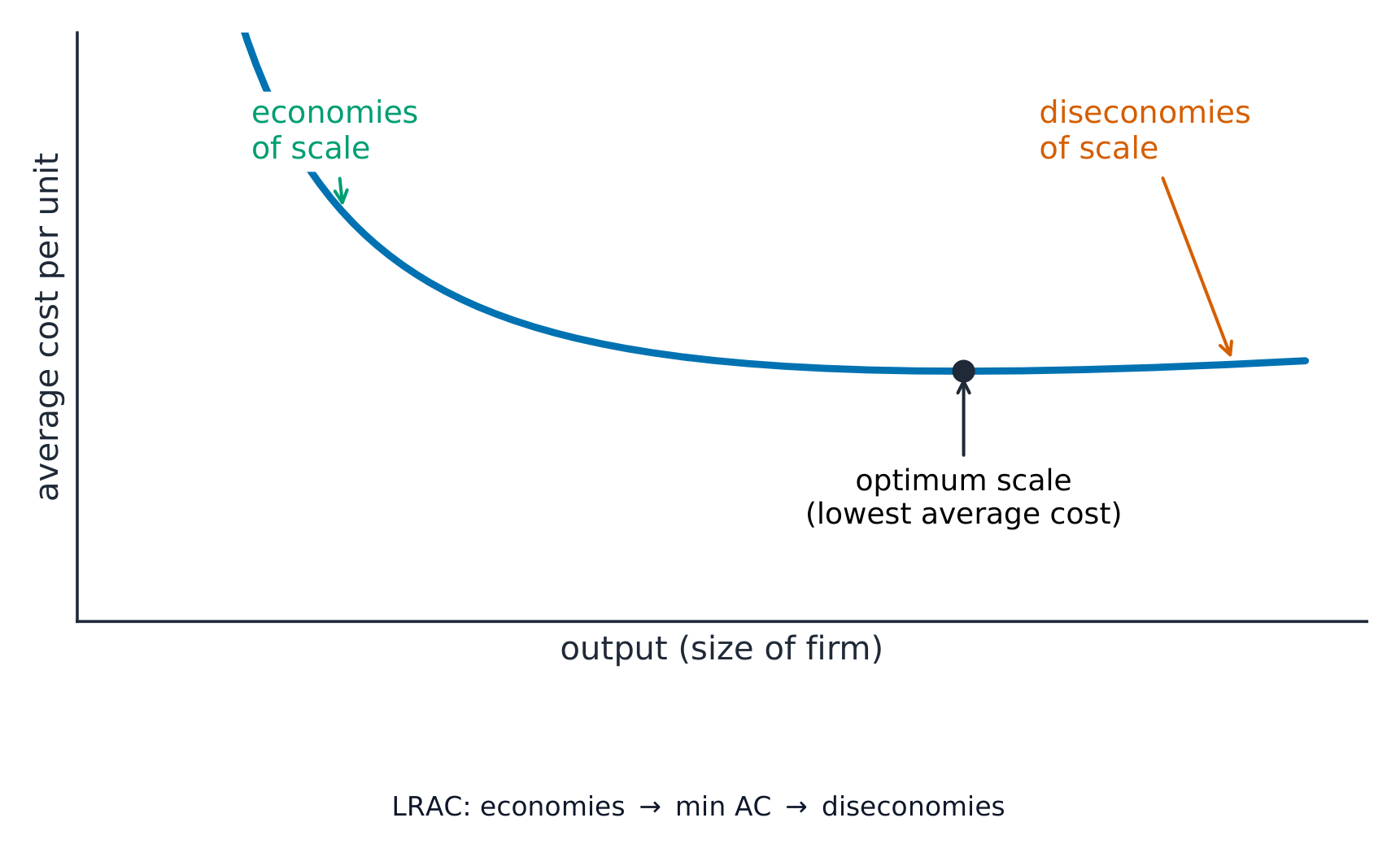 *التكلفة المتوسطة للوحدة تنخفض (وفورات الحجم) ثم ترتفع (عيوب الحجم) مع نمو الشركة

