Skip to content · ⁨الانتقال إلى المحتوى⁩

Space, Depth, and Proportion · ⁨المساحة والعمق والنسبة⁩

AP Drawing · ⁨الرسم (AP)⁩ · Topic 3 · ⁨الموضوع 3⁩

Video lesson for this topic · ⁨درس فيديو لهذا الموضوع⁩ Open the video page · ⁨افتح صفحة الفيديو⁩
7:45

المساحة والعمق والنسبة

انظر إلى هذا الطريق. حافتاه متوازيتان تماماً. لا يلتقيان أبداً. ولكن في هذه الصورة، يسيران معاً ويتلامسان، بعيداً. عيناك تقرأ العمق من…

English narration · English + 中文 subtitles burned in · ⁨سرد باللغة الإنجليزية · ترجمة مدمجة بالإنجليزية + الصينية⁩

3.1

Measuring and Sighting · ⁨القياس والملاحظة⁩

Syllabus · ⁨المنهج⁩
English

Focus: Sighting is measuring the subject with your pencil at arm's length — the observational drawing survival skill.

  • Hold the pencil at full arm's length, lock the elbow, close one eye: now it is a ruler and a protractor.
  • Pick one unit (often the head, or a cup's height) and measure everything in that unit: comparative measurement.
  • Check angles by rotating the pencil to match an edge, then carrying that angle to the paper.
  • Plumb lines (vertical checks) and level lines (horizontal checks) locate landmarks above and below each other.
  • Draw envelope shapes first: the big simple shape that contains the whole subject, then divide it.
  • Measured accuracy is visual evidence of space and proportion control in the AP rubric's drawing skills.
العربية

التركيز: الرصد هو قياس الموضوع بقلمك على بُعد ذراع ممدود — وهي مهارة البقاء الأساسية في الرسم observational.

  • امسك القلم على بُعد ذراع كامل، وثبّت الكوع، وأغلق عيناً واحدة: حينها يصبح القلم مسطرة ومدرجة زوايا.
  • اختر وحدة قياس واحدة (غالباً رأس الرأس أو ارتفاع كوب) وقياس كل شيء بهذه الوحدة: القياس المقارن.
  • تحقق من الزوايا عن طريق تدوير القلم لمحاكاة الحافة، ثم نقل تلك الزاوية إلى الورق.
  • خطوط السقوط العمودي (فحوصات عمودية) وخطوط المستوى (فحوصات أفقية) تحدد المعالم فوق بعضها البعض وأسفلها.
  • ارسم أشكال الغلاف أولاً: الشكل الكبير البسيط الذي يحتوي على الموضوع بأكمله، ثم قسّمه.
  • دقة القياس هي دليل بصري على التحكم في المكان والنسبة في معايير التقييم AP لمهارات الرسم.

Source: College Board AP Course and Exam Description · ⁨المصدر: وصف دورة وامتحان College Board AP⁩

English

Sighting 目测 means measuring the subject with your pencil at arm's length — the survival skill of observational drawing.

  • Hold the pencil at full arm's length with a locked elbow and one eye closed: now it is a ruler and a protractor.
  • Pick one unit (often the head, or a cup's height) and measure everything in that unit — comparative measurement 比较测量.
  • Check angles by rotating the pencil to match an edge, then carrying that angle to the paper.
  • A plumb line 铅垂线 (an imagined vertical) shows which landmarks sit exactly above or below each other.
  • Draw the envelope 外包形 first: the big simple shape that contains the whole subject, then divide it.
العربية

الملاحظة تعني قياس الموضوع بقلمك على بعد ذراع ممدود — وهي مهارة البقاء للرسم observational.

  • امسك القلم على طول الذراع بالكامل مع ثبات المرفق وعين واحدة مغلقة: الآن هو مسطرة وبروجكتر.
  • اختر وحدة واحدة (غالباً الرأس، أو ارتفاع كوب) وقياس كل شيء بهذه الوحدة — القياس المقارن.
  • تحقق من الزوايا عن طريق تدوير القلم لمحاكاة الحافة، ثم نقل تلك الزاوية إلى الورق.
  • الخط العمودي (عمودي متخيل) يظهر أي المعالم تقع بالضبط فوق بعضها البعض أو تحتها.
  • ارسم الغلاف أولاً: الشكل الكبير البسيط الذي يحتوي على الموضوع بأكمله، ثم قسمه.
3.2

One-Point Perspective · ⁨المنظور بنقطة واحدة⁩

Syllabus · ⁨المنهج⁩
English

Focus: Linear perspective turns the picture plane into a window: in one-point, all depth lines meet at a single vanishing point.

  • The horizon line is the viewer's eye level — everything above it we look up at, everything below we look down on.
  • Lines parallel to the picture plane stay true; lines going into the scene converge to the vanishing point.
  • Equal spaces look smaller as they recede — use the diagonal trick to divide receding space evenly.
  • One-point suits rooms, streets, and corridors seen straight-on.
  • Objects overlap and rise toward the horizon as they get further away — perspective plus overlap is depth doubled.
  • Perspective errors are easy to spot: check every depth line actually aims at the point.
العربية

التركيز: المنظور الخطي يحول سطح اللوحة إلى نافذة: في المنظور بنقطة واحدة، جميع خطوط العمق تلتقي عند نقطة اختفاء واحدة.

  • خط الأفق هو مستوى نظر المشاهد — كل ما فوقه ننظر إليه من الأسفل، وكل ما أسفله ننظر إليه من الأعلى.
  • الخطوط الموازية لسطح اللوحة تبقى كما هي؛ الخطوط التي تتجه إلى داخل المشهد تتلاقى نحو نقطة الاختفاء.
  • المسافات المتساوية تبدو أصغر كلما ابتعدت — استخدم الحيل القطرية لتقسيم الفضاء المتراجع بالتساوي.
  • المنظور بنقطة واحدة مناسب للغرف والشوارع والممرات المرئية من الأمام مباشرة.
  • الأجسام تتداخل وترتفع نحو الأفق كلما ابتعدت — المنظور بالإضافة إلى التداخل يضاعف العمق.
  • أخطاء المنظور سهلة الكشف عنها: تحقق من أن كل خط عمق يتجه فعلياً إلى النقطة.

Source: College Board AP Course and Exam Description · ⁨المصدر: وصف دورة وامتحان College Board AP⁩

English
One-point perspective

Linear perspective 线性透视 treats the picture as a window. In one-point perspective, all lines going into the depth meet at a single point.

  • The horizon line 视平线 is the viewer's eye level. We look down on everything below it and up at everything above it.
  • Lines parallel to the picture surface stay true; lines going into the scene converge to the vanishing point 灭点.
  • Equal spaces look smaller as they recede. Use diagonals to divide receding space evenly.
  • One-point perspective 一点透视 suits rooms, streets, and corridors seen straight-on.
  • Perspective plus overlap 遮挡 is depth doubled: near edges cover far edges.
العربية
المنظور بنقطة واحدة

المنظور الخطي يعامل الصورة كنافذة. في المنظور بنقطة واحدة، جميع الخطوط التي تذهب في العمق تلتقي عند نقطة واحدة.

طريق صحراوي طويل ومستقيم يمتد مباشرة نحو الأفق، حيث تتقلص حوافه لتلتقي في نقطة واحدة
طريق صحراوي مستقيم: حافتاه تبدوان وكأنهما يلتقيان عند نقطة اختفاء واحدة على الأفق، تماماً المنظور بنقطة واحدة الذي يعيد الرسم إنشاءه لإظهار العمق
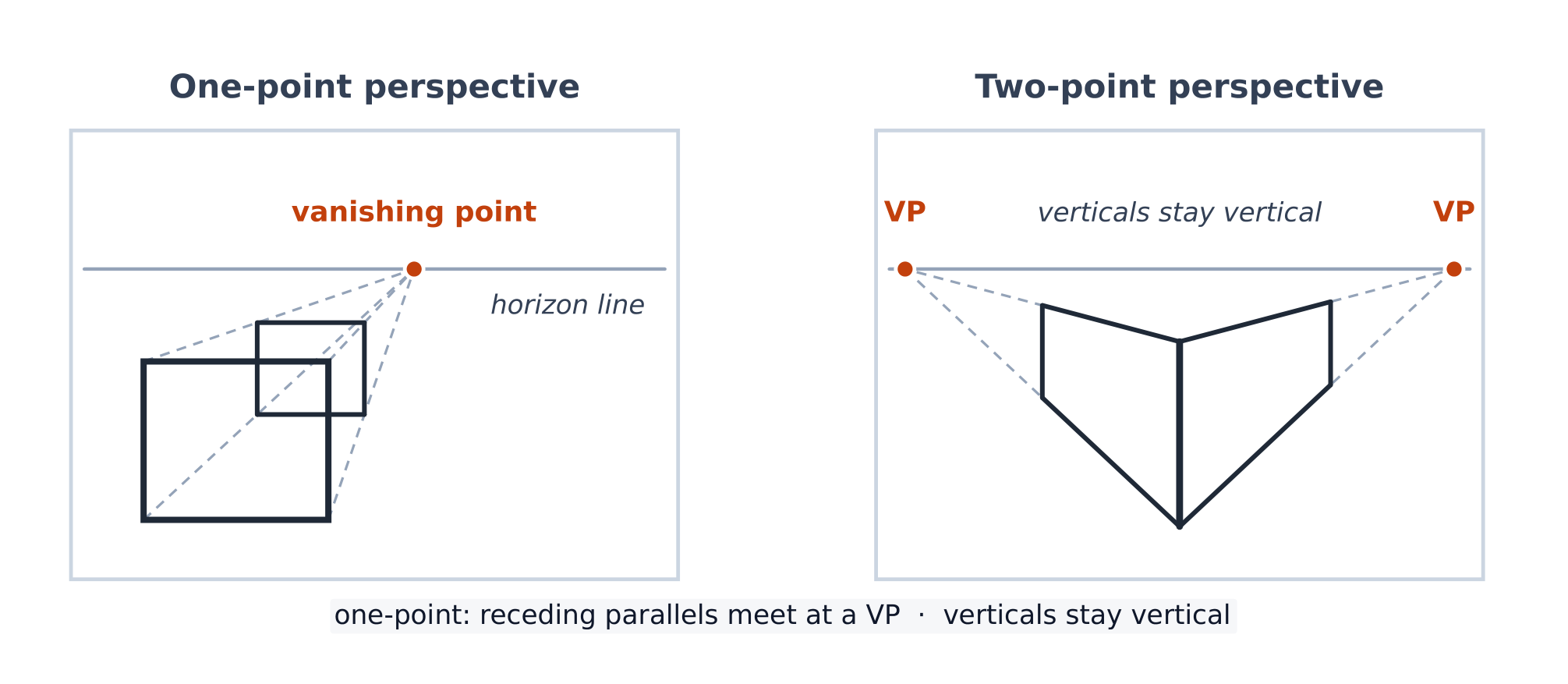
المنظور بنقطة واحدة ونقطتين: خط الأفق، ونقاط التلاشي، والحواف المتقاربة
يسار: منظور نقطة واحدة — خطوط العمق تلتقي عند نقطة اختفاء واحدة. يمين: منظور نقطتين — كل مجموعة من الحواف تلتقي بنقطة خاصة بها
  • خط الأفق هو مستوى نظر المشاهد. ننظر إلى الأسفل لكل ما تحته وإلى الأعلى لكل ما فوقه.
  • الخطوط الموازية لسطح الصورة تبقى صحيحة؛ الخطوط التي تذهب إلى داخل المشهد تتقارب نحو نقطة الاختفاء.
  • المسافات المتساوية تبدو أصغر كلما ابتعدت. استخدم القطر لتقسيم الفضاء المتراجع بالتساوي.
  • المنظور بنقطة واحدة مناسب للغرف والشوارع والممرات المرئية بشكل مستقيم.
  • المنظور بالإضافة إلى التداخل يضاعف العمق: الحواف القريبة تغطي الحواف البعيدة.
Vocabulary · ⁨مفردات⁩ Train · ⁨تدريب⁩
English العربية
one-point perspective/wʌn pɔɪnt pəˈspektɪv/ المنظور نقطة واحدة
overlap/ˌəʊvəˈlæp/ التداخل
3.3

Two-Point and Three-Point Perspective · ⁨المنظور بنقطتين وثلاث نقاط⁩

Syllabus · ⁨المنهج⁩
English

Focus: Turn the subject at an angle and you need two vanishing points; look steeply up or down and you need a third.

  • In two-point, verticals stay vertical; both sets of horizontal edges converge to left and right points on the horizon.
  • Keep both vanishing points far apart (often off the paper) — close points create fisheye distortion.
  • Three-point adds a vertical vanishing point: skyscrapers from below (looking up) or street scenes from a rooftop (looking down).
  • Boxes drawn in perspective become the scaffolding for everything: buildings, books, vehicles, even heads.
  • Cast shadows and reflections follow the same perspective system as the objects that make them.
  • A perspective grid underdrawing keeps complex scenes consistent — construct lightly, render on top.
العربية

التركيز: إذا حولت الموضوع بزاوية ستحتاج إلى نقطتي اختفاء؛ إذا نظرت بشدة للأعلى أو للأسفل ستحتاج إلى نقطة ثالثة.

  • في المنظور بنقطتين، تظل الخطوط الرأسية رأسية؛ كلا مجموعتي الحواف الأفقية تتلاقى نحو نقطتين على الأفق (يمين ويسار).
  • أبعد بين نقطتي الاختفاء قدر الإمكان (غالباً خارج الورقة) — النقاط القريبة تخلق تشويهاً يشبه عدسة السمكة.
  • يضيف المنظور بثلاث نقاط نقطة اختفاء رأسية: ناطحات السحاب من الأسفل (النظر للأعلى) أو مشاهد شوارع من السطح (النظر للأسفل).
  • الصناديق المرسومة بالمنظور تصبح الهيكل العظمي لكل شيء: مباني، كتب، مركبات، حتى الرؤوس.
  • الظلال المنعكسة والانعكاسات تتبع نفس نظام المنظور الخاص بالأجسام التي تنتجها.
  • شبكة المنظور للرسم التحضيري تحافظ على اتساق المشاهد المعقدة — قم بالبناء بخفة، ثم اكتب التفاصيل فوقها.

Source: College Board AP Course and Exam Description · ⁨المصدر: وصف دورة وامتحان College Board AP⁩

English
Two-point perspective

Turn the subject at an angle and you need two-point perspective 两点透视; look steeply up or down and you need a third point.

  • In two-point, verticals stay vertical; the two sets of horizontal edges converge to a left and a right vanishing point on the horizon.
  • Keep the two points far apart — often off the paper. Points placed too close create a fisheye distortion.
  • Three-point perspective 三点透视 adds a vertical vanishing point: a skyscraper from below, or a street from a rooftop.
  • Boxes drawn in perspective become scaffolding for everything: buildings, books, vehicles, even heads.
  • Cast shadows and reflections obey the same perspective system as the objects that make them.
العربية
منظور نقطتين

أدرّ العنصر بميل ستحتاج إلى منظور نقطتين؛ وانظر بعمق للأعلى أو للأسفل وستحتاج إلى نقطة ثالثة.

  • في منظور نقطتين، الخطوط الرأسية تبقى رأسية؛ المجموعتان من حواف أفقية تتقاربان نحو نقطة اختفاء يسرى وجمهورية على الأفق.
  • أبعد النقطتين عن بعضهما البعض — غالباً خارج الورق. النقاط الموضوعة قريبة جداً تخلق تشويهاً مثل عدسة السمكة.
  • المنظور ثلاثي النقاط يضيف نقطة تباين رأسية: ناطحة سحاب من الأسفل، أو شارع من سطح مبنى.
  • الصناديق المرسومة بالمنظور تصبح سقالات لكل شيء: مباني، كتب، مركبات، بل ورؤوس أيضًا.
  • الظلال المنسكبة والعكسات تخضع لنفس نظام المنظور الذي تحكمه الأجسام التي تُنتجها.
Vocabulary · ⁨مفردات⁩ Train · ⁨تدريب⁩
English العربية
two-point perspective/tuː pɔɪnt pəˈspektɪv/ المنظور نقطتين
three-point perspective/θriː pɔɪnt pəˈspektɪv/ المنظور ثلاث نقاط
foreshortening/fɔːˈʃɔːtənɪŋ/ الاختصار المنظوري
cross-sections/krɒs ˈsekʃnz/ مقاطع عرضية
3.4

Foreshortening · ⁨التقصير المنظوري⁩

Syllabus · ⁨المنهج⁩
English

Focus: Foreshortening is perspective applied to a single form pointing toward you — lengths compress dramatically.

  • A pointing arm may appear one-third of its true length: draw the apparent shape, not the known one.
  • Overlap is the key signal: the hand overlaps the forearm, the forearm overlaps the upper arm.
  • Think in cross-sections: imagine rings around the form (like a wireframe) to feel how it turns toward you.
  • Measure foreshortened lengths by sighting — knowledge lies, observation tells the truth.
  • Classic practice: draw a figure lying down feet-first (like Mantegna's Dead Christ).
  • Strong foreshortening is high-difficulty visual evidence — examiners recognise the skill immediately.
العربية

التركيز: التشويه المنظوري هو تطبيق المنظور على شكل واحد يتجه نحوك — حيث تنضغط الأطوال بشكل كبير.

  • قد يبدو الذراع الممتدة ثلث طولها الحقيقي: ارسم الشكل الظاهر وليس الشكل المعروف.
  • التداخل هو الإشارة الرئيسية: اليد تتداخل مع الساعد، والساعد يتداخل مع العضد.
  • فكر في المقاطع العرضية: تخيل حلقات حول الشكل (مثل الهيكل الشبكي) لإحساس كيف يلتفت نحوك.
  • قِس الأطوال المشوهة بالمنظور عن طريق الرصد — المعرفة قد تضلل، لكن الرصد يقول الحقيقة.
  • ممارسة كلاسيكية: ارسم شخصية مستلقية بأقدامها نحوك (مثل لوحة mantegna's Dead Christ).
  • التشويه المنظوري القوي هو دليل بصري عالي الصعوبة — يتعرف عليه المصححون فوراً.

Source: College Board AP Course and Exam Description · ⁨المصدر: وصف دورة وامتحان College Board AP⁩

English

Foreshortening 透视缩短 is perspective applied to a single form pointing toward you — lengths compress dramatically.

  • A pointing arm may appear one-third of its true length. Draw the apparent shape, not the length you know.
  • Overlap is the key signal: the hand overlaps the forearm, the forearm overlaps the upper arm.
  • Think in cross-sections 横截面: imagine rings around the form, like a wireframe, to feel how it turns toward you.
  • Measure foreshortened lengths by sighting — memory lies, observation tells the truth.
  • The classic practice piece: a figure lying down, drawn feet-first, like Mantegna's Dead Christ.
العربية

التقصير المنظوري هو تطبيق المنظور على شكل واحد يتجه نحوك — حيث تنضغط الأطوال بشكل كبير.

  • قد يبدو الذراع الممتدة ثلث طوله الحقيقي. ارسم الشكل الظاهر، لا الطول الذي تعرفه.
  • التداخل هو الإشارة الرئيسية: اليد تتداخل مع الساعد، والساعد يتداخل مع العضد.
  • فكر في المقاطع العرضية: تخيل حلقات حول الشكل، كإطار شبكي، لتحس كيف يلتفت نحوك.
  • قِس الأطوال المُقصَّرة المنظوريًا عن طريق النظر (sighting) — فالذاكرة تخطئ، والملاحظة تقول الحقيقة.
  • قطعة التدريب الكلاسيكية: شخص مستلقٍ، مرسومًا بدءًا من القدمين، مثل لوحة المسيح الميت لمانتيغنا.
Vocabulary · ⁨مفردات⁩ Train · ⁨تدريب⁩
English العربية
sighting/ˈsaɪtɪŋ/ رؤية / منظور بصري
comparative measurement/kəmˈpærətɪv ˈmeʒəmənt/ قياس نسبي
plumb line/plʌm laɪn/ خط مسقط
envelope/ˈenvələʊp/ غلاف
linear perspective/ˈlɪnɪə pəˈspektɪv/ المنظور الخطي
horizon line/həˈraɪzn laɪn/ خط الأفق
vanishing point/ˈvænɪʃɪŋ pɔɪnt/ نقطة التلاشي
3.5

Atmospheric Perspective · ⁨المنظور الجوي⁩

Syllabus · ⁨المنهج⁩
English

Focus: Atmospheric (aerial) perspective creates depth without lines: distant things are lighter, cooler, softer, and less detailed.

  • Air scatters light, so contrast fades with distance — the far mountain is a pale flat shape.
  • Foreground: darkest darks, sharpest edges, most texture; background: narrow value range, soft edges.
  • Reserve full black and full white for the foreground; the distance lives in the middle greys.
  • Detail density is a depth cue by itself — render the near leaf, suggest the far tree.
  • Combine linear and atmospheric perspective for maximum depth in landscape and cityscape drawing.
  • This is the AP skill space made visible through light and shade — two rubric skills in one device.
العربية

التركيز: المنظور الجوي (الهوائي) يخلق عمقاً بدون خطوط: الأشياء البعيدة تكون أخف، أكثر برودة، أكثر نعومة، وأقل تفصيلاً.

  • الهواء يشتت الضوء، لذا يتلاشى التباين مع المسافة — الجبل البعيد هو شكل باهت مسطح.
  • المقدمة: أغمس الأغماس، sharper edges, more texture; الخلفية: نطاق قيمة ضيق، حواف ناعمة.
  • احفظ الأسود الكامل والأبيض الكامل للمقدمة؛ المسافة تعيش في الرمادي المتوسط.
  • كثافة التفاصيل هي مؤشر للعمق بحد ذاتها — صوّر ورقة شجر قريبة، وأشر إلى شجرة بعيدة.
  • ادمج المنظور الخطي والمنظور الجوي لأقصى عمق في رسم المناظر الطبيعية والمدن.
  • هذه هي مهارة AP المكان أصبحت مرئية من خلال الإضاءة والظل — مهارتان في معيار التقييم في جهاز واحد.

Source: College Board AP Course and Exam Description · ⁨المصدر: وصف دورة وامتحان College Board AP⁩

English
Atmospheric perspective

Atmospheric perspective 空气透视 creates depth without any lines: distant things become lighter, cooler, softer, and less detailed.

  • Air scatters light, so contrast fades with distance. The far mountain is a pale, flat shape.
  • Foreground: darkest darks, sharpest edges, most texture. Background: a narrow value range and soft edges.
  • Save full black and full white for the foreground; the distance lives in the middle greys.
  • Detail density is a depth cue by itself: render the near leaf, suggest the far tree.
  • Combine linear and atmospheric perspective for maximum depth in landscape drawing.
العربية
المنظور الجوي

المنظور الجوي يُنشئ عمقاً بدون أي خطوط: الأشياء البعيدة تصبح أفتح، وأبرد، وأنعم، وأقل تفصيلاً.

  • الهواء يشتت الضوء، لذا يتلاشى التباين مع المسافة. الجبل البعيد هو شكل باهت ومسطح.
  • المقدمة: أشد الداكنات، وأ sharper الحواف، وأكثر النصوصية. الخلفية: نطاق قيم ضيق وحواف ناعمة.
  • احفظ الأسود الكامل والأبيض الكامل للمقدمة؛ أما المسافة فتعيش في الرمادي المتوسط.
  • كثافة التفاصيل هي مؤشر عمق بحد ذاتها: صوّر الورقة القريبة، وأشر إلى الشجرة البعيدة.
  • اجمع بين المنظور الخطي والجوي لأقصى عمق في رسم المناظر الطبيعية.
أحزمة الجبال المتدرجة تتلاشى مع المسافة: المنظور الجوي يُبرّد ويُضيء الأشكال البعيدة
Explore · ⁨استكشف⁩

Which depth cue is at work? · ⁨أي مؤشر عمق يعمل هنا؟⁩

Drawings create depth several ways at once: linear perspective (lines converge), atmospheric perspective (distance fades and softens), overlap (near covers far), and foreshortening (forms compress toward you). · ⁨تخلق الرسومات عمقاً بعدة طرق في آن واحد: المنظور الخطي (تتلاقى الخطوط)، والمنظور الجوي (تختفي المسافات وتصبح ناعمة)، والتداخل (القريب يغطي البعيد)، والقص العمودي (تتنPRESS الأشكال نحوك).⁩

Vocabulary · ⁨مفردات⁩ Train · ⁨تدريب⁩
English العربية
atmospheric perspective/ˌætməsˈferɪk pəˈspektɪv/ المنظور الجوي
composition/ˌkɒmpəˈzɪʃn/ التركيب
picture plane/ˈpɪktʃə pleɪn/ مستوى الصورة
rule of thirds/ruːl ɒv θɜːdz/ قاعدة الثلثات
negative space/ˈneɡətɪv speɪs/ المساحة السلبية
figure-ground relationship/ˈfɪɡə ɡraʊnd rɪˈleɪʃənʃɪp/ العلاقة بين الشكل والخلفية
3.6

Composition and the Picture Plane · ⁨التركيب وسطح الصورة⁩

Syllabus · ⁨المنهج⁩
English

Focus: Composition — how everything is arranged inside the picture's edges — is a named AP drawing skill and the first thing a scorer sees.

  • The picture plane has edges: what you crop out is as expressive as what you keep in.
  • The rule of thirds places focal points on the third-lines — safer than dead centre.
  • Control the figure-ground relationship: negative space is a designed shape, not leftover paper.
  • Lead the eye with paths: lines, value contrast, and detail act as arrows toward the focal point.
  • Vary the viewpoint — eye level is neutral; a low or high viewpoint makes an ordinary subject fresh.
  • Test compositions with a viewfinder or phone camera crop before committing to the page.
العربية

التركيز: التركيب — كيفية ترتيب كل شيء داخل حواف الصورة — هي مهارة رسم AP محددة وهي أول ما يراه المصحح.

  • مستوى الصورة له حواف: ما تقصه كما معبر عما تحتفظ به.
  • قاعدة الثلثات تضع نقاط التركيز على خطوط الثلثات — وهي أكثر أماناً من المركز الدقيق.
  • تحكم في العلاقة بين الشكل والخلفية: الفراغ السلبي هو شكل مصمم، وليس ورقاً متبقياً.
  • وجه العين بمسارات: الخطوط وتباين القيمة والتفاصيل تعمل كأسهم نحو نقطة التركيز.
  • غيّر وجهة النظر — مستوى العين محايد؛ وجهة نظر منخفضة أو مرتفعة تجعل موضوعاً عادياً جديداً.
  • اختبر التراكيب باستخدام إطار عرض أو قص صورة الكاميرا الهاتفية قبل الالتزام بالصفحة.

Source: College Board AP Course and Exam Description · ⁨المصدر: وصف دورة وامتحان College Board AP⁩

English

Composition 构图 — the arrangement of everything inside the picture's edges — is a named AP drawing skill and the first thing a scorer sees.

  • The picture plane 画面 has edges: what you crop out is as expressive as what you keep in.
  • The rule of thirds 三分法 places focal points on the third-lines — stronger than dead centre.
  • Design the negative space 负空间: the empty shapes around the subject are shapes you drew, not leftovers.
  • The figure-ground relationship 图底关系 must stay readable: the eye should always know what is subject and what is background.
  • Lead the eye with paths — lines, value contrast, and detail act as arrows toward the focal point.
  • Test crops with a viewfinder 取景框 (or a phone camera) before committing to the page. Change the viewpoint 视点: eye level is neutral; low or high angles make ordinary subjects fresh.
العربية

التركيب — ترتيب كل شيء داخل حواف الصورة — هو مهارة رسم AP مُصنفة وتُعد أول ما يراه المصحح.

  • مستوى الصورة له حواف: ما تقصه كما معبر عما تحتفظ به.
  • قاعدة الثلثات تضع نقاط التركيز على خطوط الثلثات — وهي أقوى من المركز الدقيق.
  • صمّم المساحة السلبية: الأشكال الفارغة حول الموضوع هي أشكال رسمتها أنت، وليست بقايا.
  • يجب أن يبقى العلاقة بين الشكل والخلفية واضحة: يجب أن يعرف العين دائمًا ما هو الموضوع وما هو الخلفية.
  • وجه العين عبر مسارات — تعمل الخطوط، وتباين القيم، والتفاصيل كأسهم نحو النقطة المحورية.
  • اختبر القص باستخدام منظار viewfinder (أو كاميرا الهاتف) قبل الالتزام بالورقة. غيّر زاوية الرؤية: مستوى العين محايد؛ الزوايا المنخفضة أو المرتفعة تجعل Subjects العادية جديدة.
Vocabulary · ⁨مفردات⁩ Train · ⁨تدريب⁩
English العربية
viewfinder/ˈvjuːfaɪndə/ منظار
viewpoint/ˈvjuːpɔɪnt/ نقطة النظر
3.7

Drawing the Figure and Portrait · ⁨رسم الجسم والبورتريه⁩

Syllabus · ⁨المنهج⁩
English

Focus: The figure combines every drawing skill at once — proportion, gesture, form, and likeness under one deadline.

  • The classic adult figure stands about 7.5 heads tall; the halfway point is near the hip, not the waist.
  • In the head, eyes sit at the halfway line of the skull — the beginner error is placing them too high.
  • Start with gesture and the big masses (ribcage, pelvis, skull); features and fingers come last.
  • Sight-size checks save likeness: compare distances between landmarks, not memorised rules alone.
  • Hands and feet earn their reputation — draw them as simple geometric mittens/wedges first, then divide.
  • Figure and portrait work is a portfolio staple: it demonstrates observation, proportion, and nerve.
العربية

التركيز: الشخصية تجمع كل مهارات الرسم مرة واحدة — النسبة، الإيماء، الشكل، والتشابه تحت限时 واحد.

  • تقف الشخصية البالغة الكلاسيكية حوالي 7.5 رؤوس طوله؛ نقطة المنتصف تكون بالقرب من الورك، ليس الخصر.
  • في الرأس، تقع العيون عند الخط الأوسط للجمجمة — خطأ المبتدئ هو وضعها عالياً جداً.
  • ابدأ بالإيماءة والكتل الكبيرة (قفص الصدغ، الحوض، الجمجمة)؛ ثم تأتي التفاصيل الأصغر والأصابع في النهاية.
  • فحوصات الحجم الفعلي تحفظ التشابه: قِس المسافات بين المعالم، لا فقط القواعد المحفوظة في الذاكرة.
  • اليدين والقدم تكسبان سمعتها — ارسمهما كأقفالة/مخاريط هندسية بسيطة أولاً، ثم قسّمهما.
  • عمل رسم الشخصية والمشهد هو عنصر أساسي في المحفظة: فهو يظهر الملاحظة والنسبة والشجاعة.

Source: College Board AP Course and Exam Description · ⁨المصدر: وصف دورة وامتحان College Board AP⁩

English

The human figure combines every drawing skill at once: proportion 比例, gesture, form, and likeness under one deadline.

  • The classic adult figure stands about 7.5 heads tall; the halfway point of the body is near the hip, not the waist.
  • In the head, the eyes sit at the halfway line 中线 of the skull — beginners always place them too high.
  • Start with gesture and the big masses (ribcage, pelvis, skull); features and fingers come last.
  • Check likeness with landmark distances, not memorised rules alone — every face bends the average.
  • Draw hands and feet as simple geometric mittens and wedges first, then divide them into parts.
العربية

الجسم البشري يجمع كل مهارات الرسم في آن واحد: النسب، الإيماءة، الشكل، والتشابه تحت موعد نهائي واحد.

نسب الجسم والرأس: جسم واقف ارتفاعه حوالي 7.5 رؤوس؛ العيون عند خط منتصف الجمجمة
الجسم البشري الكلاسيكي ارتفاعه حوالي 7.5 رؤوس؛ في الرأس، تقع العيون عند خط المنتصف
  • يقف الجسم البشري الكلاسيكي حوالي 7.5 رؤوس ارتفاعًا؛ النقطة الوسطى للجسم تكون قرب الورك، ليس الخصر.
  • في الرأس، تقع العيون عند خط المنتصف للجمجمة — المبتدئون يضعونها دائمًا أعلى من اللازم.
  • ابدأ بالإيماءة والكتل الكبيرة (قفص الصدغ، الحوض، الجمجمة)؛ ثم تأتي التفاصيل الأصغر والأصابع في النهاية.
  • تحقق من التشابه باستخدام مسافات المعالم، لا القواعد المحفوظة وحدها — كل وجه ينحرف عن المتوسط.
  • ارسم اليدين والقدمين كمفاصل هندسية بسيطة وقطع مخروطية أولاً، ثم قسمهما إلى أجزاء.
Vocabulary · ⁨مفردات⁩ Train · ⁨تدريب⁩
English العربية
proportion/prəˈpɔːʃn/ نسبة
halfway line/ˈhɑːfweɪ laɪn/ خط المنتصف
3.7

Exam tips · ⁨نصائح للامتحان⁩

English
  • Perspective errors are the easiest mistakes for a scorer to spot — check every depth line actually aims at its vanishing point before you render.
  • Include one strong observational space (an interior, a stairwell, a street) in the portfolio: it demonstrates the space skill the rubric names, unmistakably.
  • Foreshortening is high-value evidence. One convincing foreshortened limb or object tells scorers you draw what you see, not what you remember.
  • Crop like a designer. Before starting, test three viewfinder crops and pick the one with the strongest negative space — composition is judged at first glance.
  • Use atmospheric perspective in graphite too, not just paint: softening far edges with a kneaded eraser is quick and reads as skill.
العربية
  • أخطاء المنظور هي أسهل الأخطاء التي يمكن للمصحح اكتشافها — تحقق من أن كل خط عمق يستهدف فعليًا نقطة التباين الخاصة به قبل التصيير.
  • أدرج مساحة رصدية قوية واحدة (داخلي، سلم، شارع) في الملف الشخصي: هذا يُظهر مهارة المكان التي يذكرها المعيار، بلا لبس.
  • التقصير المنظوري هو دليل عالي القيمة. ذراع أو جسم واحد مُقصَّر منظوريًا مقنعًا يخبر المصححين أنك ترسم ما تراه، لا ما تتذكره.
  • قصّ كما يصمم المهندسون. قبل البدء، اختبر ثلاث قصص بمنظار viewfinder واختر الذي يحتوي على أقوى مساحة سلبية — يتم تقييم التركيب في نظرة أولى.
  • استخدم المنظور الجوي في الجرافيت أيضًا، وليس فقط في الألوان: تليين الحواف البعيدة بممحاة مطاطية مرنة سريع ويُقرأ كمهارة.

Interactive lessons on this topic · ⁨دروس تفاعلية حول هذا الموضوع⁩

Work through it step by step, with instant-check exercises. · ⁨ا-working عليه خطوة بخطوة، مع تمارين تحقق فوري.⁩

More topics in AP Drawing · ⁨الرسم (AP)⁩ · ⁨المزيد من المواضيع في AP Drawing · ⁨الرسم (AP)⁩⁩

Log in or create account · ⁨تسجيل الدخول أو إنشاء حساب⁩

IGCSE, A-Level & AP