Globalisation and trade restrictions · 全球化与贸易限制
| English | 中文 | Pinyin · 拼音 |
|---|---|---|
| globalisation/ˌɡləʊbəlaɪˈzeɪʃn/ | 全球化 | quán qiú huà |
| multinational companies/ˌmʌltɪˈnæʃənl ˈkʌmpəniz/ | 跨国公司 | kuà guó gōng sī |
| tariff/ˈtærɪf/ | 关税 | guān shuì |
| protectionism/prəˈtekʃənɪzəm/ | 贸易保护主义 | mào yì bǎo hù zhǔ yì |
| quota/ˈkwəʊtə/ | 配额 | pèi é |
| subsidy/ˈsʌbsɪdi/ | 补贴 | bǔ tiē |
| dumping/ˈdʌmpɪŋ/ | 倾销 | qīng xiāo |
| retaliation/rɪˌtælɪˈeɪʃn/ | 报复 | bào fù |
A more connected world
- A phone designed in California, made in China from parts across Asia, sold worldwide — that's globalisation 全球化.
- But governments sometimes try to block trade. Why, and how?
一个更紧密相连的世界
- 一部在加州设计、用亚洲各地的零件在中国制造、在全世界出售的手机——那就是全球化(globalisation)。
- 但政府有时试图阻止贸易。为什么,以及如何?
The growing integration of the world's economies is called . · 世界经济日益增长的一体化被称为。
Driven by trade, investment and technology. · 由贸易、投资和技术驱动。
Globalisation
- Globalisation = the growing integration of the world's economies through trade, investment and technology.
- It is driven by cheaper transport, the internet, and multinational companies 跨国公司.
A tariff 关税 raises the price from the world price to 'world price + tariff': domestic supply rises, demand falls, imports shrink, and the shaded box is the government's tariff revenue
全球化
- 全球化 = 世界经济通过贸易、投资和技术日益增长的一体化。
- 它由更便宜的运输、互联网和跨国公司驱动。

一项关税把价格从世界价格提高到"世界价格 + 关税":国内供给上升,需求下降,进口缩小,而阴影框是政府的关税收入
Trade restrictions in the market · 市场中的贸易限制
A tariff raises the price of imports, shifting effective supply and protecting home producers at consumers' expense. · 一项关税提高进口的价格,移动有效供给并以消费者为代价保护本国生产者。
A tariff is: · 一项关税是:
A tariff is an import tax; a quota is a quantity limit. · 关税是一种进口税;配额是一种数量限制。
A quota restricts trade by: · 一个配额通过以下限制贸易:
A quota caps the quantity of imports allowed. · 一个配额限制允许的进口数量。
Trade restrictions (protectionism 贸易保护主义)
- Tariff: a tax on imports, raising their price.
- Quota 配额: a limit on the quantity that can be imported.
- Subsidy 补贴 to domestic firms, and regulations, also restrict trade.
A tariff lifts the price of imports, so consumers buy fewer of them and more is made at home.
贸易限制(保护主义)
- 关税(tariff):一种对进口的税,提高它们的价格。
- 配额(quota):一种对能进口的数量的限制。
- 给国内企业的补贴(subsidy),和法规,也限制贸易。
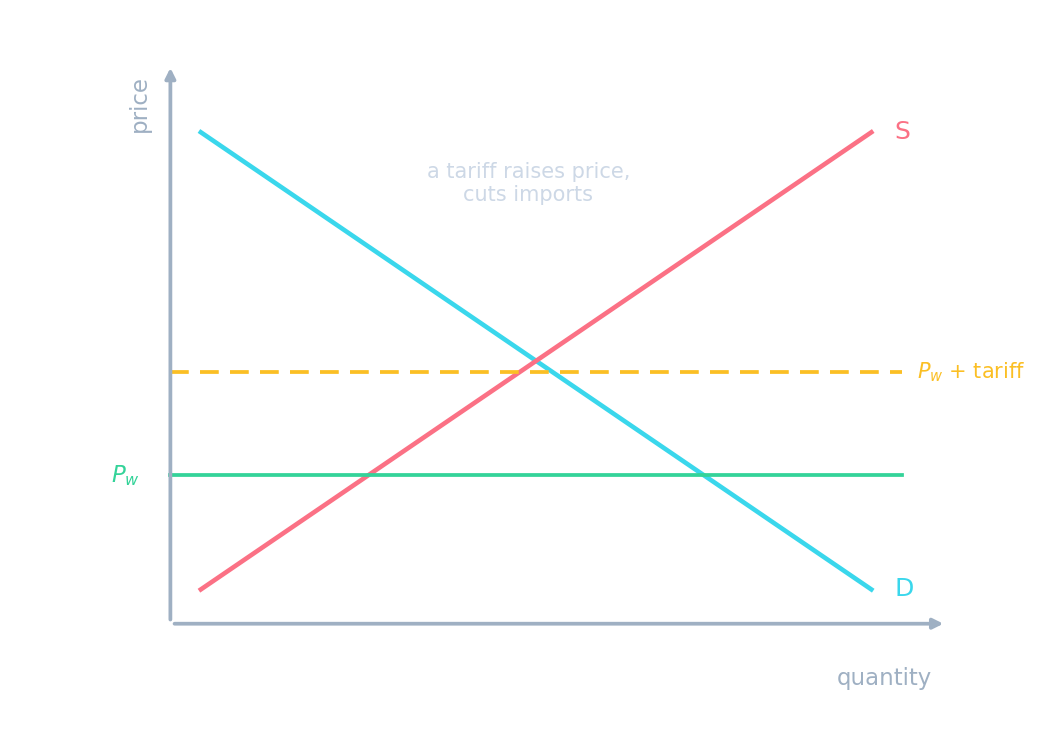
一项关税抬高进口的价格,所以消费者买更少的它们,更多的在国内制造。
Which are reasons governments restrict trade? (Select all that apply.) · 哪些是政府限制贸易的原因?(选择所有适用的。)
Protection tends to raise, not lower, domestic prices. · 保护倾向于提高而非降低国内价格。
Imposing tariffs can lead other countries to retaliate with their own. · 征收关税能导致其他国家用它们自己的报复。
Retaliation is a major risk of protectionism. · 报复是保护主义的一个主要风险。
Why restrict trade?
- To protect new ("infant") or declining industries and the jobs in them.
- To raise revenue and guard against dumping 倾销 (foreign goods sold below cost).
- But protection raises prices and can trigger retaliation 报复.
Protection has a cost. A tariff may save some home jobs, but consumers pay higher prices and other countries may retaliate with tariffs of their own. The gains are rarely free.
Exports are sold abroad; imports are bought from abroad
为什么限制贸易?
- 为了保护新的("幼稚"infant)或衰落的产业以及其中的工作。
- 为了筹集收入并防范倾销(dumping,外国物品以低于成本出售)。
- 但保护提高价格并能触发报复(retaliation)。
保护有一个成本。 一项关税可能挽救一些本国工作,但消费者支付更高的价格,而其他国家可能用它们自己的关税报复。收益很少是免费的。
You've got it
- globalisation = world economies integrating through trade, investment, technology
- tariffs (import taxes) and quotas (import limits) restrict trade
- protection saves some jobs but raises prices and risks retaliation
你掌握了
- 全球化 = 世界经济通过贸易、投资、技术一体化
- 关税(进口税)和配额(进口限制)限制贸易
- 保护挽救一些工作但提高价格并冒报复的风险