| English | 释义 | 拼音 |
|---|---|---|
| nervous system/ˈnɜːvəs ˈsɪstəm/ | 神经系统 | shén jīng xì tǒng |
| reflex/ˈriːfleks/ | 反射 | fǎn shè |
| central nervous system/ˈsentrəl ˈnɜːvəs ˈsɪstəm/ | 中枢神经系统 | zhōng shū shén jīng xì tǒng |
| spinal cord/ˈspaɪnl kɔːd/ | 脊髓 | jǐ suǐ |
| neurones/ˈnjuːrəʊnz/ | 神经元 | shén jīng yuán |
| sensory/ˈsensəri/ | 感觉的 | gǎn jué de |
| motor/ˈməʊtə/ | 运动的 | yùn dòng de |
| effector/ɪˈfektə/ | 效应器 | xiào yìng qì |
Lightning-fast messages
- Touch something hot and your hand jerks back before you even feel pain.
- Your nervous system 神经系统 carries electrical messages at high speed — and reflexes 反射 are the fastest of all.
The central nervous system (CNS) consists of the:
难度 1/5 · 今日首次完成可获 100 金币及少量额外奖励
The CNS is the brain and spinal cord.
The nervous system
- The central nervous system 中枢神经系统 (CNS) is the brain and spinal cord 脊髓.
- Neurones 神经元 (nerve cells) carry electrical impulses to and from the CNS.
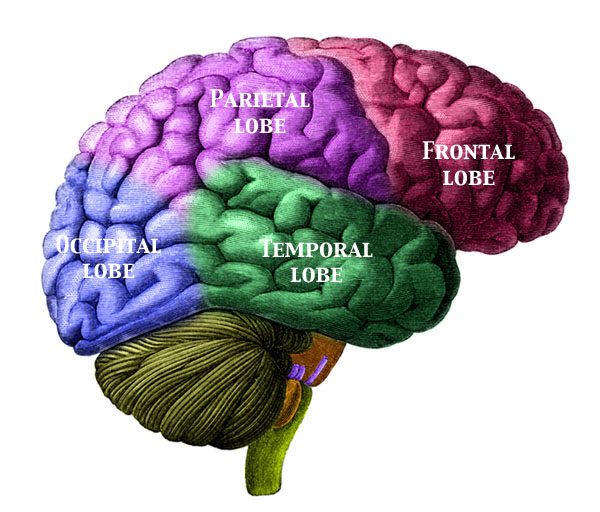
The brain coordinates the body through the nervous system
The reflex arc
A reflex is a fast, automatic response — the signal takes a short cut through the spinal cord.
A motor neurone carries impulses:
难度 1/5 · 今日首次完成可获 100 金币及少量额外奖励
Motor neurones go from the CNS to muscles or glands.
The neurone carrying impulses from a receptor to the CNS is the ______ neurone.
难度 1/5 · 今日首次完成可获 100 金币及少量额外奖励
Sensory neurones carry signals into the CNS.
Three types of neurone
- Sensory 感觉的 neurones carry impulses from receptors to the CNS.
- Relay neurones pass them on inside the CNS.
- Motor 运动的 neurones carry impulses from the CNS to effectors 效应器 (muscles/glands).
Put the reflex arc in order.
难度 3/5 · 今日首次完成可获 200 金币及少量额外奖励
Stimulus → receptor → sensory → relay → motor → effector → response.
A reflex action is fast and automatic, not consciously controlled.
难度 1/5 · 今日首次完成可获 100 金币及少量额外奖励
Reflexes protect the body before conscious thought.
The reflex arc
- A reflex is a fast, automatic response that protects the body.
- The impulse travels: stimulus → receptor → sensory → relay → motor → effector → response.
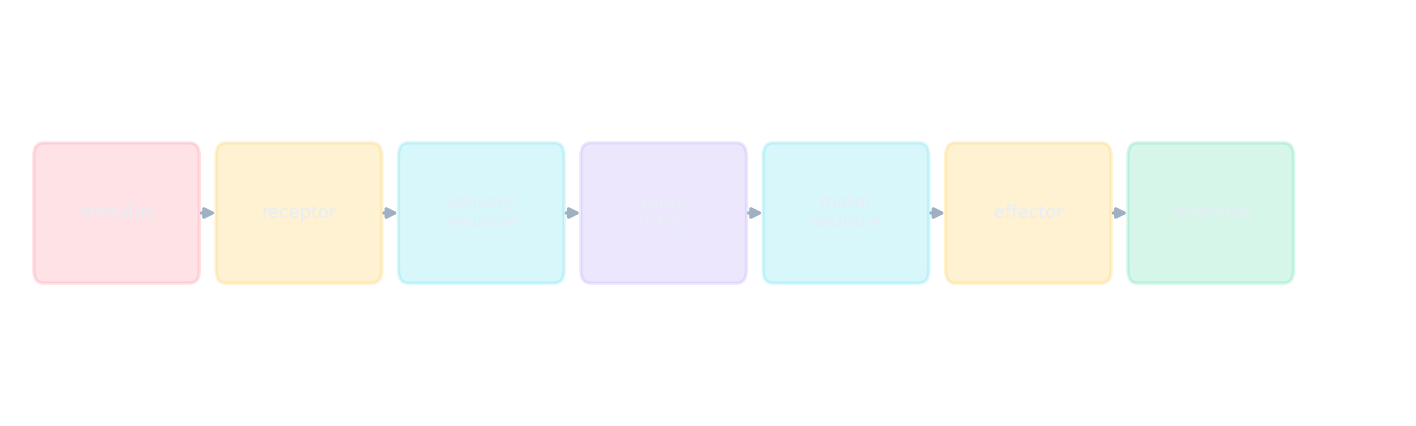
A reflex follows a fixed pathway — fast and automatic, bypassing conscious thought.
Reflexes don't wait for the brain to decide. The signal goes through the spinal cord and back, so the response happens before you consciously think — which is what makes reflexes so fast and protective.
Worked example: a hand on a hot pan
You touch a hot pan and pull your hand away before you feel the pain. Trace the reflex arc.
- Stimulus: heat. Receptor: heat-sensitive nerve endings in the skin. Sensory neurone carries impulses to the spinal cord, where a relay neurone passes them straight to a motor neurone.
- The motor neurone carries impulses to the effector, a muscle in the arm, which contracts and pulls the hand away. Because the path skips the conscious parts of the brain, it is fast and automatic; the brain learns of the pain a moment later.
In the knee-jerk reflex, what is the effector?
难度 1/5 · 今日首次完成可获 100 金币及少量额外奖励
The effector is the muscle or gland that responds.
Impulses cross a synapse by a chemical that diffuses across the gap, so they travel in one direction only.
难度 1/5 · 今日首次完成可获 100 金币及少量额外奖励
The chemical is released on one side only and binds receptors on the other.
You've got it
- the CNS = brain + spinal cord; neurones carry electrical impulses
- three neurones: sensory (in), relay (CNS), motor (out)
- a reflex arc: stimulus → receptor → sensory → relay → motor → effector → response
Write from this case
- A receptor detects a sharp pin.
- A muscle pulls the hand away.
Which neurone reaches the muscle, and what makes up the CNS?
The direction of the impulse names the neurone.
Which neurone carries an impulse to a muscle?
难度 1/5 · 今日首次完成可获 100 金币及少量额外奖励
Motor neurones run out to effectors.