Copying and sorting DNA · 复制和分拣 DNA
| English | 中文 | Pinyin · 拼音 |
|---|---|---|
| amplify/ˈæmplɪfaɪ/ | 扩增 | kuò zēng |
| gel electrophoresis/dʒel ɪˌlektrəʊfɔːˈriːsɪs/ | 凝胶电泳 | níng jiāo diàn yǒng |
| microarray/ˈmaɪkrəʊəreɪ/ | 微阵列 | wēi zhèn liè |
| genome/ˈdʒiːnəʊm/ | 基因组 | jī yīn zǔ |
| polymerase chain reaction/ˌpɒlɪməˈreɪz tʃeɪn rɪˈækʃn/ | 聚合酶链式反应 | jù hé méi liàn shì fǎn yìng |
| Taq polymerase/tæk ˌpɒlɪməˈreɪz/ | Taq聚合酶 | Taq jù hé méi |
Amplifying 扩增 the evidence
- To study DNA, we often need millions of copies.
- PCR makes them; gel electrophoresis 凝胶电泳 sorts fragments by length.
- Microarrays 微阵列 and databases handle whole genomes 基因组.
扩增证据
- 要研究 DNA,我们常需要 数百万个拷贝。
- PCR 制造它们;凝胶电泳 按长度分拣片段。
- 微阵列和数据库处理整个基因组。
PCR
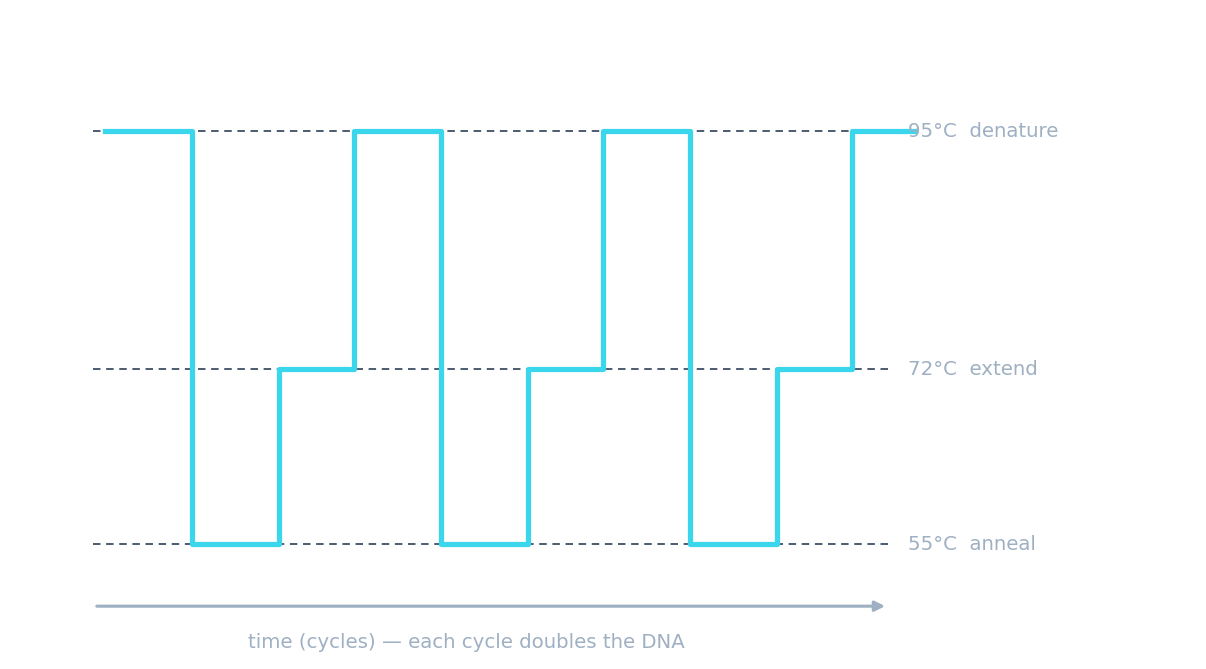
- The polymerase chain reaction 聚合酶链式反应 (PCR) clones and amplifies DNA — millions of copies.
- It repeats cycles of heating and cooling, using the heat-stable enzyme Taq polymerase Taq聚合酶.
- Each cycle doubles the DNA.
A thermal cycler automates the heat/cool cycles of PCR.
PCR
- 聚合酶链式反应(polymerase chain reaction,PCR) 克隆并 扩增 DNA——数百万个拷贝。
- 它重复 加热和冷却 的循环,使用耐热的酶 Taq 聚合酶(Taq polymerase)。
- 每个循环使 DNA 翻倍。

一台热循环仪使 PCR 的加热/冷却循环自动化。
The polymerase chain reaction (PCR) · 聚合酶链式反应(PCR)
Step through one cycle. Heat splits the DNA, primers bind, polymerase copies — and the amount doubles every cycle. · 一步步走过一个循环。加热分开 DNA,引物结合,聚合酶复制——而且数量每个循环翻倍。
The polymerase chain reaction (PCR) is used to: · 聚合酶链式反应(PCR)用来:
PCR amplifies DNA through repeated heat/cool cycles using Taq polymerase. · PCR 通过用 Taq 聚合酶的重复加热/冷却循环扩增 DNA。
The technique that makes millions of copies of a DNA sample is the ______ chain reaction. · 制造一个 DNA 样本的数百万个拷贝的技术是 ______ 链式反应。
PCR (the polymerase chain reaction) uses Taq polymerase to copy DNA over many cycles. · PCR(聚合酶链式反应)用 Taq 聚合酶在许多循环中复制 DNA。
In each PCR cycle, the amount of DNA: · 在每个 PCR 循环中,DNA 的数量:
Each cycle copies every strand, so the DNA roughly doubles — giving exponential growth. · 每个循环复制每条链,所以 DNA 大致翻倍——给出指数增长。
Put one PCR cycle in order. · 把一个 PCR 循环按顺序排列。
Denature → anneal → extend, then repeat. The doubling makes it exponential. · 变性 → 退火 → 延伸,然后重复。翻倍使它成为指数的。
Gel electrophoresis
- Gel electrophoresis separates DNA fragments by length.
- Fragments move through a gel in an electric field, towards the + end.
- Shorter fragments travel further, so the lengths spread into bands.
An electric field pulls DNA fragments through the gel; shorter ones travel further, sorting them by length
DNA fragments separated into glowing bands by gel electrophoresis, seen under UV light
凝胶电泳
- 凝胶电泳(gel electrophoresis) 按 长度 分离 DNA 片段。
- 片段在一个电场中穿过一个凝胶移动,朝 + 端。
- 更短 的片段移动得 更远,所以这些长度散开成条带。

一个电场把 DNA 片段拉过凝胶;更短的移动得更远,按长度分拣它们
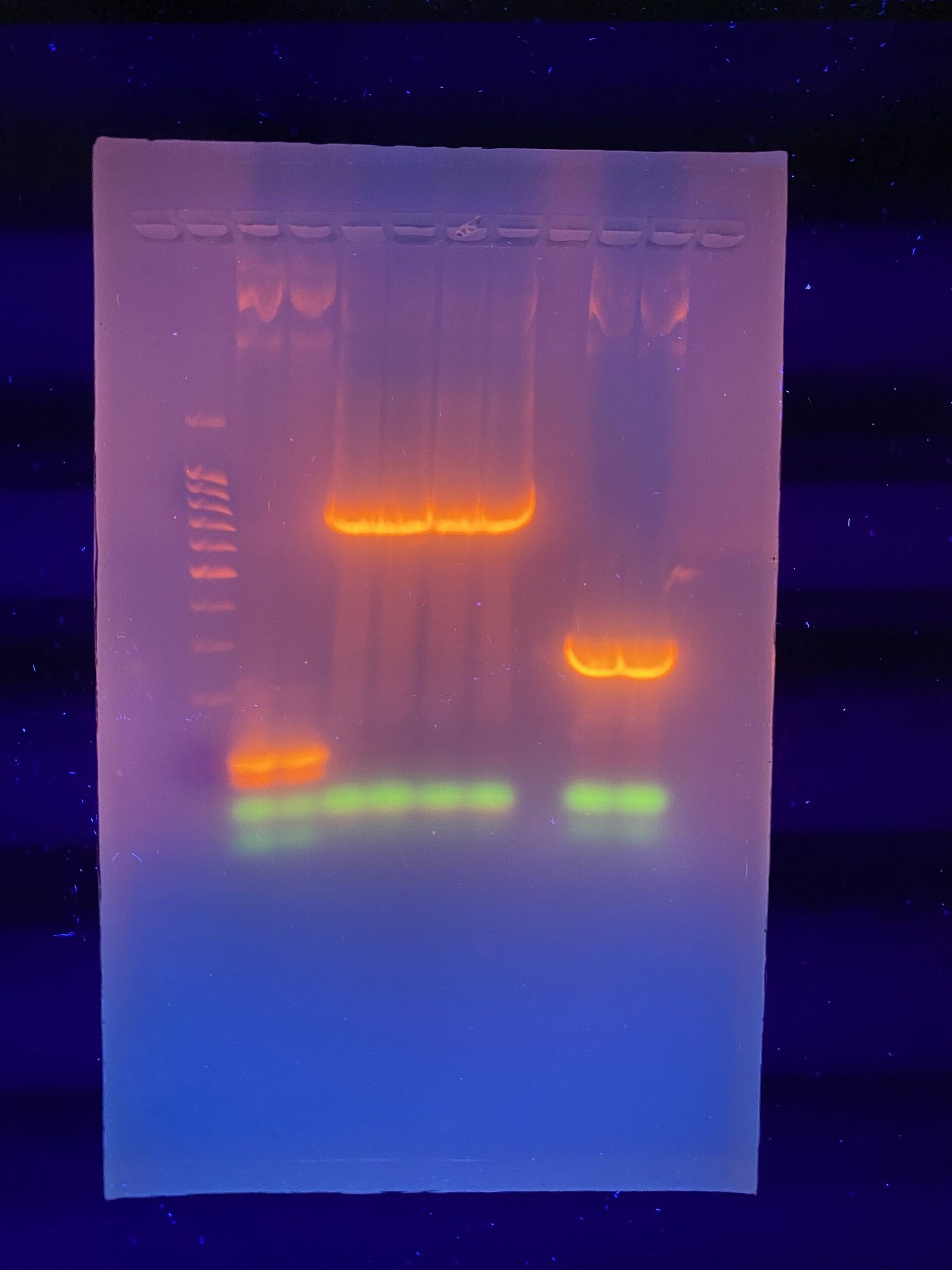
被凝胶电泳分离成发光条带的 DNA 片段,在紫外光下看到
In gel electrophoresis, shorter DNA fragments: · 在凝胶电泳中,更短的 DNA 片段:
Fragments move toward the + end; shorter ones travel further, separating the DNA by length. · 片段朝 + 端移动;更短的移动得更远,按长度分离 DNA。
In gel electrophoresis, shorter DNA fragments travel further through the gel than longer ones. · 在凝胶电泳中,更短的 DNA 片段比更长的穿过凝胶移动得更远。
DNA is negative, so it moves to the + electrode; small fragments slip through the gel more easily, so they go further. · DNA 是负的,所以它移向 + 电极;小片段更容易滑过凝胶,所以它们走得更远。
Microarrays and databases
- Microarrays study whole genomes and detect which genes are switched on (by picking up their mRNA).
- Databases store DNA and protein sequences, so scientists anywhere can compare them.
微阵列和数据库
- 微阵列(Microarrays) 研究整个 基因组 并检测哪些基因 开启(通过捕获它们的 mRNA)。
- 数据库 储存 DNA 和蛋白质序列,所以任何地方的科学家都能比较它们。
Microarrays are used to: · 微阵列用来:
Microarrays detect gene activity across a genome by picking up the mRNA of expressed genes. · 微阵列通过捕获表达基因的 mRNA 来检测整个基因组的基因活性。
You've got it
- PCR amplifies DNA (heat/cool cycles, Taq polymerase); each cycle doubles it
- gel electrophoresis sorts fragments by length — shorter travel further toward the + end
- microarrays show which genes are switched on; databases store sequences for comparison
你掌握了
- PCR 扩增 DNA(加热/冷却循环,Taq 聚合酶);每个循环使它 翻倍
- 凝胶电泳 按长度分拣片段——更短的移动得更远,朝 + 端
- 微阵列 显示哪些基因开启;数据库 储存序列以供比较