Variation · 变异
| English | 中文 | Pinyin · 拼音 |
|---|---|---|
| variation/ˌveərɪˈeɪʃn/ | 变异 | biàn yì |
| continuous variation/kənˈtɪnjuːəs ˌveərɪˈeɪʃn/ | 连续变异 | lián xù biàn yì |
| discontinuous variation/dɪskənˈtɪnjuːəs ˌveərɪˈeɪʃn/ | 不连续变异 | bù lián xù biàn yì |
| t-test/tiː test/ | t检验 | t jiǎn yàn |
No two alike
- Variation 变异 means the differences between individuals.
- It can come from your genes, your environment, or both.
- And it falls into two patterns.
没有两个一样
- 变异(variation) 意味着个体之间的差异。
- 它可以来自你的 基因、你的 环境,或 两者。
- 而且它分成两种模式。
Variation type lab · 变异类型实验
Classify examples by the source and pattern of variation. · 根据变异的来源和模式对示例进行分类。
Three causes
- genetic only — set by the alleles you inherit (e.g. blood group).
- environmental only — set by your surroundings (e.g. a scar, the language you speak).
- both — most features (e.g. height, body mass) depend on genes and diet/lifestyle.
Discontinuous and continuous variation 连续变异
三个原因
- 只遗传的——由你遗传的等位基因决定(例如血型)。
- 只环境的——由你的周围环境决定(例如一道疤、你说的语言)。
- 两者——大多数特征(例如身高、体重)取决于基因 和 饮食/生活方式。
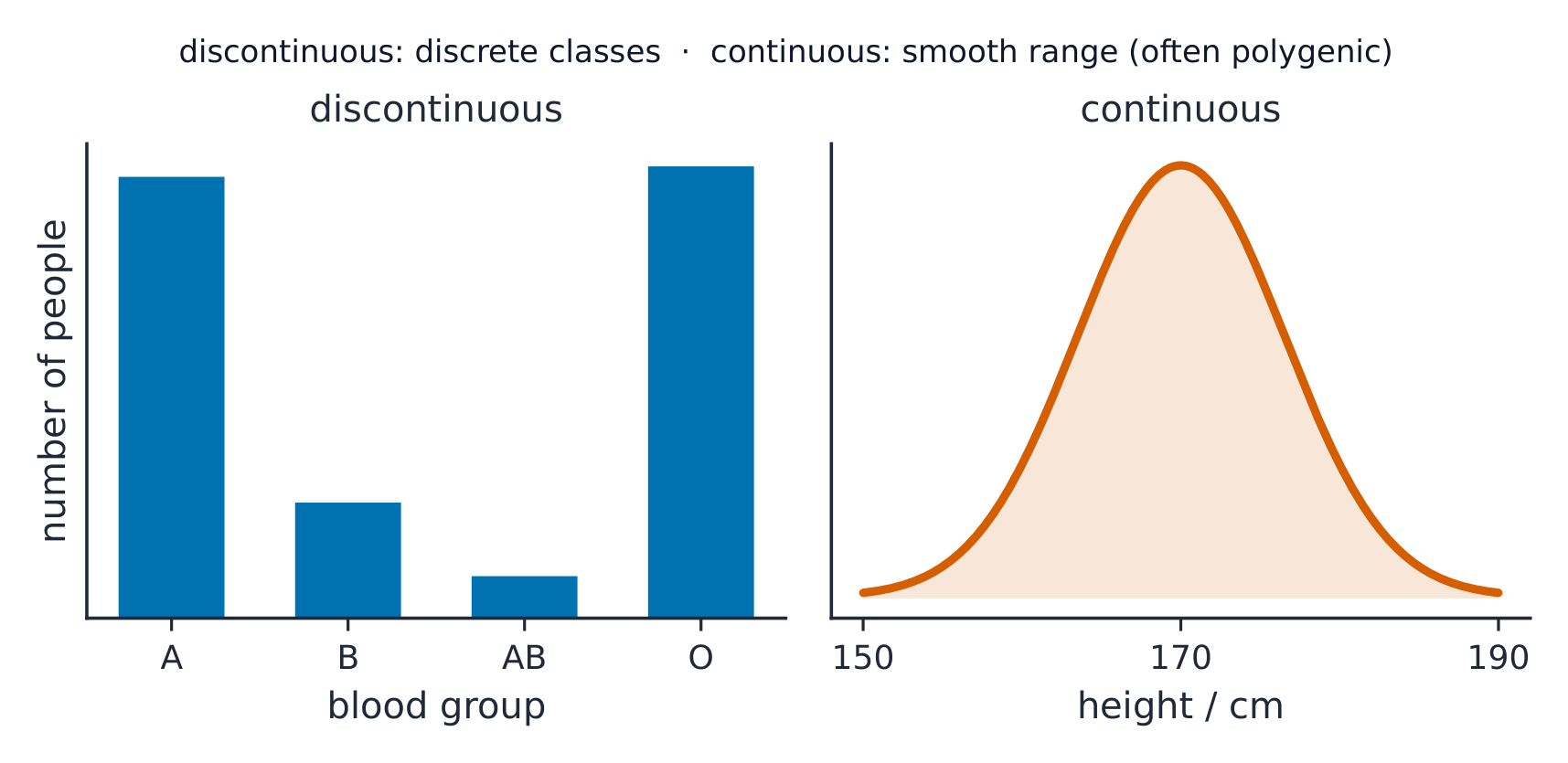
不连续变异和连续变异
Most features, such as height, are caused by: · 大多数特征,如身高,是由以下哪项引起的:
Height depends on the alleles inherited and on diet/lifestyle — a combination of genes and environment. · 身高取决于遗传的等位基因以及饮食/生活方式——这是基因与环境共同作用的结果。
Two patterns
- discontinuous variation 不连续变异 — clear, separate groups with nothing in between (e.g. blood group A/B/AB/O). Controlled by one or a few genes.
- continuous variation — a smooth range from one extreme to the other (e.g. height). Controlled by many genes plus the environment.
Pale and dark peppered moths on a tree trunk
两种模式
- 不连续变异(discontinuous variation)——清晰、分开的组,中间没有过渡(例如血型 A/B/AB/O)。由 一个或几个基因 控制。
- 连续变异(continuous variation)——从一个极端到另一个的平滑范围(例如身高)。由 许多基因 加上环境控制。

树干上浅色和深色的桦尺蛾
Continuous variation is: · 连续变异是:
Continuous variation (e.g. height) is a smooth range from many genes; discontinuous is separate groups from few genes. · 连续变异(如身高)是多基因导致的平滑范围;不连续变异是少数基因导致的分离组。
Which is an example of discontinuous variation? · 下列哪项是不连续变异的例子?
Blood group falls into clear separate categories — discontinuous variation. · 血型落入清晰的分离类别中——属于不连续变异。
Match each term to its description. · 将每个术语与其描述匹配。
Continuous = smooth range (polygenic); discontinuous = distinct categories; most features mix genetic and environmental causes. · 连续 = 平滑范围(多基因);不连续 = 明显类别;大多数特征是遗传和环境原因的结合。
Continuous variation is controlled by many genes plus the environment, giving a smooth range of values. · 连续变异受多基因加环境控制,产生一系列平滑的数值。
Many small genetic effects plus the environment add up to a smooth spread (e.g. a bell curve of heights). · 许多微小的遗传效应加上环境累积形成平滑分布(例如身高的钟形曲线)。
Variation that falls into clear, separate categories (like blood group) is ______ variation. · 落入清晰分离类别(如血型)的变异是______变异。
Discontinuous variation is controlled by one or a few genes, with little or no environmental effect. · 不连续变异受一个或少数几个基因控制,几乎没有或没有环境影响。
The t-test t检验
- To compare the means of two samples (e.g. plant heights in sun vs shade), use the t-test.
- It tells you whether the difference is large enough to be real, or just due to chance.
Banded snails (Cepaea nemoralis) show striking variation in shell colour and banding.
t 检验
- 要比较两个样本的 平均值(例如阳光下与阴影下植物的高度),用 t 检验(t-test)。
- 它告诉你差异是否 大到足以是真实的,或只是由于偶然。

带条纹的蜗牛(Cepaea nemoralis)在壳的颜色和条带上显示惊人的变异。
The t-test is used to: · t检验用于:
The t-test checks whether the difference between two sample means is real or just chance. · t检验检查两个样本均值之间的差异是真实的还是仅由偶然造成的。
You've got it
- variation causes: genetic, environmental, or both
- discontinuous = separate groups (few genes); continuous = smooth range (many genes + environment)
- e.g. blood group = discontinuous; height = continuous
- the t-test compares two means — real difference or chance?
你掌握了
- 变异的原因:遗传的、环境的,或 两者
- 不连续 = 分开的组(少数基因);连续 = 平滑范围(许多基因 + 环境)
- 例如血型 = 不连续;身高 = 连续
- t 检验 比较两个平均值——真实的差异还是偶然?