Transport of oxygen · 氧气的运输
| English | 中文 | Pinyin · 拼音 |
|---|---|---|
| haemoglobin/ˌhiːməˈɡləʊbɪn/ | 血红蛋白 | xuè hóng dàn bái |
| oxygen dissociation curve/ˈɒksɪdʒn dɪˌsəʊsɪˈeɪʃn kɜːv/ | 氧解离曲线 | yǎng jiě lí qū xiàn |
| saturation/ˌsætʃəˈreɪʃn/ | 饱和度 | bǎo hé dù |
| partial pressure/ˈpɑːʃl ˈpreʃə/ | 分压 | fēn yā |
| Bohr shift/ˈbəʊə ʃɪft/ | 波尔位移 | bō ěr wèi yí |
| fetal haemoglobin/ˈfiːtl ˌhiːməˈɡləʊbɪn/ | 胎儿血红蛋白 | tāi ér xuè hóng dàn bái |
| affinity/əˈfɪnɪti/ | 亲和力 | qīn hé lì |
Carrying oxygen
- Oxygen is carried by haemoglobin 血红蛋白 in red blood cells.
- How tightly haemoglobin holds oxygen depends on how much oxygen is around.
- The oxygen dissociation curve 氧解离曲线 captures this in one S-shaped graph.
携带氧气
- 氧气由红血球中的 血红蛋白(haemoglobin) 携带。
- 血红蛋白抓住氧气有多紧取决于周围有多少氧气。
- 氧解离曲线(oxygen dissociation curve) 把这个用一张 S 形图捕捉下来。
Loading and unloading
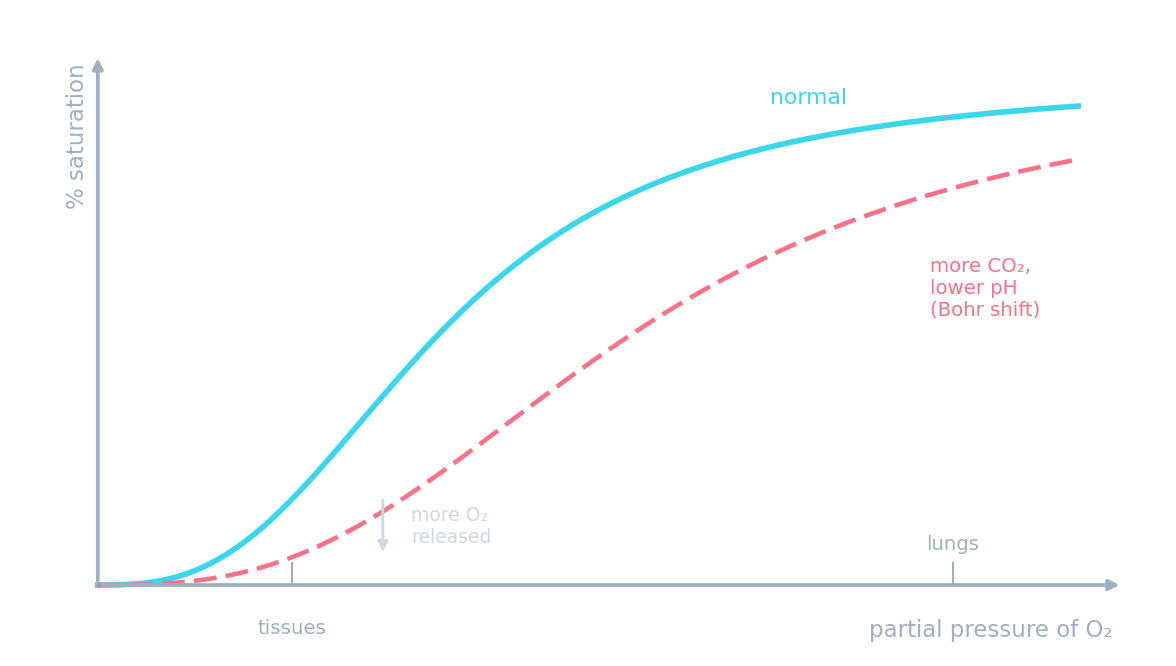
- The curve plots % saturation 饱和度 (how full of oxygen) against the partial pressure 分压 of oxygen.
- Where oxygen is high (the lungs), haemoglobin loads up and becomes almost fully saturated.
- Where oxygen is low (respiring tissues), haemoglobin unloads its oxygen for the cells.
装载和卸载
- 曲线把 % 饱和度(充满氧气的程度)对 氧分压 作图。
- 在氧气 高 的地方(肺),血红蛋白装满并变得几乎完全 饱和。
- 在氧气 低 的地方(进行呼吸的 组织),血红蛋白为细胞 卸载 它的氧气。
How blood carries oxygen · 血液如何携带氧气
Haemoglobin picks up oxygen where there is lots of it (the lungs) and releases it where there is little (the tissues). · 血红蛋白在氧气多的地方(肺)摄取氧气,在氧气少的地方(组织)释放它。
Where the partial pressure of oxygen is high (the lungs), haemoglobin: · 在氧分压高的地方(肺),血红蛋白:
At high oxygen partial pressure (lungs), haemoglobin loads up and becomes nearly fully saturated. · 在高氧分压(肺),血红蛋白装满并变得几乎完全饱和。
In respiring tissues, where oxygen is low, haemoglobin: · 在氧气低的进行呼吸的组织中,血红蛋白:
At low oxygen partial pressure (tissues), haemoglobin releases oxygen to the cells. · 在低氧分压(组织),血红蛋白把氧气释放给细胞。
The oxygen dissociation curve is S-shaped (sigmoid). · 氧解离曲线是 S 形的(乙状形)。
It is S-shaped: binding one oxygen makes the next bind more easily, giving the characteristic sigmoid curve. · 它是 S 形的:结合一个氧气使下一个更容易结合,给出特征性的乙状曲线。
The Bohr shift 波尔位移
- Active tissues release more carbon dioxide, which lowers the pH.
- This makes haemoglobin release oxygen more easily — the curve shifts to the right.
- So oxygen is given up exactly where it is needed most. This is the Bohr shift — the right-shifted curve above.
玻尔位移
- 活跃的组织释放更多 二氧化碳,这 降低 pH。
- 这使血红蛋白 更容易 释放氧气——曲线 向右 移动。
- 所以氧气恰好在最需要的地方被释放。这是 玻尔位移(Bohr shift)——上面右移的曲线。
Match each situation to what haemoglobin does. · 把每种情况与血红蛋白做的事配对。
Hb loads in the lungs, unloads in tissues; high CO₂ shifts the curve right; fetal Hb grabs oxygen from the mother. · 血红蛋白在肺装载,在组织卸载;高 CO₂ 使曲线右移;胎儿血红蛋白从母亲那里抓取氧气。
The Bohr shift describes how: · 玻尔位移描述了:
More CO₂ lowers pH, shifting the curve right so haemoglobin releases more oxygen where tissues need it. · 更多的 CO₂ 降低 pH,使曲线右移,所以血红蛋白在组织需要的地方释放更多氧气。
The rightward shift of the curve when CO₂ rises, releasing more oxygen to active tissues, is the ______ shift. · 当 CO₂ 升高时曲线的右移,向活跃组织释放更多氧气,是 ______ 位移。
The Bohr shift means active tissues (high CO₂, low pH) get more oxygen unloaded to them. · 玻尔位移意味着活跃组织(高 CO₂、低 pH)有更多氧气被卸载给它们。
Fetal haemoglobin 胎儿血红蛋白
- A fetus must take oxygen from its mother's blood, so its fetal haemoglobin has a higher affinity 亲和力 for oxygen.
- Its dissociation curve lies to the left of the adult curve — it loads oxygen where adult haemoglobin would unload it.
胎儿血红蛋白
- 一个胎儿必须从它母亲的血液中取氧,所以它的 胎儿血红蛋白 对氧气有 更高的亲和力。
- 它的解离曲线位于成人曲线的 左侧——它在成人血红蛋白会卸载的地方装载氧气。
You've got it
- haemoglobin carries oxygen; the dissociation curve is S-shaped
- high oxygen (lungs) → loads / saturated; low oxygen (tissues) → unloads
- Bohr shift: more CO₂ → lower pH → curve moves right → more oxygen released
- the Bohr shift delivers oxygen where active tissues need it most
你掌握了
- 血红蛋白 携带氧气;解离曲线 是 S 形 的
- 高 氧气(肺)→ 装载 / 饱和;低 氧气(组织)→ 卸载
- 玻尔位移:更多 CO₂ → 更低 pH → 曲线 向右 移 → 释放更多氧气
- 玻尔位移把氧气送到活跃组织最需要它的地方