Present simple — พฤติกรรมประจำวัน
Introducedเวลาที่คุณจะใช้มากที่สุด
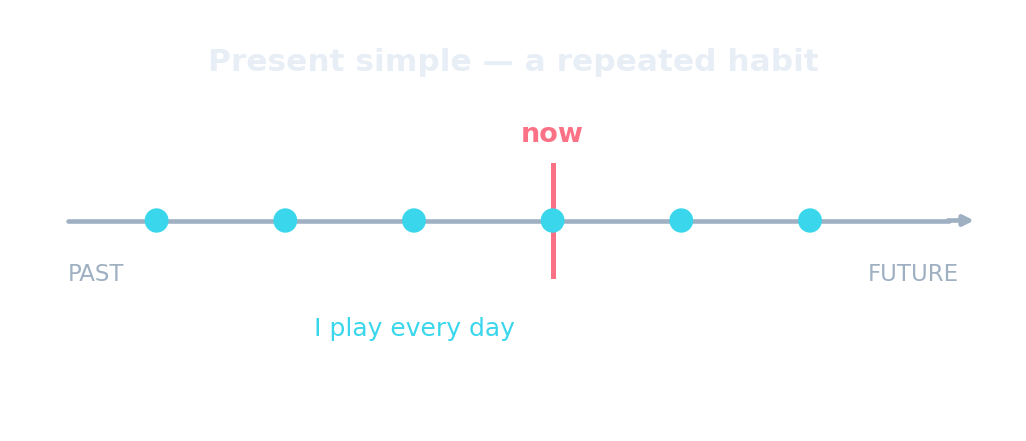
- Present simple ใช้สำหรับสิ่งที่คุณทำ ทุกวัน และข้อเท็จจริง
- I get up at seven. The sun rises in the east.
- นี่คือเวลาที่คุณจะใช้บ่อยที่สุด
I drink tea every day. The tea does not get a day off.
รากคำกริยา, และ -s สำหรับ he / she / it
- I / you / we / they → กริยาราก: I play, we work.
- he / she / it → เติม -s: He plays. She works.
- go → goes, watch → watches, study → studies.
กริยาต้องการ -s หรือไม่?
เฉพาะ he / she / it เท่านั้นที่เพิ่ม -s ให้กับกริยาใน Present simple.
เลือก: He ___ football every day.
he / she / it → เพิ่ม -s: “He plays football.”
เติมคำ: She ___ (go) to school by bus.
“go” ลงท้ายด้วย -o, ดังนั้นเพิ่ม -es: go → goes.
แปลเป็นภาษาอังกฤษ: 我喜欢茶。
I → กริดาต้นแบบ: “I like tea.” (ไม่ใช่ “I likes tea”)
คำปฏิเสธ: don't / doesn't
- I / you / we / they → don't + กริยาราก: I don't eat meat.
- he / she / it → doesn't + กริยาราก: He doesn't like tea.
- หลัง don't / doesn't ไม่ต้องเติม -s
ประโยคนี้ถูกต้องไหม? “He doesn't likes tea.”
หลังdoesn't ใช้กริดาต้นแบบ: “He doesn't like tea.”
คำถาม: Do / Does …?
- Do you …? · Does he …?
- Do you speak English? Does she live here?
- คำตอบสั้น: Yes, I do. / No, he doesn't.
ข้อผิดพลาดทั่วไป
- ❌ I very like English. → ✓ I like English very much. — ห้ามใช้ very + กริยาโดยตรง
- ❌ He go to school. → ✓ He goes to school. — จำ -s ด้วย!
- ❌ You like tea? → ✓ Do you like tea? — คำถามต้องใช้ do / does
จับคู่กริยากับรูป he / she ของมัน.
-ch / -o → -es (watches, goes);พยัญชนะ + y → -ies (studies); ส่วนใหญ่กริยามีแค่เพิ่ม -s.
哪个句子是正确的?
very ไม่ใช้กับกริยา — ต้องพูดว่า “like … very much”.
- Present simple = นิสัย + ข้อเท็จจริง
- he / she / it → กริยา + -s
- คำปฏิเสธและคำถามใช้ do / does + กริยาราก
เขียนประโยคหนึ่งประโยคเกี่ยวกับสิ่งที่คุณทำทุกวัน ใช้ Present simple.
ตัวอย่าง: “I get up at seven every day.”