can — ความสามารถและการขอ
Introducedสิ่งที่ทำได้
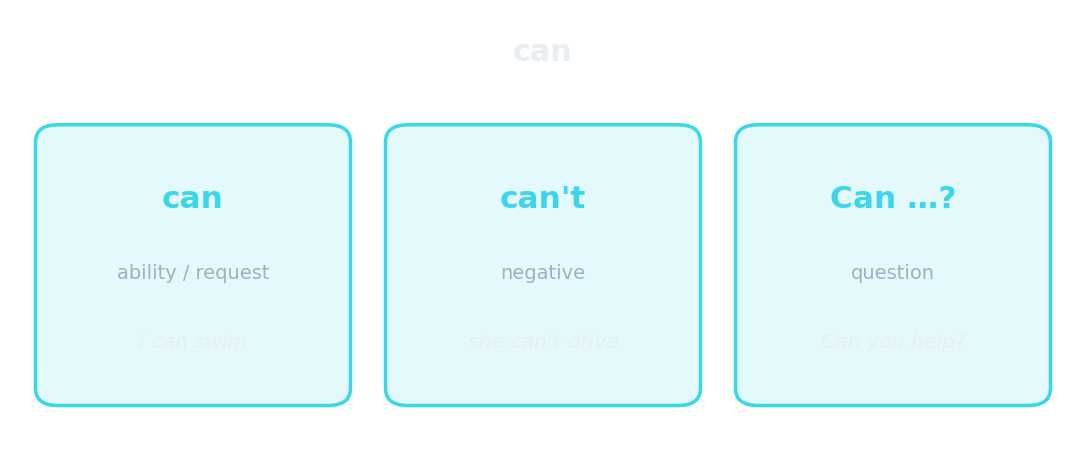
- can แปลว่า "สามารถ" — บ่งบอกถึงความสามารถ
- เราใช้它还用于ขอความช่วยเหลือด้วย
- I can swim. Can you help me?
I can sing. My neighbours can hear me.
can + กริยาราก
- can + กริยาราก, ใช้ได้กับทุกประธาน (ไม่ต้องเติม -s, ไม่ต้องใช้ to)
- She can dance. They can speak English.
- ไม่ใช่ can to dance, ไม่ใช่ can dances
สำรวจ
can — ถูกหรือผิด?
can ตามด้วยกริดาต้นแบบเสมอ (ไม่มี ‘to’, ไม่มี -s).
ฝึกฝน
哪个句子是正确的?
can + กริดาต้นแบบ (ไม่มี “to”): “I can swim.”
ฝึกฝน
แปลเป็นภาษาอังกฤษ: 我会游泳。
can + กริดาต้นแบบ: “I can swim.”
คำปฏิเสธ: can't
- cannot = can't + กริยาราก
- He can't drive. I can't come today.
ฝึกฝน
ทำให้เป็นประโยคปฏิเสธ: She ___ drive. (cannot, รูปย่อ)
cannot → can't: “She can't drive.”
คำถาม: สามารถ …?
- วาง Can ไว้หน้าประธาน: Can you swim? Can he cook?
- คำตอบสั้นๆ: Yes, I can. / No, I can't.
- ไม่ต้องใช้ do / does กับ can
ฝึกฝน
ประโยคนี้ถูกต้องไหม? “Does he can cook?”
can ไม่ต้องใช้ “does”: “Can he cook?”
ข้อผิดพลาดทั่วไป
- ❌ She cans swim. → ✓ She can swim. — can ไม่ pernahเติม -s
- ❌ I don't can drive. → ✓ I can't drive.
- ❌ She can sing very good. → ✓ She can sing very well. — ใช้ well กับคำกริยา
ฝึกฝน
คำถามข้อใดถูกต้อง?
can ใช้สร้างคำถามเอง — ไม่ต้องใช้ do / does: “Can you swim?”
ฝึกฝน
เรียงคำให้กลายเป็นคำถาม.
can นำหน้าคำกริยา: “Can your friend play football?”
Key idea
- can + กริยาต้นแบบ = ความสามารถ / การขอ (ใช้ได้กับทุกประธาน)
- รูปปฏิเสธ: can't (cannot).
- รูปคำถาม: Can ไว้หน้าประธาน — ไม่ต้องใช้ do / does
ฝึกฝน
เขียนประโยคหนึ่งประโยคเกี่ยวกับสิ่งที่คุณทำได้ โดยใช้ “can”.
ตัวอย่าง: “I can play the piano.”