Skip to content · ⁨コンテンツへスキップ⁩

Understanding business activity · ⁨ビジネス活動の理解⁩

IGCSE Business Studies · ⁨IGCSE 商業研究⁩ · Topic 1 · ⁨トピック 1⁩

View Slides · ⁨查看幻灯片⁩ Train · ⁨練習する⁩
Video lesson for this topic · ⁨このトピックのビデオレッスン⁩ Open the video page · ⁨動画ページを開く⁩
17:55

ビジネス活動の理解

どの商店街を見ても、店から店へ、全て何かを売り、同じ顧客層を狙っている。全てが企業である。だが、企業とは本当に…

English narration · English + 中文 subtitles burned in · ⁨英語ナレーション・英語+中文字幕 burning-in⁩

1.1

What business activity is for · ⁨事業活動の目的⁩

Syllabus · ⁨シラバス⁩
English
  1. understand the purpose of business activity: combining factors of production (land, labour, capital, enterprise) to make goods and services that satisfy people's needs and wants
  2. understand the economic problem: needs and wants are unlimited but resources are scarce, so choices must be made
  3. understand opportunity cost: the next best alternative given up when a choice is made
  4. explain the concept of added value (selling price minus cost of bought-in materials) and how a business can increase added value
  5. understand why businesses succeed or fail (e.g. management skill, finance, competition)
日本語
  1. 事業活動の目的を理解する: 生産要素(土地、労働、資本、起業家精神)を組み合わせ、人々のニーズや欲求を満たす商品やサービスを生み出すこと
  2. 経済的問題を理解する: ニーズや欲求は無限であるが、資源は希少であるため、選択を行う必要がある
  3. 機会費用を理解する: 選択を行った際に舍弃される最も良い代替案
  4. 付加価値の概念(販売価格から仕入材料費を引いたもの)を理解し、企業が如何にして付加価値を増加させるかを説明する
  5. 企業が成功するか失敗するか的理由を理解する(例: 経営スキル、資金、競争)

Source: Cambridge International syllabus · ⁨出典: Cambridge International シラバス⁩

English

A business 企业 is an organisation that makes goods 商品 or provides services 服务 for customers 顾客.

  • Goods are physical things you can touch — bread, phones, cars.
  • Services are useful actions done for you — a haircut, a bus ride, a doctor's visit.

The purpose of business activity is to use resources 资源 to make goods and services, so that people's needs 需要 and wants 欲望 are met.

  • Needs are things you must have to live: food, water, shelter, clothes.
  • Wants are things you would like but can live without: a holiday, a games console.

Factors of production

To produce anything, a business brings together four factors of production 生产要素 — the resources needed to make goods and services.

Factor What it means Example
land 土地 natural resources farmland, water, oil, minerals
labour 劳动力 the work of people workers, managers
capital 资本 money and the man-made tools bought with it machines, factories, vehicles
enterprise 企业家才能 the skill to bring the other three together and take risks the owner's idea and effort

The economic problem

People's needs and wants are unlimited. But resources are scarce 稀缺 — there are not enough of them for everything. This is the economic problem 经济问题.

Because resources are scarce, you must always choose. You cannot have everything.

Opportunity cost

When you choose one thing, you give up the next best thing. The opportunity cost 机会成本 is the next best choice you give up.

Example: a business has some money and spends it on a new machine. Now it cannot also spend that money on a bigger shop. The bigger shop is the opportunity cost.

Added value

Added value 增值 is the difference between the price a business sells a product for and the cost of the raw materials 原材料 bought in to make it.

$$\text{added value} = \text{selling price} - \text{cost of bought-in materials}$$

A business can increase added value by:

  • raising the price, often through a strong brand 品牌 or better design,
  • lowering the cost of materials, for example by finding cheaper suppliers,
  • improving the product so customers will pay more.

Worked example. A furniture maker buys the wood and fabric for a chair for £40 and sells the chair for £110. The factory rent is £6,000 a month. Find the added value per chair.

$$\text{added value} = \text{\pounds} 110 - \text{\pounds} 40 = \text{\pounds} 70$$

The rent is a deliberate distractor. Added value counts only the cost of the bought-in materials, so rent, wages and other running costs stay out of it - they matter for profit, not for added value. Subtract only what was bought in to make the product, and never treat added value as if it were profit.

Why businesses succeed or fail

A business is more likely to succeed when it has:

  • good management 管理 — skilled leaders who plan well,
  • enough finance 资金 — money to pay bills while it grows,
  • a product customers want, and an edge over the competition 竞争 (the other businesses selling similar things).

A business may fail and close down when it runs out of cash, manages money badly, or cannot compete. Weak management and poor cash control are the most common causes.

日本語
商店街で競合する店舗の風景
商店街での店舗間の競争:企業は人々の欲求を満たすために商品やサービスを生産しています。
人々のニーズと欲求がビジネスを生み出し、ビジネスが商品やサービスを提供する
企業は人々のニーズと欲求を満たすために財やサービスを生産している

ビジネスとは、顧客のために商品を生産したり、サービスを提供したりする組織のことです。

  • 商品は触れることのできる物理的なもの — パン、携帯電話、車。
  • サービスはあなたのために行われる有益な行為 — ヘアカット、バス乗り物、医師の診察。

事業活動の目的は、資源を使用して商品やサービスを作り、人々のニーズと欲求を満たすことです。

  • ニーズとは、生きるために不可欠なものです:食料、水、住居、衣類。
  • 欲求とは、あると良いけれどなくても生きていけるものです:休暇、ゲームコンソール。

生産要因

何かを生産するためには、企業は4つの生産要因 — 商品やサービスを作るために必要な資源 — を組み合わせます。

要因 意味 例
土地 天然資源 農地、水、石油、鉱物
労働 人の仕事 労働者、管理者
資本 お金と、それを使って購入される人工的な道具 機械、工場、車両
起業家精神 他の3つを組み合わせてリスクを取る技術 経営者のアイデアと努力
土地、労働、資本、起業家精神が4つの投入要素として示されており、これらが企業によって組み合わされて商品やサービスが生産される
4つの生産要因は組み合わされて商品やサービスを生産する

経済問題

人々のニーズと欲求は限りありません。しかし、資源は希少であり — すべてを充足するには十分ではありません。これが経済問題です。

資源は限られているため、常に選択を行う必要があります。すべてのものを手に入れることはできません。

機会費用

あるものを選ぶと、次に良い選択肢を諦めることになります。機会費用とは、諦めた次の最も良い選択肢のことです。

例: ある企業が資金を持って新しい機械を購入しました。すると、そのお金でより大きな店舗を建てることもできなくなります。このより大きな店舗が機会費用となります。

お金は一方のみに使われ、新しい機械が選ばれ、より大きな店舗は放弃される — より大きな店舗が機会費用である
機会費用とは、諦めた次の最も良い選択肢のこと

付加価値

付加価値とは、企業が製品を販売する価格から、製造のために購入した原材料のコストを差し引いた差額のことです。

$$\text{added value} = \text{selling price} - \text{cost of bought-in materials}$$
下段に外注材料費、上段に付加価値を積み上げた棒グラフ Together making the selling price
付加価値は、販売価格から外注材料費を引いたもの

企業は以下のようにして付加価値を増やすことができます:

  • 価格を引き上げる(強力なブランド力やより良いデザインによって)、
  • 材料コストを下げること(より安いサプライヤーを見つけるなど)、
  • 製品を改善して顧客に高い価格を支払ってもらうようにすること。

** worked example.** 家具メーカーが椅子用の木材と布地を£40で購入し、椅子を£110で販売しました。工場の家賃は月額£6,000です。椅子あたりの付加価値を求めよ。

$$\text{added value} = \text{\pounds} 110 - \text{\pounds} 40 = \text{\pounds} 70$$

家賃は意図的な迷い要素です。付加価値には外注材料費のみが含まれます。したがって、家賃、給料、その他の運営費は含まれません — これらは利益には関係しますが、付加価値には関係しません。製品製作のために購入した分だけを差し引き、付加価値を利益として扱ってはいけません。

企業の成功と失敗

企業が成功しやすい条件は以下の通りです:

  • 良好な経営管理 — 優秀なリーダーによる的確な計画、
  • 十分な資金調達 — 成長期に支払いを賄える资金、
  • 顧客が求める製品、および競合他社(同様の製品を販売する他の企業)に対する優位性。

企業が失敗して閉業する原因としては、現金が尽きる、資金運用が悪化、あるいは競争に負けることが挙げられます。最も一般的な原因は、経営管理の弱さと現金管理の不備です。

Explore · ⁨探索⁩

Value added lab · ⁨付加価値ラボ⁩

Change the bought-in cost, the selling price and other costs to see how business activity creates value added. · ⁨仕入れ原価、販売価格および他のコストを変更して、事業活動がいかに付加価値を生み出すかを確認する。⁩

Vocabulary · ⁨語彙⁩ Train · ⁨練習する⁩
English 日本語
business/ˈbɪznəs/ ビジネス
goods/ɡʊdz/ 商品
services/ˈsɜːvɪsɪz/ サービス
customers/ˈkʌstəməz/ 顧客
resources/rɪˈzɔːsɪz/ 資源
needs/niːdz/ 必要とする
wants/wɒnts/ ニーズ
factors of production/ˈfæktəz ɒv prəˈdʌkʃn/ 生産要因
land/lænd/ 土地
labour/ˈleɪbə/ 労働力
capital/ˈkæpɪtl/ 資本
enterprise/ˈentəpraɪz/ 起業家精神
scarce/skeəs/ 希少である
economic problem/ˌiːkəˈnɒmɪk ˈprɒbləm/ 経済問題
opportunity cost/ɒpəˈtjuːnɪti kɒst/ 機会原価がある場合
added value/ˈædɪd ˈvæljuː/ 付加価値
raw materials/rɔː məˈtɪərɪəlz/ 原材料
brand/brænd/ ブランド
management/ˈmænɪdʒmənt/ 経営
finance/ˈfaɪnæns/ 金融
competition/ˌkɒmpəˈtɪʃn/ 競争
primary sector/ˈpraɪməri ˈsektə/ 一次産業
manufacturing/ˌmænjuːˈfæktʃərɪŋ/ 製造業
secondary sector/ˈsekəndəri ˈsektə/ 二次産業
tertiary sector/ˈtɜːʃjəri ˈsektə/ 三次産業
developing economy/dɪˈveləpɪŋ ɪˈkɒnəmi/ 開発途上国経済
developed economy/dɪˈveləpt ɪˈkɒnəmi/ 先進国経済
de-industrialisation/də ɪnˌdʌstrɪəlaɪˈzeɪʃn/ 産業の縮小
private sector/ˈpraɪvət ˈsektə/ 民間部門
profit/ˈprɒfɪt/ 利益
public sector/ˈpʌblɪk ˈsektə/ 公共部門
1.2

Classifying businesses · ⁨企業の分類⁩

Syllabus · ⁨シラバス⁩
English
  1. classify business activity into primary, secondary and tertiary sectors with examples
  2. understand the changing importance of business sectors (de-industrialisation) in developed and developing economies
  3. distinguish the private sector and the public sector and give the features of each
日本語
  1. 一次産業、二次産業、三次産業に事業活動を分類し、具体例を示す
  2. 先進国および途上国の経済における各産業セクターの重要度の変化(去工業化)を理解する
  3. 民間部門と公的部門を区別し、それぞれの特徴を述べる

Source: Cambridge International syllabus · ⁨出典: Cambridge International シラバス⁩

English

The three sectors

We sort all business activity into three groups, by how far the work is from the final customer.

Sector What it does Examples
primary sector 第一产业 takes natural resources from the earth farming, fishing, mining, oil drilling
secondary sector 第二产业 makes goods from raw materials building, manufacturing 制造业, food processing
tertiary sector 第三产业 provides services shops, banks, transport, tourism

How the sectors change

The importance of each sector changes as a country grows richer.

  • In a developing economy 发展中经济体 (a poorer country building up its industry), the primary sector is often large — many people farm.
  • As the country grows, the secondary sector grows too.
  • In a developed economy 发达经济体 (a rich, industrialised country), most people work in the tertiary sector.

De-industrialisation 去工业化 is when the secondary sector shrinks and the tertiary sector grows. This has happened in many developed economies as factories move abroad.

Private sector and public sector

The private sector 私营部门 is made up of businesses owned by private people and groups. Most aim to make a profit 利润. The public sector 公共部门 is made up of organisations owned by the government, which aim to provide a service to the public.

Private sector Public sector
Owner private people and companies the government
Main aim usually profit provide services to everyone
Examples shops, factories, private firms state schools, public hospitals, the army
日本語

3つのセクター

作業が最終顧客からどれだけ離れているかによって、すべての事業活動を3つのグループに分けます。

セクター 行うこと 例
一次産業 自然資源の採取 農業、漁業、採掘、石油掘削
二次産業 原材料から商品を生産 建設、製造業、食品加工
三次産業 サービスを提供 小売店、銀行、運輸、観光
3つの箱が並ぶ — 一次、二次、三次 — 矢印で結ばれ、各下に例がある
事業活動は一次産業から三次産業へと流れる

セクターの変化

一国が豊かになるにつれて、各セクターの重要性は変化します。

  • 発展途上経済(産業基盤を整えている貧しい国)では、一次産業が大きく、多くの人が農業に従事しています。
  • 国が発展するにつれて、二次産業も成長します。
  • 先進経済(豊かな工業国)では、ほとんどの人が三次産業に従事しています。

**再工業化(デ・インダストライゼーション)**とは、二次産業が縮小し、三次産業が拡大することを指します。工場が海外へ移転したことで、多くの先進経済でこの現象が起こっています。

民間部門と公的部門

民間部門は、個人や集団が所有する企業から構成されます。多くは利益の追求を目指します。公的部門は、政府が所有する組織から構成され、市民へのサービス提供を目指します。

民間部門 公的部門
所有者 個人と企業 政府
主な目的 通常は利益 皆へのサービス提供
例 小売店、工場、民間企業 公立学校、公立病院、軍隊
Explore · ⁨探索⁩

Classify business activity · ⁨ビジネス活動の分類⁩

Sort real firms by the sector they mainly belong to. · ⁨実際の企業を主な所属セクターに基づいて分類せよ。⁩

1.3

Enterprise, business growth and size · ⁨エンタープライズ、企業成長と規模⁩

Syllabus · ⁨シラバス⁩
English
  1. describe the characteristics of a successful entrepreneur (risk-taker, hard-working, innovative, confident, organised)
  2. explain the contents and purpose of a business plan and how it helps a business raise finance
  3. explain why and how governments support business start-ups (grants, loans, training, advice)
  4. measure the size of a business (number of employees, revenue/sales, capital employed) and the limitations of each measure
  5. explain why some businesses remain small and why/how businesses grow (internal/organic growth and external growth: mergers and takeovers, horizontal, vertical and conglomerate integration)
  6. explain economies and diseconomies of scale (purchasing, financial, managerial, technical, marketing)
日本語
  1. 成功した起業家の特徴を記述する(リスクテイク、勤勉、革新的、自信、組織的)
  2. ビジネスプランの内容と目的を理解し、それが如何にして企業に資金調達を助けるかを説明する
  3. 政府が起業支援を行う理由と方法を説明する(補助金、融資、研修、助言)
  4. 企業の規模を測定する(従業員数、売上高、投入資本)方法と、それぞれの測定の限界を説明する
  5. なぜ一部の企業は小規模で留まるのか、また企業が如何にして成長するのか(内部/有機的成長、外部成長: M&A、水平統合、垂直統合、コンglomレート統合)を説明する
  6. 規模の経済と不経済を説明する(調達、金融、管理、技術、マーケティング)

Source: Cambridge International syllabus · ⁨出典: Cambridge International シラバス⁩

English

The entrepreneur

An entrepreneur 企业家 is a person who sets up a business and takes the risk of running it. Successful entrepreneurs usually:

  • are willing to take risk 风险 — to risk their own money on a new idea,
  • work hard and do not give up,
  • are innovative 创新 — full of new ideas,
  • are confident and good at making decisions,
  • are well organised, able to manage time, money and people.

The business plan

A business plan 商业计划书 is a document that describes the business and its future. It usually contains the business idea and objectives, the product, the market 市场 it will sell to, who will run it, and a plan for the money.

A business plan has two main uses:

  • it makes the owner think carefully and plan ahead,
  • it helps the business raise finance 筹集资金 — banks and investors want to see a plan before they lend or invest.

Government support for start-ups

A start-up 初创企业 is a brand-new business. New businesses create jobs and help the economy grow, so governments often support them with:

  • grants 补助金 — money given that does not have to be paid back,
  • low-interest loans 贷款 — money lent on easy terms,
  • training and advice for new owners,
  • lower taxes in the first years.

Measuring the size of a business

You can measure how big a business is in several ways. Each one has a weakness.

Measure How it works Limitation
number of employees 员工 count the staff a high-tech firm can have few staff but large output 产量
revenue 收入 (sales) the value of everything sold a firm selling cheap goods may sell a lot yet be small
capital employed 所用资本 the total money invested in the business hard to compare between different industries

Staying small or growing

Some businesses stay small on purpose: the owner wants to keep control, the market is small, or the product is specialised.

Businesses that want to grow bigger — to achieve growth 增长 — can do it in two ways.

  • Internal growth 内部增长 (also called organic growth): the business grows by itself, by selling more, opening new branches, or adding new products. It is slower but lower-risk.
  • External growth 外部增长: the business joins with another business. This is faster. It happens through a merger 合并 (two businesses agree to join into one) or a takeover 收购 (one business buys control of another).

External growth is classified by the kind of business that is joined.

Type What joins Example
horizontal integration 横向一体化 two firms at the same stage of the same business two car makers join
vertical integration 纵向一体化 two firms at different stages of the same business a car maker buys a tyre maker
conglomerate integration 混合一体化 two firms in completely different businesses a car maker buys a food company

Economies and diseconomies of scale

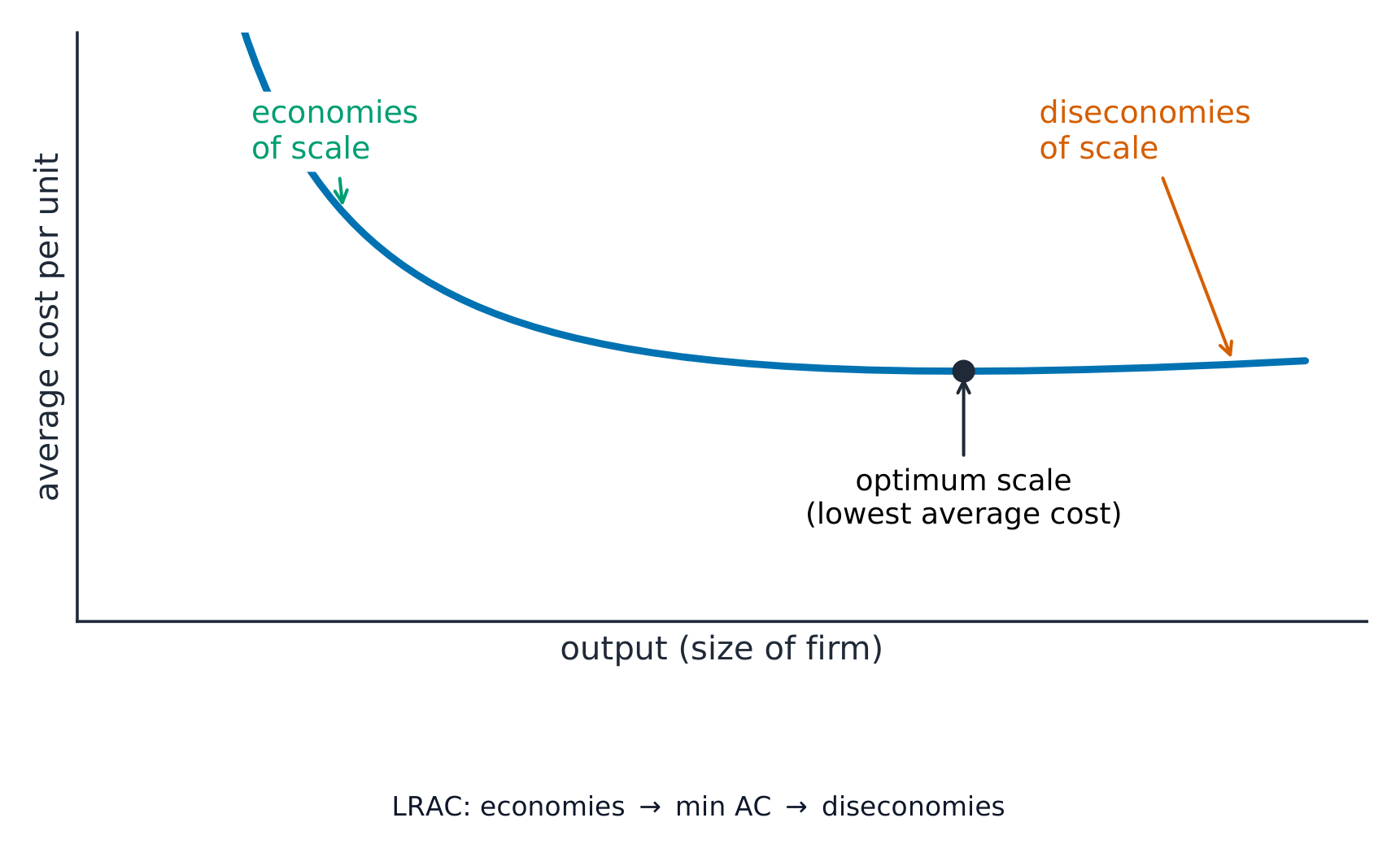
As a business grows, its cost per unit can fall. These savings are called economies of scale 规模经济.

Type How the cost per unit falls
purchasing buying large amounts of materials brings a lower price
financial large firms can borrow money more cheaply
managerial the firm can afford expert managers
technical the firm can use large, efficient machines
marketing 营销 the cost of advertising 广告 is spread over more goods

If a business grows too big, the cost per unit can start to rise again. These are diseconomies of scale 规模不经济. They happen because communication 沟通 in a huge firm gets worse, workers feel less important and work less hard, and managers find the firm hard to control.

日本語

起業家

起業家とは、事業を立ち上げ、経営のリスクを負う人です。成功した起業家は通常、以下の特質を持っています:

  • リスクを取る覚悟がある — 新しいアイデアに自らの資金を投じる、
  • 努力を惜しまず、あきらめない、
  • 革新的である — 新しいアイデアにあふれている、
  • 自信があり、意思決定が上手い、
  • 組織的で、時間、資金、人を適切に管理できる。
中央に起業家、周囲に5つの特性(リスクを取る、勤勉、革新的、自信、組織的)
成功した起業家の一般的な特徴

ビジネスプラン

ビジネスプランとは、事業とその将来について記した文書です。通常、事業のアイデアや目標、製品、販売先となる市場、運営者、資金計画が含まれます。

ビジネスプランには2つの主な用途があります:

  • 経営者が慎重に考え、先を見据えて計画を立てることを促す、
  • 企業が資金調達をするのを助ける — 銀行や投資家は、貸出や投資の前にプランを見ることを望みます。

スタートアップへの政府支援

スタートアップとは、 newly established business です。新規事業は雇用を生み出し、経済成長に寄与するため、政府はしばしば以下のような形で支援を行います:

  • 補助金 — 返済不要の交付金、
  • 低利ローン — 借入条件が緩やかな融資、
  • 新規オーナー向けのトレーニングと助言、
  • 初年度における税制優遇。

企業の規模の測定

企業の大きさを測る方法は複数あります。それぞれに欠点があります。

指標 測定方法 制限
従業員数 従業員の数を数える 高技術企業は従業員数が少なくても、生産量(産出量)が大きいことがある
売上高 販売された全商品の価値 安価な商品を扱う企業は大量に売っても、規模自体は小さい場合がある
使用資本額 企業に投下された総資金 業種間での比較が難しい

小規模維持か成長か

意図的に小規模で続ける企業もあります。経営者が管理権を維持したい、市場が小さい、または製品が専門的であるためです。

拡大して成長を実現したい企業は、2つの方法で成長できます。

  • 内部成長(有機成長とも呼ばれる): 企業自身が、販売増、新店舗の開設、新製品の追加などによって成長します。速度は遅いですが、リスクは低いです。
  • 外部成長: 他社との統合によるものです。これはより迅速です。買収(二社が一体となる合意をする)や買収(一社が他社の支配権を購入する)を通じて行われます。

外部成長は、統合される企業の種類に基づいて分類されます。

種類 統合されるもの 例
水平統合 同じ業界の同じ段階にある二社 自動車メーカー同士の統合
垂直統合 同じ業界の異なる段階にある二社 自動車メーカーがタイヤメーカーを買収
コンglomレート統合 全く異なる業界の二社 自動車メーカーが食品会社を買収

規模の経済と不経済

企業が成長すると、単位あたりのコストが低下することがあります。これらの節減効果は規模の経済と呼ばれます。

種類 単位あたりコストが下がる理由
調達 原材料を大量に購入することで単価が下がる
金融 大企業はより安く資金を借り入れられる
経営 専門的な経営陣を雇う余裕がある
技術 大型かつ効率的な機械を使用できる
マーケティング 広告費をより多くの商品に分散できる

企業が過度に巨大化すると、単位あたりのコストが再び上昇し始めます。これらは規模の不経済と呼ばれます。巨大企業ではコミュニケーションが滞り、従業員が存在感を感じて勤勉さが低下したり、経営陣が企業を統制できなくなったりするためです。

左側で下降(規模の経済)、最低点を経て右側で上昇(規模の不経済)するU字型平均原曲線
企業が拡大するにつれ、単品あたりの平均原価が低下(规模の経済)し、その後上昇(规模の不経済)する
Explore · ⁨探索⁩

Business case lab · ⁨ビジネスケースラボ⁩

Classify real decisions so the main business concept becomes concrete. · ⁨実際の意思決定を分類し、主要なビジネス概念を具体的に示す。⁩

Vocabulary · ⁨語彙⁩ Train · ⁨練習する⁩
English 日本語
entrepreneur/ˌɒntrɪprəˈnjʊə/ 起業家
risk/rɪsk/ リスク
innovative/ˈɪnəveɪtɪv/ 革新的な
business plan/ˈbɪznəs plæn/ ビジネスプラン
market/ˈmɑːkɪt/ 市場
raise finance/reɪz ˈfaɪnæns/ 資金調達
start-up/stɑːt ʌp/ スタートアップ
grants/ɡrænts/ 助成金
loans/ləʊnz/ ローン
employees/emˈplɔɪiːz/ 従業員
output/ˈaʊtpʊt/ 出力
revenue/ˈrevənjuː/ 収益
capital employed/ˈkæpɪtl emˈplɔɪd/ 使用資本
growth/ɡrəʊθ/ 成長とのトレードオフを示す
internal growth/ɪnˈtɜːnl ɡrəʊθ/ 内部成長
external growth/ekˈstɜːnl ɡrəʊθ/ 外部成長
merger/ˈmɜːdʒə/ 合併(merger)
takeover/ˈteɪkəʊvə/ 買収
horizontal integration/ˌhɒrɪˈzɒntl ˌɪntɪˈɡreɪʃn/ 水平統合
vertical integration/ˈvɜːtɪkl ˌɪntɪˈɡreɪʃn/ 垂直統合
conglomerate integration/kənˈɡlɒməreɪt ˌɪntɪˈɡreɪʃn/ コンglomレート統合
economies of scale/ɪˈkɒnəmiz ɒv skeɪl/ スケールメリット
marketing/ˈmɑːkɪtɪŋ/ マーケティング
advertising/ˈædvətaɪzɪŋ/ 広告
diseconomies of scale/ˌdɪsɪˈkɒnəmiz ɒv skeɪl/ 不経済の规模
communication/kəˌmjuːnɪˈkeɪʃn/ 通信
liability/ˌlaɪəˈbɪlɪti/ 負債
debts/dets/ 債務
unlimited liability/ʌnˈlɪmɪtɪd ˌlaɪəˈbɪlɪti/ 無限責任がある
limited liability/ˈlɪmɪtɪd ˌlaɪəˈbɪlɪti/ 有限責任がある
incorporated/ɪnˈkɔːpəreɪtɪd/ 法人格取得
unincorporated/ˌʌnɪnˈkɔːpəreɪtɪd/ 非法人
sole trader/səʊl ˈtreɪdə/ 個人事業主
partnership/ˈpɑːtnəʃɪp/ 組合せ
private limited company/ˈpraɪvət ˈlɪmɪtɪd ˈkʌmpəni/ 有限会社
shareholders/ˈʃeəhəʊldəz/ 株主
public limited company/ˈpʌblɪk ˈlɪmɪtɪd ˈkʌmpəni/ 株式会社
shares/ʃeəz/ 株式
stock exchange/stɒk eksˈtʃeɪndʒ/ 証券取引所
dividend/ˈdɪvɪdend/ 配当金
franchise/ˈfræntʃaɪz/ フランチャイズ
franchisee/ˈfræntʃɪsiː/ フランチャイジー
franchisor/ˈfræntʃaɪzə/ フランチャイザー
joint venture/dʒɔɪnt ˈventʃə/ 合弁事業
social enterprise/ˈsəʊʃl ˈentəpraɪz/ 社会企業
public corporation/ˈpʌblɪk ˌkɔːpəˈreɪʃn/ 公共企業
objective/ɒbˈdʒektɪv/ 目標
survival/səˈvaɪvl/ 生存
market share/ˈmɑːkɪt ʃeə/ 市場シェア
customer service/ˈkʌstəmə ˈsɜːvɪs/ カスタマーサービス
environment/enˈvaɪrənmənt/ 環境
1.4

Types of business organisation · ⁨企業の組織形態⁩

Syllabus · ⁨シラバス⁩
English
  1. describe the features, advantages and disadvantages of sole traders, partnerships, private limited companies and public limited companies
  2. explain the difference between unlimited and limited liability and between incorporated and unincorporated businesses
  3. describe franchises, joint ventures and social enterprises and their advantages and disadvantages
  4. explain the features of public sector business organisations (public corporations)
日本語
  1. 個人事業主、合名会社、非公開有限会社、公開有限会社の特徴、利点、欠点を記述する
  2. 無限責任と有限責任の違い、設立法人と未設立法人の違いを説明する
  3. フランチャイズ、ジョイントベンチャー、社会企業を記述し、その利点と欠点を述べる
  4. 公的部門の企業組織(公営企業)の特徴を説明する

Source: Cambridge International syllabus · ⁨出典: Cambridge International シラバス⁩

English

Liability

Liability 责任 means who must pay the debts 债务 if a business cannot pay them itself.

  • With unlimited liability 无限责任, the owner is personally responsible for all the debts. If the business fails, the owner may lose personal things, like a house or car, to pay them.
  • With limited liability 有限责任, the owner can only lose the money they put into the business. Their personal things are safe.

Incorporated and unincorporated

  • An incorporated 法人 business has a separate legal identity from its owners. The business itself can own things and be taken to court. Its owners get limited liability. Companies are incorporated.
  • An unincorporated 非法人 business is not separate from its owner in law. Sole traders and partnerships are unincorporated.

The four main types

A sole trader 独资企业 is a business owned by one person.

Advantages Disadvantages
easy and cheap to set up unlimited liability
the owner keeps all the profit hard to raise finance
the owner makes all decisions long hours, no one to share the work
private (accounts stay secret) the business ends if the owner stops

A partnership 合伙企业 is owned by two or more people who share the work, the decisions and the profit. They usually sign a written agreement.

Advantages Disadvantages
more owners bring more capital unlimited liability (in most cases)
work and ideas are shared the profit is shared
easy to set up partners can disagree
one partner's mistake affects everyone

A private limited company 私人有限公司 (often "Ltd") is owned by shareholders 股东, but its shares cannot be sold to the public. The owners are often family and friends.

Advantages Disadvantages
limited liability more legal rules and paperwork
easier to raise capital than a sole trader shares cannot be sold to the public
control stays in a small group accounts must be shared with the government

A public limited company 公众有限公司 (often "plc") is a large company whose shares 股份 can be bought by the public on the stock exchange 证券交易所.

Advantages Disadvantages
can raise very large amounts of capital expensive and complex to set up
limited liability accounts are fully public
well known, so easy to borrow anyone can buy shares, so there is a risk of takeover
the original owners may lose control

Shareholders may receive a share of the profit, called a dividend 股息.

Other forms of organisation

  • Franchise 特许经营: a person (the franchisee 加盟商) pays to use the name, products and methods of an existing successful business (the franchisor 授权商). The franchisee gets a known brand, training and lower risk, but must pay fees and a share of the profit and has less freedom. Many fast-food chains work this way.
  • Joint venture 合资企业: two businesses agree to share the cost, risk and profit of one project, while staying separate companies.
  • Social enterprise 社会企业: a business that trades to help society or the environment, not only to make profit. Most of its profit is put back into its social aims.

Public sector organisation

A public corporation 国有企业 is a business owned and run by the government, such as a national rail or postal service. Its aims include giving an important service to everyone, not only making a profit.

日本語
近代的な本社ビル
本社の例:企業は個人事業主から巨大な公開持株会社まで多様です。

責任

責任とは、企業が債務を支払えない場合に、誰がその債務を負担するかを意味します。

  • 無限責任の場合、経営者はすべての債務について個人的に責任を負います。企業が破綻した場合、経営者は自宅や車などの個人資産を失って債務を弁済する可能性があります。
  • 有限責任の場合、経営者が損失として負担できるのは投資した金額のみです。個人資産は守られます。

法人格の有無

  • 法人格のある企業は、経営者と別個の法的実体として扱われます。企業自身が資産を所有したり、訴訟の対象になったりできます。経営者は有限責任を得ます。株式会社は法人格があります。
  • 法人格のない企業は、法的に経営者と区別されません。個人事業主や合名会社は法人格がありません。

4つの主要なタイプ

個人事業主とは、一人の個人が所有する企業です。

利点 欠点
設立が容易で費用がかからない 無限責任
経営者が利益をすべて受け取る 資金調達が難しい
経営者がすべての意思決定を行う 長時間労働であり、仕事を分担する人がいない
非公開(財務諸表は秘密) 経営者が引退すると企業は終了する

合資会社とは、二人以上の者が業務・意思決定・利益を共有する企業です。通常、書面による契約を結んでいます。

利点 欠点
経営者が増えることで資本が増加する 無限責任(ほとんどの場合)
業務やアイデアを共有できる 利益を共有する
設立が容易 共同経営者間で意見対立が生じる可能性がある
一人の共同経営者のミスが全員に影響を与える

非公開株式会社(通称「Ltd」)は株主によって所有されますが、株式は一般公募できません。経営者は親族や知人であることが一般的です。

利点 欠点
有限責任 法令上のルールや書類作業が多い
個人事業主よりも資金調達が容易 株式を一般に販売できない
管理権が限られたグループ内に留まる 政府に対して財務諸表を開示する必要がある

公開株式会社(通称「plc」)は、株式を一般が証券取引所で購入できる大企業です。

利点 欠点
巨額の資金を調達できる 設立に多額のコストがかかり複雑である
有限責任 財務諸表が完全に公開される
知名度が高いため融資がしやすい 誰でも株式を購入できるため、買収のリスクがある
創業者が管理権を失う可能性がある

株主は利益の一部を受け取り、これを配当金と呼びます。

責任に基づき企業タイプを分類する図:無限責任を持つ非公開企業(個人事業主、合資会社)と有限責任を持つ公開企業(非公開Ltd、公開plc)
責任に基づく企業タイプの分類:非公開(無限責任)と公開(有限責任)

その他の組織形態

  • フランチャイズ: 既存の成功しているビジネス(フランチャイザー)の名前、製品、手法を使用するために費用を支払う個人(フランチャイジー)。フランチャイジーは、有名ブランド、研修、リスク低減を得られるが、手数料と利益の割合を支払い、自由が制限される。多くのファーストフードチェーンはこの方式で運営されている。
  • ジョイントベンチャー: 2つの企業が、別々の会社でありながら、あるプロジェクトの費用、リスク、利益を共有することを合意する。
  • ソーシャルエンタープライズ: 利益だけでなく、社会や環境のためにも商活動を行う企業。利益の大部分は社会的目的に再投資される。

公共部門組織

公共企業体とは、政府が所有し経営する企業であり、国鉄や郵便サービスなどが該当する。その目的は、利益追求だけでなく、すべての人々への重要なサービスの提供である。

Explore · ⁨探索⁩

Choose the ownership form · ⁨所有形態を選択する⁩

Compare ownership, control and liability in real business types. · ⁨実際のビジネスタイプにおける所有、管理、責任を比較せよ。⁩

1.5

Business objectives and stakeholder objectives · ⁨ビジネス目標とステークホルダー目標⁩

Syllabus · ⁨シラバス⁩
English
  1. explain the objectives a business might have: survival, profit, growth, market share, customer service, social objectives
  2. explain the objectives of a social enterprise (economic, social and environmental)
  3. identify the main stakeholder groups (owners/shareholders, employees, customers, suppliers, government, local community, banks) and their objectives
  4. explain how and why stakeholder objectives may conflict
日本語
  1. 企業が持つ可能性のある目標(生存、利益、成長、市場シェア、顧客サービス、社会的目標)を説明する
  2. 社会企業の目標(経済的、社会的、環境的)を説明する
  3. 主要なステークホルダーグループ(所有者/株主、従業員、顧客、サプライヤー、政府、地域コミュニティ、銀行)を特定し、その目標を述べる
  4. ステークホルダーの目標が如何にして、なぜ衝突しうるかを説明する

Source: Cambridge International syllabus · ⁨出典: Cambridge International シラバス⁩

English

Business objectives

An objective 目标 is a goal that a business aims for. Common objectives are:

  • survival 生存 — staying in business, especially when new or in hard times,
  • profit — earning more than it spends; the main aim of most private firms,
  • growth — getting bigger, to be safer and earn more,
  • market share 市场份额 — the share of total sales in a market that one business holds,
  • customer service 顾客服务 — keeping customers happy so they come back,
  • social objectives — helping society or the environment 环境.

Objectives of a social enterprise

A social enterprise aims for three kinds of objective together:

  • economic — earn enough money to survive and grow,
  • social — help people, for example by giving jobs to those who find work hard to get,
  • environmental — protect the planet, for example by cutting waste.

Stakeholders

A stakeholder 利益相关者 is any person or group that is affected by a business or has an interest in it.

Stakeholder What they usually want
owners / shareholders good profit and a rising dividend
employees fair pay, safe work, secure jobs
customers good quality at a fair price
suppliers 供应商 to be paid on time, and regular orders
government businesses to obey laws and pay tax 税收
local community 当地社区 jobs, but no pollution or noise
banks to be repaid the money they lent

Why stakeholder objectives conflict

Stakeholders often want different things, so their objectives can conflict 冲突. A business cannot fully please everyone at once.

  • Owners want higher profit, but employees want higher pay. Higher pay lowers profit.
  • Owners want to cut costs, but the local community wants less pollution 污染. Cutting costs may create more pollution.
  • Customers want low prices, but suppliers want to be paid more.

Good managers try to balance these different objectives.

日本語

ビジネス目標

目標とは、企業が目指すゴールのことである。一般的な目標には以下がある:

  • 生存 — 新規事業時や不況時など、ビジネスを継続すること、
  • 利益 — 支出よりも収入が多く、大多数の民間企業の主要な目的、
  • 成長 — 規模を拡大して安全性を高め、より多くの収益を得ること、
  • 市場シェア — 市場における総販売高に対する自社の割合、
  • 顧客サービス — 顧客を満足させ、リピート購買を促すこと、
  • 社会的目標 — 社会や環境への貢献。

ソーシャルエンタープライズの目標

ソーシャルエンタープライズは、以下の3種類の目標を同時に目指す:

  • 経済的 — 生存・成長に必要な足够な資金を稼ぐこと、
  • 社会的 — 雇用獲得が難しい人々に仕事を提供することで人々を支援すること、
  • 環境的 — 廃棄物を削減することで地球を保護すること。

ステークホルダー

ステークホルダーとは、企業の活動に影響を受けたり、関心を持ったりするあらゆる個人や集団を指す。

ステークホルダー 通常求めること
所有者/株主 良好な利益と配当金の増額
従業員 公正な給与、安全な労働環境、安定した雇用
顧客 適正価格での高品質商品
サプライヤー 期日厳守の支払い、定期的な発注
政府 法律遵守と税金の納付
地域コミュニティ 雇用機会の提供、ただし汚染や騒音はないこと
銀行 借入金の返済
中央に企業があり、内部ステークホルダー(所有者、従業員)および外部ステークホルダー(顧客、サプライヤー、銀行、政府、コミュニティ)に囲まれたステークホルダーマップ
内部および外部のステークホルダーはすべて、事業に関心を持っています

ステークホルダー目標の対立について

ステークホルダーは異なる要望を持つため、目標が競合することが多い。企業はすべてを完全に満足させることはできない。

  • 所有者は利益増加を求めるが、従業員は賃金上昇を求める。賃金上昇は利益を減少させる。
  • 所有者はコスト削減を求めるが、地域コミュニティは汚染の削減を求める。コスト削減は汚染を増やす可能性がある。
  • 顧客は低価格を求めるが、サプライヤーはより高い支払いを求める。

優れた経営者はこれらの異なる目標をバランスさせるよう努める。

Explore · ⁨探索⁩

Stakeholder interest lab · ⁨ステークホルダー関心ラベル⁩

See how different stakeholders judge the same business decision. · ⁨異なるステークホルダーが同じ事業判断をどう評価するかを確認する。⁩

Vocabulary · ⁨語彙⁩ Train · ⁨練習する⁩
English 日本語
stakeholder/ˈsteɪkhəʊldə/ ステークホルダー
suppliers/səˈplaɪəz/ サプライヤー
tax/tæks/ 不足を生じる
local community/ˈləʊkl kəˈmjuːnɪti/ 地域コミュニティ
conflict/ˈkɒnflɪkt/ 矛盾する
pollution/pəˈluːʃn/ 汚染
1.5

Exam tips · ⁨試験対策⁩

English
  • Added value = selling price − cost of bought-in materials. A business raises it with a strong brand, better design, or cheaper materials.
  • Know the three sectors: primary (extracts raw materials), secondary (makes goods), tertiary (services). As a country develops, employment shifts from primary towards tertiary.
  • Unlimited liability (sole traders, partnerships) puts the owner's personal things at risk; limited liability (Ltd, plc) limits any loss to the money invested.
  • A stakeholder is anyone affected by the business, and their objectives often conflict — owners want profit, workers want higher pay, the community wants less pollution.
  • Economies of scale cut the cost per unit as a firm grows; growing too big brings diseconomies of scale (cost per unit rises).
日本語
  • 付加価値 販売価格 − 仕入れ原価。強力なブランド、優れたデザイン、あるいは安価な材料によって付加価値を向上させることができる。
  • 3つのセクターを理解する:一次産業(鉱物などの採掘)、二次産業(製造業)、三次産業(サービス業)。国の発展に伴い、雇用の中心は一次から三次へシフトしていく。
  • 無限責任(個人事業、組合)では、経営者の私的財産がリスクにさらされる;有限責任(株式会社、公開株式)では、損失は出資額に限定される。
  • ステークホルダーとは企業の影響を受ける全ての人々であり、その目標はoften 競合する——所有者は利益を、労働者は賃金を、コミュニティは汚染の削減を求める。
  • スケール・オブ・エコノミー(规模经济)は、企業の成長に伴い単価を低下させる;しかし過度な成長はスケール・オブ・ディスコノミー(规模不经济)を生み、単価が上昇する。

Interactive lessons on this topic · ⁨このトピックのインタラクティブ授業⁩

Work through it step by step, with instant-check exercises. · ⁨一歩ずつ進め、即時チェック付きの問題で学習します。⁩

Past Papers · ⁨過去問⁩

More topics in IGCSE Business Studies · ⁨IGCSE 商業研究⁩ · ⁨IGCSE Business Studies · ⁨IGCSE 商業研究⁩ の他のトピック⁩

Log in or create account · ⁨ログインまたはアカウント作成⁩

IGCSE, A-Level & AP