עסק זה הייתה מצליח. כל חודש הוא יצר רווח — המוצרים נמכרו והלקוחות היו מרוצים. אבל השתמשו במזומנים בבנק. הספקים רצו…
English narration · English + 中文 subtitles burned in · קריאת קול באנגלית · תרגום אנגלי + סינית שרוף בתוך הסרטון
5.1
Why businesses need finance · מדוע עסקים זקוקים למימון
Syllabus · סיילבוס
English
explain why businesses need finance (start-up capital, expansion, working capital, cash-flow problems)
distinguish short-term and long-term finance and internal and external sources of finance
describe sources of finance (retained profit, sale of assets, owners' savings, bank loan/overdraft, share issue, debentures, leasing, hire purchase, trade credit, microfinance, crowdfunding, government grants)
explain the factors that influence the choice of source of finance
עברית
להסביר מדוע עסקים זקוקים למימון (הון התחלתי, הרחבה, הון עובד, בעיות זרימת מזומנים)
להבחין בין מימון לטווח קצר ומימון לטווח ארוך ובין מקורות מימון פנימיים וחיצוניים
לתאר מקורות מימון (רווח מוחזר, מכירת נכסים, חיסכון של בעלי עסק, הלוואת בנק/היתר סופר-אוקראונטי, הנפקת מניות, אג
הסבר את הגורמים המשפיעים על בחירת מקור מימון
Source: Cambridge International syllabus · מקור: הסיילבוס הבינלאומי של קמבריד'ג'
English
Finance 资金 means the money a business needs. A business needs finance to:
start up — start-up capital 启动资金 to buy equipment and stock before it earns anything,
grow — money for expansion 扩张, such as new shops or machines,
run day to day — working capital 营运资金 to pay wages and suppliers while waiting for customers to pay,
survive a cash-flow 现金流 problem, when more money is going out than is coming in.
Sources of finance
Finance can be short-term 短期 (paid back within a year) or long-term 长期 (over several years). It can come from inside the business (internal) or from outside (external).
Source
Internal / external
Notes
retained profit 留存利润
internal
profit kept in the business, not paid out
sale of assets 资产
internal
selling things the business no longer needs
owners' savings
internal
the owners' own money
bank loan 贷款
external
borrowed money, repaid with interest 利息 over time
bank overdraft 透支
external
the bank lets the account go below zero, for short-term needs
issuing new shares 股份
external
only for limited companies; raises money but shares out control
debentures 债券
external
long-term loans to a company that pay interest
leasing 租赁
external
renting equipment instead of buying it
hire purchase 分期付款
external
buy now and pay in monthly parts
trade credit 贸易信贷
external
pay suppliers later, for example after 30 days
microfinance 小额信贷
external
small loans for tiny businesses in poorer areas
crowdfunding 众筹
external
many people each give a small amount, often online
government grants 补助金
external
money from the government that need not be repaid
Choosing a source
The best source depends on how much money is needed and for how long, the cost (interest and fees), the size and legal type of the business (only companies can sell shares), and how much risk and control the owners will accept.
עברית
בנקים הם מקור חיצוני מרכזי למימון עסקים, דרך הלוואות והיפרשות.מימון נדרש להקמה, לתפעול יומיומי ולצמיחה
מימון הוא הכסף שהעסק זקוק לו. עסק זקוק למימון כדי:
הקמה — הון התחלתי לרכישת ציוד ומלאי לפני שהחברה מניבה הכנסות,
צמיחה — כסף עבור הרחבה, כמו חנויות חדשות או מכונות,
הפעלה יומיומית — הון עבודה לכיסוי משכורות לספקים בזמן המתנה לתשלום לקוחות,
הישרדות מבעיית זרימת מזומנים, כאשר יוצא יותר כסף מאשר נכנס.
מקורות מימון
מימון יכול להיות קצר-טווח (נשולם בתוך שנה) או ארוך-טווח (מעל למספר שנים). הוא יכול להגיע מפנים העסק (פנימי) או מחוצו (חיצוני).
מקור
פנימי / חיצוני
הערות
רווח מוחזק
פנימי
רווח שנשמר בעסק ולא חולק
מכירת נכסים
פנימי
מכירת דברים שאין לעסק עוד צורך בהם
חסכונות בעלים
פנימי
הכסף האישי של הבעלים
הלוואת בנק
חיצוני
כסף שמצולע, נשולם עם ריבית לאורך זמן
גילוי סופי
חיצוני
הבנק מאפשר לחשבון להיכנס לפלוס, לצרכים קצרים-טווח
הנפקת מניות חדשות
חיצוני
רק לחברות מוגבלות; מייצר כסף אך מחלק את השליטה
דבנטורות
חיצוני
הלוואות ארוכות-טווח לחברה המניבות ריבית
השכרה
חיצוני
שכירת ציוד במקום רכישתו
רכישה בהשתלמות
חיצוני
רכישה עכשיו ותשלום בשלבים חודשיים
אמון מסחרי
חיצוני
תשלום לספקים מאוחר יותר, לדוגמה לאחר 30 ימים
מימון מיקרו
חיצוני
הלוואות קטנות לעסקים זעירים באזורים עניים
גיוס הון קהילתי
חיצוני
הרבה אנשים תורמים כל אחד סכום קטן, לעיתים קרובות באינטרנט
מענקים ממשלתיים
חיצוני
כסף מהממשלה שאינו דורש החזרה
מקורות המימון מגיעים מתוך העסק (פנימיים) או מחוצה לו (חיצוניים)
בחירת מקור
המקור הטוב ביותר תלוי בכמות הכסף הנדרשת ובמשך הזמן, בעלויות (ריבית ועמלות), בגודל ובסוג המשפטי של העסק (רק חברות יכולות למכור מניות), ובמידת הסיכון והשליטה שהבעלים מסכימים לקבל.
Explore · חקור
Sources of finance lab · מעבדת מקורות מימון
Choose the best type of finance by time, risk and ownership. · בחרו את סוג המימון הטוב ביותר לפי זמן, סיכון ובעלות.
להסביר הון עובד וכיצד עסק יכול להתגבר על בעיות זרימת מזומנים
Source: Cambridge International syllabus · מקור: הסיילבוס הבינלאומי של קמבריד'ג'
English
Cash-flow forecast
Cash is not the same as profit
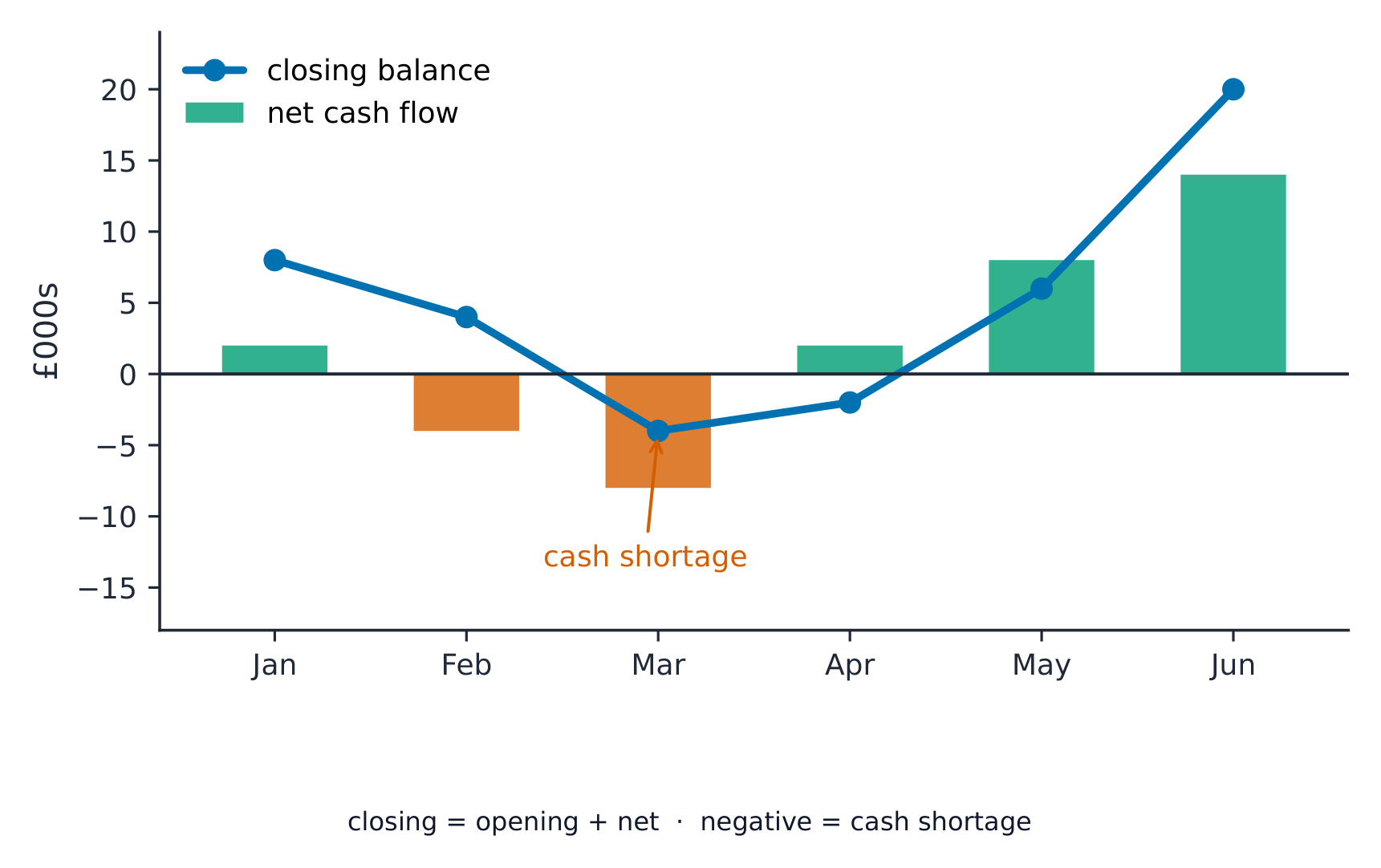
Cash 现金 is the money a business can use right now. Profit 利润 is revenue 收入 minus costs over a period. A business can be making a profit yet still run out of cash — for example, if customers have not paid yet. Running out of cash can force even a profitable business to close.
The cash-flow forecast
A cash-flow forecast 现金流预测 predicts the money coming in and going out each month. It uses:
inflows 流入 — money coming in (sales, loans),
outflows 流出 — money going out (wages, rent, materials),
net cash flow 净现金流 — inflows minus outflows,
opening balance 期初余额 — the cash held at the start of the month,
closing balance 期末余额 — the cash held at the end of the month.
Worked example. A shop expects inflows of £12,000 and outflows of £9,000 next month, and starts the month with £2,000 in the bank. Find the net cash flow and the closing balance.
Working capital is the money available for day-to-day running. It is the current assets 流动资产 (cash and things soon turned into cash) minus the current liabilities 流动负债 (debts due within a year).
To overcome cash-flow problems, a business can arrange an overdraft, delay paying suppliers, ask customers to pay sooner, sell spare assets, or cut spending.
עברית
תחזית זרימת מזומן
מזומן אינו אותו דבר כרווח
מזומן הוא הכסף שעסק יכול להשתמש בו כרגע. רווח הוא הכנסות פחות עלויות לאורך תקופה. עסק יכול לייצר רווח אך עדיין להיגמר לו המזומן — לדוגמה, אם לקוחות טרם שילמו. גימור מזומן יכול לגרום אף לעסק רווחי לסגור את דלתותיו.
מכירה באשראי מניבה רווח על הנייר כעת – המזומן מגיע הרבה מאוחר יותר
תחזית זרימת מזומנים
תחזית זרימת מזומנים נותנת תחזית לכסף הנכנס והיוצא בכל חודש. היא משתמשת ב:
כדי להתמודד עם בעיות זרימת מזומנים, עסק יכול להסדיר קרן גישור, לעכב תשלום לספקים, לבקש מלקוחות לשלם מוקדם יותר, למכור נכסים מיותרים, או לצמצם הוצאות.
הון עובד: נכסים נזולים מינוס חובות נזולים
Explore · חקור
Cash-flow forecasting · תחזית זרימת מזומנים
A forecast of cash in and out each month warns a business of a cash shortage before it strikes. · תחזית של כניסות ויציאות מזומן בחודש מזהירה את החברה ממחסור במזומנים לפני שהוא מתרחש.
Drag the monthly cash in, cash out and the one-off oven purchase — does the bakery stay out of the red all six months? · גרור את הכניסות והיציאות החודשיות, ואת הרכישת התנור המעורבת אחת — האם למאפייה תהיה רמות נמוכות יותר מאפס כל שישה החודשים?
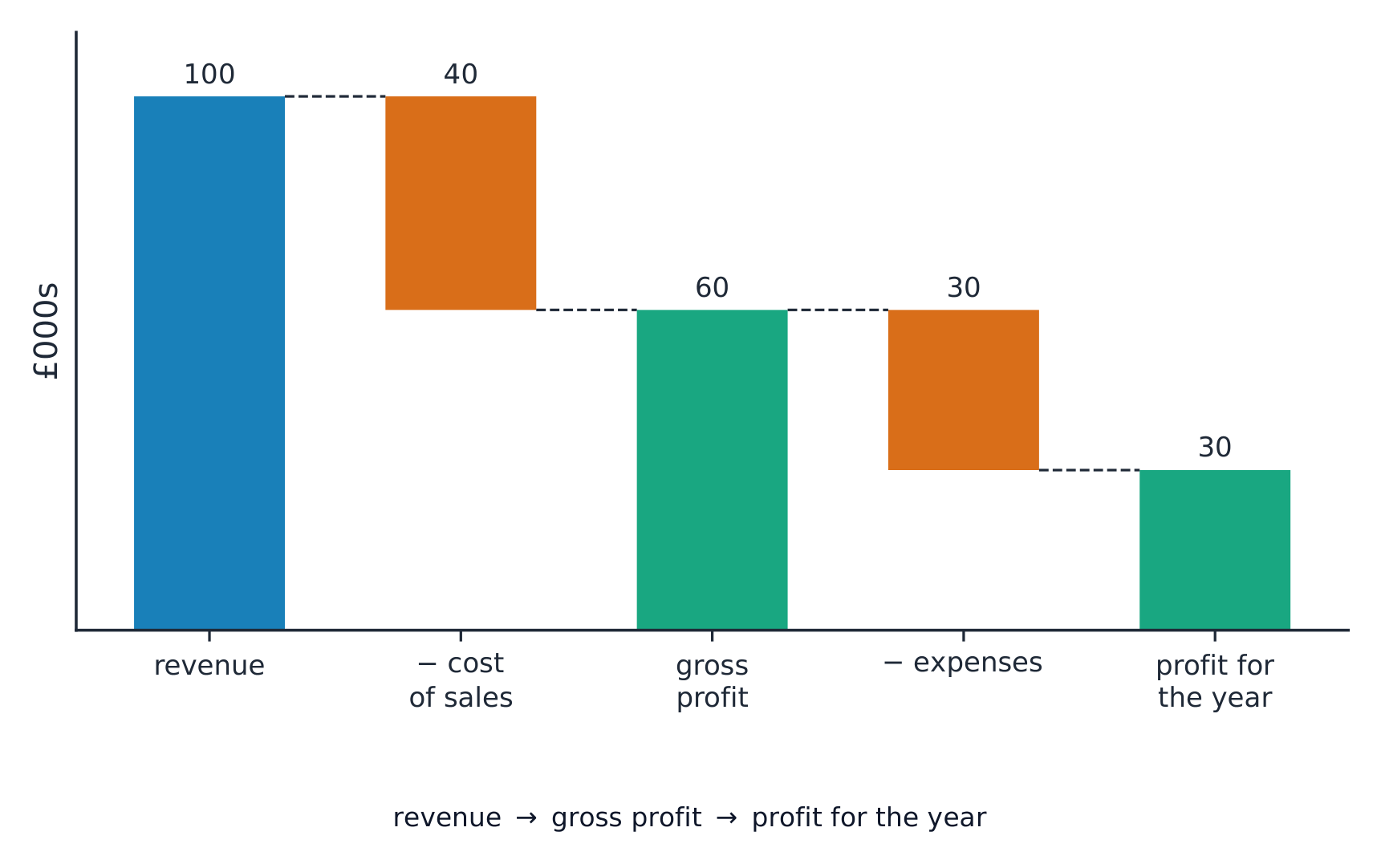
identify the main features of an income statement: revenue, cost of sales, gross profit, expenses and profit for the year
explain how income statements are used by stakeholders
עברית
זיהוי המאפיינים העיקריים של דוח תוצאות: הכנסות, עלויות מכירה, רווח ברוטו, הוצאות ורווח לשנה
הסבר על השימוש בדוח תוצאות על ידי בעלי עניין
Source: Cambridge International syllabus · מקור: הסיילבוס הבינלאומי של קמבריד'ג'
English
An income statement 损益表 shows how much profit a business made over a period, usually a year.
Line
Meaning
revenue
money from sales
cost of sales 销售成本
the cost of making or buying the goods that were sold
gross profit 毛利润
revenue minus cost of sales
expenses 费用
other running costs: rent, wages, advertising
profit for the year 年度利润
gross profit minus expenses
$$\text{gross profit} = \text{revenue} - \text{cost of sales}$$
$$\text{profit for the year} = \text{gross profit} - \text{expenses}$$
Worked example. A business has revenue of £200,000, cost of sales of £120,000 and expenses of £50,000. Find its gross profit and its profit for the year.
identify the main classifications in a statement of financial position: non-current and current assets, current and non-current liabilities, and owners' equity/capital
explain how the statement of financial position is used
עברית
זיהוי המחלקות העיקריות במצב הכספי: נכסים לא-זורמים ונכסים זורמים, חובות זורמות ולא-זורמות, והון עצמי/הון
הסבר על השימוש במצב הכספי
Source: Cambridge International syllabus · מקור: הסיילבוס הבינלאומי של קמבריד'ג'
English
A statement of financial position 财务状况表 (also called a balance sheet) shows what a business owns and what it owes (its liabilities 负债) on one day.
non-current assets 非流动资产 — things kept for the long term: buildings, machines.
current assets — short-term items: inventory 库存, money owed by customers, and cash.
current liabilities — debts due within a year: an overdraft, money owed to suppliers.
non-current liabilities 非流动负债 — debts due after more than a year: a long-term loan.
owners' equity 所有者权益 — the money the owners put in, plus profit kept in the business.
It is used to check what the business is worth, how much it owes, and whether it can pay its debts.
עברית
בורסה למניות: חברות מוגבלות ציבוריות מארגנות מימון על ידי מכירת מניות למשקיעים.
דוח מצב כספי (נקרא גם מאזן) מראה מה עסק מחזיק ומה הוא חייב (ה-חובות) ביום אחד ספציפי.
gross profit margin 毛利率 — gross profit as a percentage of revenue.
profit margin 利润率 — profit for the year as a percentage of revenue.
return on capital employed 资本回报率 (ROCE) — profit as a percentage of the capital employed 所用资本 (money invested). It shows how well the investment is used.
A higher percentage is better for all three.
Worked example. The same business (revenue £200,000, gross profit £80,000, profit for the year £30,000) has capital employed of £150,000. Find its three profitability ratios.
$$\text{acid test ratio} = \frac{\text{current assets} - \text{inventory}}{\text{current liabilities}}$$
the current ratio 流动比率 compares current assets with current liabilities. Around 1.5 to 2 is healthy.
the acid test ratio 速动比率 is stricter: it leaves out inventory, because inventory is not yet sold.
Worked example. A business has current assets of £40,000 (including £10,000 of inventory) and current liabilities of £20,000. Find its current ratio and acid test ratio.
Cash is not profit: a profitable business can still run out of cash if customers pay late. Watch the closing balance on a cash-flow forecast.
Separate internal sources (retained profit, sale of assets, owners' savings) from external ones (bank loan, overdraft, shares, leasing, trade credit).
Key formulas: net cash flow = inflows − outflows; closing balance = opening balance + net cash flow; working capital = current assets − current liabilities.
Profitability ratios (gross margin, profit margin, ROCE) — higher is better. Liquidity: the current ratio (healthy ≈ 1.5–2) and the stricter acid test (which leaves out inventory).
Only limited companies can raise money by issuing shares; a sole trader or partnership cannot.
עברית
מזומנים אינם רווח: עסק רוחי יכול להגיע לקיצוץ מזומנים אם לקוחות מאחרים בתשלום. יש לעקוב אחרי המאזן הסופי בתחזית זרמי המזומנים.
להפריד בין מקורות פנימיים (רווח נשמר, מכירת נכסים, חסכונות בעלים) לבין מקורות חיצוניים (הלוואת בנק, גילוי קשה, מניות, מימון השכרה, הארכת תשלום ספקים).
נוסחאות מפתח: זרם מזומנים נטו = כניסות − פיתוח; מאזן סופי = מאזן פתיחה + זרם מזומנים נטו; הון עבודה = נכסי מסלול − התחייבויות מסלול.
יחסים לרווחיות (שולי gross, שולי profit, ROCE) — גבוה יותר הוא טוב יותר. נוזלות: היחס הנוכחי (בריאות ≈ 1.5–2) ובדיקת החומצה המחמירה (הכוללת מחיקת מלאי).
רק חברות מוגבלות יכולות לאסוף כסף על ידי הנפקת מניות; בעל עסק יחיד או שותפות אינם יכולים.
Interactive lessons on this topic · שיעורים אינטראקטיביים בנושא זה
Work through it step by step, with instant-check exercises. · לעבור על הדברים צעד אחר צעד, עם תרגילים לבדיקה מיידית.
Pick one and the site follows you — notes, papers, videos and practice all open on it. · בחרו נושא אחד והאתר יעקוב אחריו — הערות, מסמכים, וידאו ותרגולים פתוחים בו.
Type to search notes, lessons, code, vocabulary and past-paper questions across every subject. · הקלד כדי לחפש הערות, שיעורים, קוד, אוצר מילים ושאלות מבחנים בכל הנושאים.