IGCSE Business Studies (0450) has six topics: understanding business activity, people in business, marketing, operations management, financial information and decisions, and external influences. Both papers are built around short case studies.
The case study is the paper. An answer that defines a term correctly but never mentions the business in the stem earns the knowledge mark and stops. The same answer tied to that business — its size, its market, its cash position — earns application and analysis too.
Read the stem twice before writing; the details in it are the marks. The financial content — cash-flow forecasts, break-even, simple ratios — is the most reliably scorable part, because it is right or wrong rather than judged.
What business activity is for · מהי פעילות העסקית מיועדת
Syllabus · סיילבוס
English
understand the purpose of business activity: combining factors of production (land, labour, capital, enterprise) to make goods and services that satisfy people's needs and wants
understand the economic problem: needs and wants are unlimited but resources are scarce, so choices must be made
understand opportunity cost: the next best alternative given up when a choice is made
explain the concept of added value (selling price minus cost of bought-in materials) and how a business can increase added value
הבנת מטרת הפעילות העסקית: שילוב גורמי הייצור (אדמה, עבודה, הון, עסקאות) ליצירת מוצרים ושירותים המשרתים צרכים ורצונות אנשים
הבנת הבעיה הכלכלית: צרכים ורצונות הם אינסופיים אך המשאבים מוגבלים, ולכן יש לבצע בחירות
הבנת עלות הזדמנות: האלטרנטיבה הטובה ביותר שנותרה מאחור כאשר נעשית בחירה
הסבר מושג הערך המוסף (מחיר מכירה פחות עלות חומרי רכישה) וכיצד עסק יכול להגדיל את הערך המוסף
הבנת סיבות להצלחה או לכשלון של עסקים (למשל: מיומנויות ניהול, מימון, תחרות)
Source: Cambridge International syllabus · מקור: הסיילבוס הבינלאומי של קמבריד'ג'
English
A business 企业 is an organisation that makes goods 商品 or provides services 服务 for customers 顾客.
Goods are physical things you can touch — bread, phones, cars.
Services are useful actions done for you — a haircut, a bus ride, a doctor's visit.
The purpose of business activity is to use resources 资源 to make goods and services, so that people's needs 需要 and wants 欲望 are met.
Needs are things you must have to live: food, water, shelter, clothes.
Wants are things you would like but can live without: a holiday, a games console.
Factors of production
To produce anything, a business brings together four factors of production 生产要素 — the resources needed to make goods and services.
Factor
What it means
Example
land 土地
natural resources
farmland, water, oil, minerals
labour 劳动力
the work of people
workers, managers
capital 资本
money and the man-made tools bought with it
machines, factories, vehicles
enterprise 企业家才能
the skill to bring the other three together and take risks
the owner's idea and effort
The economic problem
People's needs and wants are unlimited. But resources are scarce 稀缺 — there are not enough of them for everything. This is the economic problem 经济问题.
Because resources are scarce, you must always choose. You cannot have everything.
Opportunity cost
When you choose one thing, you give up the next best thing. The opportunity cost 机会成本 is the next best choice you give up.
Example: a business has some money and spends it on a new machine. Now it cannot also spend that money on a bigger shop. The bigger shop is the opportunity cost.
Added value
Added value 增值 is the difference between the price a business sells a product for and the cost of the raw materials 原材料 bought in to make it.
$$\text{added value} = \text{selling price} - \text{cost of bought-in materials}$$
A business can increase added value by:
raising the price, often through a strong brand 品牌 or better design,
lowering the cost of materials, for example by finding cheaper suppliers,
improving the product so customers will pay more.
Worked example. A furniture maker buys the wood and fabric for a chair for £40 and sells the chair for £110. The factory rent is £6,000 a month. Find the added value per chair.
The rent is a deliberate distractor. Added value counts only the cost of the bought-in materials, so rent, wages and other running costs stay out of it - they matter for profit, not for added value. Subtract only what was bought in to make the product, and never treat added value as if it were profit.
Why businesses succeed or fail
A business is more likely to succeed when it has:
good management 管理 — skilled leaders who plan well,
enough finance 资金 — money to pay bills while it grows,
a product customers want, and an edge over the competition 竞争 (the other businesses selling similar things).
A business may fail and close down when it runs out of cash, manages money badly, or cannot compete. Weak management and poor cash control are the most common causes.
עברית
חנויות המתחרות ברחוב הראשי: עסקים יוצרים מוצרים ושירותים כדי לענות על הצרכים של האנשים.חברות מייצרות סחורות ושירותים כדי לספק את הצרכים והרצונות של אנשים
עסק הוא ארגון שמייצר מוצרים פיזיים או מספק שירותים ללקוחות.
מוצרים הם דברים פיזיים שניתן למשוך אותם — לחם, טלפונים, מכוניות.
שירותים הם פעולות שימושיות הנעשות עבורכם — תסרוקת, נסיעה באוטובוס, ביקור אצל רופא.
המטרה של פעילות עסקית היא להשתמש במשאבים כדי ליצור מוצרים ושירותים, כך שהצרכים ורצונות של האנשים יסופקו.
צרכים הם דברים שאתם חייבים כדי להתקיים: מזון, מים, מקלט, בגדים.
רצונות הם דברים שאתם מעדיפים אך יכולים להסתדר בלעדם: חופשה, קונסולת משחקים.
גורמי ייצור
כדי לייצר כל דבר, עסק מאחד ארבעה גורמי ייצור — המשאבים הנדרשים ליצירת מוצרים ושירותים.
גורם
משמעות
דוגמה
קרקע
משאבים טבעיים
אדמות חקלאיות, מים, נפט, מינרלים
עבודה
העבודה של אנשים
עובדים, מנהלים
הון
כסף וכלי עשוי ידי אדם שנרכשו עמו
מכונות, מפעלים, רכבים
יזמות
המיומנות לאחד את השלושה גורמים האחרים ולקחת סיכונים
הרעיון והמאמץ של בעל העסק
ארבעת גורמי הייצור מאוחדים כדי לייצר מוצרים ושירותים
הבעיה הכלכלית
הצרכים והרצונות של אנשים אינם מוגבלים. אך המשאבים נדירים — אין מספיק מהם לכל צורך. זוהי ה-בעיה הכלכלית.
מכיוון שמשאבים נדירים, עליך תמיד לבחור. לא ניתן לקבל את הכל.
עלות הזדמנות
כשאתה בוחר במועדף אחד, אתה ויתרת על האפשרות הטובה ביותר הבאה. עלות ההזדמנות היא המועדף הטוב ביותר שוותרת עליו.
למשל: לחברה יש כסף והיא משקיעה אותו במכונה חדשה. כעת היא לא יכולה גם לשקוע את הכסף בחנות גדולה יותר. החנות הגדולה יותר היא עלות ההזדמנות.
עלות ההזדמנות היא המועדף הטוב ביותר שוותרת עליו
ערך מוסף
ערך מוסף הוא ההפרש בין המחיר שבו חברה מוכרת מוצר לבין עלות ה-חומרי גלם שנרכשו ליצירתו.
$$\text{added value} = \text{selling price} - \text{cost of bought-in materials}$$
ערך מוסף הוא מחיר המכירה פחות עלות החומרים הנרכשים
חברה יכולה להגדיל את הערך המוסף על ידי:
הרמת המחיר, לעיתים קרובות באמצעות מותג חזק או עיצוב טוב יותר,
הורדת עלות החומרים, לדוגמה על ידי מציאת ספקים זולים יותר,
שיפור המוצר כדי שהלקוחות ישלמו יותר.
דוגמה מפורטת. יצרן רהיטים קנה עץ ובד לכיסא בתשלום של £40 ומכר את הכיסא בתשלום של £110. השכירות למפעל היא £6,000 לחודש. מצאו את הערך המוסף לכל כיסא.
השכירות היא מפנה מתכוונן. ערך מוסף מחושב רק לפי עלות החומרים הנרכשים, ולכן שכירות, משכורות ועלויות הפעלה אחרות אינן נכללות בהן — הן רלוונטיות ל-רווח, ולא לערך מוסף. חסרו רק את מה שנרכש ליצירת המוצר, ואין לטפל בערך מוסף כאילו היה רווח.
מדוע עסקים מצליחים או נכשלים
עסק סביר יותר להצליח כאשר יש לו:
ניהול טוב — מנהיגים מיומנים המתכננים היטב,
הון מספיק — כסף לכסות חשבונות בעת הגדילה,
מוצר שלקוחות רוצים, ויתרון על פני התחרות (העסקים האחרים המוכרים מוצרים דומים).
עסק עשוי להיכשל ולסגור כאשר נגמר לו מזומן, ניהל את הכסף בצורה לא טובה, או אינו יכול להתחרות. ניהול חלש ושליטה גרועה במזומנים הם הסיבות הנפוצות ביותר.
Explore · חקור
Value added lab · מעבדת הוספת ערך
Change the bought-in cost, the selling price and other costs to see how business activity creates value added. · שנה את עלות הרכישות, מחיר המכירה ועלויות אחרות כדי לראות כיצד פעילות עסקית יוצרת תוספת ערך.
ההבדלה בין הסקטור הפרטי לבין הסקטור הציבורי והצגת מאפייני כל אחד מהם
Source: Cambridge International syllabus · מקור: הסיילבוס הבינלאומי של קמבריד'ג'
English
The three sectors
We sort all business activity into three groups, by how far the work is from the final customer.
Sector
What it does
Examples
primary sector 第一产业
takes natural resources from the earth
farming, fishing, mining, oil drilling
secondary sector 第二产业
makes goods from raw materials
building, manufacturing 制造业, food processing
tertiary sector 第三产业
provides services
shops, banks, transport, tourism
How the sectors change
The importance of each sector changes as a country grows richer.
In a developing economy 发展中经济体 (a poorer country building up its industry), the primary sector is often large — many people farm.
As the country grows, the secondary sector grows too.
In a developed economy 发达经济体 (a rich, industrialised country), most people work in the tertiary sector.
De-industrialisation 去工业化 is when the secondary sector shrinks and the tertiary sector grows. This has happened in many developed economies as factories move abroad.
Private sector and public sector
The private sector 私营部门 is made up of businesses owned by private people and groups. Most aim to make a profit 利润. The public sector 公共部门 is made up of organisations owned by the government, which aim to provide a service to the public.
Private sector
Public sector
Owner
private people and companies
the government
Main aim
usually profit
provide services to everyone
Examples
shops, factories, private firms
state schools, public hospitals, the army
עברית
שלושת התחומים
אנו ממיינים כל פעילות עסקית לשלושה קבוצות, לפי הקרבה של העבודה ללקוח הסופי.
תחום
מה שהוא עושה
דוגמאות
תחום ראשוני
לוקח משאבים טבעיים מהקרקע
חקלאות, דיג, מכרות, קידוח נפט
תחום משני
מייצר סחורות מחומרי גלם
בנייה, ייצור, עיבוד מזון
תחום תרטיאי
מספק שירותים
חנויות, בנקים, תחבורה, תיירות
הפעילות העסקית זורמת מתחום ראשוני דרך תחום משני עד לתחום תרטיאי
כיצד התחומים משתנים
החשיבות של כל תחום משתנה ככל שהמדינה עשירה יותר.
בכלכלה פותחת (מדינה ענייה הבונה את תעשייתה), התחום הראשוני הוא לעיתים גדול — אנשים רבים עוסקים בחקלאות.
ככל שהמדינה צומחת, גם התחום השניי צומח.
בכלכלה מפותחת (מדינה עשירה ותעשייתית), רוב האנשים עובדים בתחום התרטיאי.
התעשייה היא תהליך שבו התחום השני (התעשייתי) צמצם את פעילותו והתחום השלישי (שירותי) גדל. תהליך זה התרחש בכלכלות מפותחות רבות כאשר מפעלים עברו לחו"ל.
התחום הפרטי והתחום הציבורי
התחום הפרטי מורכב ממגזרים המנוהלים על ידי פרטים וקבוצות פרטיות. רובם שואפים להשיג רווח. התחום הציבורי מורכב מארגונים המנוהלים על ידי הממשלה, אשר מטרתם היא לספק שירותים לציבור.
תחום פרטי
תחום ציבורי
בעלים
אנשים וחברות פרטיות
הממשלה
מטרה ראשונית
בדרך כלל רווח
ספק שירותים לכל אדם
דוגמאות
חנויות, מפעלים, חברות פרטיות
בתי ספר מדינתיים, בתי חולים ציבוריים, הצבא
Explore · חקור
Classify business activity · מיון פעילות עסקית
Sort real firms by the sector they mainly belong to. · סדרו חברות אמיתיות לפי המגזר שבו הן משתייכות בעיקר.
1.3
Enterprise, business growth and size · יזמות, גידול ועסקים וגודלם
Syllabus · סיילבוס
English
describe the characteristics of a successful entrepreneur (risk-taker, hard-working, innovative, confident, organised)
explain the contents and purpose of a business plan and how it helps a business raise finance
explain why and how governments support business start-ups (grants, loans, training, advice)
measure the size of a business (number of employees, revenue/sales, capital employed) and the limitations of each measure
explain why some businesses remain small and why/how businesses grow (internal/organic growth and external growth: mergers and takeovers, horizontal, vertical and conglomerate integration)
explain economies and diseconomies of scale (purchasing, financial, managerial, technical, marketing)
עברית
תיאור המאפיינים של יזם מצליח (נושא סיכונים, עובד קשה, חדשני, סומך על עצמו, מאורגן)
הסבר על התוכן והמטרה של תוכנית עסקית וכיצ היא עוזרת לעסק לגייס מימון
הסבר מדוע וכיצ הממשלות תומכות בהקמת עסקים חדשים (מענקים, הלוואות, הכשרה, ייעוץ)
מדידת גודל עסק (מספר עובדים, הכנסות/מכירות, הון מושקע) וביצוע הגבלות של כל מדידה
הסבר מדוע חלק מעסקים נשארים קטנים ומדוע/כיצ עסקים צומחים (צמיחה פנימית/אורגנית וצמיחה חיצונית: מיזוגים ורכישות, אינטגרציה אופקית, אנכית וקונגלומרטית)
הסבר על תמורות עסקיות ואי-תמורות עסקיות (קניות, פיננסיות, מנהליות, טכניות, שיווק)
Source: Cambridge International syllabus · מקור: הסיילבוס הבינלאומי של קמבריד'ג'
English
The entrepreneur
An entrepreneur 企业家 is a person who sets up a business and takes the risk of running it. Successful entrepreneurs usually:
are willing to take risk 风险 — to risk their own money on a new idea,
work hard and do not give up,
are innovative 创新 — full of new ideas,
are confident and good at making decisions,
are well organised, able to manage time, money and people.
The business plan
A business plan 商业计划书 is a document that describes the business and its future. It usually contains the business idea and objectives, the product, the market 市场 it will sell to, who will run it, and a plan for the money.
A business plan has two main uses:
it makes the owner think carefully and plan ahead,
it helps the business raise finance 筹集资金 — banks and investors want to see a plan before they lend or invest.
Government support for start-ups
A start-up 初创企业 is a brand-new business. New businesses create jobs and help the economy grow, so governments often support them with:
grants 补助金 — money given that does not have to be paid back,
low-interest loans 贷款 — money lent on easy terms,
training and advice for new owners,
lower taxes in the first years.
Measuring the size of a business
You can measure how big a business is in several ways. Each one has a weakness.
Measure
How it works
Limitation
number of employees 员工
count the staff
a high-tech firm can have few staff but large output 产量
revenue 收入 (sales)
the value of everything sold
a firm selling cheap goods may sell a lot yet be small
capital employed 所用资本
the total money invested in the business
hard to compare between different industries
Staying small or growing
Some businesses stay small on purpose: the owner wants to keep control, the market is small, or the product is specialised.
Businesses that want to grow bigger — to achieve growth 增长 — can do it in two ways.
Internal growth 内部增长 (also called organic growth): the business grows by itself, by selling more, opening new branches, or adding new products. It is slower but lower-risk.
External growth 外部增长: the business joins with another business. This is faster. It happens through a merger 合并 (two businesses agree to join into one) or a takeover 收购 (one business buys control of another).
External growth is classified by the kind of business that is joined.
Type
What joins
Example
horizontal integration 横向一体化
two firms at the same stage of the same business
two car makers join
vertical integration 纵向一体化
two firms at different stages of the same business
a car maker buys a tyre maker
conglomerate integration 混合一体化
two firms in completely different businesses
a car maker buys a food company
Economies and diseconomies of scale
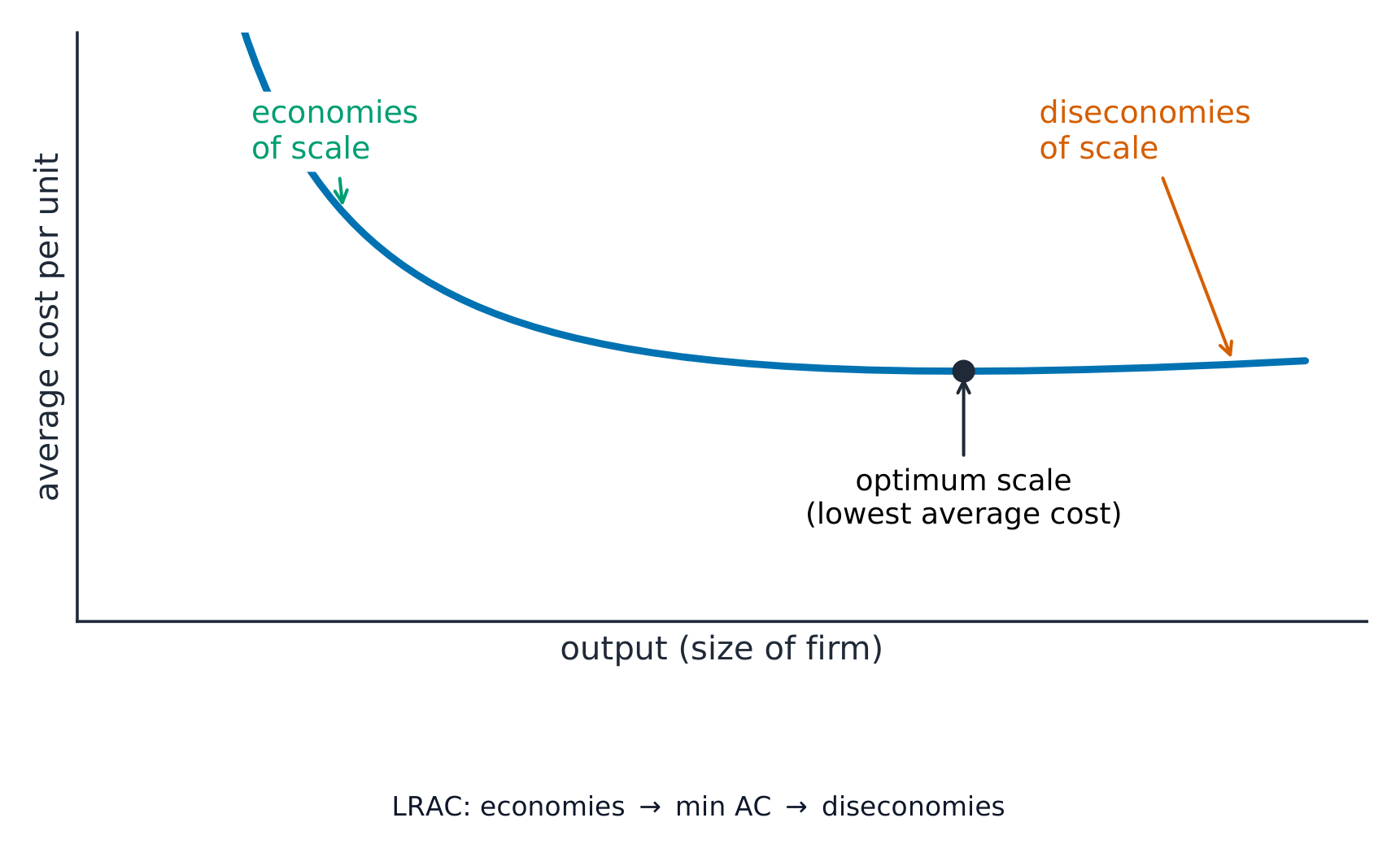
As a business grows, its cost per unit can fall. These savings are called economies of scale 规模经济.
Type
How the cost per unit falls
purchasing
buying large amounts of materials brings a lower price
financial
large firms can borrow money more cheaply
managerial
the firm can afford expert managers
technical
the firm can use large, efficient machines
marketing 营销
the cost of advertising 广告 is spread over more goods
If a business grows too big, the cost per unit can start to rise again. These are diseconomies of scale 规模不经济. They happen because communication 沟通 in a huge firm gets worse, workers feel less important and work less hard, and managers find the firm hard to control.
עברית
היזם
יזם הוא אדם שמייסד עסק ונושא בסיכון ניהולו. יזמים מצליחים בדרך כלל:
מוכנים לקחת סיכון – למסור כסף אישי על רעיון חדש,
עובדים קשה ואינם נופלים
הם חדשניים – מלאים ברעיונות חדשים,
הם בטוחים בעצמם ומצטיינים בקבלת החלטות,
הם מאורגנים היטב, מסוגלים לנהל זמן, כסף ואנשים.
מה יזמים מצליחים בדרך כלל כמו
תוכנית העסק
תוכנית עסק היא מסמך המתאר את העסק ואת עתידו. היא מכילה בדרך כלל את הרעיון העסקי והמטרות, את המוצר, את השוק אליו הוא ימכר, מי יהיה אחראי על ההפעלה, ותוכנית לכספים.
לתוכנית עסק יש שני שימושים עיקריים:
זה גורם לבעלים לחשוב בקפידה ולתכנן מראש,
זה עוזר לעסק להשיג מימון — בנקים ומשקיעים רוצים לראות תוכנית לפני שהם ילוו או ישקיעו.
תמיכת הממשלה בתחילתי עסקים
חברת תחילה היא עסק חדש לגמרי. חברות חדשות יוצרות מקומות עבודה ועוזרות לכלכלה לצמוח, לכן הממשלות לעיתים תדירות תומכות בהן באמצעות:
מענקים — כסף שניתן ואינו דורש החזרה,
הלוואות בעלות ריבית נמוכה — כסף שמלווה בתנאים קלים,
הכשרה וייעוץ לבעלים חדשים,
מס נמוך יותר בשנים הראשונות.
מדידת גודל העסק
ניתן למדוד את גודל העסק בדרכים שונות. לכל אחת מהן יש חולשה.
מדידה
כיצד זה עובד
מגבלה
מספר עובדים
ספירת הצוות
חברה הייטקית עשויה להיות עם מעט צוות אך תפוקה גדולה
הכנסות (מכירות)
הערך של כל הנמכר
חברה המוכרת מוצרים זולים עשויה למכור הרבה אך להישאר קטנה
הון מושקע
הסכום הכולל שהושקע בעסק
קשה להשוות בין תעשיות שונות
השארה קטנה או צמיחה
חלק מעסקים נשארים קטנים במתכוון: הבעย์ רוצה לשמור על שליטה, השוק קטן או המוצר הוא ספציפי.
עסקים הרצוניים לצמוח יותר — כדי להשיג צמיחה — יכולים לעשות זאת בשתי דרכים.
צמיחה פנימית (הנקראת גם צמיחה אורגנית): העסק צומח מעצמו, על ידי מכירה יותר, פתיחת סניפים חדשים או הוספת מוצרים חדשים. זוהי איטית יותר אך עם סיכון נמוך יותר.
צמיחה חיצונית: העסק מצטרף לעסק אחר. זהו תהליך מהיר יותר. זה מתרחש דרך מיזוג (שתי חברות מסכימות להתחדד לאחת) או קנייה (חברה אחת קונה שליטה בחברה אחרת).
צמיחה חיצונית מסווגת לפי סוג העסק שהוא מצטרף.
סוג
מה מחבר
דוגמה
אינטגרציה אופקית
שתי חברות באותה רמת פעילות עסקית
שתי יצרניות מכוניות מתמזגות
אינטגרציה אנכית
שתי חברות ברמות שונות של אותה פעילות עסקית
יצרנית מכוניות קונה יצרנית צמיגים
אינטגרציה קונגלומרטיבית
שתי חברות בתחומי עסקים שונים לחלוטין
יצרנית מכוניות קונה חברה מזון
תמורות ומתמורות גודל
ככל שהעסק גדל, העלות ליחידה יכולה לרדת. חיסכון זה נקרא תמורת גודל.
סוג
כיצד העלות ליחידה יורדת
רכישה
רכישת כמויות גדולות של חומרים מביאה למחיר נמוך יותר
פיננסית
חברות גדולות יכולות לקבל הלוואות במחיר זול יותר
מנהלית
החברה יכולה להרשות לעצמה מנהלים מומחים
טכנית
החברה יכולה להשתמש במכונות גדולות ויעילות
שיווק
עלות הפרסום מתפוצעת על מספר גדול יותר של מוצרים
אם עסק גדל מדי, העלות ליחידה עשויה להתחיל לעלות שוב. אלו הן מתמורות גודל. הן נובעות מכך שהתקשורת בחברה ענקית הופכת לגרועה, העובדים מרגישים פחות חשובים ועובדים פחות בעצימות, והמנהלים מתקשים לשלוט בחברה.
העלות הממוצעת ליחיד יורדת (מנועי סקאלה) ואז עולה (דיס-סקאלה) כשהחברה גדלה
Explore · חקור
Business case lab · מעבדת מקרה עסקי
Classify real decisions so the main business concept becomes concrete. · מיינו החלטות אמיתיות כדי שהמושג המרכזי בעסק יהפוך למلمשי.
Types of business organisation · סוגי ארגון עסקי
Syllabus · סיילבוס
English
describe the features, advantages and disadvantages of sole traders, partnerships, private limited companies and public limited companies
explain the difference between unlimited and limited liability and between incorporated and unincorporated businesses
describe franchises, joint ventures and social enterprises and their advantages and disadvantages
explain the features of public sector business organisations (public corporations)
עברית
תיאור המאפיינים, היתרונות והחסרונות של בעלי עסקים בנפרד, שותפויות, חברות פרטיות מוגבלות וחברות ציבוריות מוגבלות
הסבר על ההבדל בין אחריות בלתי מוגבלת לאחריות מוגבלת, ובין עסקים רשומים לבעלי עסקים שאינם רשומים
תיאור פריינצ'יזות, מיזמים משותפים ועסקים חברתיים ואתר יתרונותיהם וחסרונותיהם
הסבר על מאפייני ארגוני עסקים בתחום הציבור (חברות ציבוריות)
Source: Cambridge International syllabus · מקור: הסיילבוס הבינלאומי של קמבריד'ג'
English
Liability
Liability 责任 means who must pay the debts 债务 if a business cannot pay them itself.
With unlimited liability 无限责任, the owner is personally responsible for all the debts. If the business fails, the owner may lose personal things, like a house or car, to pay them.
With limited liability 有限责任, the owner can only lose the money they put into the business. Their personal things are safe.
Incorporated and unincorporated
An incorporated 法人 business has a separate legal identity from its owners. The business itself can own things and be taken to court. Its owners get limited liability. Companies are incorporated.
An unincorporated 非法人 business is not separate from its owner in law. Sole traders and partnerships are unincorporated.
The four main types
A sole trader 独资企业 is a business owned by one person.
Advantages
Disadvantages
easy and cheap to set up
unlimited liability
the owner keeps all the profit
hard to raise finance
the owner makes all decisions
long hours, no one to share the work
private (accounts stay secret)
the business ends if the owner stops
A partnership 合伙企业 is owned by two or more people who share the work, the decisions and the profit. They usually sign a written agreement.
Advantages
Disadvantages
more owners bring more capital
unlimited liability (in most cases)
work and ideas are shared
the profit is shared
easy to set up
partners can disagree
one partner's mistake affects everyone
A private limited company 私人有限公司 (often "Ltd") is owned by shareholders 股东, but its shares cannot be sold to the public. The owners are often family and friends.
Advantages
Disadvantages
limited liability
more legal rules and paperwork
easier to raise capital than a sole trader
shares cannot be sold to the public
control stays in a small group
accounts must be shared with the government
A public limited company 公众有限公司 (often "plc") is a large company whose shares 股份 can be bought by the public on the stock exchange 证券交易所.
Advantages
Disadvantages
can raise very large amounts of capital
expensive and complex to set up
limited liability
accounts are fully public
well known, so easy to borrow
anyone can buy shares, so there is a risk of takeover
the original owners may lose control
Shareholders may receive a share of the profit, called a dividend 股息.
Other forms of organisation
Franchise 特许经营: a person (the franchisee 加盟商) pays to use the name, products and methods of an existing successful business (the franchisor 授权商). The franchisee gets a known brand, training and lower risk, but must pay fees and a share of the profit and has less freedom. Many fast-food chains work this way.
Joint venture 合资企业: two businesses agree to share the cost, risk and profit of one project, while staying separate companies.
Social enterprise 社会企业: a business that trades to help society or the environment, not only to make profit. Most of its profit is put back into its social aims.
Public sector organisation
A public corporation 国有企业 is a business owned and run by the government, such as a national rail or postal service. Its aims include giving an important service to everyone, not only making a profit.
עברית
מטה חברת: העסקים נעים מעצמאים ועד לחברות ציבוריות ענקיות.
אחריות
אחריות מציינת מי חייב לשלם את החובות אם העסק אינו יכול לשלם אותם בעצמו.
עם אחריות בלתי מוגבלת, לבעל יש אחריות אישית על כל החובות. אם העסק נכשל, הבעל עלול לאבד רכוש אישי כמו בית או רכב כדי לשלם אותם.
עם אחריות מוגבלת, לבעל ניתן לאבד רק את הכסף שהשקיע בעסק. הרכוש האישי שלו בטוח.
חברה משולבת ולא משולבת
חברה משולבת היא לחברה זהות משפטית נפרדת מבעליה. החברה עצמה יכולה לרכוש רכוש ולהישפט. לבעליה יש אחריות מוגבלת. חברות הן משולבות.
חברה שאינה משולבת אינה נפרדת מבעליה במשפט. בעלי עסקים בודדים ושיתופי פעולה הם שאינם משולבים.
ארבעת הסוגים הראשיים
בעל עסק בודד הוא עסק בבעלות אדם אחד.
יתרונות
חסרונות
קל וזול להקמה
אחריות אינסופית
המנהל שומר על כל הרווח
קשה לגייס מימון
המנהל מקבל את כל ההחלטות
שעות עבודה ארוכות, אין מי לחלק את העבודה
פרטי (החשבונות נשארים סודיים)
העסק נפסק אם המנהל מפסיק
שותפות מנוהלת על ידי שני אנשים או יותר, המשתתפים בעבודה, בקבלת ההחלטות ובחלוקת הרווח. בדרך כלל הם חותמים על הסכם כתוב.
יתרונות
חסרונות
ריבוי בעלים מביא ע capital יותר
אחריות אינסופית (ברוב המקרים)
העבודה והרעיונות משותפים
הרווח מחולק
קל להקמה
השותפים עשויים להתמכח
טעות של שותף אחת פוגעת בכל האנשים
חברה מוגבלת פרטית (לרוב "Ltd") מנוהלת על ידי אקדמאים, אך המניות שלה לא נמכרות לציבור. הבעלים הם לעיתים קרובות משפחה וחברים.
יתרונות
חסרונות
אחריות מוגבלת
יותר תקנות משפטיות ומסמכים
קל יותר לגייס ע capital מאשר יחיד-פעיל
מניות לא נמכרות לציבור
השליטה נשארת בקבוצה קטנה
החשבונות חייבים להיות זמינים לממשלה
חברה מוגבלת ציבורית (לרוב "plc") היא חברה גדולה שהמניות שלה ניתנות לקנייה על ידי הציבור בבורסה לניירות ערך.
יתרונות
חסרונות
ניתן לגייס סכומי ע capital גדולים מאוד
הקמה יקרה ומורכבת
אחריות מוגבלת
החשבונות מפורסמים לחלוטין
ידוע היטב, ולכן קל להשקיע בו
כל אחד יכול לקנות מניות, ולכן קיים סיכון של התחלפה בבעלות
בעלי המניות המקוריים עשויים לאבד את השליטה
עלולים לקבל בעלי המניות חלק מהרווח, הנקרא דיבידנד.
סוגי עסקים לפי אחריות: ללא אינטגרציה משפטית (אחריות אינסופית) ואינטגרציה משפטית (אחריות מוגבלת)
צורות ארגון נוספות
פרנ차يز: אדם (הפרנचाיזי) משלם כדי להשתמש בשם, במוצרים ובשיטות של עסק קיים והצלחתי (הפרנצ'ייזר). הפרנचाיזי מקבל מותג מוכר, הכשרה וסיכון נמוך יותר, אך חייב לשלם עמלות וחלק מהרווח ויש לו פחות חופש פעולה. סדרת מסעדות מהירות רבות פועלת על פי שיטה זו.
מיזם משותף: שני עסקים מסכימים לחלוק במחיר, בסיכון וברווח של פרויקט אחד, תוך שמירה על כך שהם נותרו חברות נפרדות.
ארגון חברתי: עסק העוסק במסחר כדי לתרום לקהילה או לסביבה, ולא רק כדי להרוויח רווח. רוב הרווח שלו מושקע חזרה למטרות החברתיות שלו.
ארגונים בתחום הציבורי
חברה ציבורית היא עסק בבעלות ומנהל על ידי הממשלה, כמו שרת רכבות לאומית או שרות דואר. מטרתה כוללת מתן שירות חשוב לכל האוכלוסייה, ולא רק הרשאת רווח.
Explore · חקור
Choose the ownership form · בחרו את צורת הבעלות
Compare ownership, control and liability in real business types. · השוו בין בעלות, שליטה ואחריות במיזמים עסקיים אמיתיים.
Added value = selling price − cost of bought-in materials. A business raises it with a strong brand, better design, or cheaper materials.
Know the three sectors: primary (extracts raw materials), secondary (makes goods), tertiary (services). As a country develops, employment shifts from primary towards tertiary.
Unlimited liability (sole traders, partnerships) puts the owner's personal things at risk; limited liability (Ltd, plc) limits any loss to the money invested.
A stakeholder is anyone affected by the business, and their objectives often conflict — owners want profit, workers want higher pay, the community wants less pollution.
Economies of scale cut the cost per unit as a firm grows; growing too big brings diseconomies of scale (cost per unit rises).
עברית
ערך נוסף = מחיר מכירה − עלות חומרי גלם שנרכשו. עסק מגדיל אותו באמצעות מותג חזק, עיצוב טוב יותר או חומרים זולים יותר.
הכירו את שלושת התחומים: תחום ראשוני (חולש חומרי גלם), תחום שניוני (מייצר סחורות), תחום תרציוני (שירותים). ככל שהמדינה מתפתחת, ההעסקה משתנה מהתחום הראשוני לעבר התחום התרציוני.
אחריות בלתי מוגבלת (בעלי עסק יחיד, שיתופי פעולה) חושפת את הנכסים האישיים של הבעלים לסכנה; אחריות מוגבלת (Ltd, plc) מגבילה את כל הפסד אפשרי לכסף שהושקע.
מעורב הוא כל אדם שנפגע מעסק, והמטרות שלהם לעיתים קרובות נמצאות בסתירה – בעלי העסק רוצים רווח, העובדים רוצים שכר גבוה יותר, והקהילה רוצה פחות זיהום.
חסכי גודל מפחית את העלות ליחידה כשהחברה גדלה; גדילה גדולה מדי מביאה לחוסר-חסכי גודל (העלות ליחידה עולה).
תיאור שיטות מוטיבציה פיננסיות: שכר (תשלום לפי שעות/תשלום לפי יחידות), משכורת, עמלה, בונוס, חלוקת רווחים, זכויות נלוות
תיאור שיטות מוטיבציה לא פיננסיות: סיבוב בתפקיד, עושר תפקודי, הרחבת תפקוד, אוטונומיה, עבודה בצוות, הכשרה, הזדמנויות לקידום
Source: Cambridge International syllabus · מקור: הסיילבוס הבינלאומי של קמבריד'ג'
English
Motivation 激励 is the drive that makes people want to work hard. A well-motivated workforce 员工队伍 — all the employees 员工 in a business — brings real benefits:
higher productivity 生产率 — each worker produces more,
lower absenteeism 缺勤 — fewer workers stay away from work,
lower labour turnover 员工流动率 — fewer workers leave, so the business spends less time and money hiring and training new staff.
Motivation theories
Three thinkers explain what makes workers work hard.
Thinker
Main idea
Taylor
Workers are mainly motivated by pay. Pay them more for more work (piece rate) and they work harder.
Maslow
People have a hierarchy of needs 需求层次: five levels, from basic pay and safety up to respect and reaching your full potential. You must meet the lower needs before the higher ones can motivate.
Herzberg
Two groups of factors. Hygiene factors 保健因素 (pay, conditions, rules) do not motivate, but poor ones cause unhappiness. Motivators 激励因素 (achievement and responsibility) truly drive people to work harder.
Financial methods of motivation
These reward workers with money.
Method
What it means
wage 工资
regular pay, often by the hour or week
time rate 计时工资
pay for each hour worked
piece rate 计件工资
pay for each item made
salary 薪金
a fixed yearly amount, paid monthly
commission 佣金
pay based on how much you sell
bonus 奖金
an extra payment for good work
profit sharing 利润分享
workers get a share of the company's profit
fringe benefits 额外福利
extras like a company car, free meals or health care
Worked example. A factory pays a piece rate of £3 per item. Anya makes 210 items in a week. Ben is on a time rate of £12 per hour for a 40-hour week. Who earns more, and what risk does the piece rate carry? Anya earns 210 × £3 = £630. Ben earns 40 × £12 = £480, so Anya earns £150 more. But paying for each item made tempts workers to rush, so quality may fall and more items are rejected - which is why a piece rate usually has to be paired with quality checks. Show the calculation, then judge it: a question that asks who earns more and for an evaluation gives marks for the number and for the drawback.
Non-financial methods of motivation
These motivate without extra money.
job rotation 工作轮换 — workers switch between different tasks, so work is less boring.
job enlargement 工作扩大化 — adding more tasks at the same level.
job enrichment 工作丰富化 — giving more challenging tasks and more responsibility.
autonomy 自主权 — letting workers make some of their own decisions.
teamworking 团队合作 — working in small groups.
training 培训 and chances for promotion 晋升 — helping workers improve and move up.
עברית
היררכיית הצרכים של מסלו, עם דוגמאות מהעבודה בכל רמה.עובדים ממוטיוונים עובדים קשה יותר, מה שמעלה את התפוקה
מוטיבציה היא הדחיפה הגורמת לאנשים לרצון לעבוד קשה. צוות עובדים מוטיב היטב — כל העובדים בחברה — מביא יתרונות אמיתיים:
פרודוקטיביות גבוהה יותר — כל עובד מייצר יותר,
יעדרות נמוכה יותר — פחות עובדים נשארים הרחק מעבודה,
תנועת עובדים נמוכה יותר — פחות עובדים עוזבים, ולכן החברה מבזבזת פחות זמן וכסף על גיוס ואימון עובדים חדשים.
תיאוריות מוטיבציה
שלושה חוכמים מסבירים מה גורם לעובדים לעבוד קשה.
חושב
רעיון מרכזי
טיילור
העובדים מוטיבים בעיקר בשכר. לשלם להם יותר עבור עבודה יותר (תשלום לפי יחידה) ולהם יעבדו קשה יותר.
מסלו
לאנשים יש היררכיית צרכים: חמישה רמות, מהשכר הבסיסי והביטחון ועד לקבלת כבוד והשגת מלוא הפוטנציאל. עליכם לקיים את הצרכים הנמוכים לפני שהגבוהים יכולים למתג אתכם.
הרצברג
שתי קבוצות של גורמים. גורמי היגיינה (שכר, תנאי עבודה, תקנות) אינם ממתיגים, אך חסרם גורם לאי-שביעות רצון. ממתיגים (השגה ואחריות) דוחפים אנשים באמת לעבוד קשה יותר.
היררכיית צרכים של מסלו: אנשים מקיימים צרכים נמוכים לפני גבוהים
שיטות פיננסיות למוטיבציה
שיטות אלו מעניקות לעובדים פרס כספי.
שיטה
משמעות
שכר
תשלום קבוע, לעיתים לפי שעה או שבוע
תעודת שעתי
תשלום עבור כל שעת עבודה
תעודת יחידה
תשלום עבור כל פריט המיוצר
שכר חודשי/קבוע
סכום שנתי קבוע המשולם בחודשים
עמלה
תשלום המבוסס על כמות המכירות שלך
בונוס
תשלום נוסף על ביצוע מצוין
שיתוף ברווח
העובדים מקבלים אחוז מהרווח של החברה
זכויות נלוות
תוספות כמו רכב חברתי, ארוחות חינם או טיפול רפואי
דוגמה מפורטת. מפעל משלם תעודת יחידה של £3 לכל פריט. אניה מייצרת 210 פריטים בשבוע. בן מקבל תעודת שעתי של £12 לשעה בשבוע של 40 שעות. מי מרוויח יותר, ומהו הסיכון הקשור בתעודת יחידה? אניה מרוויחה 210 × £3 = £630. בן מרוויח 40 × £12 = £480, ולכן אניה מרוויחה £150 יותר. אך תשלום לפי כל פריט המיוצר גורם לעובדים להאיץ, כך שה-איכות עשויה לרדת ויותר פריטים יידחו - ולכן תעודת יחידה צריכה להיות לרוב מצומדת לבדיקות איכות. הצג את החישוב, ולאחר מכן השקל: שאלה ששואלת מי מרוויח יותר וגם מבקשת הערכה זוכה נקודות גם על הספרות וגם על ההיעילות.
שיטות אינטגרציה לא פיננסיות
אלו מעודדות ללא תשלום נוסף.
סיבוב תפקידים — העובדים מחליפים בין משימות שונות, כך שהעבודה פחות משעממת.
הרחבת תפקיד — הוספת משימות נוספות באותה רמה.
עשרון תפקידים — מתן משימות מאתגרות יותר ואחריות גדולה יותר.
אוטונומיה — אפשרות לעובדים לקבל חלק מההחלטות בעצמם.
עבודה בצוות — עבודה בקבוצות קטנות.
הכשרה והזדמנויות ל-קידום — עזרה לעובדים לשפר את יכולותיהם ולהתקדם.
Explore · חקור
Maslow's hierarchy of needs · היררכית הצרכים של מסלו
People are motivated by a ladder of needs — a business motivates staff by helping them up it. · אנשים מונעים על ידי סולם צרכים — עסק מניע את הצוות על ידי עזרתם לעלות בו.
draw and interpret simple organisational charts; explain hierarchy, chain of command, span of control and delayering
explain the role and functions of management (planning, organising, coordinating, commanding, controlling)
describe leadership styles: autocratic, democratic and laissez-faire, and when each is appropriate
explain the role of trade unions in business
עברית
ציור ופירוט גרפי ארגוני פשוטים; הסבר היררכיה, שרשרת פיקוד, רוחב בקרה והורדת שלבים בניהול
הסבר התפקיד והפונקציות של הניהול (תכנון, ארגון, קואורדינציה, הנהגה, בקרה)
תיאור סגנונות ניהול: אוטוקרטית, דמוקרטית ולאז-פאר, ומתי כל אחד מהם מתאים
הסבר התפקיד של איגודי עובדים בעסקים
Source: Cambridge International syllabus · מקור: הסיילבוס הבינלאומי של קמבריד'ג'
English
Organisational charts
An organisational chart 组织结构图 is a diagram that shows how a business is organised — who reports to whom. It shows several ideas:
hierarchy 层级 — the levels of staff, from the top down.
chain of command 指挥链 — the line along which orders pass down from managers to workers.
span of control 管理幅度 — the number of subordinates 下属 (people directly below) that one manager controls.
delayering 扁平化 — removing one or more levels to cut costs and speed up messages.
A long chain of command (a "tall" structure) slows messages down. A wide span of control gives one manager many people to watch.
Functions of management
The five main jobs (functions) of management 管理 are:
planning 计划 — setting aims and deciding how to reach them,
organising 组织 — arranging people and resources,
coordinating 协调 — making different parts work together,
commanding 指挥 — giving instructions and guiding staff,
controlling 控制 — checking that targets are met.
Leadership styles
A leadership style 领导风格 is the way a manager leads people.
Style
How it works
Best when
autocratic 专制型
the leader decides alone and gives orders
a crisis, or with new and untrained staff
democratic 民主型
the leader asks staff for ideas before deciding
staff are skilled and want a say
laissez-faire 放任型
the leader sets goals, then lets staff work freely
creative, expert teams
Trade unions
A trade union 工会 is a group of workers who join together to protect their shared interests. A union can bargain for better pay and conditions, support a worker in a dispute, and push for safer work.
עברית
מנהלים מארגנים ומובילים את הכוח האנושי כדי שהחברה תשג את המטרות שלה.
דיאגרמות ארגוניות
תרשים ארגוני הוא דיאגרמה המראה כיצד עסק מאורגן — מי דוחה למי. היא מציגה רעיונות מספר:
היררכיה — שלבי העובדים, מהמעלה למטה.
שרשרת פקודות — הקו לאורך הכול הפקודות חולקות מנהלים לעובדים.
טווח ניהול — מספר תת-מנהלים (אנשים ישירות מתחת) שמנהל אחד שולט בהם.
סילוק שכבות — הסרת שכבה אחת או יותר לצמצום עלויות ולהאיץ את זרימת המידע.
שרשרת פקודות ארוכה (מבנה "גבוה") מאטה את זרימת המידע. טווח ניהול רחב מעניק למנהל אחד אנשים רבים לתפקח עליהם.
תרשים ארגוני מראה את שרשרת הפיקוד ואת טווח הפיקוד של כל מנהל
תפקידי ניהול
חמש התפקידים העיקריים (הפונקציות) של ניהול הם:
תכנון — קביעת יעדים והחלטה כיצד להשיג אותם,
ארגון — סידור אנשים ומשאבים,
תיאום — הבטחת פעולה משותפת בין חלקים שונים,
פקודתיות — מתן הוראות והדרכת עובדים,
בקרה — בדיקה שהיעדים מושגים.
סגנונות מנהיגות
סגנון מנהיגות הוא האופן שבו מנהל מנהיג אנשים.
סגנון
כיצד זה עובד
מתאים ביותר כש
אוטוקרטית
המנהיג מחליט לבדו ומנפיק פקודות
במצב חירום, או עם צוות חדש ולא מוכשר
דמוקרטית
המנהיג מבקש רעיונות מצוות לפני החלטה
הצוות מומחה ורוצה לקבל חלק
לאז-פרר
המנהיג קובע יעדים, ואז מאפשר לצוות לעבוד בחופשיות
צוותים יצירתיים ומומחים
איגודים מקצועיים
איגוד מקצועי הוא קבוצת עובדים המצטרפים יחד כדי להגן על האינטרסים המשותפים שלהם. האיגוד יכול למכור בשם השכר והתנאים הטובים יותר, לתמוך בעובד במחלוקת ולקדם עבודה בטוחה.
Explore · חקור
Choose the ownership form · בחרו את צורת הבעלות
Compare ownership, control and liability in real business types. · השוו בין בעלות, שליטה ואחריות במיזמים עסקיים אמיתיים.
Recruitment, selection and training · גיוס, בחירה ולימודים
Syllabus · סיילבוס
English
describe the recruitment process: job analysis, job description and person specification
compare internal and external recruitment and selection methods (application forms, CVs, interviews, tests)
describe types of training: induction, on-the-job and off-the-job, and their benefits/limitations
explain why a business may need to reduce its workforce (redundancy and dismissal) and the legal controls over employment
עברית
תיאור תהליך הגיוס: ניתוח תפקיד, תיאור תפקיד ומפרט אישיות
השוואה בין שיטות גיוס ובחירה פנימיות וחיצוניות (טופסי בקשה, קורות חיים, ראיונות, מבחנים)
תיאור סוגי ההכשרה: הכשרה מקדימה, הכשרה במהלך העבודה והכשרה מחוץ למקום העבודה, ותועלותיהם/מגבלותיהם
הסבר מדוע עסק עשוי לצורך להפחית את כוח העובדים שלו (התנתקות והוצאה) והבקרות החוקיות על העסקה
Source: Cambridge International syllabus · מקור: הסיילבוס הבינלאומי של קמבריד'ג'
English
The recruitment process
Recruitment 招聘 is finding and attracting people to apply for a job. Selection 选拔 is choosing the best person from those who apply. The process starts with three documents:
job analysis 工作分析 — studying what the job involves,
job description 工作描述 — a list of the duties and tasks of the job,
person specification 人员规格 — the skills, qualities and qualifications the right person needs.
Internal and external recruitment
Internal recruitment 内部招聘 fills the job with someone already in the business. It is cheaper and quicker, and the person is already known, but it brings in no new ideas.
External recruitment 外部招聘 fills the job from outside. It brings new ideas and skills, but it costs more and takes longer.
Common selection methods include the application form 申请表, the CV 简历 (a short summary of a person's education and work history), the interview 面试, and skills tests 测试.
Training
Training improves workers' skills. There are three main types.
induction training 入职培训 — given to new workers, to learn about the business and their role.
on-the-job training 在职培训 — learning while doing the job, beside an experienced worker.
off-the-job training 脱产培训 — learning away from the workplace, for example at a college.
Type
Benefits
Limitations
on-the-job
cheap; uses real tasks
the trainer stops their own work; bad habits can pass on
off-the-job
expert teaching; no work distractions
costs more; the skills may not fit the exact job
Reducing the workforce
Sometimes a business must cut staff numbers.
Redundancy 裁员 — the job is no longer needed, for example because a machine now does it. It is not the worker's fault.
Dismissal 解雇 — the worker is removed for a good reason, such as breaking rules or poor work.
Most countries have employment laws 劳动法 that protect workers. They cover a fair contract of employment 雇佣合同, safe conditions, fair pay, and protection from being sacked unfairly.
עברית
עסק חייב לגייס, לאמן ולהניע מספיק אנשים עם המיומנויות המתאימות.
תהליך הגיוס
גיוס הוא מציאת ומשיכת אנשים לפנות לבקשת עבודה. בחירה היא בחירת האדם הטוב ביותר מתוך הפונים. התהליך מתחיל בשלושה מסמכים:
explain the importance of effective communication and the features of good communication
compare one-way and two-way communication and internal and external communication
describe communication methods and barriers to effective communication and how to reduce them
עברית
הסבר על חשיבות התקשורת האפקטיבית ועל מאפייני תקשורת טובה
השוואה בין תקשורת חד-כיוונית לשני-כיוונית ובין תקשורת פנימית לחיצונית
תיאור שיטות תקשורת ומחסומים לתקשורת אפקטיבית וכיצד להפחית אותם
Source: Cambridge International syllabus · מקור: הסיילבוס הבינלאומי של קמבריד'ג'
English
Why communication matters
Good communication 沟通 means information is sent, received and understood correctly. It helps workers know what to do, cuts mistakes, and makes people feel valued.
The communication process has five parts: a sender 发送者, a message 信息, a medium 媒介 (the way it is sent), a receiver 接收者, and feedback 反馈 (the receiver's reply, which shows the message was understood).
Types of communication
One-way communication 单向沟通 — information flows in one direction only, with no reply (for example, a public notice).
Two-way communication 双向沟通 — the receiver can reply and give feedback. It is usually better, because it checks understanding.
Internal communication 内部沟通 — between people inside the business.
External communication 外部沟通 — between the business and outside people, like customers 顾客 or suppliers 供应商.
Barriers to communication
A communication barrier 沟通障碍 is anything that stops a message getting through clearly. Common barriers include:
a message that is too long or unclear,
a poor medium, such as a weak phone line,
language differences between sender and receiver,
a receiver who is not paying attention.
To reduce barriers: keep messages short and clear, choose the right medium, and ask for feedback to check the message was understood.
עברית
מדוע תקשורת חשובה
תקשורת טובה פירושה שהמידע נשלח, מתקבל ומובן בצורה נכונה. היא עוזרת לעובדים לדעת מה לעשות, מצמצאת טעויות וגורמת לאנשים להרגיש מעודכים.
תהליך התקשורת כולל חמישה חלקים: שולח, הודעה, אמצעי (הדרך בה נשלחת), קולט ו-משוב (תגובת הקולט, המראה שההודעה הובנה).
ההודעה זורמת מהשולח לקולט, ומשוב מאשר שהיא הובנה
סוגי תקשורת
תקשורת חד-כיוונית — המידע זורם בכיוון אחד בלבד, ללא תגובה (לדוגמה, פרסום ציבורי).
תקשורת דו-כיוונית — הקולט יכול לתגובת ולתת משוב. בדרך כלל זו שיטה טובה יותר, משום שהיא מבדיקה הבנה.
תקשורת פנימית — בין אנשים בתוך החברה.
תקשורת חיצונית — בין החברה לבין אנשים מחוץ לה, כמו לקוחות או ספקים.
מכשולים לתקשורת
מכשול תקשורות הוא כל דבר המונע מההודעה להגיע בבירור. מכשולים נפוצים כוללים:
הודעה ארוכה מדי או לא ברורה,
ערוץ תקשורת גרוע, כגון קו טלפון חלש,
הבדלים שפה בין השולח למקבל,
מקבל שאינו מתמקד.
להפחתת מחסומים: שמור על הודעות קצרות וברורות, בחר בערוץ המתאים, ובקש משוב כדי לוודא שההודעה נבנתה.
Explore · חקור
Communication route lab · מעבדת מסלולי תקשורת
Watch a message move from sender to feedback and see where noise can enter. · צפו בהעברת הודעה משולחן למשוב וראו היכן רעש עשוי להתערב.
Link motivation to its benefits: higher productivity, lower absenteeism, and lower labour turnover.
Match each theory: Taylor (pay / piece rate), Maslow (a hierarchy of needs — lower needs before higher), Herzberg (hygiene factors stop unhappiness; motivators drive real effort).
Separate financial methods (wage, piece rate, salary, commission, bonus) from non-financial ones (job rotation, job enlargement, job enrichment, autonomy).
On an organisation chart, know the chain of command (the line orders travel down) and the span of control (how many people report to one manager).
Distinguish redundancy (the job is no longer needed — not the worker's fault) from dismissal (the worker is removed for a reason such as breaking rules).
עברית
קשר את המוטיבציה ליתרונות שלה: פרודוקטיביות גבוהה יותר, היעדרות נמוכה יותר, ותנודת כוח עבודה נמוכה יותר.
התאם כל תיאוריה: טיילור (תשלום / תעריף לפי יחידה), מסלו (היררכיית צרכים — צרכים נמוכים לפני גבוהים), הרצברג (גורמי היגיינה מונעים אי-שביעות רצון; מוטיבטורים מעודדים מאמץ אמיתי).
הפרד בין שיטות פיננסיות (שכר, תעריף לפי יחידה, משכורת, עמלה, בונוס) לבין שיטות לא פיננסיות (סיבוב תפקידים, הרחבת תפקיד, עושר תפקיד, אוטונומיה).
בתרשים ארגוני, הכר את שרשרת הפיקוד (הקו שבו ההוראות זורמות למטה) ואת טווח הפיקוד (כמה אנשים מדווחים למנהל אחד).
הבדל בין פיטורים (התפקיד אינו נדרש יותר — לא אשמת העובד) לבין פיטורי נזיקה (העובד מופטר בגלל סיבה כמו פגיעה בחוקים).
explain the role of marketing: identifying and satisfying customer needs, maintaining/increasing sales and market share, building customer loyalty
explain why customers are important and the costs of losing them
distinguish niche and mass markets and explain market segmentation and its benefits
עברית
הסבר על תפקיד השיווק: זיהוי ושביעת רצון לקוחות, שמירה/הגדלת מכירות ומנת שוק, בניית נאמנות לקוח
הסבר מדוע לקוחות חשובים ומהן העלויות של אובדנם
הבחנה בין שוקי נישה לשווקי המון והסברת חלוקת שוק ותועלותיה
Source: Cambridge International syllabus · מקור: הסיילבוס הבינלאומי של קמבריד'ג'
English
Marketing 营销 is the work of finding out what customers 顾客 want, then making, pricing, selling and promoting products to meet those wants at a profit.
Marketing has several roles:
find out and satisfy what customers want,
keep and increase sales 销售额 and market share 市场份额,
build customer loyalty 顾客忠诚度 so buyers come back again.
Why customers matter
Customers bring in the money, so keeping them is vital. Losing customers is costly: the business loses their future spending, and it must spend a lot on advertising 广告 to win new ones. It is usually far cheaper to keep a customer than to find a new one.
Niche and mass markets
A market 市场 is all the buyers and sellers of a product.
A niche market 利基市场 is a small part of a market with special needs, for example left-handed tools.
A mass market 大众市场 is a large market with many similar buyers, for example soft drinks.
Market segmentation
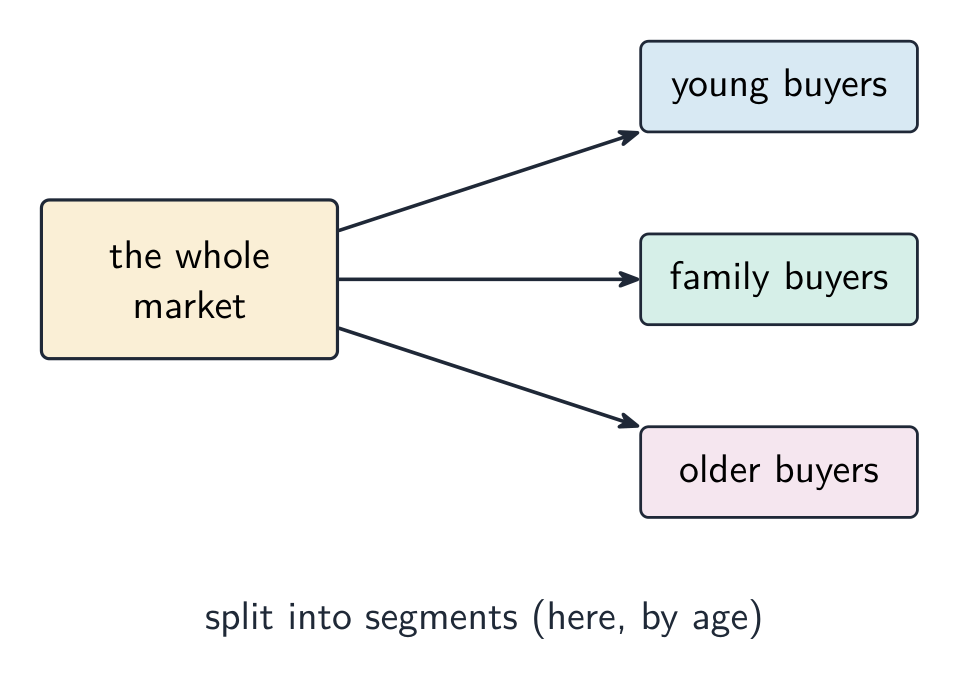
Market segmentation 市场细分 means splitting a market into groups of buyers who share something, such as age, income, gender or location. Its benefits:
the business can design a product to fit each group,
it can aim its advertising at the right people,
it can spot gaps in the market.
עברית
שיווק הוא העבודה של גילוי מה לקוחות רוצים, ולאחר מכן ייצור, קביעת מחירים, מכירה וקידום מוצרים כדי לענות על הצרכים האלו ברווח.
לשיווק יש מספר תפקידים:
לגלות ולספק את מה שהלקוחות רוצים,
לשמור ולהגדיל מכירות ונתח שוק,
לבנות נאמנות לקוחות כך שקונים יחזרו שוב.
למה לקוחות חשובים
לקוחות מביאים כסף, לכן שמירתם קריטית. אובדן לקוחות יקר: העסק מאבד את ההוצאות העתידיות שלהם, ועליו להוציא הרבה על פרסום כדי לזכות בחדשים. בדרך כלל הרבה זול יותר לשמור על לקוח מאשר למצוא חדש.
שווקים נישיים ושווקים המוניים
שוק הוא כל הקונים והמוכרים של מוצר.
שוק נישה הוא חלק קטן משוק הכולל צרכנים בעלי צרכים מיוחדים, לדוגמה: כלים עבור שמאלנים.
שוק המון הוא שוק גדול עם קהל רחב של קונים בעלי צרכים דומים, לדוגמה: משקאות גזים.
חלוקת שוק
חלוקת שוק היא חלוקת השוק לקבוצות קונים המשתפות בתכונה משותפת, כמו גיל, הכנסה, מגדר או מיקום. יתרונותיה:
העסק יכול לעצב מוצר המותאם לכל קבוצה,
ניתן לכוון את הפרסום לאנשים הנכונים,
ניתן לזהות פער בשוק.
חלוקת שוק מפצלת את השוק כולו לקבוצות של קונים דומים
Explore · חקור
Marketing mix lab · מעבדת ערכת שיווק
See which part of the marketing mix changes in each real decision. · ראו איזה חלק מערכת השיווק משתנה בכל החלטה אמיתית.
distinguish primary (field) and secondary (desk) market research and their methods
explain sampling and the need for accurate, reliable data
present and interpret market research data (tables, charts, graphs) to support decisions
עברית
הבחנה בין מחקר שוק ראשוני (שטחי) ומחקר שוק משני (משרדי) ובין השיטות שלהם
הסבר על דגימה והצורך בנתונים מדויקים ואמינים
הצגה ופרשנות נתוני מחקר שוק (טבלאות, גרפים, דיאגרמות) לתמיכה בקבלת החלטות
Source: Cambridge International syllabus · מקור: הסיילבוס הבינלאומי של קמבריד'ג'
English
Market research 市场调研 is collecting information about customers, rivals and the market, to help make good decisions.
Primary and secondary research
Primary research 一手调研 (also called field research) collects new information directly, for the first time. Methods include questionnaires 问卷, interviews, surveys and tests. It is up to date and fits the exact need, but costs time and money.
Secondary research 二手调研 (also called desk research) uses information that already exists, such as government reports, websites and past sales records. It is cheap and quick, but may be old or may not fit the need.
Sampling and reliable data
A business cannot ask everyone, so it asks a small group, called a sample. Sampling 抽样 must be done with care. If the sample is too small or not typical, the data 数据 will not be reliable, and decisions based on it may be wrong.
Using research data
Research results are shown in tables, charts and graphs. You should be able to read them — for example, find the most popular product, or see how sales change over time — and use them to support a decision.
עברית
מחקר שוק הוא איסוף מידע על לקוחות, מתחרים והשוק עצמו, כדי לתמוך בקבלת החלטות טובות.
מחקר ראשוני אוסף נתונים חדשים; מחקר משני משתמש בנתונים קיימים
מחקר ראשוני ומחקר משני
מחקר ראשוני (נקרא גם מחקר שטח) אוסף מידע חדש ישירות, לראשונה. שיטות נפוצות כוללות מquestionnaires, ראיונות, סקירות ובדיקות. המידע מעודכן ומותאם בדיוק לצורך, אך דורש זמן וכסף.
מחקר משני (נקרא גם מחקר שולחן עבודה) משתמש במידע שקיים כבר, כגון דוחות ממשלתיים, אתרי אינטרנט ורשומות מכירות עבריות. המחקר זול ומהיר, אך ייתכן שהמידע יישן או לא יתאים לצורך.
דגימה ומידע אמין
לעסק אין אפשרות לשאול את כולם, ולכן הוא שואל קבוצה קטנה הנקראת דגימה. יש לבצע את הדגימה בזהירות. אם הדגימה קטנה מדי או אינה ייצוגית, הנתונים לא יהיו אמינים, והחלטות המבוססות עליהן עלולות להיות שגויות.
שימוש בנתוני מחקר
תוצאות המחקר מוצגות בטבלאות, גרפים ותרשימים. עליך להיות מסוגל לקרוא אותם — לדוגמה, למצוא את המוצר הפופולרי ביותר או לראות כיצד המכירות משתנות לאורך זמן — ולהשתמש בהם לתמיכה בהחלטה.
Explore · חקור
Market research cycle · מחזור מחקר שוק
Follow how a business turns customer data into a marketing decision. · עקוב אחר כך העסק הופך נתוני לקוחות להחלטת שיווק.
explain the four elements of the marketing mix (product, price, place, promotion)
product: the product life cycle and extension strategies, branding and packaging
price: pricing methods (cost-plus, penetration, skimming, competitive, promotional, dynamic) and influences on price
place: channels of distribution (wholesaler, retailer, direct, e-commerce)
promotion: advertising, sales promotion and the role of technology (internet, social media) in the marketing mix
עברית
הסבר על ארבעת אלמנטים של ערך השיווק (מוצר, מחיר, מקום, קידום)
מוצר: מחזור חיי המוצר ואסטרטגיות להרחבתו, מיתוג ואריזה
מחיר: שיטות קביעת מחירים (עלות פלוס, חדירה, סקימינג, תחרותי, קידום, דינמי) וגורמים המשפיעים על המחיר
מקום: ערוצי הפצה (סיטונאי, קמעונאי, ישיר, מסחר אלקטרוני)
קידום: פרסום, קידום מכירות ותפקיד הטכנולוגיה (אינטרנט, מדי חברתיות) בערך השיווק
Source: Cambridge International syllabus · מקור: הסיילבוס הבינלאומי של קמבריד'ג'
English
The product life cycle
The marketing mix 营销组合 is the four main choices a business makes about a product. They are often called the four Ps: product, price, place and promotion.
Product
The product 产品 must meet customers' needs. Two ideas matter here.
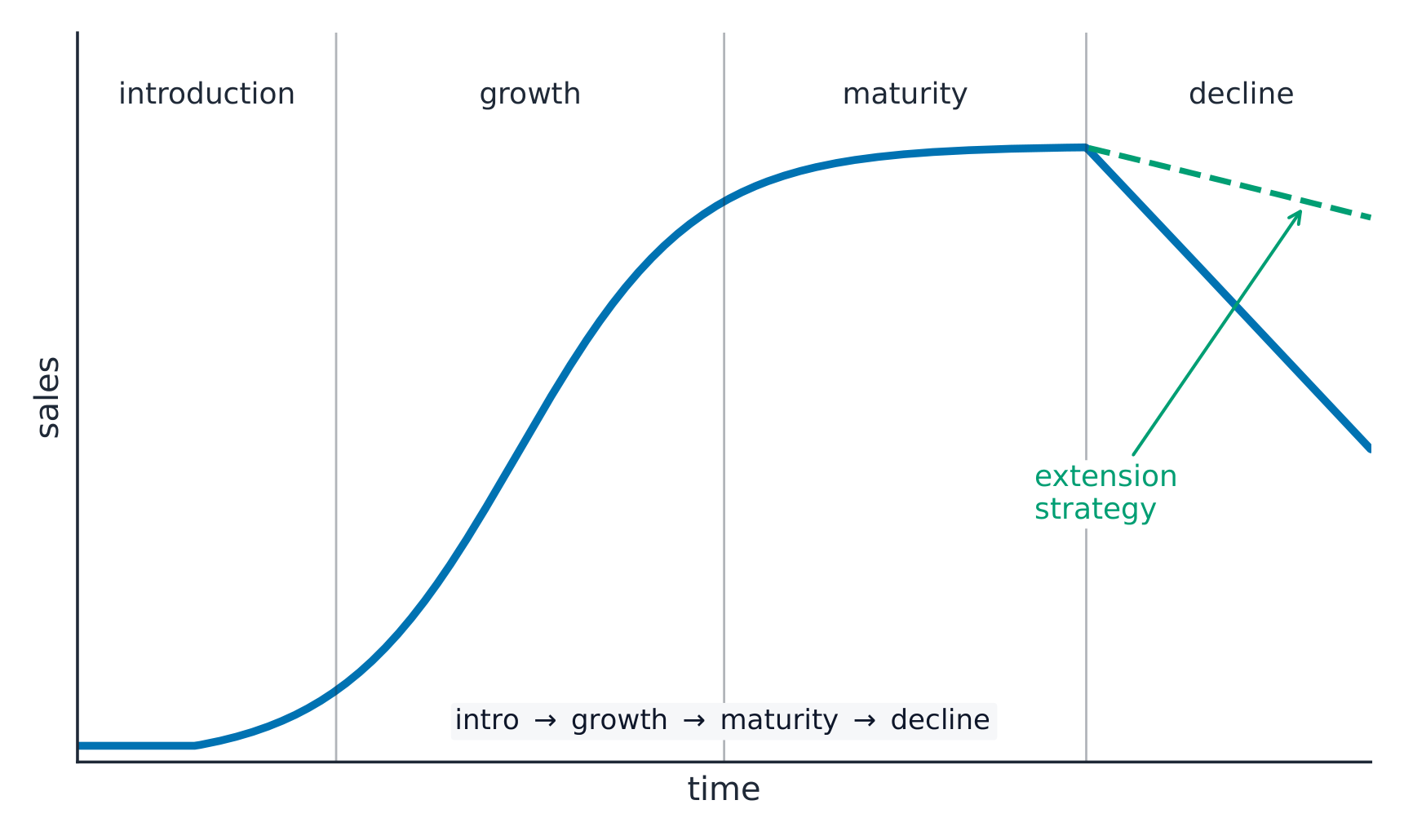
The product life cycle 产品生命周期 describes the sales of a product over time, in four stages: introduction, growth, maturity and decline. When sales begin to fall, a business can use an extension strategy 延长策略 — such as a new design, a new advert, or selling in a new market — to keep the product selling.
A strong brand 品牌 (a name, logo and image that customers recognise) and good packaging 包装 (the wrapping that protects the product and attracts buyers) both help a product sell. Building a brand is called branding.
Price
The price 价格 is what the customer pays. A business can choose from several pricing methods.
Method
How it works
cost-plus pricing 成本加成定价
add a fixed share of profit on top of the cost of making the item
penetration pricing 渗透定价
set a low price to enter a market and win customers fast
price skimming 撇脂定价
set a high price at first for a new, special product
competitive pricing 竞争定价
set a price close to rivals' prices
promotional pricing 促销定价
cut the price for a short time to lift sales
dynamic pricing 动态定价
change the price automatically as demand changes, as airlines do
The right price also depends on the cost of making the product, on what customers will pay, on rivals' prices, and on the product's stage in its life cycle.
Worked example. One firm launches a smartphone using technology no rival has. Another enters a crowded soft-drinks market. Which pricing method suits each, and why? The smartphone is new and special with no direct competition, so use price skimming: charge a high price at first to recover the development cost from customers who must have it, then lower it as rivals catch up. The soft drink faces many established rivals, so use penetration pricing: a low price wins customers quickly and buys market share, and it can be raised later. Match the method to the market conditions - a pricing strategy is only right or wrong relative to the competition and the product's stage in its life cycle.
Place
Place 地点 is about how and where the product is sold, so it reaches the customer at the right time. The route a product takes from maker to customer is called a channel of distribution 分销渠道.
Many channels use a wholesaler 批发商 (buys large amounts from makers and sells smaller amounts to shops) and a retailer 零售商 (a shop that sells to the final customer). A business can also sell directly 直销 to customers, or online through e-commerce 电子商务.
Promotion
Promotion 推广 means telling customers about a product and persuading them to buy it. It includes:
advertising — paid messages on TV, online, on posters and so on,
sales promotion 促销 — short-term offers like discounts, free gifts, or "buy one get one free".
Technology now plays a big part. The internet 互联网 and social media 社交媒体 let a business reach many people cheaply, target the right customers, and sell all over the world.
עברית
מחזור חיי המוצרפרסום על מסכים ענקיים — קידום הוא אחד מארבעת ה-Ps של תערובת השיווק.
תערובת השיווק היא ארבעת הבחירות המרכזיות שעושה עסק לגבי מוצר. הן מכונות לעיתים קרובות ארבעת ה-Ps: מוצר, מחיר, מקום וקידום.
שילוב המרקטמינג כולל את ארבעת ה-Ps
מוצר
המוצר חייב לענות על צרכי הלקוחות. שתי נקודות חשובות כאן.
מחזור החיים של המוצר מתאר את מכירות המוצר לאורך זמן, בארבעה שלבים: הכנסה, צמיחה, בגרות וירידה. כאשר המכירות מתחילות לרדת, עסק יכול להשתמש באסטרטגיית הארכה — כגון עיצוב חדש, פרסום חדש או מכירה בשוק חדש — כדי לשמור על מכירות המוצר.
מכירות מוצר לאורך ארבעה שלבי מחזור החיים שלו, עם אסטרטגיית הרחבה בשלב הבגרות
מותג חזק (שם, לוגו ותדמית שהלקוחות מזהים) ואריזה טובה (האריזה שמגנה על המוצר ומושכת קונים) עוזרים שניהם למכור מוצר. בניית מותג נקראת בינוי מותג.
מחיר
המחיר הוא מה שהלקוח משלם. לעסק יש מספר אפשרויות לבחירת שיטות קביעת מחיר.
שיטה
כיצד היא פועלת
קביעת מחיר על בסיס עלות פלוס
הוספת נתח רווח קבוע מעל עלות הייצור של הפריט
קביעת מחיר חדירה
קביעת מחיר נמוך כדי להיכנס לשוק ולזכות בלקוחות במהירות
קפיסת מחיר
קביעת מחיר גבוה בהתחלה עבור מוצר חדש ומיוחד
קביעת מחיר תחרותית
קביעת מחיר קרובה למחיריה של התחרות
קביעת מחיר לקידום
הורדת המחיר למשך זמן קצר כדי להגביר את המכירות
קביעת מחיר דינמית
שינוי המחיר באופן אוטומטי כשהביקוש משתנה, כפי שעושות חברות התעופה
המחיר הנכון תלוי גם בעלות ייצור המוצר, במה שהלקוחות מוכנים לשלם, במחירי המתחרים ובשלב במחזור החיים של המוצר.
דוגמה מפורטת. חברה אחת משיקה טלפון חכם באמצעות טכנולוגיה שאין למתחרים. חברה אחרת נכנסת לשוק משקאות קלים עמוס. איזה שיטת קביעת מחיר מתאימה לכל אחת, ולמה? הטלפון החכם הוא חדש ומיוחד ללא תחרות ישירה, לכן יש להשתמש בקפיסת מחיר: לחייג מחיר גבוה בהתחלה כדי לכסות את עלות הפיתוח אצל לקוחות שהמוצר חיוני להם, ולאחר מכן להוריד אותו כשהמתחרים יגיעו. המשקה הקל מתמודד עם הרבה מתחרים ממוסדים, לכן יש להשתמש בקביעת מחיר חדירה: מחיר נמוך זוכה בלקוחות במהירות ורוכשpart ofpart של השוק, והוא יכול להיות מוגבה מאוחר יותר. התאם את השיטה לתנאי השוק - אסטרטגיית קביעת מחיר היא נכונה או שגויה רק ביחס לתחרות ולשלב במחזור החיים של המוצר.
מקום
המקום עוסק בכך וכיצד המוצר נמכר, כך שהוא מגיע אל הלקוח בזמן הנכון. המסלול שעובר המוצר מהיצרן ללקוח נקרא ערוץ חלוקה.
לעיתים קרובות ערוצים משתמשים בסיטונאי (קונה כמויות גדולות מהיצרנים ומוכר כמויות קטנות יותר לחנויות) ובקמעונאי (חנות המוכרת ללקוח הסופי). לעסק יש גם אפשרות למכור ישירות ללקוחות, או באמצעות מסחר אלקטרוני מקוון.
ערוך קצר מעניק שליטה רבה יותר; ערוך ארוך יותר מגיע לקהל רחב יותר
קידום
קידום פירונו להודיע ללקוחות על מוצר ולהשכנע אותם לקנות אותו. זה כולל:
פרסום — הודעות ממומן בטלוויזיה, מקוון, בפוסטר ועוד,
קידום מכירות — הצעות לטווח קצר כמו הנחות, מתנות חינם או "קנה אחד קבל שני חינם".
כיום הטכנולוגיה ממלאת תפקיד מרכזי. ה-אינטרנט וה-מדיה החברתית מאפשרים לעסק להגיע למספר רב של אנשים בעלות נמוכה, לכוון לקוחות המתאימים ולמכור בכל העולם.
Explore · חקור
The marketing mix (4 Ps) · ערבוב השיווק (4 P's)
The marketing mix is the four decisions a business blends to sell a product well. · ערבוב השיווק הוא ארבעת ההחלטות שחברה מערבבת כדי למכור מוצר היטב.
explain how a marketing mix can be used to achieve marketing objectives
explain legal controls related to marketing (consumer protection, misleading promotion)
explain the opportunities and problems of entering new markets in other countries
עברית
הסבר כיצד ניתן להשתמש בערך השיווק כדי להשיג יעדי שיווק
הסבר על בקרות משפטיות הקשורות לשיווק (הגנת צרכן, קידום מטעה)
הסבר על ההזדמנויות והבעיות הנובעות מכניסה לשווקים חדשים במדינות אחרות
Source: Cambridge International syllabus · מקור: הסיילבוס הבינלאומי של קמבריד'ג'
English
A marketing strategy 营销策略 is a plan that uses the four Ps together to reach the business's objectives 目标. The four Ps must fit each other and fit the target customers. For example, a high-price luxury product needs high-quality packaging, expensive shops and image-based adverts.
Legal controls on marketing
Many countries have legal controls 法律管制 that protect buyers:
consumer protection 消费者保护 laws stop the sale of unsafe or faulty goods,
rules ban misleading 误导 promotion — adverts that lie about what a product can do.
Selling in other countries
A business can grow by entering an international market 国际市场 in another country.
Opportunities: many more customers, higher sales, and spreading risk across markets.
Problems: different languages and tastes, higher transport costs, foreign laws and tariffs 关税 (taxes on imports), and strong local competition 竞争.
עברית
חלון חנות עם מותג: המותגיות עוזרת למוצר להתבלט מול המתחרים.
אסטרטגיית שיווק היא תוכנית המשלבת את ארבעת ה-Ps יחד כדי להשיג את ה-מטרות של העסק. ארבעת ה-Ps חייבים להתאים זה לזה ולהתאים ללקוחות היעד. לדוגמה, מוצר יוקרתי במחיר גבוה דורש אריזות איכותיות, חנויות יקרות ופרסומות המבוססות על תדמית.
בקרות משפטיות בשיווק
למדינות רבות יש בקרות משפטיות שמגנות על קונים:
חוקי הגנת צרכנים מונעים את מכירת מוצרים לא בטיחיים או פגומים,
כללים אוסרים על קידום מוטעה — פרסומות שמעלימות לגבי יכולות המוצר.
מכירה בשווקים זרים
עסק יכול לצמוח על ידי כניסה לשוק בינלאומי במדינה אחרת.
הזדמנויות: מספר גדול יותר של לקוחות, מכירות גבוהות יותר פיזור הסיכון על פני שווקים שונים.
בעיות: שפות וטעמים שונים, עלויות תחבורה גבוהות יותר, חוקים זרים ומכסים (מיסים על יבוא), ותחרות מקומית חזקה.
Explore · חקור
Ansoff strategy lab · מעבדה לאסטרטגיית אנסוף
Sort growth choices by product and market risk. · מיינו את אפשרויות הגידול לפי סיכון מוצר ושוק.
Learn the four Ps of the marketing mix — product, price, place, promotion — and remember they must fit each other and the target customer.
Primary research collects new data (surveys, questionnaires; up to date but costly); secondary research uses existing data (cheap and quick but may be out of date).
Know the product life cycle (introduction, growth, maturity, decline) and that an extension strategy revives falling sales.
Match the pricing methods: penetration (low, to enter a market), skimming (high, for a new product), plus cost-plus, competitive, promotional and dynamic pricing.
A niche market is small and specialised; a mass market is large, with many similar buyers.
עברית
ללמוד את ארבעת ה-Ps של מיקס השיווק — מוצר, מחיר, מקום, קידום — ולהיזכר שהם חייבים להתאים זה לזה וללקוח היעד.
מחקר ראשוני אוסף נתונים חדשים (מרוצות, שאלונים; עדכני אך יקר); מחקר משני משתמש בנתונים קיימים (זול ומהיר אך עשוי להיות מיושן).
להכיר את מחזור חיי המוצר (הקדמה, צמיחה, בגרות, ירידה) ולזכור שאסטרטגיית הרחבה מעוררת מחדש מכירות יורדות.
התאמת שיטות המחיר: חדירה (נמוך, כדי להיכנס לשוק), חילוץ (גבוה, עבור מוצר חדש), בנוסף למחיר לפי עלות, תחרותי, קידומי ודינמי.
שוק נישה הוא קטן ומיועד; שוק המוני הוא גדול, עם קונים רבים דומים זה לזה.
describe the methods of production: job, batch and flow production, and their advantages/disadvantages
explain productivity and how it can be increased
explain lean production and just-in-time (JIT) inventory control and the management of inventory
explain how technology has changed production
עברית
תיאור שיטות הייצור: ייצור מלאכת, ייצור בארגז וייצור זרימה, והיתרונות/חסרונות שלהן
הסבר על פרודוקטיביות וכיצד ניתן לשיפורה
הסבר על ייצור רזה ובקרת מלאי Just-in-Time (JIT) וניהול מלאי
הסבר כיצד טכנולוגיה שינתה את הייצור
Source: Cambridge International syllabus · מקור: הסיילבוס הבינלאומי של קמבריד'ג'
English
Stock control: the sawtooth chart
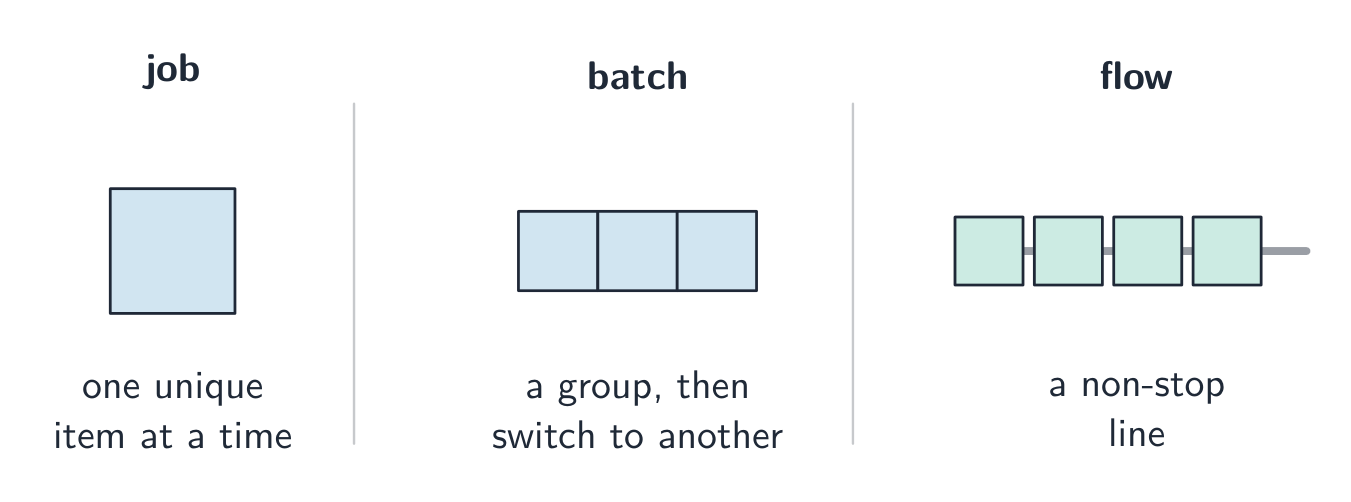
Production 生产 means turning materials and labour 劳动力 into finished goods and services 服务. There are three main methods.
Method
What it is
Good for
Drawback
job production 单件生产
making one item at a time, to order
special, one-off items: a wedding cake, a ship
slow and costly per item
batch production 批量生产
making a group of the same item, then switching to another group
bakeries, clothes in different sizes
machines stand idle while switching
flow production 流水线生产
making goods non-stop on a moving line
mass-made goods: cars, drinks
costly to set up; work can be boring
Productivity
Productivity 生产率 measures how much each worker or machine produces in a set time. Higher productivity lowers the cost per item. A business can raise productivity by:
training workers,
using better machines and technology 技术,
improving motivation 激励,
organising the work better.
Lean production and just-in-time
Lean production 精益生产 means cutting all waste — wasted time, materials, space and effort — while keeping quality.
One key method is just-in-time 准时制 (JIT). With JIT, materials arrive just as they are needed, and finished goods are sold quickly, so the business holds very little inventory 库存 (its stock of materials and goods). This saves storage cost, but one late delivery can stop production. Good management of inventory keeps enough stock to meet demand, but not so much that money is tied up or goods go out of date.
Technology in production
Technology has changed production. Automation 自动化 (machines and robots doing tasks), computer design and online ordering all make production faster, cheaper and more exact. But machines cost a lot to buy and can replace workers' jobs.
עברית
בקרת מלאי: הגרף השן-מסור
ייצור הוא ההפיכה של חומרים ועבודה למוצרים סופיים ושירותים. ישנם שלושה שיטות עיקריות.
קו הרכבה של מכונית: ייצור של מוצרים זהים רבים בקו זז
שיטה
מהי
מתאימה ל-
חיסרון
ייצור בפרט
ייצור פריט אחד בכל פעם, בהתאמה להזמנה
פריטים מיוחדים וחד-פעמיים: עוגת כלה, אונייה
איטי ומדיר על כל פריט
ייצור בכמויות (בצ'יקלים)
ייצור קבוצה של אותו פריט, ולאחר מכן מעבר לקבוצה אחרת
מאפיות, בגדים במידות שונות
המכונות נשארות עומדות בזמן ההחלפה
ייצור זרימה
ייצור סחורות ברציפות על קו זורם
סחורות מסוגל-גוף: מכוניות, משקאות
דורש השקעה גבוהה להתקנה; העבודה עשויה להיות משעממת
שלוש שיטות הייצור
פרודוקטיביות
פרודוקטיביותמדדת כמה מייצר כל עובד או מכונה בזמן נתון. פרודוקטיביות גבוהה מורידה את העלות לפריט. עסק יכול להגביר את הפרודוקטיביות על ידי:
הכשרת עובדים,
שימוש במכונות טובות יותר וב-טכנולוגיה,
שיפור ה-מוטיבציה,
ארגון העבודה בצורה טובה יותר.
פרודוקטיביות היא תפוקה לכל עובד בזמן נתון; הגבהתה מורידה את העלות לפריט
ייצור רזה וJust-in-Time
ייצור רזהמשמעו החסרת כל ביזבוז — בזבוז של זמן, חומרים, מקום ומאמץ — תוך שמירה על איכות.
שיטה מרכזית אחת היא Just-in-Time (JIT). עם JIT, חומרים מגיעים בדיוק בזמן שהם נדרשים, והמוצרים המוגמרים נמכרים במהירות, כך שהעסק מחזיק כמות מלאי (מלאי החומרים והסחורות) נמוכה מאוד. הדבר חוסך בעלויות אחסון, אך משלוח מאוחר אחד יכול לעצור את הייצור. ניהול נכון של המלאי שומר על מלאי מספיק כדי לענות על הביקוש, אך לא כזה גדול מדי שיקפיץ מזומנים או יגרום לסחורה להפוך למיושנת.
Just-in-Time מחזיק מעט מלאי עם משלוחים תכופים; Just-in-Case מחזיק מלאי בסיכון
טכנולוגיה בייצור
הטכנולוגיה שינתה את הייצור. אוטומציה (מכונות ורובוטים המבצעים משימות), עיצוב מחשבתי והזמנות אונליין הופכים את הייצור מהיר, זול מדויק יותר. אך מכונות עולות הרבה לקנייה ועלולות להחליף את תפקידי העובדים.
אוטומציה: רובוטים תעשייתיים מבצעים ריתוך והרכבה של גופי רכב — מהר ובדיוק גבוה יותר מאשר בעבודת יד, אך הם עולים הרבה ומחליפים חלק מעובדים
Explore · חקור
Methods of production · שיטות ייצור
A business picks job, batch or flow production to suit its product and order size. · עסק בוחר בייצור עבודה, סדרות או זרימה בהתאם למוצר ולגודל ההזמנה שלו.
Worked example. A factory has fixed costs of £8,000 and variable costs of £2 per unit, and makes 1,000 units. Find the total cost and the average cost per unit.
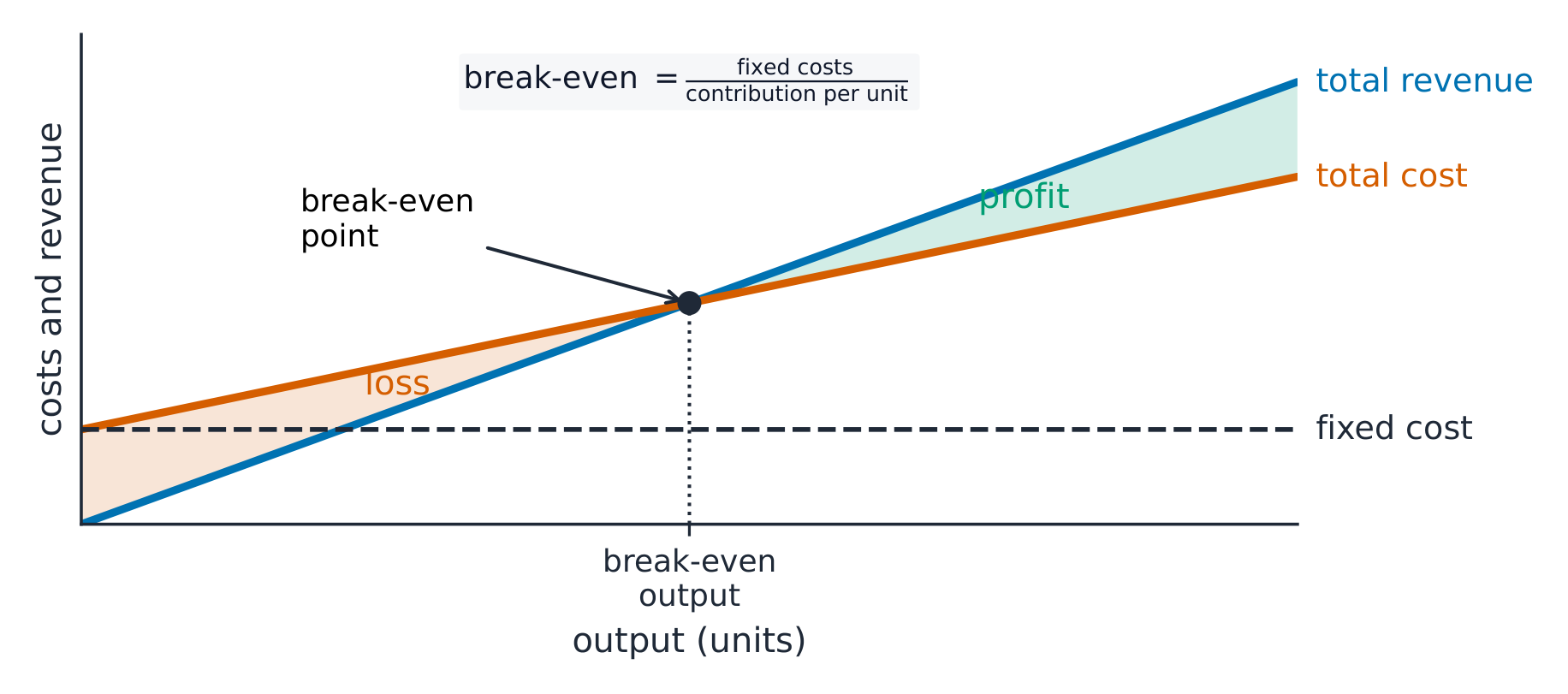
The break-even 盈亏平衡 point is the level of output where total revenue exactly equals total cost: the business makes no profit and no loss. Below it the business makes a loss; above it, a profit.
Each item sold gives an amount towards covering the fixed costs. This amount is the selling price minus the variable cost of one item (sometimes called the contribution 贡献 per unit).
$$\text{break-even output} = \frac{\text{fixed costs}}{\text{selling price per unit} - \text{variable cost per unit}}$$
A break-even chart 盈亏平衡图 plots total cost and total revenue against output. The two lines cross at the break-even point 盈亏平衡点.
The margin of safety 安全边际 is how far the actual output is above the break-even output.
$$\text{margin of safety} = \text{actual output} - \text{break-even output}$$
Worked example. A product sells for £15 with a variable cost of £5 per unit, and the firm's fixed costs are £8,000. Find the break-even output, and the margin of safety if the firm actually makes 1,200 units.
The contribution per unit is $\text{\pounds} 15 - \text{\pounds} 5 = \text{\pounds} 10$, so
A large margin of safety is safer, because sales can fall a long way before the business makes a loss.
Limits of break-even analysis. It assumes that all output is sold, and that the selling price and the costs stay the same at every level of output. In real life these often change, so break-even is only a guide.
עברית
חסכוניות בקנה מידה: עלות ממוצעת יורדתניתוח נקודת השווי, נבנה שורה בשורה
סוגי עלויות
לעסק ישנם סוגים שונים של עלויות.
עלויות קבועות אינן משתנות בהתאם לייצור — שכירות, משכורות, ביטוח. אתה משלם אותן גם אם אינך מייצר כלום.
עלויות משתנות משתנות בהתאם לייצור — חומרי גלם ותשלום עבור כל פריט המיוצר. ייצור גדול יותר אומר עלויות משתנות גדולות יותר.
סה"כ עלויות הוא סכום העלויות הקבועות והמשתנות.
עלות ממוצעת היא הסה"כ עלויות מחולק במספר הפריטים המיוצרים.
נקודת השוויון היא רמת הייצור בה ההכנסה הכוללת שווה בדיוק לסה"כ העלויות: לעסק אין רווח ואין הפסד. מתחת לה, העסק מפיק הפסד; מעליה, רווח.
כל פריט שנמכר תורם בסכום מסוים לכיסוי העלויות הקבועות. סכום זה הוא מחיר המכירה מינוס העלות המשתנה של פריט אחד (לעיתים קרובות נקרא תרומה ליחידה).
$$\text{break-even output} = \frac{\text{fixed costs}}{\text{selling price per unit} - \text{variable cost per unit}}$$
גרף נקודת השוויה מציג את העלות הכוללת וההכנסה הכוללת כנגד הייצור. שתי הקווים נחתכים בנקודת השוויה.
נקודת השווי היא הנקודה שבה ההכנסה הכוללת שווה לעלות הכוללת — משמאל לה יש פסד, מימין לה יש רווח
שולי הבטיחות הם המרחק בין הייצור בפועל לבין ייצור נקודת השוויה.
$$\text{margin of safety} = \text{actual output} - \text{break-even output}$$
דוגמה מוצגת. מוצר נמכר ב-£15 עם עלות משתנה של £5 ליחידה, ועלויות הקבועות של החברה הן £8,000. מצאו את ייצור נקודת השוויה, ושולי הבטיחות אם החברה מייצרת למעשה 1,200 יחידות.
התרומה ליחידה היא $\text{\pounds} 15 - \text{\pounds} 5 = \text{\pounds} 10$, לכן
שולי בטיחות גדולים הם בטוחים יותר, מכיוון שהמכירות יכולות לצנוח רבות לפני שהעסק יופסד.
גבולות ניתוח נקודת השוויה. הוא מניח שכל הייצור נמכר, וכי מחיר המכירה והעלויות נשארים זהים בכל רמת ייצור. במציאות הדברים משתנים לעיתים קרובות, ולכן ניתוח נקודת השוויה הוא רק מדריך.
Explore · חקור
Break-even · נקודת שיווי משקל (Break-even)
Break-even is where total revenue crosses total cost. · נקודת איזון היא הרגע שבו ההכנסה הכוללת חוצה את העלות הכוללת.
explain the factors affecting the location decision of a manufacturing business and a service business
explain the factors a business considers when locating in another country and the role of legal controls
עברית
להסביר את הגורמים המשפיעים על החלטת המיקום של עסק תעשייתי ועסק שירותי
להסביר את הגורמים שעסק שוקל במהלך בחירת מיקום בחו"ל ואת התפקיד של בקרות משפטיות
Source: Cambridge International syllabus · מקור: הסיילבוס הבינלאומי של קמבריד'ג'
English
Locating a business
Where a business sits affects its costs and its sales. A manufacturing 制造业 business (one that makes goods) looks at:
nearness to raw materials 原材料, because heavy or bulky materials cost a lot to move,
nearness to customers and the market 市场,
the cost and size of the land,
a supply of suitable labour,
good transport links,
government grants offered in some areas.
A service business (one that sells services, such as a shop or a hair salon) looks more at being close to customers, passing foot traffic, nearby shops, and the rent.
Locating in another country
A business may produce or sell abroad in order to reach new customers and bigger markets, pay lower wages or rent, get nearer to raw materials, or avoid tariffs 关税 (taxes on imports) by making goods inside the country. But it must then deal with different laws, languages and customs, and follow the legal controls 法律管制 of both countries.
עברית
מיקום עסק — כמו מרכז ההפצה הזה — משפיע על הוצאותיו ועל השירותים שמספק.
מיקום עסק
מיקום עסק משפיע על הוצאותיו ועל מכירותיו. עסק ייצור (העוסק בייצור מוצרים) לוקח בחשבון:
קרבה ל-חומרי גלם, כיוון שלחומרים כבדים או נפחיים ישנה עלות הובלה גבוהה,
קרבה ללקוחות ול-שוק,
עלות וגודל הקרקע,
אספקת כוח עבודה מתאים,
קשרי תחבורה טובים,
מענקים ממשלתיים המוצעים באזורים מסוימים.
עסק שירותים (העוסק במכירת שירותים, כמו חנות או סלון יופי) מתמקד יותר בקרבה ללקוחות, תנועת הולכים רגלי, חנויות בסמוך ותשלום השכירות.
מיקום במדינה אחרת
עסק עשוי לייצר או למכור בחו"ל כדי להגיע ללקוחות חדשים ולשווקים גדולים יותר, לשלם שכר או שכירות נמוכים יותר, להתקרیب לחומרי גלם, או להימנע ממכסים (מיסים על יבוא) על ידי ייצור המוצרים בתוך המדינה. אך הוא צריך להתמודד עם חוקים, שפות ומנהגים שונים, ולפעול בהתאם לבקרה משפטית בשתי המדינות.
Explore · חקור
Location factor lab · מעבדת גורמי מיקום
Classify why a business chooses one site over another. · סווג מדוע עסק בוחר באתר אחד על פני אחר.
Match the production methods: job (one-off items to order), batch (a group, then switch to another), flow (non-stop mass production on a line).
Learn the formulas: total cost = fixed + variable; average cost = total cost ÷ output; total revenue = price × quantity; profit = total revenue − total cost.
Break-even output = fixed costs ÷ (selling price − variable cost per unit). How far actual output is above break-even is the margin of safety.
Break-even analysis assumes everything made is sold at one fixed price and cost, so it is only a guide.
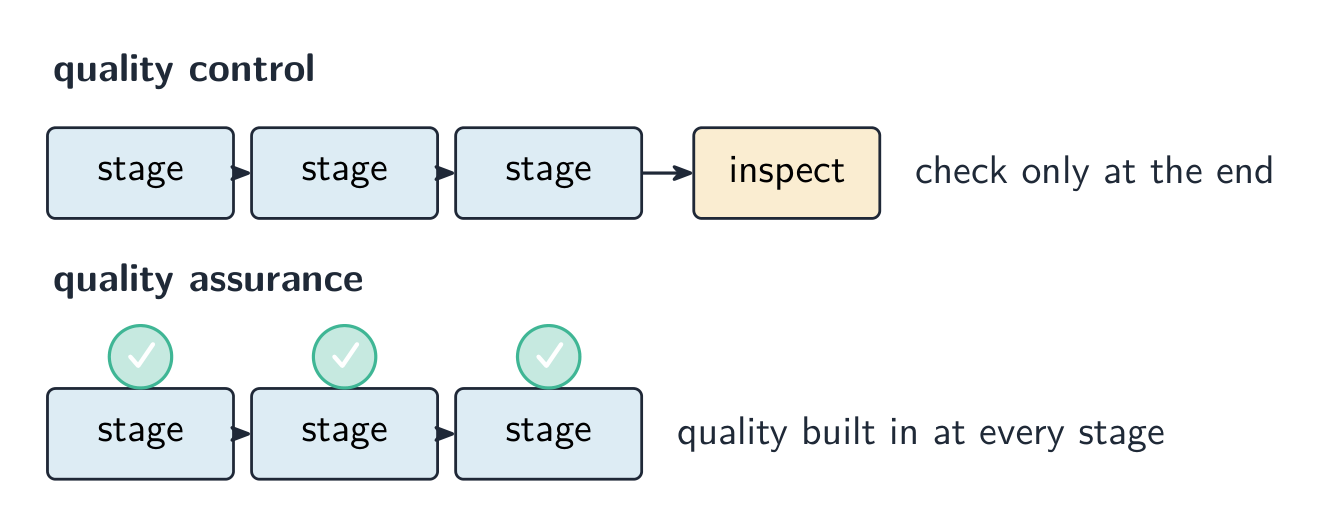
Quality control checks finished goods at the end; quality assurance builds quality in at every stage.
עברית
התאמת שיטות הייצור: עבודת ארגז (פריטים יחידים לפי הזמנה), שיטת סדרות (סדרה אחת ואז מעבר לסדרה אחרת), ייצור זורם (ייצור המוני רציף בקו).
לימוד הנוסחאות: העלות הכוללת = קבועה + משתנה; העלות הממוצעת = העלות הכוללת ÷ תפוקה; ההכנסה הכוללת = מחיר × כמות; הרווח = הכנסה כוללת − עלות כוללת.
תפוקת נקודת איזון = עלות קבועה ÷ (מחיר מכירה − עלות משתנה ליחידה). המרחק בין תפוקה בפועל לבין נקודת האיזון הוא שולי הביטחון.
ניתוח נקודת איזון מניח שהכל מה שמיוצר נמכר במחיר ובעלות קבועים, ולכן מדובר רק במדריך.
בקרת איכות בודקת מוצרים מוגמרים בסוף התהליך; אחריות לאיכות בונה את האיכות בכל שלב.
5
Financial information and decisions · מידע פיננסי והחלטות
Why businesses need finance · מדוע עסקים זקוקים למימון
Syllabus · סיילבוס
English
explain why businesses need finance (start-up capital, expansion, working capital, cash-flow problems)
distinguish short-term and long-term finance and internal and external sources of finance
describe sources of finance (retained profit, sale of assets, owners' savings, bank loan/overdraft, share issue, debentures, leasing, hire purchase, trade credit, microfinance, crowdfunding, government grants)
explain the factors that influence the choice of source of finance
עברית
להסביר מדוע עסקים זקוקים למימון (הון התחלתי, הרחבה, הון עובד, בעיות זרימת מזומנים)
להבחין בין מימון לטווח קצר ומימון לטווח ארוך ובין מקורות מימון פנימיים וחיצוניים
לתאר מקורות מימון (רווח מוחזר, מכירת נכסים, חיסכון של בעלי עסק, הלוואת בנק/היתר סופר-אוקראונטי, הנפקת מניות, אג
הסבר את הגורמים המשפיעים על בחירת מקור מימון
Source: Cambridge International syllabus · מקור: הסיילבוס הבינלאומי של קמבריד'ג'
English
Finance 资金 means the money a business needs. A business needs finance to:
start up — start-up capital 启动资金 to buy equipment and stock before it earns anything,
grow — money for expansion 扩张, such as new shops or machines,
run day to day — working capital 营运资金 to pay wages and suppliers while waiting for customers to pay,
survive a cash-flow 现金流 problem, when more money is going out than is coming in.
Sources of finance
Finance can be short-term 短期 (paid back within a year) or long-term 长期 (over several years). It can come from inside the business (internal) or from outside (external).
Source
Internal / external
Notes
retained profit 留存利润
internal
profit kept in the business, not paid out
sale of assets 资产
internal
selling things the business no longer needs
owners' savings
internal
the owners' own money
bank loan 贷款
external
borrowed money, repaid with interest 利息 over time
bank overdraft 透支
external
the bank lets the account go below zero, for short-term needs
issuing new shares 股份
external
only for limited companies; raises money but shares out control
debentures 债券
external
long-term loans to a company that pay interest
leasing 租赁
external
renting equipment instead of buying it
hire purchase 分期付款
external
buy now and pay in monthly parts
trade credit 贸易信贷
external
pay suppliers later, for example after 30 days
microfinance 小额信贷
external
small loans for tiny businesses in poorer areas
crowdfunding 众筹
external
many people each give a small amount, often online
government grants 补助金
external
money from the government that need not be repaid
Choosing a source
The best source depends on how much money is needed and for how long, the cost (interest and fees), the size and legal type of the business (only companies can sell shares), and how much risk and control the owners will accept.
עברית
בנקים הם מקור חיצוני מרכזי למימון עסקים, דרך הלוואות והיפרשות.מימון נדרש להקמה, לתפעול יומיומי ולצמיחה
מימון הוא הכסף שהעסק זקוק לו. עסק זקוק למימון כדי:
הקמה — הון התחלתי לרכישת ציוד ומלאי לפני שהחברה מניבה הכנסות,
צמיחה — כסף עבור הרחבה, כמו חנויות חדשות או מכונות,
הפעלה יומיומית — הון עבודה לכיסוי משכורות לספקים בזמן המתנה לתשלום לקוחות,
הישרדות מבעיית זרימת מזומנים, כאשר יוצא יותר כסף מאשר נכנס.
מקורות מימון
מימון יכול להיות קצר-טווח (נשולם בתוך שנה) או ארוך-טווח (מעל למספר שנים). הוא יכול להגיע מפנים העסק (פנימי) או מחוצו (חיצוני).
מקור
פנימי / חיצוני
הערות
רווח מוחזק
פנימי
רווח שנשמר בעסק ולא חולק
מכירת נכסים
פנימי
מכירת דברים שאין לעסק עוד צורך בהם
חסכונות בעלים
פנימי
הכסף האישי של הבעלים
הלוואת בנק
חיצוני
כסף שמצולע, נשולם עם ריבית לאורך זמן
גילוי סופי
חיצוני
הבנק מאפשר לחשבון להיכנס לפלוס, לצרכים קצרים-טווח
הנפקת מניות חדשות
חיצוני
רק לחברות מוגבלות; מייצר כסף אך מחלק את השליטה
דבנטורות
חיצוני
הלוואות ארוכות-טווח לחברה המניבות ריבית
השכרה
חיצוני
שכירת ציוד במקום רכישתו
רכישה בהשתלמות
חיצוני
רכישה עכשיו ותשלום בשלבים חודשיים
אמון מסחרי
חיצוני
תשלום לספקים מאוחר יותר, לדוגמה לאחר 30 ימים
מימון מיקרו
חיצוני
הלוואות קטנות לעסקים זעירים באזורים עניים
גיוס הון קהילתי
חיצוני
הרבה אנשים תורמים כל אחד סכום קטן, לעיתים קרובות באינטרנט
מענקים ממשלתיים
חיצוני
כסף מהממשלה שאינו דורש החזרה
מקורות המימון מגיעים מתוך העסק (פנימיים) או מחוצה לו (חיצוניים)
בחירת מקור
המקור הטוב ביותר תלוי בכמות הכסף הנדרשת ובמשך הזמן, בעלויות (ריבית ועמלות), בגודל ובסוג המשפטי של העסק (רק חברות יכולות למכור מניות), ובמידת הסיכון והשליטה שהבעלים מסכימים לקבל.
Explore · חקור
Sources of finance lab · מעבדת מקורות מימון
Choose the best type of finance by time, risk and ownership. · בחרו את סוג המימון הטוב ביותר לפי זמן, סיכון ובעלות.
להסביר הון עובד וכיצד עסק יכול להתגבר על בעיות זרימת מזומנים
Source: Cambridge International syllabus · מקור: הסיילבוס הבינלאומי של קמבריד'ג'
English
Cash-flow forecast
Cash is not the same as profit
Cash 现金 is the money a business can use right now. Profit 利润 is revenue 收入 minus costs over a period. A business can be making a profit yet still run out of cash — for example, if customers have not paid yet. Running out of cash can force even a profitable business to close.
The cash-flow forecast
A cash-flow forecast 现金流预测 predicts the money coming in and going out each month. It uses:
inflows 流入 — money coming in (sales, loans),
outflows 流出 — money going out (wages, rent, materials),
net cash flow 净现金流 — inflows minus outflows,
opening balance 期初余额 — the cash held at the start of the month,
closing balance 期末余额 — the cash held at the end of the month.
Worked example. A shop expects inflows of £12,000 and outflows of £9,000 next month, and starts the month with £2,000 in the bank. Find the net cash flow and the closing balance.
Working capital is the money available for day-to-day running. It is the current assets 流动资产 (cash and things soon turned into cash) minus the current liabilities 流动负债 (debts due within a year).
To overcome cash-flow problems, a business can arrange an overdraft, delay paying suppliers, ask customers to pay sooner, sell spare assets, or cut spending.
עברית
תחזית זרימת מזומן
מזומן אינו אותו דבר כרווח
מזומן הוא הכסף שעסק יכול להשתמש בו כרגע. רווח הוא הכנסות פחות עלויות לאורך תקופה. עסק יכול לייצר רווח אך עדיין להיגמר לו המזומן — לדוגמה, אם לקוחות טרם שילמו. גימור מזומן יכול לגרום אף לעסק רווחי לסגור את דלתותיו.
מכירה באשראי מניבה רווח על הנייר כעת – המזומן מגיע הרבה מאוחר יותר
תחזית זרימת מזומנים
תחזית זרימת מזומנים נותנת תחזית לכסף הנכנס והיוצא בכל חודש. היא משתמשת ב:
כדי להתמודד עם בעיות זרימת מזומנים, עסק יכול להסדיר קרן גישור, לעכב תשלום לספקים, לבקש מלקוחות לשלם מוקדם יותר, למכור נכסים מיותרים, או לצמצם הוצאות.
הון עובד: נכסים נזולים מינוס חובות נזולים
Explore · חקור
Cash-flow forecasting · תחזית זרימת מזומנים
A forecast of cash in and out each month warns a business of a cash shortage before it strikes. · תחזית של כניסות ויציאות מזומן בחודש מזהירה את החברה ממחסור במזומנים לפני שהוא מתרחש.
Drag the monthly cash in, cash out and the one-off oven purchase — does the bakery stay out of the red all six months? · גרור את הכניסות והיציאות החודשיות, ואת הרכישת התנור המעורבת אחת — האם למאפייה תהיה רמות נמוכות יותר מאפס כל שישה החודשים?
identify the main features of an income statement: revenue, cost of sales, gross profit, expenses and profit for the year
explain how income statements are used by stakeholders
עברית
זיהוי המאפיינים העיקריים של דוח תוצאות: הכנסות, עלויות מכירה, רווח ברוטו, הוצאות ורווח לשנה
הסבר על השימוש בדוח תוצאות על ידי בעלי עניין
Source: Cambridge International syllabus · מקור: הסיילבוס הבינלאומי של קמבריד'ג'
English
An income statement 损益表 shows how much profit a business made over a period, usually a year.
Line
Meaning
revenue
money from sales
cost of sales 销售成本
the cost of making or buying the goods that were sold
gross profit 毛利润
revenue minus cost of sales
expenses 费用
other running costs: rent, wages, advertising
profit for the year 年度利润
gross profit minus expenses
$$\text{gross profit} = \text{revenue} - \text{cost of sales}$$
$$\text{profit for the year} = \text{gross profit} - \text{expenses}$$
Worked example. A business has revenue of £200,000, cost of sales of £120,000 and expenses of £50,000. Find its gross profit and its profit for the year.
identify the main classifications in a statement of financial position: non-current and current assets, current and non-current liabilities, and owners' equity/capital
explain how the statement of financial position is used
עברית
זיהוי המחלקות העיקריות במצב הכספי: נכסים לא-זורמים ונכסים זורמים, חובות זורמות ולא-זורמות, והון עצמי/הון
הסבר על השימוש במצב הכספי
Source: Cambridge International syllabus · מקור: הסיילבוס הבינלאומי של קמבריד'ג'
English
A statement of financial position 财务状况表 (also called a balance sheet) shows what a business owns and what it owes (its liabilities 负债) on one day.
non-current assets 非流动资产 — things kept for the long term: buildings, machines.
current assets — short-term items: inventory 库存, money owed by customers, and cash.
current liabilities — debts due within a year: an overdraft, money owed to suppliers.
non-current liabilities 非流动负债 — debts due after more than a year: a long-term loan.
owners' equity 所有者权益 — the money the owners put in, plus profit kept in the business.
It is used to check what the business is worth, how much it owes, and whether it can pay its debts.
עברית
בורסה למניות: חברות מוגבלות ציבוריות מארגנות מימון על ידי מכירת מניות למשקיעים.
דוח מצב כספי (נקרא גם מאזן) מראה מה עסק מחזיק ומה הוא חייב (ה-חובות) ביום אחד ספציפי.
gross profit margin 毛利率 — gross profit as a percentage of revenue.
profit margin 利润率 — profit for the year as a percentage of revenue.
return on capital employed 资本回报率 (ROCE) — profit as a percentage of the capital employed 所用资本 (money invested). It shows how well the investment is used.
A higher percentage is better for all three.
Worked example. The same business (revenue £200,000, gross profit £80,000, profit for the year £30,000) has capital employed of £150,000. Find its three profitability ratios.
$$\text{acid test ratio} = \frac{\text{current assets} - \text{inventory}}{\text{current liabilities}}$$
the current ratio 流动比率 compares current assets with current liabilities. Around 1.5 to 2 is healthy.
the acid test ratio 速动比率 is stricter: it leaves out inventory, because inventory is not yet sold.
Worked example. A business has current assets of £40,000 (including £10,000 of inventory) and current liabilities of £20,000. Find its current ratio and acid test ratio.
Cash is not profit: a profitable business can still run out of cash if customers pay late. Watch the closing balance on a cash-flow forecast.
Separate internal sources (retained profit, sale of assets, owners' savings) from external ones (bank loan, overdraft, shares, leasing, trade credit).
Key formulas: net cash flow = inflows − outflows; closing balance = opening balance + net cash flow; working capital = current assets − current liabilities.
Profitability ratios (gross margin, profit margin, ROCE) — higher is better. Liquidity: the current ratio (healthy ≈ 1.5–2) and the stricter acid test (which leaves out inventory).
Only limited companies can raise money by issuing shares; a sole trader or partnership cannot.
עברית
מזומנים אינם רווח: עסק רוחי יכול להגיע לקיצוץ מזומנים אם לקוחות מאחרים בתשלום. יש לעקוב אחרי המאזן הסופי בתחזית זרמי המזומנים.
להפריד בין מקורות פנימיים (רווח נשמר, מכירת נכסים, חסכונות בעלים) לבין מקורות חיצוניים (הלוואת בנק, גילוי קשה, מניות, מימון השכרה, הארכת תשלום ספקים).
נוסחאות מפתח: זרם מזומנים נטו = כניסות − פיתוח; מאזן סופי = מאזן פתיחה + זרם מזומנים נטו; הון עבודה = נכסי מסלול − התחייבויות מסלול.
יחסים לרווחיות (שולי gross, שולי profit, ROCE) — גבוה יותר הוא טוב יותר. נוזלות: היחס הנוכחי (בריאות ≈ 1.5–2) ובדיקת החומצה המחמירה (הכוללת מחיקת מלאי).
רק חברות מוגבלות יכולות לאסוף כסף על ידי הנפקת מניות; בעל עסק יחיד או שותפות אינם יכולים.
6
External influences on business activity · השפעות חיצוניות על פעילות עסקית
Every business is affected by external influences 外部影响 — things outside the business that it cannot control, such as the economy, the law and the environment. A good business watches these and plans for them.
עברית
כל עסק מושפע מ-השפעות חיצוניות — דברים מחוץ לעסק שאינו יכול לשלוט בהם, כמו כלכלה, חוק וסביבה. עסק טוב צופה אותן ומתכנן לפיהן.
ממשלה וחוקים מעצבים כל חברה: מסים, ריבית ותקנות הן השפעות חיצוניות
6.1
Economic issues · נושאים כלכליים
Syllabus · סיילבוס
English
explain the business cycle (growth, boom, recession, slump/recovery) and its effects on business
explain government economic objectives and how taxation, interest rates, inflation, unemployment and exchange rates affect business
עברית
הסבר על מחזור הכלכלי (צמיחה, פריחה, רסגסיה, שפל/התאוששות) והשפעתו על עסקים
הסבר על מטרות כלכליות של ממשלה וכיצד מיסוי, ריבית, אינפלציה, אבטלה ושיערי חילוף משפיעים על עסקים
Source: Cambridge International syllabus · מקור: הסיילבוס הבינלאומי של קמבריד'ג'
English
The business cycle
The economy does not grow at a steady pace. It moves in a repeating pattern called the business cycle 经济周期, with these stages.
Stage
What happens
Effect on business
growth 增长
the economy is rising; people spend more
sales and profit rise; firms expand and hire
boom 繁荣
spending is very high
prices and wages rise; shortages appear
recession 衰退
spending falls; the economy shrinks
sales and profit fall; firms cut jobs
slump 萧条
a deep, long recession
many firms close; high unemployment 失业
recovery 复苏
spending starts to rise again
sales slowly improve
In hard times a business may cut costs, lower prices, or sell cheaper products.
Government economic aims and how they affect business
Governments try to keep the economy healthy. Their main aims are stable prices, plenty of jobs, steady growth, and a stable currency. To manage the economy, a government uses or watches several economic factors. Each one affects every business.
Economic factor
What it is
Effect on business
taxation 税收
money the government takes from incomes and sales
higher tax leaves people with less to spend, and cuts business profit
interest rates 利率
the cost of borrowing money
higher rates make loans dearer, so firms borrow and invest less, and customers spend less
inflation 通货膨胀
a general rise in prices
costs rise; if wages chase prices, the country's goods can become too dear
unemployment
the number of people without work
high unemployment lowers sales, but workers are easier to hire
exchange rates 汇率
the price of one currency in another
a change makes imports and exports cheaper or dearer (see below)
עברית
שיעורי ריבית, מיסים, אבטלה ואינפלציה כולם משפיעים על עסקים
מחזור עסקים
הכלכלה אינה צומחת בקצב אחיד. היא נעה בדגם חוזר הנקרא מחזור עסקי, עם שלבים אלו.
שלב
מה קורה
השפעה על העסק
צמיחה
הכלכלה עולה; אנשים מוציאים יותר
מכירות ורווח עולים; חברות מתרחבות ומשרות
שיא
הוצאות גבוהות מאוד
מחירים ושכר עולים; מופיעות מחסור
מיתון
הוצאות יורדות; הכלכלה מתכווצת
מכירות ורווח יורדים; חברות מקצצות תפקידים
צניחה
מיתון עמוק וארוך
הרבה חברות נסגרות; אבטלה גבוהה
התאוששות
הוצאות מתחילות לעלות שוב
מכירות משתפרות לאט
המחזור העסקי עובר שלבים של צמיחה, שיא, מרדף, קריסה והתאוששות
בתקופות קשות עשויים עסקים לחתוך בעלויות, להוריד מחירים או למכור מוצרים זולים יותר.
מטרות כלכליות של הממשלה וכיצן הן משפיעות על עסקים
ממשלות שואפות לשמור על בריאות הכלכלה. המטרות המרכזיות שלהן הן יציבות במחירים, נגישה לתעסוקה, צמיחה יציבה ויציבות במטבע. כדי לנהל את הכלכלה, הממשלה משתמשת או פוקחת מספר גורמים כלכליים. כל אחד מהם משפיע על כל עסק.
גורם כלכלי
מה זה
השפעה על עסק
מיסוי
כסף שממשלה גובה מהכנסות וממכירות
מיסוי גבוה משאיר לאנשים פחות להוציא, ומצמצם רווחי עסקים
ריבית
עלות ההלוואה
ריבית גבוהה הופכת הלוואות למיוקרות, כך שהחברות מלווה ומוניעות פחות, והלקוחות מצרכים פחות
אינפלציה
עלייה כללית במחירים
עלויות עולות; אם השכר רודף אחר המחירים, מוצרי המדינה עשויים להיות יקרים מדי
אבטלה
מספר האנשים ללא עבודה
אבטלה גבוהה מצמצמת מכירות, אך עובדים קלים יותר לגייס
שווי שווקי
מחיר מטבע אחד ביחס למטבע אחר
שינוי בשווי שווקי הופך יבוא ויצוא לזולים או למיוקרים (ראו למטה)
Explore · חקור
External influences lab · מעבדה: השפעות חיצוניות
Classify outside changes by the channel that hits the business. · סווג שינויים חיצוניים לפי הערוץ שפגע בעסק.
Environmental and ethical issues · נושאים סביבתיים ואתיים
Syllabus · סיילבוס
English
explain external costs and external benefits of business activity and the meaning of sustainable development
explain how business activity can damage or protect the environment and the role of pressure groups
explain ethical business behaviour and the possible conflict between ethics and profit
עברית
הסבר על עלויות חיצוניות ותועלות חיצוניות של פעילות עסקית ומשמעות הפיתוח בר-קיימה
הסבר כיצד פעילות עסקית עלולה לפגוע או לשמר את הסביבה ותפקיד קבוצות לחץ
הסבר על התנהגות עסקית אתית והסתירות האפשריות בין אתיקה לרווח
Source: Cambridge International syllabus · מקור: הסיילבוס הבינלאומי של קמבריד'ג'
English
External costs and external benefits
When a business acts, other people can gain or lose.
external costs 外部成本 are costs paid by other people or by society, not by the business — for example pollution 污染, noise and heavy traffic.
external benefits 外部收益 are gains for others — for example new jobs and better roads.
Sustainable development
Sustainable development 可持续发展 means meeting today's needs without harming the ability of future people to meet their own needs. A business can harm the environment 环境 — through waste, pollution, and using up resources — or protect it, through recycling, clean energy and less packaging.
Pressure groups
A pressure group 压力团体 is a group that tries to influence businesses and governments, for example to cut pollution. Pressure groups use the media, protests and boycotts. A business may change its behaviour to avoid bad publicity.
Ethics and profit
Ethical behaviour 道德行为 means doing what is morally right, even when no law forces it — for example fair pay, safe products, and no child labour. Acting ethically can cost more in the short term, so it may conflict 冲突 with profit. But it can also win loyal customers and a good name, which raise profit in the long term.
עברית
פעילות עסקית עלולה לפגוע בסביבה ולהעמיד שאלות אתיות לפני חברות וממשלות.
עלויות חיצוניות ותועלות חיצוניות
כאשר עסק פועל, אנשים אחרים עשויים לרווח או להפסיד.
עלויות חיצוניות הן עלויות שמטיל אדם אחר או החברה, ולא העסק — לדוגמה זיהום, רעש ותנועה כבדה.
תועלות חיצוניות הן רווחים עבור אחרים — לדוגמה מקומות עבודה חדשים וכבישים משופרים.
פעילות עסקית יכולה ליצור עלויות חיצוניות ותועלות חיצוניות המורגשות על ידי אנשים אחרים
פיתוח בר-קיימה
פיתוח בר-קיימה פירושו ספק את צרכי היום מבלי לפגוע ביכולתם של אנשים בעתיד לספק את צרכיהם. עסק יכול לפגוע ב-סביבה — דרך פסולת, זיהום ושימוש באובדן משאבים — או להגן עליה, דרך מחזור, אנרגיה נקייה ואריזה מופחתת.
קבוצות לחץ
קבוצת לחץ היא קבוצה הננסה להשפיע על עסקים וממשלות, למשל לצמצום זיהום. קבוצות לחץ משתמשות בתקשורת, הפגנות וב бойקוט. עסק עשוי לשנות את התנהגותו כדי למנוע פרסום שלילי.
אתיקה ורווחיות
התנהגות אתית פירושה לעשות מה שנכון מוסרית, גם כשאין חוק המחייב זאת — לדוגמה שכר הוגן, מוצרים בטוחים ואין שימוש בעבודה ילדים. פעולה אתית עשויה להיות יקרה יותר לטווח הקצר, ולכן עשויה להתנגש עם רווחיות. אך היא יכולה גם לזכות בלקוחות נאמנים ושם טוב, המעלים את הרווחיות לטווח הארוך.
Explore · חקור
External influences lab · מעבדה: השפעות חיצוניות
Classify outside changes by the channel that hits the business. · סווג שינויים חיצוניים לפי הערוץ שפגע בעסק.
Business and the international economy · עסקים והכלכלה הבינלאומית
Syllabus · סיילבוס
English
explain globalisation, its importance to business and the reasons for it
explain the role of multinational companies and their benefits and drawbacks to a country
explain how changes in exchange rates affect businesses that import and export
עברית
הסבר על גלובליזציה, חשיבותה לעסקים והסיבות לה
הסבר על תפקיד חברות רב-לאומיות ועל יתרונות וחסרונותיהן עבור מדינה
הסבר על השפעת שינויים בשיערי חילוף על עסקים המייבאים ומוצאים
Source: Cambridge International syllabus · מקור: הסיילבוס הבינלאומי של קמבריד'ג'
English
Globalisation
Globalisation 全球化 is the growing trade and movement of goods, money and people between countries, so the world acts more and more like one single market. It has grown because of cheaper transport, better communication, the internet, and fewer trade barriers such as tariffs 关税 (taxes on imports).
Multinational companies
A multinational company 跨国公司 has operations — factories, branches, or offices — in more than one country. (Simply exporting to other countries is not enough; the firm must actually operate there.)
Benefits to a country
Drawbacks to a country
new jobs and training
profits may be sent out of the country
investment and new technology
local firms may be forced out of business
more choice and lower prices
resources may be used up, or the area polluted
more tax paid to the government
a large firm can have too much power
Exchange rates and trade
An exchange rate is the price of one currency in another. A change affects businesses that import 进口 (buy from abroad) and those that export 出口 (sell abroad).
If the currency gets stronger (rises), exports become dearer for foreign buyers, so they sell less, while imports become cheaper.
If the currency gets weaker (falls), exports become cheaper and sell more, while imports become dearer.
A useful memory aid is SPICED: Strong Pound → Imports Cheaper, Exports Dearer.
Worked example. A UK firm exports a machine priced at £20,000. The exchange rate moves from £1 = 1.50 USD to £1 = 1.20 USD. What happens to the price a US buyer pays, and is that good for the exporter? Convert the UK price at each rate: at the old rate 20,000 × 1.50 = 30,000 USD; at the new rate 20,000 × 1.20 = 24,000 USD. The pound has weakened, so the machine is 6,000 USD cheaper abroad and the firm should sell more - good for an exporter. Check it against SPICED: a weak pound is the reverse of it, so exports are cheaper. Convert the actual figures rather than only reciting the mnemonic, and notice that the UK price never changed at £20,000 - it is the foreign price that moves.
עברית
מכולות משלוח: עסקים סוחרים עם הכלכלה הבינלאומית הרחבה.
גלובליזציה
גלובליזציה היא העלייה בסחר ובתנועת מוצרים, כסף ואנשים בין ארצות, כך שהעולם פועל越来越 כמו שוק אחד שלם. היא גדלה בשל תחבורה זולה יותר, תקשורת משופרת, האינטרנט ומחסור במחסומי סחר כמו מכסים (מסי על יבוא).
חברות רב-לאומיות
חברה רב-לאומית יש לה פעילות — מפעלים, סניפים או משרדים — ביותר מארץ אחת. (יצוא פשוט לארצות אחרות אינו מספיק; החברה צריכה לתפעל בפועל שם.)
יתרונות עבור ארץ
חסרונות עבור ארץ
תעסוקה חדשה ואימונים
רווחים עשויים לשלוח החוץ מהארץ
השקעה וטכנולוגיה חדשה
חברות מקומיות עשויות להתנשק מעסקיהן
מגוון רחב יותר ומחירים נמוכים
משאבים עשויים להישחק, או האזור לזהום
תשלום מס נוסף לממשלה
חברה גדולה עשויה להיות בעלת עוצמה יתר
שיעורי החלפה ומסחר
שיעור החלפה הוא מחיר של מטבע אחד במטבע אחר. שינוי זה משפיע על עסקים מיובאים (קונים מחו
אם המטבע מתחזק (עולה), היצוא נהיה יקר יותר לקונים זרים, כך שהם קונים פחות, בעוד שהיבוא נהיה זול יותר.
אם המטבע מתחלש (יורד), הייצוא נהיה זול יותר ונמכר טוב יותר, בעוד שהיבוא נהיה יקר יותר.
עזר לזיכרון שימושי הוא SPICED: Sטוח Pאונד → Iבוא Cזול, Eיצוא Dיקר.
איך מטבע חזק או חלש משנה את מחיר היבוא והייצוא
דוגמה פתורה. חברת בריטית מייצאת מכונה במחיר של £20,000. שיער ההמרה משתנה מ-£1 = 1.50 USD ל-£1 = 1.20 USD. מה קורה למחיר שמשתלם קונה אמריקאי, והאם זה טוב עבור היצואן? המירו את המחיר הבריטי בכל שיער: בשיער הישן 20,000 × 1.50 = 30,000 USD; בשיער החדש 20,000 × 1.20 = 24,000 USD. הפאונד התחלש, ולכן המכונה זולה ב-6,000 USD בחו"ל והחברה צריכה למכור יותר - טוב ליצואן. בדקו זאת מול SPICED: פאונד חלש הוא ההפך שלו, ולכן הייצוא הוא זול. המירו את הנתונים האמיתיים ולא רק לשנות את הקישורית, ושמו לב כי המחיר הבריטי לעולם לא השתנה ב-£20,000 - זו המחיר החו"מי שנע.
Explore · חקור
International market lab · מעבדת שוק בינלאומי
See how access to world markets changes quantity and price pressure. · ראו כיצד גישה לשווקים עולמיים משנה את לחץ הכמות והמחיר.
Learn the business cycle (growth, boom, recession, slump, recovery) and how each stage changes sales, profit and jobs.
Trace each economic factor to the business: higher interest rates → dearer loans, so less borrowing and spending; higher tax → people have less to spend; inflation → higher costs.
External costs (pollution, noise) fall on other people, not the business; external benefits (new jobs, better roads) help others.
Use SPICED for exchange rates: Strong Pound → Imports Cheaper, Exports Dearer.
Ethical behaviour can cost more in the short term (so it may conflict with profit), but it can win loyal customers and a good name that raise profit later.
עברית
למדו אתמחזור העסקים (צמיחה, פריחה, רססיה, צניחה, התאוששות) וכיצד כל שלב משנה מכירות, רווח ותעסוקה.
עקבו אחרי כל גורם כלכלי לעסק: שיעריריבית גבוהים → הלוות יקרות יותר, ולכן פחות הלוות ופחות הוצאה; מס גבוה → לאנשים יש פחות להוציא; אינפלציה → עלויות גבוהות יותר.
עלויות חיצוניות (זיהום, רעש) מוטלות על אנשים אחרים ולא על העסק; תועלות חיצוניות (תעסוקה חדשה, כבישים טובים יותר) מועילות לאחרים.
השתמשו ב-SPICED עבור שיערי המטבע: Sטוח Pאונד → Iבוא Cזול, Eיצוא Dיקר.
התנהגות אתית עשויה להיות יקרה בטווח הקצר (ולכן עשויה להתנגד לרווח), אך היא יכולה להשיג לקוחות נאמנים ושם טוב שמעלים את הרווח מאוחר יותר.
Pick one and the site follows you — notes, papers, videos and practice all open on it. · בחרו נושא אחד והאתר יעקוב אחריו — הערות, מסמכים, וידאו ותרגולים פתוחים בו.
Type to search notes, lessons, code, vocabulary and past-paper questions across every subject. · הקלד כדי לחפש הערות, שיעורים, קוד, אוצר מילים ושאלות מבחנים בכל הנושאים.