Skip to content · ⁨דלג לתוכן⁩

Social Psychology and Personality · ⁨פסיכולוגיה חברתית ואישיות⁩

AP Psychology · ⁨פסיכולוגיה - AP⁩ · Topic 4 · ⁨נושא 4⁩

Video lesson for this topic · ⁨שיעור וידאו לנושא זה⁩ Open the video page · ⁨פתח את עמוד הוידאו⁩
10:24

פסיכולוגיה חברתית ואישיות

נהג חורג מנתיב לפניך וחושב שהוא גס. אחר כך אתה חורג מנתיב לפני מישהו, ואתה יודע בדיוק למה: היית מאוחר, והנתיב השני היה…

English narration · English + 中文 subtitles burned in · ⁨קריאת קול באנגלית · תרגום אנגלי + סינית שרוף בתוך הסרטון⁩

4.1

Explaining Behaviour: Attribution · ⁨הסבר התנהגות: ייחוס⁩

Syllabus · ⁨סיילבוס⁩
English

Learning Objective 4.1.A: Explain how attribution theory applies to behavior and mental processes.

  • 4.1.A.1 Attributions are how people explain behavior and mental processes of themselves and others. Dispositional attributions relate to internal qualities of others (such as intelligence or personality) while situational attributions relate to external circumstances that are experienced.
  • 4.1.A.2 People demonstrate a predictable pattern of attributions called explanatory style. Explanatory style is how people explain good and bad events in their lives and in the lives of others. Explanatory style can be optimistic or pessimistic.
  • 4.1.A.3 People are subject to biases in their attributions. Those biases include actor/ observer bias, fundamental attribution error, and self-serving bias, all of which can affect behavior and mental processes.

Learning Objective 4.1.B: Explain how locus of control (internal and external) applies to behavior and mental processes.

Learning Objective 4.1.C: Explain how person perception applies to behavior and mental processes.

  • 4.1.C.1 People’s perception of how much they like something can be influenced by the mere exposure effect. The mere exposure effect occurs when people are exposed to a stimulus repeatedly over time, which causes them to like the stimulus more.
  • 4.1.C.2 People can behave in ways that elicit behaviors from others that confirm their beliefs or perceptions about themselves or others (self-fulfilling prophecy).
  • 4.1.C.3 Social comparison is a type of person perception that occurs when people evaluate themselves based on comparisons to other members of society or social circles. Social comparison can be upward or downward. People often judge their own sense of deprivation relative to others (relative deprivation).
עברית

מטרת הלמידה 4.1.A: הסבר כיצד תיאוריית הייחס חלה על התנהגות ותהליכים נפשיים.

  • 4.1.A.1 הייחסים הם אופן בו אנשים מסבירים התנהגות ותהליכים נפשיים שלהם ולסביבתם. הייחסים דיספוזיציונליים קשורים לתכונות פנימיות של אחרים (כגון חכמה או אישיות), בעוד שהייחסים סביבתיים קשורים לתנאים חיצוניים הנחווים.
  • 4.1.A.2 אנשים מראים דפוס הייחסים צפוי הנקרא סגנון הסבר. סגנון ההסבר הוא אופן בו אנשים מסבירים אירועים טובים ורעים בחייהם ובחיי אחרים. סגנון ההסבר יכול להיות אופטימי או פסימי.
  • 4.1.A.3 לאנשים יש נטייה להטיות בהשגחות שלהם. הטייות כוללות הטיית גורם/צופה, שגיאת השגחות יסודית והטייה לזכות עצמי, כולן עלולות לשפוע על התנהגות ותהליכים מנטליים.

מטרות לימוד 4.1.B: הסבר כיצד מקור שלטון (פנימי וחיצוני) חל על התנהגות ותהליכים מנטליים.

מטרות לימוד 4.1.C: הסבר כיצד תפיסת אדם חל על התנהגות ותהליכים מנטליים.

  • 4.1.C.1 תפיסתם של אנשים לגבי עד כמה הם אוהבים דבר מה יכולה להיות מושפעת מאפקט החשיפה הפשוטה. אפקט החשיפה הפשוטה מתרחש כאשר אנשים נחשפים לגירוי מסוים שוב ושוב לאורך זמן, מה שמוביל אותם לאהוב את הגירוי יותר.
  • 4.1.C.2 אנשים עשויים לפעול בדרך המעוררת התנהגות מצד אחרים המאשרת את האמונות או התפיסות שלהם לגבי עצמם או לגבי אחרים (נבואה מקיימת את עצמה).
  • 4.1.C.3 השוואה חברתית היא סוג של תפיסת אדם המתרחשת כאשר אנשים מעריכים את עצמם בהתבסס על השוואה לחברים אחרים בחברה או בקבוצות חברתיות. ההשוואה החברתית יכולה להיות אופקית או נמוכה. אנשים נוטים להעריך את תחושת העיוורונות היחסית שלהם ביחס לאחרים (עיוורונות יחסי).
Source: College Board AP Course and Exam Description · ⁨מקור: תיאור הקורס והמבחן של College Board AP⁩

English

Social psychology 社会心理学 studies how people think about, influence, and relate to others. It begins with attribution 归因 - how we explain behaviour.

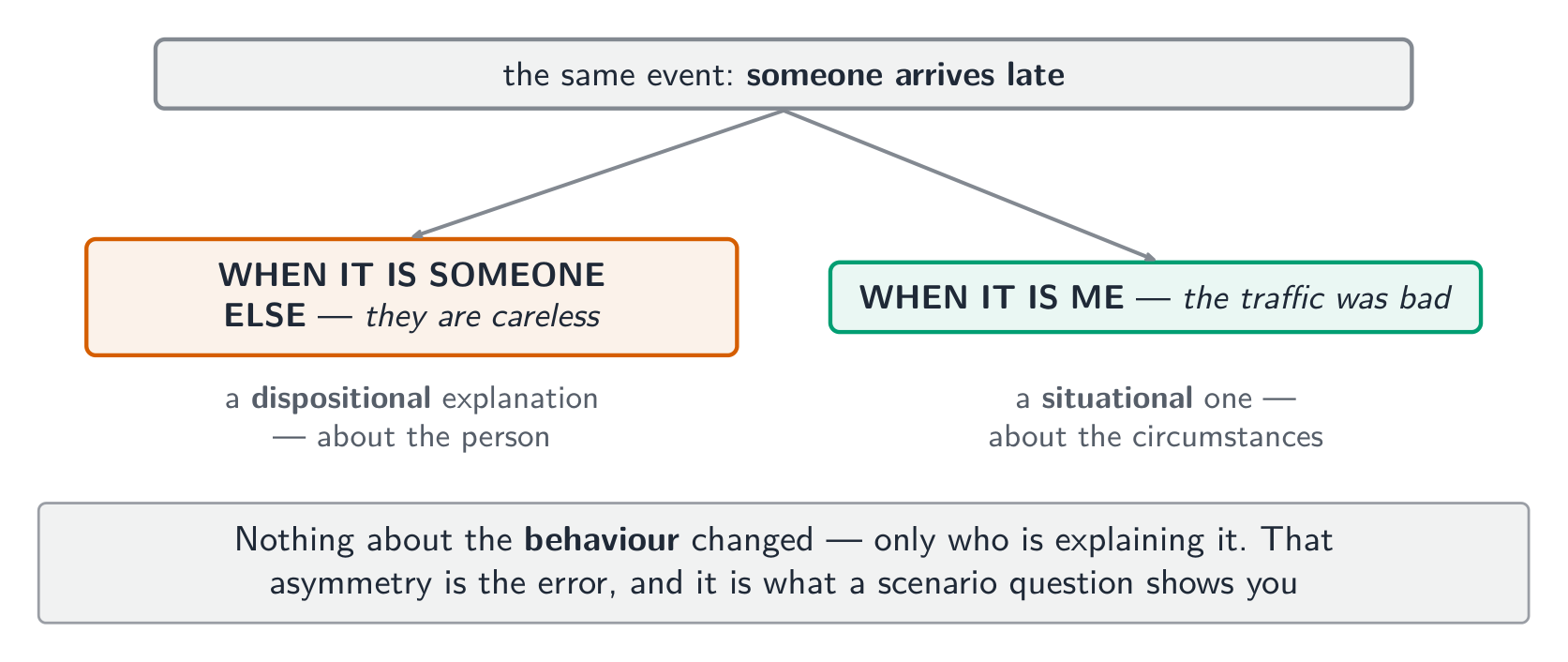
An explanation is either dispositional 内归因 (about the person's personality) or situational 外归因 (about the circumstances). People are not even-handed about which they choose:

  • The fundamental attribution error 基本归因错误 is over-using dispositional explanations for other people's behaviour.
  • The actor-observer bias 行动者-观察者偏差 is explaining your own behaviour situationally while explaining others' dispositionally.
  • The self-serving bias 自利偏差 credits success to yourself and blames failure on the situation.
  • The just-world phenomenon 公正世界现象 is the belief that people get what they deserve.

A person's explanatory style 解释风格 can be optimistic 乐观的 or pessimistic 悲观的, and this shapes how they respond to setbacks.

Person perception has its own effects. The mere exposure effect 单纯曝光效应 means repeated contact increases liking. A self-fulfilling prophecy 自我实现预言 occurs when expectations cause the behaviour that confirms them. Social comparison 社会比较 is judging yourself against others, either upward 向上比较 or downward 向下比较.

עברית

פסיכולוגיה חברתית לומדת כיצד אנשים חושבים על אחרים, משפיעים עליהם וקיימים ביניהם יחסים. היא מתחילה בייחוס - כיצד אנו מסבירים התנהגות.

הסבר הוא או דיספוזיציונלי (על האופי של האדם) או מצבי (על הנסיבות). אנשים אינם שווים בין השניים לבחירה שלהם:

  • שגיאת הייחוס הבסיסית היא שימוש מוגזם בהסברים דיספוזיציונליים להתנהגות של אחרים.
  • טיית הפועל-צופה: הסבר ההתנהגות העצמית בצורה מצבית בעוד שהתנהגות אחרים מוסברת בצורה דיספוזיציונלית.
  • טיית שירות עצמי: ייחס הצלחה לעצמנו והאשמה בכישלון בנסיבות.
  • תופעת העולם המקשר: האמונה שאנשים מקבלים את מה שהם ראויים לה.

לסגנון ההסבר של אדם יכול להיות אופטימי או פסימי, והדבר מעצב את תגובתו לקשיים.

תפיסת אישיות יש לה השפעות משלה. אפקט החשיפה הפשוטה פירושו שמגע חוזר מגביר אהבה. נבואה מקיימת עצמה מתרחשת כאשר ציפיות גורמות להתנהגות המאשרת אותן. השוואה חברתית היא הערכת עצמך מול אחרים,eventually מעלה או מטה.

אף דבר בהתנהגות לא השתנה - רק מי שמסביר אותו
Explore · ⁨חקור⁩

Sort each explanation as dispositional or situational · ⁨מיינו כל הסבר כתלותי או סביבתי⁩

Nothing about the behaviour changes — only who is explaining it. That asymmetry is the error. · ⁨שום דבר בהתנהגות אינו משתנה — רק מי שמסביר. א-סימטריה זו היא השגיאה.⁩

Vocabulary · ⁨מילון מונחים⁩ Train · ⁨אימון⁩
English עברית
Social psychology/ˈsəʊʃl saɪˈkɒlədʒi/ פסיכולוגיה חברתית
attribution/ətrɪˈbjuːʃn/ יחסוביות
dispositional/ˌdɪspəˈzɪʃənl/ מיוחס למאפיין אישי
situational/ˌsɪtʃuːˈeɪʃənl/ מיוחס למצב
fundamental attribution error/ˌfʌndəˈmentl ətrɪˈbjuːʃn ˈerə/ שגיאת יחסוס בסיסית
actor-observer bias/ˈæktə ɒbˈzɜːvə ˈbaɪəs/ טיית התייחסות שחקן-צופה
self-serving bias/self ˈsɜːvɪŋ ˈbaɪəs/ טיית השירות העצמי
just-world phenomenon/dʒʌst wɜːld fɪˈnɒmɪnən/ תופעת עולם צדק
explanatory style/ekˈsplænətəri staɪl/ סגנון הסבר
optimistic/ˌɒptɪˈmɪstɪk/ אופטימי
pessimistic/ˌpesɪˈmɪstɪk/ פessimistic (פסימי)
mere exposure effect/mɪə ekˈspəʊʒə ɪˈfekt/ אפקט החשיפה הפשוטה
self-fulfilling prophecy/self fʊlˈfɪlɪŋ ˈprɒfəsi/ נבואה מתקיימת
Social comparison/ˈsəʊʃl kəmˈpærɪsn/ השוואה חברתית
upward/ˈʌpwəd/ עלייה
downward/ˈdaʊnwəd/ ירידה
stereotype/ˈsterɪəʊtaɪp/ סטריאוטייפ
Prejudice/ˈpredʒuːdɪs/ גישה קדומה
discrimination/dɪˌskrɪmɪˈneɪʃn/ הבחנה
Implicit attitudes/ɪmˈplɪsɪt ˈætɪtjuːdz/ עמדות סמויות
Belief perseverance/bɪˈliːf ˌpɜːsɪˈvɪərəns/ חזקת אמונה
Confirmation bias/kɒnfəˈmeɪʃn ˈbaɪəs/ טיית אישור
Cognitive dissonance/ˈkɒɡnɪtɪv ˈdɪsənəns/ דיסוננס קוגניטיבי
Social norms/ˈsəʊʃl nɔːmz/ נורמות חברתיות
Conformity/kənˈfɔːmɪti/ התמכרות
Obedience/əʊˈbiːdɪəns/ ציות
Normative social influence/ˈnɔːmətɪv ˈsəʊʃl ˈɪnfluːəns/ השפעה חברתית נורמטיבית
informational social influence/ˌɪnfəˈmeɪʃənl ˈsəʊʃl ˈɪnfluːəns/ השפעה חברתית מידעית
Persuasion/pəˈsweɪʒn/ שכנוע
elaboration likelihood model/ɪˌlæbəˈreɪʃn ˈlaɪklihʊd ˈmɒdl/ מודל האפשרויות לעיבוד מעמיק
central route/ˈsentrəl ruːt/ נתיב מרכזי
peripheral route/pəˈrɪfərəl ruːt/ נתיב פריפריאלי
foot-in-the-door/fʊt ɪnðə dɔː/ רגל בדלת
door-in-the-face/dɔː ɪnðə feɪs/ דלת בפנים הפנים
Social facilitation/ˈsəʊʃl fəˌsɪlɪˈteɪʃn/ הקלה חברתית
Social loafing/ˈsəʊʃl ˈləʊfɪŋ/ התחלשות חברה
Deindividuation/ˌdeɪndɪˌvɪdjuːˈeɪʃn/ דיאינדיבידואציה
Group polarization/ɡruːp ˌpəʊləraɪˈzeɪʃn/ קוטביות קבוצתית
groupthink/ˈɡruːpθɪŋk/ חשיבה קבוצתית
Individualism/ˌɪndɪˈvɪdʒuːəlɪzəm/ אינדיוואידיזם
collectivism/kəˈlektɪvɪzəm/ קולקטיביזם
multiculturalism/ˌmʌltɪˈkʌltʃərəlɪzəm/ רב-תרבותיות
false consensus effect/fɒls kənˈsensəs ɪˈfekt/ אפקט הסכמה שגויה
Superordinate goals/ˌsuːpəˈrɔːdɪnət ɡəʊlz/ מטרות עליונות משותפות
Altruism/ˈɔːltruːɪzəm/ אלטרוויזם
prosocial behavior/ˈprɒsəʊʃl bɪˈheɪvjə/ התנהגות פרוסוציאלית
bystander effect/ˈbaɪstændə ɪˈfekt/ אפקט העד
diffusion of responsibility/dɪˈfjuːʒn ɒv rɪˌspɒnsəˈbɪlɪti/ פיזור אחריות
4.2

Attitudes and Attitude Change · ⁨עמדות ושנוי עמדה⁩

Syllabus · ⁨סיילבוס⁩
English

Learning Objective 4.2.A: Explain how stereotypes and implicit attitudes contribute to the behaviors and mental processes of prejudice and discrimination.

  • 4.2.A.1 A stereotype is a generalized concept about a group. Stereotypes can help reduce cognitive load when making decisions or judgments. Stereotypes can be the cause and/or result of biased perceptions and experiences and are frequently the basis of prejudiced attitudes and discriminatory behaviors.
  • 4.2.A.2 Implicit attitudes are those that individuals hold but may be unaware of or may not acknowledge. Research has focused on how implicit attitudes reflect negative evaluations of others, as demonstrated by the just-world phenomenon, out-group homogeneity bias, in-group bias, or ethnocentrism.

Learning Objective 4.2.B: Explain how belief perseverance and cognitive dissonance apply to attitude formation and change.

  • 4.2.B.1 Belief perseverance occurs when a belief persists even if evidence suggests it is not accurate. People experiencing belief perseverance may engage in confirmation bias, thereby clinging to an attitude or belief regardless of the evidence for or against it.
  • 4.2.B.2 Cognitive dissonance refers to the mental discomfort that occurs when actions or attitudes are in conflict. People are motivated to reduce the discomfort by changing either actions or attitudes to be more in line with each other.
עברית

מטרות לימוד 4.2.A: הסבר כיצד סטריאוטיפים ועמדות סתומות תורמים להתנהגויות ולתהליכים מנטליים הקשורים לקדע ואפליה.

  • 4.2.A.1 סטריאוטיפ הוא רעיון כללי על קבוצה. סטריאוטיפים יכולים לעזור לצמצם עומס קוגניטיבי בעת קבלת החלטות או פסקי דין. סטריאוטיפים יכולים להיות גורם ו/או תוצאה של תפיסות ומחוויות טעויות, והם בסיס נפוץ לעמדות קדעיות והתנהגויות אפליסטיות.
  • 4.2.A.2 עמדות סתומות הן אלו שאינדיוידים מחזיקים אך עשויים לא לדעת עליהן או לא להכיר בהן. מחקר התמקד באופן בו עמדות סתומות משקפות הערכות שליליות כלפי אחרים, כפי שהוכח על ידי תופעת העולם צדקני, הטיית אחידות קבוצה חיצונית, הטיית קבוצה פנימית או אתnocentrism.

מטרות לימוד 4.2.B: הסבר כיצד עקשנות אמונה ודיסוננס קוגניטית חלות על יצירת עמדות ושינוי עמדות.

  • 4.2.B.1 עקשנות אמונה מתרחשת כאשר אמונה נמשכת גם אם עדויות מצביעות על כך she is not accurate. אנשים החווים עקשנות אמונה עשויים לתגלם הטיית אישור, ובכך להחזיק בעמדה או אמונה כלשהי ללא קשר לעדדים למעלה או למטה.
  • 4.2.B.2 דיסוננס קוגניטית מתייחסת למתח מנטלי הנובע מכך שפעולות או עמדות נמצאות בסתירה. אנשים מוטיבים לצמצם את המתח על ידי שינוי פעולות או עמדות כדי ליישר אותן זו עם זו.

Source: College Board AP Course and Exam Description · ⁨מקור: תיאור הקורס והמבחן של College Board AP⁩

English

A stereotype 刻板印象 is a generalised idea about a group; it reduces mental effort but can be inaccurate and harmful. Prejudice 偏见 is an attitude, and discrimination 歧视 is the behaviour. Implicit attitudes 内隐态度 are held without full awareness.

Attitudes resist change. Belief perseverance 信念固着 keeps a belief alive even after the evidence for it is discredited. Confirmation bias 确认偏差 is seeking evidence that fits what you already believe.

Cognitive dissonance 认知失调 is the discomfort felt when actions and attitudes conflict. Because the action has already happened, people often resolve it by changing the attitude - which is why doing something can change what a person believes.

עברית

סטריאוטיפ הוא רעיון כללי על קבוצה; הוא מפחית מאמץ קוגניטיבי אך עשוי להיות לא מדויק ומזיק. מגדר הוא עמדה, והיבדל הוא התנהגות. עמדות סמוכות נשמרות ללא מודעות מלאה.

עמדות עמידות בפני שינוי. הישרדות אמונה שומר על אמונה חיה גם לאחר שהעדות לתומכת בה נכחתה. טיית אישוש היא חיפוש עדות שתתאים למה שאתה כבר מאמין.

תחושת אי-התאמה קוגניטיבית היא אי-הנוחות שחווים כאשר פעולות ועמדות נמצאות בסתירה. מכיוון שהפעולה כבר התרחשה, אנשים פותרים זאת לעיתים קרובות על ידי שינוי העמדה - ולכן פעולה יכולה לשנות את מה שאדם מאמין.

4.3

Social Situations · ⁨מצבים חברתיים⁩

Syllabus · ⁨סיילבוס⁩
English

Learning Objective 4.3.A: Explain how the social situation affects behavior and mental processes.

  • 4.3.A.1 Social norms define expectations and roles a society may have for its members in individual and social situations.
  • 4.3.A.2 Social influence theory proposes that social pressure to behave or think in certain ways can be normative or informational.
  • 4.3.A.3 Persuasion refers to the techniques applied to convince the self or others of particular ideas, actions, or beliefs.
    • 4.3.A.3.i Persuasion can depend on the route to persuasion. The elaboration likelihood model outlines two main routes to persuasion: central and peripheral. The halo effect is an example of a peripheral route to persuasion.
    • 4.3.A.3.ii Persuasion can depend on how information is presented, as demonstrated by the foot-in-the-door and the door-in-the-face techniques.
  • 4.3.A.4 Research on conformity clarifies the conditions that strengthen the likelihood of people adhering to unspoken rules, norms, or expectations.
  • 4.3.A.5 Research on obedience clarifies the conditions that strengthen the likelihood of people complying with the directives of an authority figure.

Learning Objective 4.3.B: Explain how being in a group can affect an individual’s behavior and mental processes.

  • 4.3.B.1 Cultural phenomena such as individualism, collectivism, and multiculturalism can influence how one perceives and behaves towards oneself and others.
  • 4.3.B.2 Being a member of a group can influence how one behaves or experiences mental processes via group polarization, groupthink, diffusion of responsibility, social loafing, and deindividuation.
  • 4.3.B.3 Performing a mental or physical behavior in front of a group can lead to social facilitation.
  • 4.3.B.4 People often overestimate the levels to which others agree with them, known as the false consensus effect.
  • 4.3.B.5 Superordinate goals serve to unite disparate groups under a common goal and help reduce negative affect and stereotyping among groups. Social traps occur when individuals do not unite and act in their own self-interest to the detriment of the group.
  • 4.3.B.6 Industrial-organizational (I/O) psychologists study how people perform in the workplace. I/O psychologists study best practices in management of work, relationships among people working together or for a common company or program, and how people feel about work (burnout).

Learning Objective 4.3.C: Explain how prosocial behavior affects behavior and mental processes.

  • 4.3.C.1 Altruism refers to selfless behavior, but some researchers suggest that people act in prosocial ways due to incurring social debt. The social reciprocity norm and the social responsibility norm explain this type of behavior.
  • 4.3.C.2 The bystander effect demonstrates that situational and attentional variables predict whether someone is likely to help another person.
עברית

מטרות לימוד 4.3.A: הסבר כיצד המצב החברתי משפיע על התנהגות ותהליכים מנטליים.

  • 4.3.A.1 תקנות חברתיות מגדירות ציפיות ותפקידים שהחברה עשויה להיות עבור חבריה במצבים אישיים וחברתיים.
  • 4.3.A.2 תיאוריית השפעה חברתית טוענת כי לחץ חברתי להתנהג או לחשוב בצורות מסוימות יכול להיות תקני או מידעתי.
  • 4.3.A.3 שיכנוע מתייחס לטכניקות המשמשות לשכנע את העצמי או אחרים ברעיונות, פעולות או אמונות ספציפיים.
    • 4.3.A.3.i שיכנוע יכול להסתמך על מסלול השיכנוע. הדגם להסתברות הרחבה מפרט שני מסלולים עיקריים לשיכנוע: מרכזי ומישורי. אפקט ההילה הוא דוגמה למסלול מישורי לשיכנוע.
    • 4.3.A.3.ii שיכנוע יכול להסתמך על אופן הצגת המידע, כפי שהוכח על ידי הטכניקות "רגל בדלת" ו"דלת בפנים".
  • 4.3.A.4 מחקר על התאמה ברורה את התנאים המחזקים את הסיכון לאנשים להתנהג לפי כללים, נורמות או ציפיות שאינם מנוסחים.
  • 4.3.A.5 מחקר על ציות ברור את התנאים המחזקים את הסיכון לאנשים לציית להוראותיו של איש סמכות.

מטרת הלמידה 4.3.B: הסבר כיצד נוכחות בקבוצה יכולה לשפיעה על התנהגותו ותהליכי החשיבה של אדם יחיד.

  • 4.3.B.1 תופעות תרבותיות כמו אינדיוואידיאליות, קולקטיביזם ומולטי-תרבותיות יכולות להשפיע על האופן שבו אדם תופס ומתנהג כלפי עצמו וכלפי אחרים.
  • 4.3.B.2 היותו חלק מקבוצה יכולה להשפיע על ההתנהגות או על תהליכי החשיבה באמצעות קיבוע קבוצתי, מחשבת-קבוצה, פיזור אחריות, רעלן חברתי ואינדיבידואציה.
  • 4.3.B.3 ביצוע התנהגות מנטלית או פיזית מול קבוצה עשוי להוביל להקלה חברתית.
  • 4.3.B.4 אנשים נוטים להעריך ללא הצדקה את רמת ההסכמה שלהם עם אחרים, תופעה הידועה כאפקט הפסקת הקונסנס.
  • 4.3.B.5 מטרה על-קבוצתית משמשת לאיחוד קבוצות מפורדות תחת מטרה משותפת ועוזרת להפחית אפקט שלילי וסטריאוטיפים בין קבוצות. תופעת המלכודות החברתיות מתרחשת כאשר אנשים אינם מאחדים כוחות ופועלים לפי האינטרסים האישיים שלהם לזיקון הקבוצה.
  • 4.3.B.6 פסיכולוגים תעשייתיים-ארגוניים (I/O) לומדים כיצד אנשים מבצעים את עבודתם במקום העבודה. פסיכולוגים I/O לומדים שיטות מיטביות בניהול עבודה, יחסים בין אנשים העובדים יחד או עבור חברה או תוכנית משותפת, וכיצד אנשים מרגישים לגבי העבודה (שריפת דלק).

מטרת הלמידה 4.3.C: הסבר כיצד התנהגות פרוסוציאלית משפיעה על התנהגות ותהליכי חשיבה.

  • 4.3.C.1 אלטרויזם מתייחס להתנהגות ללא חובה, אך חוקרים מסוימים מציעים שאנשים פועלים באופן פרוסוציאלי בשל נכסות לחוב חברתי. הנורמה להדדיות חברתית והנורמה לאחריות חברית מסבירות סוג זה של התנהגות.
  • 4.3.C.2 אפקט העובר הרואה מדגים כי משתנים מצביעים ומשתני תשומת לב מנבאים האם אדם סביר להניח שיסייע לאדם אחר.

Source: College Board AP Course and Exam Description · ⁨מקור: תיאור הקורס והמבחן של College Board AP⁩

English

Social norms 社会规范 define the behaviour a group expects. Behaviour changes when others are present:

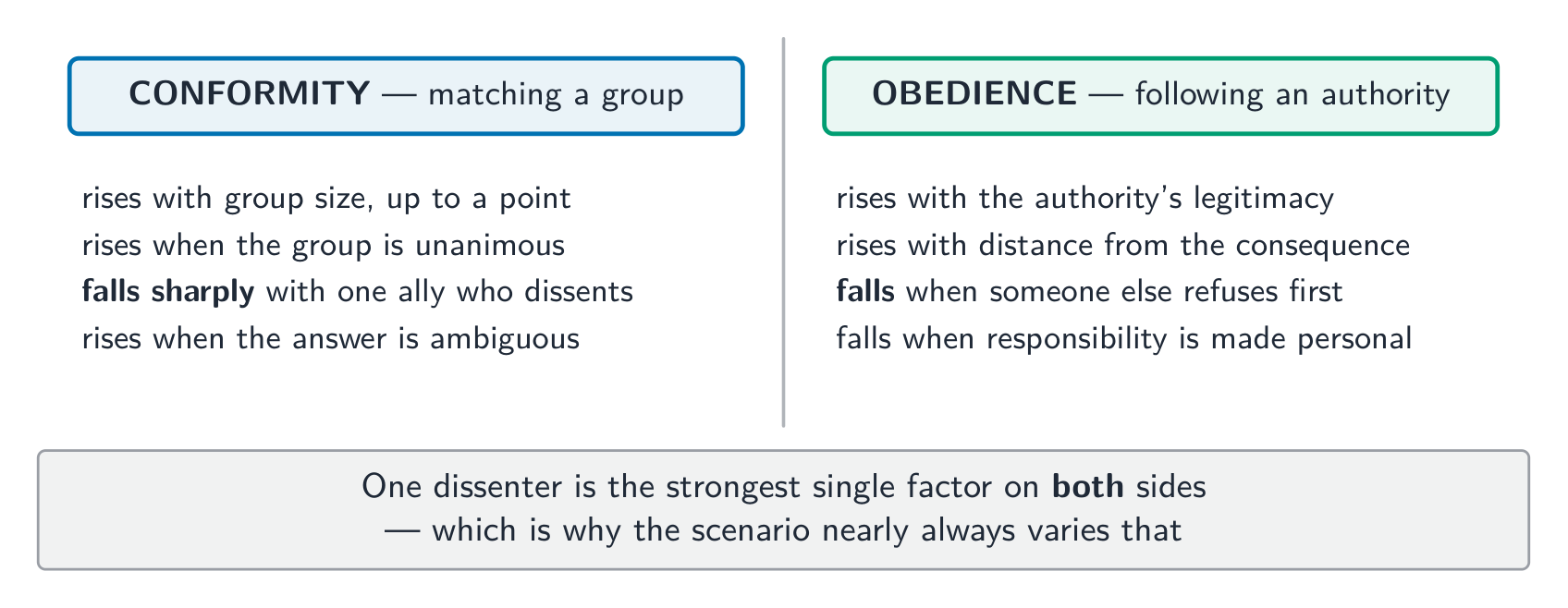
  • Conformity 从众 is adjusting behaviour to match a group. It rises with group size (up to a point), unanimity, and ambiguity, and falls when even one other person dissents.
  • Obedience 服从 is following an instruction from an authority. It rises with the authority's perceived legitimacy and closeness, and falls when the victim is close or the authority is distant.
  • Normative social influence 规范性社会影响 is conforming to be accepted; informational social influence 信息性社会影响 is conforming because you think others know better.

Persuasion 说服 has two routes in the elaboration likelihood model 精细加工可能性模型: the central route 中心路径 uses the strength of the argument, and the peripheral route 边缘路径 uses cues such as attractiveness. Sequential techniques matter too: the foot-in-the-door 登门槛效应 technique starts with a small request, while the door-in-the-face 留面子效应 technique starts with an unreasonable one.

Group settings change behaviour further. Social facilitation 社会助长 improves performance on simple or well-practised tasks when others watch, but harms performance on difficult ones. Social loafing 社会惰化 is reduced individual effort in a group. Deindividuation 去个体化 is loss of self-awareness in a crowd. Group polarization 群体极化 pushes a group's average view further in its original direction, and groupthink 群体思维 is the suppression of dissent to keep harmony.

Individualism 个人主义 and collectivism 集体主义 shape all of these, and multiculturalism 多元文化主义 describes societies holding several traditions together. The false consensus effect 虚假一致效应 is overestimating how many people agree with you. Superordinate goals 超级目标 - shared aims that need cooperation - reduce hostility between groups.

Altruism 利他行为 is selfless helping, though prosocial behavior 亲社会行为 may also bring benefit to the helper. The bystander effect 旁观者效应 shows people are less likely to help as the number of onlookers rises, because of diffusion of responsibility 责任分散.

Worked example (a real AP exam question). The 2025 Evidence-Based Question asked students to "develop and justify an argument about whether the presence of others improves performance", then to "Explain how the evidence from Part B (i) supports your claim using a psychological perspective, theory, concept, or research finding learned in AP Psychology." A full-mark answer supplies a course concept, not just a restatement of the source: "The participants performed better on the simple task when observed (Source 1). This supports my claim because social facilitation predicts that an audience improves performance on tasks that are simple or well practised, while impairing performance on difficult ones." Notice the shape: cite the source, then name the concept and state what it predicts. Re-describing the study alone does not earn the explanation point.

עברית

תקנים חברתיים מגדירים את ההתנהגות שהקבוצה מצפה ממנה. התנהגות משתנה כאשר אחרים נוכחים:

  • התאמה היא כיוון התנהגות כדי להתאים לקבוצה. היא עולה עם גודל הקבוצה (עד נקודה מסוימת), פסיקה, ואmbiguity, ויורדת כאשר אף אחד אחר מתנגד.
  • הכשרה היא ביצוע הוראה מרשות. היא עולה ככל שהסמכות נתפסת כחוקית וכקרובה, ויורדת כאשר הקורבן קרוב או הסמכות רחוקה.
  • השפעה חברתית נורמטיבית היא התאמה כדי להתקבל; השפעה חברתית מידעית היא התאמה משום שאתה סבור שאחרים יודעים טוב יותר.

השכנוע יש לו שתי דרכים ב-מודל האפשרות לעיבוד: הדרך המרכזית משתמעת בעוצמת הטיעון, ו-הדרך הפריפרלית משתמשת באותיות כמו משיכות גוף. טכניקות רצופות חשובות גם הן: טכניקת הרגל בדלת מתחילה בבקשה קטנה, בעוד ש-טכניקת דלת בפנים פנים מתחילה באחת בלתי סבירה.

סביבות קבוצתיות משנות התנהגות further. הקלה חברתית משפרת ביצועים במשימות פשוטות או שרוגלות היטב כאשר אחרים צופים, אך פוגעת בביצועים במשימות קשות. הנחתה חברתית היא הפחתת מאמץ אישי בקבוצה. דאינדיווידואציה היא אובדן מודעות עצמית בצומת. קוטביות קבוצתית דוחפת את הדעת הממוצעת של הקבוצה עוד יותר בכיוונה המקורי, ו-מחשבת קבוצה היא דיכוי מחלוקת לשמירה על שלווה.

אינדיווידואליזם ו-קולקטיביזם מעצבים את כל אלו, ו-רב-תרבותיות מתארת חברות המחזיקות מסורת רבות יחד. אפקט ההסכמה השגויה הוא הערכת יתר של כמה אנשים מסכימים איתך. מטרות עליונות - מטרות משותפות הדורשות שיתוף פעולה - מצמצמות עוינות בין קבוצות.

אלטרויזם הוא עזרה ללא תועלת עצמית, אם כי התנהגות פרוסוציאלית עשויה להביע גם תועלת למסייע. אפקט הצופה מראה שאנשים פחות סביר שיעזרו ככל שמספר הצופים עולה, בשל פיזור אחריות.

דוגמה עבודה (שאלה אמיתית מבחן AP). השאלה המבוססת-עדות לשנת 2025 ביקשה מהתלמידים "לפתח ולנסח טיעון לגבי כך שהנוכחות של אחרים משפרת ביצועים", ולאחר מכן "להסביר כיצד העדות מהחלק ב' (i) תומכת בטענתך באמצעות זווית נפשית, תיאוריה, מושג או ממצא מחקר שנלמדו בנפש AP." תשובה מלאה מנקודות מקבלת מושג מקור, לא רק החזרה על המקור: "המשתתפים ביצעו טוב יותר במשימה הפשוטה כאשר נצפו (מקור 1). זה תומך בטענתי משום שהקלה חברתית חוזה שהקהל משפר ביצועים במשימות פשוטות או שרוגלות היטב, תוך פגיעה בביצועים במשימות קשות." שים לב לצורה: ציין את המקור, ואז קרא את המושג וגם ציין מה הוא חוזה. חזרה על המחקר בלבד אינה מזכה בנקודת ההסבר.

התנגדות אחת היא הגורם הבודד החזק משני הצדדים
4.4

Personality: Psychodynamic and Humanistic · ⁨אישיות: פסיכודינמית ואנושית⁩

Syllabus · ⁨סיילבוס⁩
Learning ObjectiveEssential Knowledge

4.4.A
Explain how the psychodynamic theory of personality defines and assesses personality.

  • 4.4.A.1 According to the psychodynamic theory of personality, unconscious processes drive personality.
    • Exclusion Statement: The stage theory of psychosexual development is out of scope for the AP Psychology Exam.
  • 4.4.A.2 Ego defense mechanisms (denial, displacement, projection, rationalization, reaction formation, regression, repression, and sublimation) serve to protect the ego unconsciously from threats.
  • 4.4.A.3 Psychodynamic personality psychologists assess personality using projective tests that are designed to probe the preconscious and unconscious mind.

4.4.B
Explain how the humanistic theory of personality defines and assesses personality.

  • 4.4.B.1 According to humanistic psychology, personality focuses on unconditional regard and the self-actualizing tendency as primary motivating factors.
    • Exclusion Statement: Maslow’s hierarchy of needs is outside the scope of the AP Psychology Exam.

Source: College Board AP Course and Exam Description · ⁨מקור: תיאור הקורס והמבחן של College Board AP⁩

English

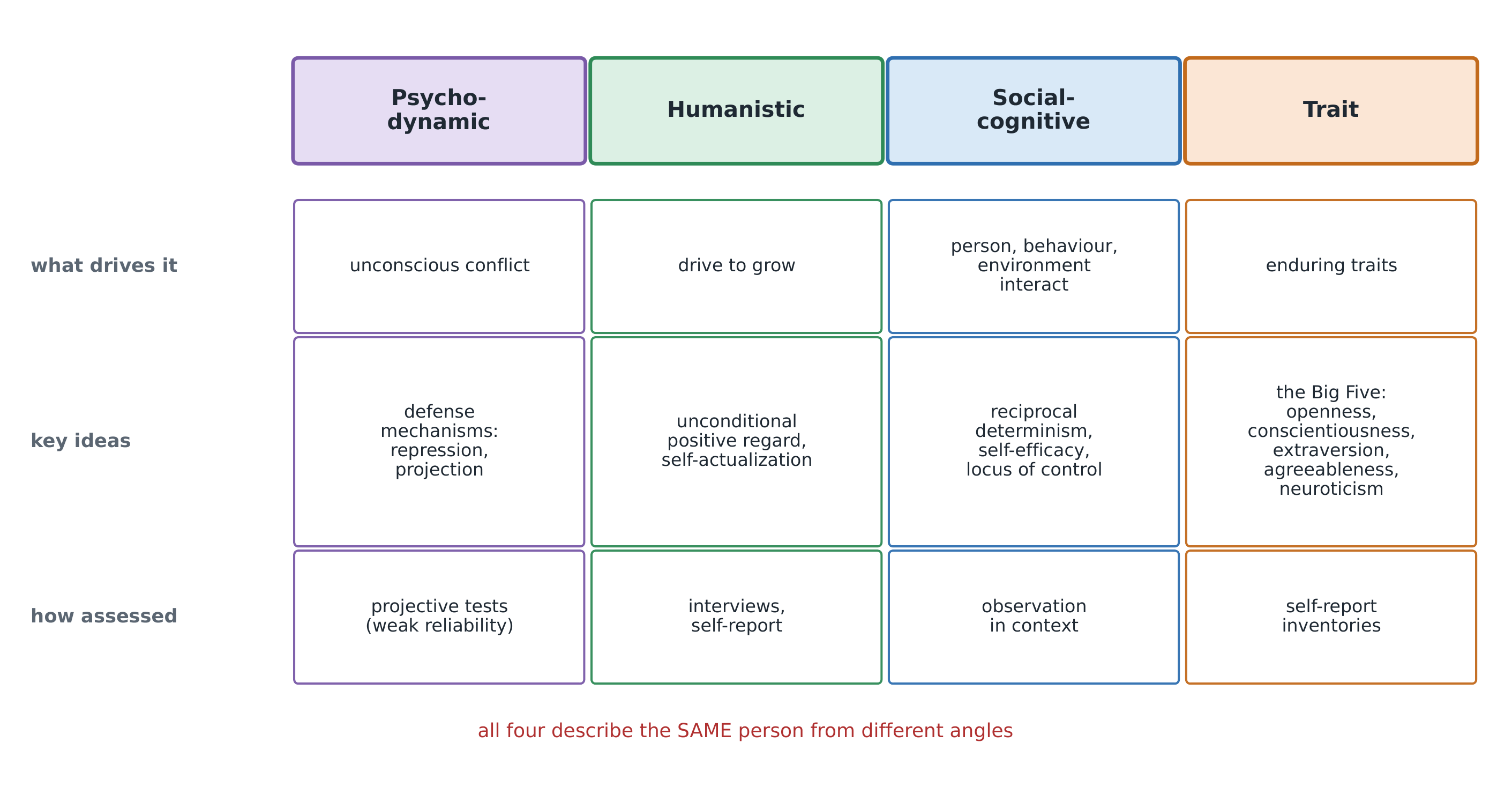
Personality 人格 is a person's characteristic pattern of thinking, feeling, and behaving. Four approaches are examinable.

The psychodynamic 精神动力学 approach holds that unconscious 无意识 processes drive personality. Ego defense mechanisms 自我防御机制 protect the person from anxiety, and the examinable set is denial 否认, displacement 转移, projection 投射, rationalization 合理化, reaction formation 反向形成, regression 退行, repression 压抑, and sublimation 升华. It assesses personality with projective tests 投射测验, which present an ambiguous stimulus; these have weak reliability and validity.

The humanistic 人本主义 approach focuses on growth. It emphasises unconditional positive regard 无条件积极关注 and self-actualization 自我实现 - becoming the fullest version of oneself.

עברית
ארבעת גישות האישיות לצד, כל אחת עם מה שמניע אותה וכיצד היא נמדדת
ארבע גישות לאישיות, כל אחת עם מניע שונה וערך מדידה שונה

אישיות היא דפוס חשיבה, תחושה והתנהגות מאופיינים של אדם. ארבע גישות ניתנות לבחינה.

הגישה הפסיכודינמית טוענת שתהליכים בל conscious מניעים אישיות. מנגנוני הגנה של האגו מגנים על האדם מפני חרדה, והסט הנבחר לבחינה הוא הכחשה, הזזה, פרויקציה, רציונליזציה, התנהגות נגדית, רגרסיה, דיכוי וסובלימציה. היא נמדדת באמצעות מבחנים פרויקטיביים, המציגים גירוי מטושטש; אלו הם בעלי אמינות ותוקף חלשים.

הגישה האנושית מתמקדת בצמיחה. היא מדגישה הערכה חיובית ללא תנאים ואישור עצמי - הופכה לגרסה המלאה ביותר של עצמך.

Vocabulary · ⁨מילון מונחים⁩ Train · ⁨אימון⁩
English עברית
Personality/ˌpɜːsəˈnælɪti/ אישיות
psychodynamic/ˌsaɪkəʊdaɪˈnæmɪk/ פסיכודינמי
unconscious/ʌnˈkɒnʃəs/ לא-מודע
Ego defense mechanisms/ˈiːɡəʊ dɪˈfens ˈmekənɪzəmz/ מנגנוני הגנה של האני
denial/dɪˈnaɪəl/ הכחשה
displacement/dɪˈspleɪsmənt/ הזזה
projection/prəˈdʒekʃn/ מיפוי (הדמה)
rationalization/ˌræʃənəlaɪˈzeɪʃn/ רציונליזציה
reaction formation/rɪˈækʃn fɔːˈmeɪʃn/ התגבשות תגובה
regression/rɪˈɡreʃn/ ריגרסיה
repression/rɪˈpreʃn/ דיכוי
sublimation/ˌsʌblɪˈmeɪʃn/ סובלימציה
projective tests/prəˈdʒektɪv tests/ מבחנים פרויקטיביים
humanistic/ˌhjuːməˈnɪstɪk/ הומניסטי
unconditional positive regard/ʌŋkənˈdɪʃənl ˈpɒzɪtɪv rɪˈɡɑːd/ דאגה חיובית ללא תנאים
self-actualization/self ˌæktʃuːəlaɪˈzeɪʃn/ השגת עצמי
social-cognitive/ˈsəʊʃl ˈkɒɡnɪtɪv/ חברתי-קוגניטיבי
reciprocal determinism/rɪˈsɪprəkl dɪˈtɜːmɪnɪzəm/ קביעורמטוזם הדדי
Self-efficacy/self ˈefɪkəsi/ יעילות עצמית
locus of control/ˈləʊkəs ɒv kənˈtrəʊl/ מיקום השליטה
internal/ɪnˈtɜːnl/ פנימי
external/ekˈstɜːnl/ חיצוני
Trait theories/treɪt ˈθɪəriz/ תיאוריות מאפיין
Big Five/bɪɡ faɪv/ החמישה הגדולים
openness to experience/ˈəʊpənnəs tʊ ekˈspɪərɪəns/ פתיחות לחוויה
conscientiousness/ˌkɒnsɪˈenʃəsnəs/ אחריותיות
extraversion/ˌekstrəˈvɜːʃn/ אקסטרוversion
agreeableness/əˈɡriːəbəlnəs/ היכרות/התאמה חברתית
neuroticism/njuːˈrɒtɪsɪzəm/ נוירוטיזם
Drive-reduction theory/draɪv rɪˈdʌkʃn ˈθɪəri/ תיאוריית הפחתת מניע
homeostasis/ˌhəʊmiːəˈstɑːsiz/ הומיאוסטזיס
Arousal theory/əˈraʊzl ˈθɪəri/ תיאוריית גירוי
Yerkes-Dodson law/jɜːks ˈdɒdsn lɔː/ חוק ירקס-דודסון
Self-determination theory/self dɪˌtɜːmɪˈneɪʃn ˈθɪəri/ תיאוריית ההתמדה העצמית
intrinsic motivation/ɪnˈtrɪnsɪk ˌməʊtɪˈveɪʃn/ מוטיבציה פנימית
extrinsic motivation/ekˈstrɪnsɪk ˌməʊtɪˈveɪʃn/ מוטיבציה חיצונית
incentive theory/ɪnˈsentɪv ˈθɪəri/ תיאוריית המוטיבציה
Instincts/ˈɪnstɪŋkts/ יצריות
Lewin's motivational conflicts/ˈluːɪnz ˌməʊtɪˈveɪʃənl ˈkɒnflɪkts/ התנגשויות מוטיווניות לפי לווין
approach-approach/əˈprəʊtʃ əˈprəʊtʃ/ משיכה-משיכה
approach-avoidance/əˈprəʊtʃ əˈvɔɪdəns/ הימנעות-קירבה
avoidance-avoidance/əˈvɔɪdəns əˈvɔɪdəns/ הימנעות-הימנעות
Sensation-seeking theory/senˈseɪʃn ˈsiːkɪŋ ˈθɪəri/ תיאוריית החיפוש אחר חוויות חדשות
4.5

Personality: Social-Cognitive and Trait · ⁨אישיות: חברתית-קוגניטיבית ותכונית⁩

Syllabus · ⁨סיילבוס⁩
English

Learning Objective 4.5.A: Explain how the social-cognitive theory of personality defines and assesses personality.

  • 4.5.A.1 According to social-cognitive theory, reciprocal determinism shapes personality. Reciprocal determinism explores self-concept (how one views themselves and in relation to others) and how self-efficacy and self-esteem both contribute to self-concept.

Learning Objective 4.5.B: Explain how trait theories of personality define and assess personality.

  • 4.5.B.1 Trait theories of personality conclude that personality involves a set of enduring characteristics that lead to typical responses to stimuli.
  • 4.5.B.2 The Big Five theory of personality proposes that traits of agreeableness, openness to experience, extraversion, conscientiousness, and emotional stability make up one’s personality. These traits are measured by specialized personality inventories that use factor analysis to organize item responses.
עברית

מטרה לימודית 4.5.A: הסבר כיצד התיאוריה הסוציו-קוגניטיבית לאישיות מגדירה ומעריכה את האישיות.

  • 4.5.A.1 לפי התיאוריה הסוציו-קוגניטיבית, קביעות הדדית מעצבת את האישיות. קביעות הדדית חוקרת את התפיסה העצמית (כיצד אדם תופס את עצמו ואת יחסיו לאחרים) וכיצד יעילות עצמית וערך עצמי תורמים לתפיסה העצמית.

מטרה לימודית 4.5.B: הסבר כיצד תיאוריות האישיות התכוניות מגדירות ומעריכות את האישיות.

  • 4.5.B.1 תיאוריות האישיות התכוניות מסיקות שאישיות כוללת סט של מאפיינים מתמשכים המובילים לתגובות טיפיות לגירויים.
  • 4.5.B.2 תיאוריית החמישה הגדולים באישיות מציעה שתכונות של ערנות, פתיחות לחוויה, אקסטרוversion, נקיון והיציבות רגשית מהוות את האישיות. תכונות אלו נמדדות על ידי מכשירי אישיות מיוחדים המשתמשים בניתוח גורמים לארגון תשובות לפריטים.

Source: College Board AP Course and Exam Description · ⁨מקור: תיאור הקורס והמבחן של College Board AP⁩

English

The social-cognitive 社会认知 approach explains personality through reciprocal determinism 交互决定论: the person, their behaviour, and the environment each influence the other two. Self-efficacy 自我效能感 - belief in one's own ability to succeed at a task - is central, as is locus of control 控制点, which is internal 内控 or external 外控.

Trait theories 特质理论 describe personality as enduring characteristics. The Big Five 大五人格 traits are openness to experience 开放性, conscientiousness 尽责性, extraversion 外向性, agreeableness 宜人性, and neuroticism 神经质. Traits are measured with self-report inventories, which are more reliable than projective tests.

עברית

הגישה החברתית-קוגניטיבית מסבירה אישיות דרך קביעתיות הדדית: האדם, התנהגותו והסביבה משפיעים זה על זה. יעילות עצמית - אמונה ביכולתך להצליח במשימה - היא מרכזית, כמו גם מקור שליטה, שהוא פנימי או חיצוני.

תיאוריות תכונות מתארות אישיות כתכונות מתמשכות. התכונות החמש גדולות הן פתוחות לחוויה, מצפוןיות, חוצניות, התאמה ונוירוטיזם. תכונות נמדדות באמצעות מיפויי דיווח עצמי, שהם אמינים יותר ממבחנים פרויקטיביים.

4.6

Motivation · ⁨מוטיבציה⁩

Syllabus · ⁨סיילבוס⁩
English

Learning Objective 4.6.A: Explain how theories about motivation apply to behavior and mental processes.

  • 4.6.A.1 Some theories about motivation focus on behavior and mental processes that seek to address physical needs and desires such as drive-reduction theory and arousal theory. Drive-reduction theory addresses how certain behaviors help maintain homeostasis while arousal theory addresses how people seek an optimal level of arousal when they behave (as demonstrated by the Yerkes-Dodson Law).
  • 4.6.A.2 Self-determination theory proposes that people are motivated by intrinsic (internal) or extrinsic (external) motivations. Incentive theory explores the role of rewards (an extrinsic motivation) in motivating behavior.
  • 4.6.A.3 Many non-human animals are motivated by instincts (innate, typically fixed patterns of behavior in animals in response to certain stimuli). Humans do not seem to demonstrate instinctual behavior or mental processes.
  • 4.6.A.4 Lewin’s motivational conflicts theory proposes that choices create conflicts one must resolve as the basis of motivation. The type of conflicts faced include approach-approach, approach-avoidance, and avoidance-avoidance.
  • 4.6.A.5 Sensation-seeking theory proposes that one’s level of need for varied or novel experiences is the basis of motivation. The types of sensation seeking are experience seeking, thrill or adventure seeking, disinhibition, and boredom susceptibility.

Learning Objective 4.6.B: Explain how eating and belongingness motivate behavior and mental processes.

  • 4.6.B.1 Eating is a complex motivated behavior that demonstrates how physical and mental processes interact.
    • 4.6.B.1.i Hormones, such as ghrelin and leptin (regulated by the hypothalamus via the pituitary gland), regulate feelings of hunger and satiety.
    • 4.6.B.1.ii External factors like the presence of food, time of day, or social gatherings around meals also influence the behavior of eating.
עברית

מטרה לימודית 4.6.A: הסבר כיצד תיאוריות על מוטיבציה חלות על התנהגות ותהליכים מנטליים.

  • 4.6.A.1 כמה תיאוריות על מוטיבציה מתמקדות בהתנהגות ובתהליכים מנטליים השואפים להתמודד עם צרכים פיזיים ותשוקות כמו תיאוריית ההפחתת דחיפה ותיאוריית העוררות. תיאוריית ההפחתת דחיפה עוסקת בכיצד התנהגויות מסוימות עוזרות לשמור על היסטזיס בעוד שתיאוריית העוררות עוסקת בכיצד אנשים מחפשים רמת עוררות מיטבית כאשר הם מתנהגים (כפי שהוכח על ידי חוק ירקס-דודסון).
  • 4.6.A.2 תיאוריית הקבלת החלטות מציעה שאנשים מוטיבים על ידי מוטיבציה פנימית (אינטרנסית) או חיצונית (אקסטרנסית). תיאוריית השבועות חוקרת את תפקיד השבועות (מוטיבציה חיצונית) במotivation התנהגות.
  • 4.6.A.3许多非人类动物受本能驱动(天生的、通常固定的行为模式,对特定刺激的反应)。人类似乎不表现出本能行为或心理过程。
  • 4.6.A.4 תיאוריית העימותים המוטיבציוניים של לווין מציעה שבחירות יוצרות עימותים יש לפתור כבסיס למוטיבציה. סוגי העימותים הנפגשים כוללים קרבה-קרבה, קרבה-הימנעות והימנעות-הימנעות.
  • 4.6.A.5 תיאוריית חיפוש חוויות מציעה שרמת הצורך בחוויות מגוונות או חדשות היא בסיס המוטיבציה. סוגי חיפוש החוויות הם חיפוש חוויות, חיפוש חוויות הרפתקאות או תנועה, דיסאינביציה ורגישות לעמום.

מטרה לימודית 4.6.B: הסבר כיצד אכילה ושייכותות מוטיבות התנהגות ותהליכים מנטליים.

  • 4.6.B.1 אכילה היא התנהגות מוטיבציה מורכבת המראה כיצד תהליכים פיזיים ומנטליים מקיימים אינטראקציה.
    • 4.6.B.1.i הורמונים, כמו גרלין ולפטין (שמנויים על ידי ההיפותלamus דרך בלוטת ה pituitary), מכוונים תחושות רעב ורוויה.
    • 4.6.B.1.ii גורמים חיצוניים כמו נוכחות מזון, זמן ביום או אירועים חברתיים סביב ארוחות גם כן משפיעים על התנהגות האכילה.

Source: College Board AP Course and Exam Description · ⁨מקור: תיאור הקורס והמבחן של College Board AP⁩

English

Several theories explain what drives behaviour:

  • Drive-reduction theory 驱力减少理论 says behaviour reduces a physical need to restore homeostasis 内稳态.
  • Arousal theory 唤醒理论 says people seek an optimal level of arousal; the Yerkes-Dodson law 耶克斯-多德森定律 states that moderate arousal gives the best performance on most tasks.
  • Self-determination theory 自我决定理论 separates intrinsic motivation 内在动机 (from within) from extrinsic motivation 外在动机 (from reward), and incentive theory 诱因理论 focuses on the pull of rewards.
  • Instincts 本能 are innate fixed patterns, seen in non-human animals rather than in human behaviour.
  • Lewin's motivational conflicts 勒温的动机冲突理论 names three: approach-approach 双趋冲突, approach-avoidance 趋避冲突, and avoidance-avoidance 双避冲突.
  • Sensation-seeking theory 感觉寻求理论 explains differences in the need for novelty.

Eating shows physical and mental processes interacting. Ghrelin and leptin, regulated by the hypothalamus, control hunger and fullness, while external factors - the sight of food, the time of day, a shared meal - change how much people eat.

עברית

מספר תיאוריות מסבירות מה מניע התנהגות:

  • תיאוריית הפחתת לחץ אומרת שהתנהגות מפחיתה צורך פיזי כדי לשחזר ביתוסטזיס.
  • תיאוריית הגירוי טוענת שאנשים שואפים לרמת גירוי מיטבית; חוק ירקס-דודסון קובע כי גירוי בינוני מביא לביצועי המיטבים ברוב המשימות.
  • תיאוריית ההתמדה העצמית מבדילה בין מוטיבציה פנימית (מפנים) לבין מוטיבציה חיצונית (מפרס), ותיאוריית התגמול מתמקדת במשיכה של פרסים.
  • אינסטינקטים הם דפוסי פעולה מופיעים ואחידים, הנראים בעיקר בבעלי חיים ולא בהתנהגות אנושית.
  • התנגשויות מוטיווניות לפי לווין כולות שלושה סוגים: גישה-גישה, גישה-הימנעות, והימנעות-הימנעות.
  • תיאוריית חיפוש חווייתיות מסבירה הבדלים בצורך בחדשות.

אכילה משקפת אינטראקציה בין תהליכים פיזיים ומנטליים. גרילין ולפטין, המתכווננים על ידי ההיपोthalamus, שולטים בתחושת רעב ושביעה, בעוד שגורמים חיצוניים – מראה מזון, שעת היום, ארוחה משותפת – משנים את כמות האכילה של אנשים.

4.7

Emotion · ⁨רגש⁩

Syllabus · ⁨סיילבוס⁩
English

Learning Objective 4.7.A: Explain how theories of emotion apply to behavior and mental processes.

  • 4.7.A.1 Emotion, or affect, is a complex psychological process that is distinguished from reasoning or knowledge. Emotions reflect internal and external factors affecting an individual. Early 20th century psychological theories of emotion parsed the distinction between the physiological and cognitive experiences of emotion. Some theories proposed that the physiological and cognitive experiences occurred in succession while others proposed that they occurred simultaneously. Other theories emphasize that the cognitive label is required to experience an emotion. The facial-feedback hypothesis suggests that the experience of emotion is influenced by facial expressions, which supports theories that propose the physiological experience of emotion precedes the cognitive appraisal, and research testing this hypothesis has produced mixed results.
    • Exclusion Statement: Specific names of theories of emotion are outside the scope of the AP Psychology Exam.
  • 4.7.A.2 The broaden-and-build theory of emotion proposes that positive emotional experiences tend to broaden awareness and encourage new actions and thoughts. Negative emotions tend to reduce awareness and narrow thinking and action.

Learning Objective 4.7.B: Explain how social norms and experiences influence the expression of emotions.

  • 4.7.B.1 Research has explored whether the expression of emotions is universally common. Some emotions that may be commonly experienced across cultures include anger, disgust, sadness, happiness, surprise, and fear. Research on the universality of emotions shows mixed results.
  • 4.7.B.2 Display rules and elicitors for emotional expression can differ among cultures. Display rules and elicitors may regulate how people from different genders, ages, or socioeconomic classes within a culture can display and interpret emotions.
עברית

מטרה לימודית 4.7.A: הסבר כיצד תיאוריות על רגש חלות על התנהגות ותהליכים מנטליים.

  • 4.7.A.1 רגש או אפקט הם תהליך פסיכולוגי מורכב המיומן מהיכרה או ידע. רגשים משקפים גורמים פנימיים וחיצוניים המשפיעים על פרט. בראשית המאה ה-20, תיאוריות פסיכולוגיות של רגש הבדילו בין החוויה הפיזיולוגית והחוויה הקוגניטיבית של רגש. חלק מהתיאוריות הציעו שהחוויות הפיזיולוגית והקוגניטיבית מתרחשות ברצף, בעוד שאחרות הציעו שהן מתרחשות בו-זמנית. תיאוריות אחרות מדגישות כי התווית הקוגניטיבית נדרשת כדי לחוות רגש. ההנחה המשוב-פנים (facial-feedback hypothesis) טוענת שחווית הרגש מושפעת מבטויי פנים, וזה תומך בתיאוריות שמציעות שהחוויה הפיזיולוגית של רגש קודמת להערכה קוגניטיבית; מחקר שנערך לבדיקת הנחה זו יצר תוצאות מעורבות.
    • הצהרת השללה: שמות ספציפיים של תיאוריות רגש אינם בתחום הלימודים במבחן AP Psychology.
  • 4.7.A.2 תיאוריית הרחבה ובנייה (broaden-and-build theory) של רגש מציעה שחוויות רגשיות חיוביות נוטות להרחיב את המודעות ולעודד פעולות ומחשבות חדשות. רגשים שליליים נוטים לצמצם את המודעות ולהצيق את המחשבה והפעולה.

מטרה לימודית 4.7.B: הסבר כיצד תקנות חברתיות וחוויות משפיעות על ביטוי רגשים.

  • 4.7.B.1 מחקר חקר האם ביטוי רגשים הוא אוניברסלי. חלק מהרגשים שעשויים להיות חוויות נפוצות בצירופי תרבויות כוללים כעס, זרמה, עצב, שמחה, הפתעה ופחד. מחקר על האוניברסליות של רגשים מראה תוצאות מעורבות.
  • 4.7.B.2 כללי הביטוי וגורמי העירור לביטוי רגשים עשויים להשתנות בין תרבויות. כללי הביטוי וגורמי העירור עשויים לכוון כיצד אנשים מגברים, גילאים או שכונות סוציו-אקונומיות שונות בתוך תרבות יכולים לבטא ולפרש רגשים.

Source: College Board AP Course and Exam Description · ⁨מקור: תיאור הקורס והמבחן של College Board AP⁩

English

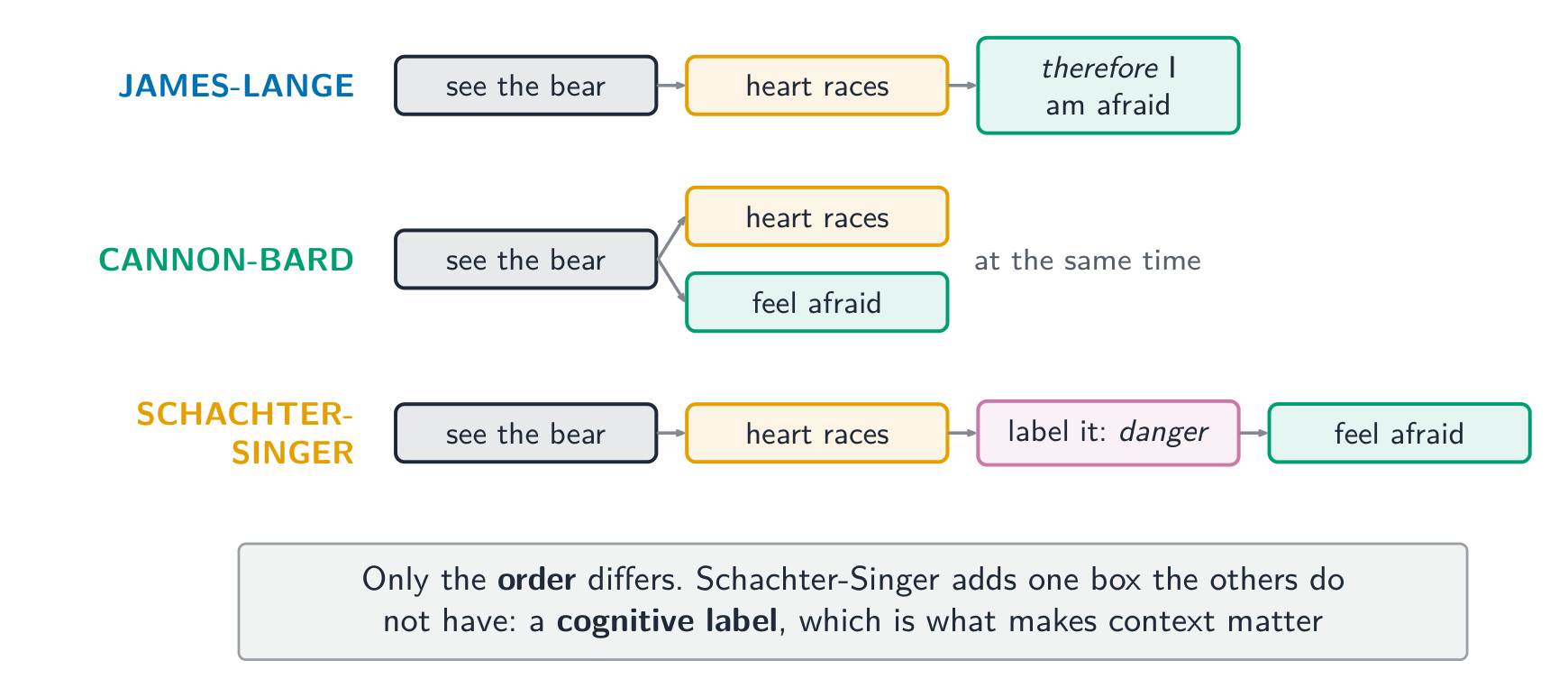
Emotion 情绪, also called affect 情感, combines physical arousal, expressive behaviour, and conscious experience. Examinable theories are the James-Lange theory 詹姆斯-兰格理论 (the body responds first, and emotion is the reading of that response), the Cannon-Bard theory 坎农-巴德理论 (arousal and emotion occur at once), and the Schachter-Singer two-factor theory 沙赫特-辛格两因素理论 (arousal plus a cognitive label 认知标签). Broaden-and-build theory 拓展-建构理论 proposes that positive emotions widen thinking and build lasting resources.

Some facial expressions are recognised across cultures, but display rules 表达规则 - a culture's norms for showing emotion - and the events that trigger emotion both vary.

עברית

רגש, הנקרא גם אפקט, משלב גירוי פיזי, התנהגות מבטאת וחוויה מודעת. תיאוריות שנבדקות הן: תיאוריית ג'יימס-לאנג (הגוף מגיב תחילה, והרגש הוא הקריאה של תגובה זו), תיאוריית קאנון-ברד (הגירוי והרגש מתרחשים בו-זמנית), ותיאוריית שכטר-סינגר דו-גורמי (גירוי plus תווית קוגניטיבית). תיאוריית הרחבה-ובנייה מציעה שרגשים חיוביים רוחבים את החשיבה ובונים משאבים מתמשכים.

חלק ממחוייות הפנים מוכרות בכל התרבויות, אך כללי הצגה – נורמות תרבותיות להצגת רגש – והאירועים שמפעילים רגש משתנים.

שלוש תיאוריות, שלושה סידורים של אותו שלושה אירועים
Explore · ⁨חקור⁩

Order the three events for each theory · ⁨סדרו את שלושת האירועים עבור כל תיאוריה⁩

The three theories are three orderings of the same three events — and only Schachter-Singer adds a cognitive label. · ⁨שלושת התיאוריות הן שלוש סידורי אותו שלושת אירועים — ורק שכטר-סינגר מוסיף תווית קוגניטיבית.⁩

Vocabulary · ⁨מילון מונחים⁩ Train · ⁨אימון⁩
English עברית
Emotion/ɪˈməʊʃn/ רגש
affect/əˈfekt/ אפקט
James-Lange theory/dʒeɪmz lændʒ ˈθɪəri/ תיאוריית ג'יימס-לאנג
Cannon-Bard theory/ˈkænən bɑːd ˈθɪəri/ תיאוריית קאןון-בארד
Schachter-Singer two-factor theory/ˈʃætʃtə ˈsɪŋə tuː ˈfæktə ˈθɪəri/ תיאוריית שךטר-סינגר דו-גורמית
cognitive label/ˈkɒɡnɪtɪv ˈleɪbl/ תווית קוגניטיבית
Broaden-and-build theory/ˈbrɔːdn ænd bɪld ˈθɪəri/ תיאוריית הרחבה ובנייה
display rules/dɪˈspleɪ ruːlz/ כללי הצגה
4.7

Exam tips · ⁨טיפים לבחינות⁩

English
  • Fundamental attribution error applies to explaining others. If the question is about explaining yourself, the answer is usually self-serving bias.
  • Social facilitation improves simple tasks and harms difficult ones. Say which kind of task the scenario describes.
  • Separate conformity (matching a group) from obedience (following an authority).
  • For cognitive dissonance, name the conflict and say which side changed - usually the attitude, because the behaviour already happened.
  • Learn the Big Five as a set; questions often ask you to place a described person on one named trait.
  • With emotion theories, the difference is order: body first (James-Lange), together (Cannon-Bard), or arousal plus label (two-factor).
עברית
  • שגיאת היחס הבסיסית מתייחסת להסבר של אחרים. אם השאלה היא על הסבר עצמי, התשובה היא לרוב שיפוט משרת עצמי.
  • הקלה חברתית משפרת משימות פשוטות ומפגעת באותן משימות קשות. ציין איזה סוג משימה התרחיש מתאר.
  • הפרד בין התמכנות (התאמה לקבוצה) לבין צייות (מענה לאauthority).
  • עבור תזום קוגניטיבי, ציין את ההתנגשות ואמור איזה צד השתנה – בדרך כלל הגישה, מכיוון שההתנהגות כבר התרחשה.
  • למד את החמישה הגדולים כסט; שאלות לעיתים קרובות מבקשות ממך למקם אדם מתואר על מאפיין אחד ממונה.
  • עם תיאוריות רגש, ההבדל הוא בסדר: גוף תחילה (ג'יימס-לאנג), יחד (קאנון-ברד), או גירוי plus תווית (דו-גורמי).

Interactive lessons on this topic · ⁨שיעורים אינטראקטיביים בנושא זה⁩

Work through it step by step, with instant-check exercises. · ⁨לעבור על הדברים צעד אחר צעד, עם תרגילים לבדיקה מיידית.⁩

Past Papers · ⁨מבחני עבר⁩

More topics in AP Psychology · ⁨פסיכולוגיה - AP⁩ · ⁨נושאים נוספים בAP Psychology · ⁨פסיכולוגיה - AP⁩⁩

Log in or create account · ⁨היכנס או צור חשבון⁩

IGCSE, A-Level & AP