English
Learning Objective 2.1.A: Explain how internal and external factors influence perception.
- 2.1.A.1 Perception is influenced by whether one primarily relies on external sensory information (bottom-up processing) or internal prior expectations (top-down processing).
- 2.1.A.2 Schemas and perceptual sets are internal factors that filter perceptions of the world.
- 2.1.A.3 Contexts, experiences, and cultural experiences and expectations are external factors that filter perceptions of the world.
- 2.1.A.4 Perceptual principles proposed by Gestalt psychology (closure, figure and ground, proximity, and similarity) help explain how humans organize their perceptual world.
- 2.1.A.5 Attention is an interaction of sensation and perception that is affected by internal and external processes.
- 2.1.A.5.i Some experiences of attention can be selective, such as with the cocktail party effect, where people attend to mentions of their names or specific topics in loud or distracting environments.
- 2.1.A.5.ii Inattention can lead to a type of “blindness” to aspects of the environment. Change blindness occurs when changes to the environment are not perceived due to inattention.
Learning Objective 2.1.B: Explain how visual perceptual processes produce correct or incorrect interpretations of stimuli.
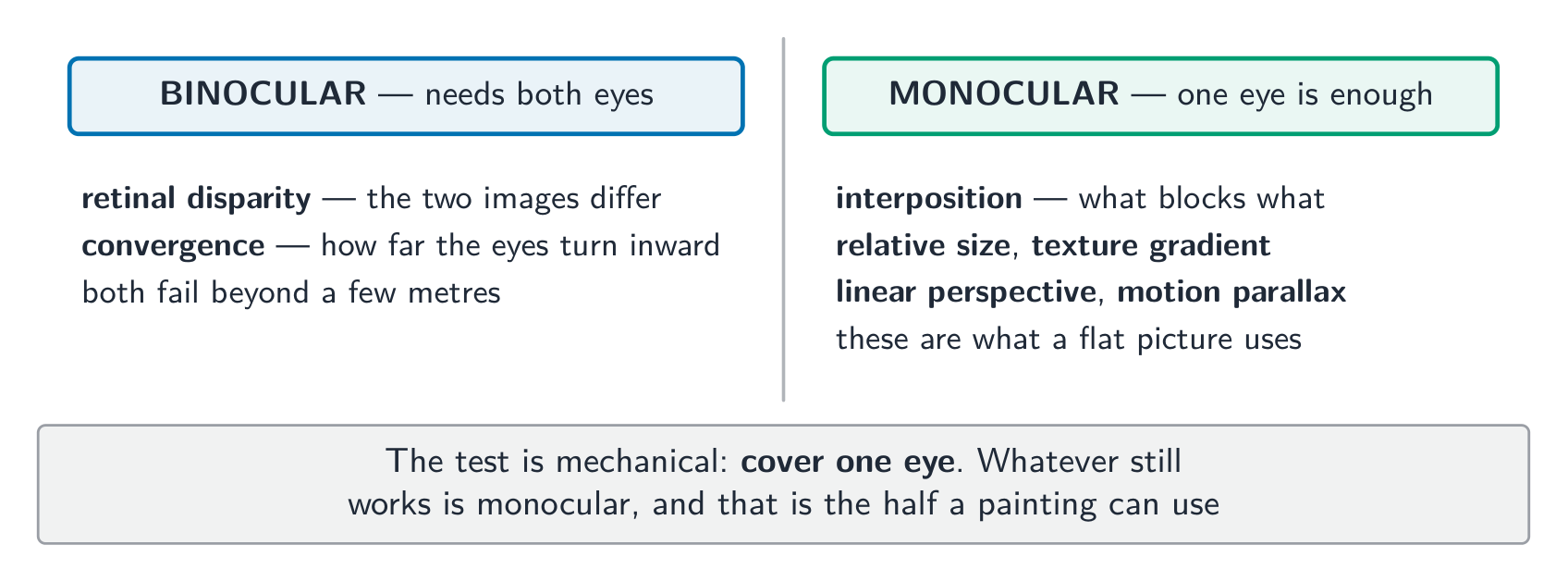
- 2.1.B.1 Binocular depth cues of retinal disparity (the difference between the images projecting onto the retina) and convergence (the merging of the retinal images by the brain) utilize images from each eye to provide perception of depth.
- 2.1.B.2 Monocular depth cues (relative clarity, relative size, texture gradient, linear perspective, and interposition) give the illusion of depth on flat or two-dimensional surfaces.
- Exclusion Statement: The AP Psychology Exam will only address the listed monocular depth cues in EK 2.1.B.2.
- 2.1.B.3 Visual perceptual constancies maintain the perception of an object even when the images of the object in the visual field change.
- 2.1.B.4 Apparent movement can be visually perceived even when objects are not actually moving.
עברית
מטרת למידה 2.1.A: הסבר כיצד גורמים פנימיים וחיצוניים משפיעים על תפיסה.
- 2.1.A.1 תפיסה מושפעת מכך האם אדם נסמך בעיקר על מידע חושי חיצוני (עיבוד מהלמטה למעלה) או על ציפיות קודמות פנימיות (עיבוד ממעלה למטה).
- 2.1.A.2 סכימות וסטטוס תפיסתי הם גורמים פנימיים שסיננים את התפיסה של העולם.
- 2.1.A.3 הקשרים, ניסיונות וציפיות תרבותיים הם גורמים חיצוניים שסיננים את התפיסה של העולם.
- 2.1.A.4 עקרונות תפיסתיים שהוצעו על ידי הפסיכולוגיה הגשטלטית (סגירה, דמות ורקע, קרבה ודמיון) עוזרים להסביר כיצד בני אדם מארגנים את עולמם התפיסתי.
- 2.1.A.5 תשומת לב היא אינטראקציה בין תחושה לתפיסה המושפעת מתהליכים פנימיים וחיצוניים.
- 2.1.A.5.i חלק מחוויות התשומת לב יכולות להיות סלקטיביות, כגון באפקט המסיבה בקוקטיילים, שבו אנשים מקדישים תשומת לב לזכירות של שמותיהם או נושאים ספציפיים בסביבות רועשות או מפריעות.
- 2.1.A.5.ii חוסר תשומת לב יכול להוביל לסוג של "עיוורון" כלפי היבטים מסוימים בסביבה. עיוורון לשינויים מתרחש כאשר שינויים בסביבה אינם נתפסים בשל חוסר תשומת לב.
מטרת למידה 2.1.B: הסבר כיצד תהליכים תפיסתיים ויזואליים מייצרים פרשנות נכונה או שגויה לגירויים.
- 2.1.B.1 סימני עומק בינוניים של ניגוד רטינלי (ההפרש בין התמונות הנופלות על הרטינה) והתכנסות (המיזוג של התמונות הרטינליות על ידי המוח) משתמשות בתמונות מכל עין כדי לספק תפיסת עומק.
- 2.1.B.2 סימני עומק חד-עניים (בהירות יחסית, גודל יחסי, גרדיאנט טקסטורה, פרספקטיבה ליניארית והתאבקות) יוצרים את הרושם של עומק על משטחים שטוחים או דו-ממדיים.
- הצהרת בלילה: מבחן הפסיכולוגיה AP יטפל רק בסימני העומק החד-עניים המפורטים ב-EK 2.1.B.2.
- 2.1.B.3 קבועות תפיסותיות ויזואליים שומרות על התפיסה של אובייקט גם כאשר התמונות שלו בשדה הראייה משתנות.
- 2.1.B.4 תנועה apparent (מדומה) יכולה להתפרש ויזואלית גם כאשר אובייקטים לא זזים בפועל.