English
Learning Objective 3.1.A: Construct graphs of periodic relationships based on verbal representations.
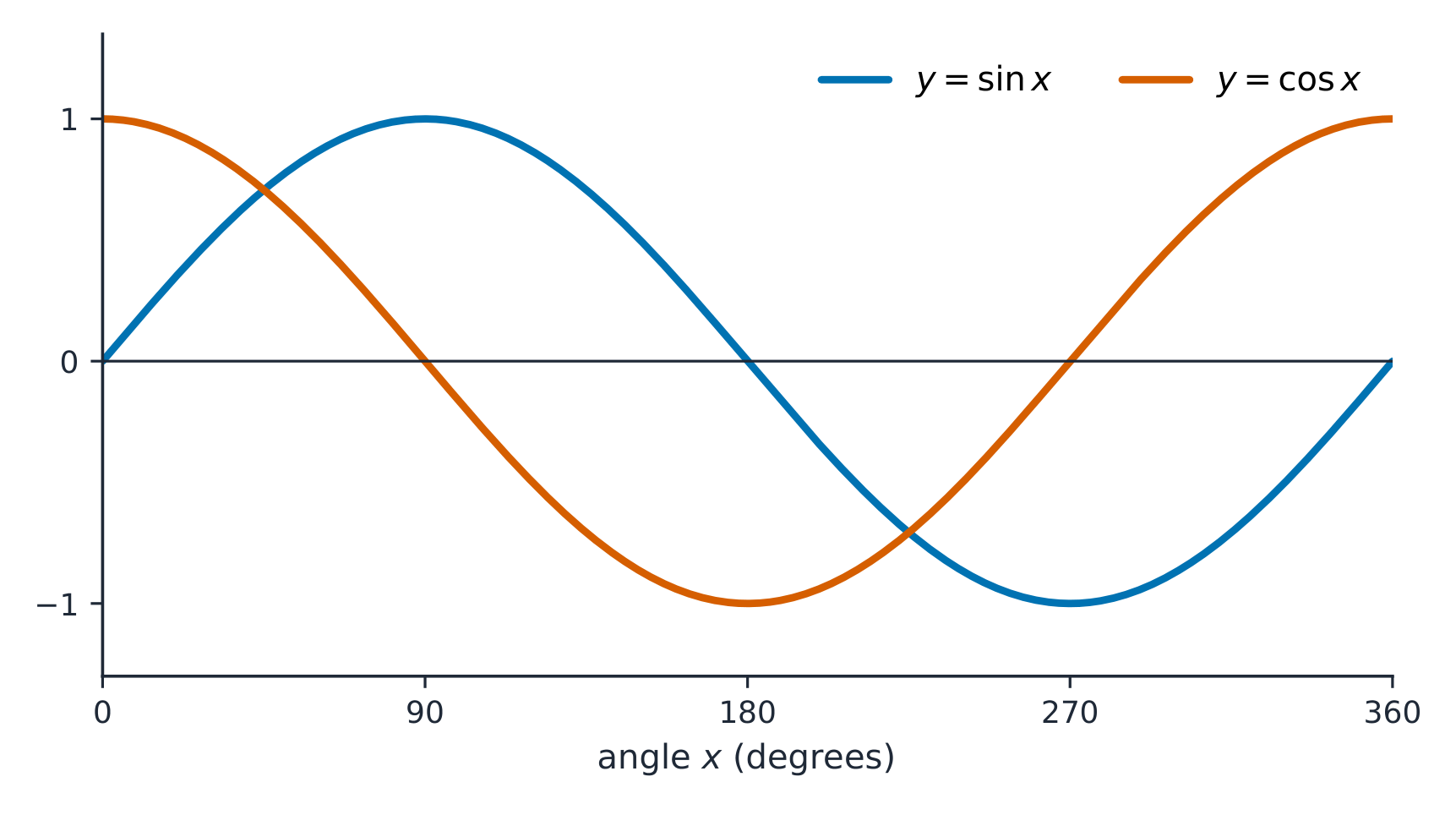
- 3.1.A.1 A periodic relationship can be identified between two aspects of a context if, as the input values increase, the output values demonstrate a repeating pattern over successive equal-length intervals.
- 3.1.A.2 The graph of a periodic relationship can be constructed from the graph of a single cycle of the relationship.
Learning Objective 3.1.B: Describe key characteristics of a periodic function based on a verbal representation.
- 3.1.B.1 The period of the function is the smallest positive value $k$ such that $f(x + k) = f(x)$ for all $x$ in the domain. Consequently, the behavior of a periodic function is completely determined by any interval of width $k$.
- 3.1.B.2 The period can be estimated by investigating successive equal-length output values and finding where the pattern begins to repeat.
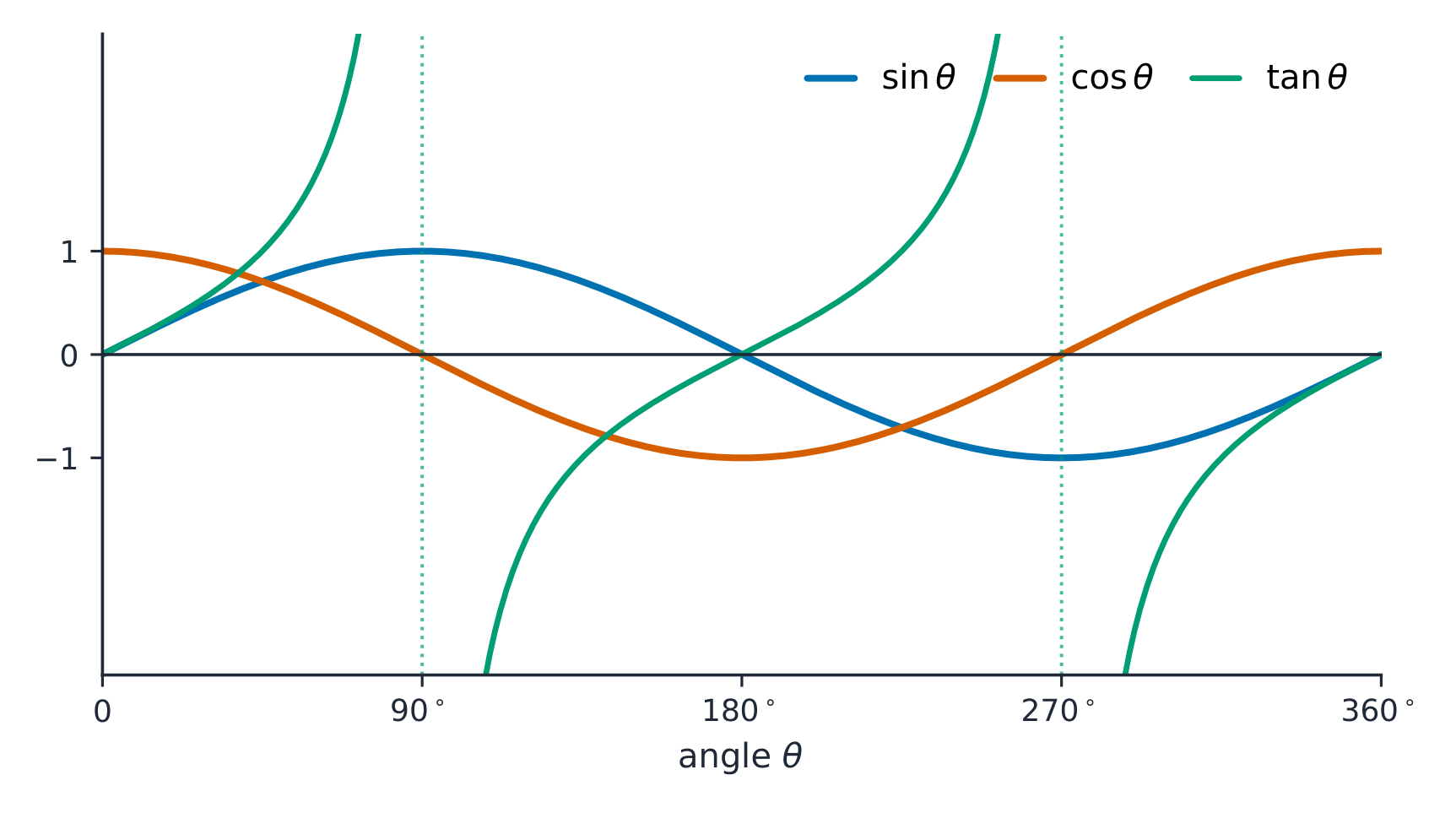
- 3.1.B.3 Periodic functions take on characteristics of other functions, such as intervals of increase and decrease, different concavities, and various rates of change. However, with periodic functions, all characteristics found in one period of the function will be in every period of the function.
עברית
מטרת הלמידה 3.1.A: בניית גרפים של קשרים מחזוריים על בסיס ייצוגים מילוליים.
- 3.1.A.1 ניתן לזהות קשר מחזורי בין שני היבטים של הקשר אם, כאשר ערכי הקלט עולים, ערכי הפלט מראים דפוס חוזר בתוך פרקי אורך שווה רצופים.
- 3.1.A.2 ניתן לבנות את הגרף של קשר מחזורי מתוך הגרף של מחזור אחד בלבד של הקשר.
מטרת הלמידה 3.1.B: תיאור מאפיינים מרכזיים של פונקציה מחזורית על בסיס ייצוג מילולי.
- 3.1.B.1 התקופה של הפונקציה היא הערך החיובי הקטן ביותר $k$ כך ש$f(x + k) = f(x)$ לכל $x$ בתחום ההגדרה. מכאן, התנהגותה של פונקציה מחזורית נקבעת במלואה על ידי כל פרק בעל רוחב $k$.
- 3.1.B.2 ניתן להעריך את התקופה על ידי בדיקת ערכי פלט רצופים בעלי אורך שווה וזיהוי הנקודה בה הדפוס מתחיל לחזור על עצמו.
- 3.1.B.3 פונקציות מחזוריות לוקחות מאפיינים של פונקציות אחרות, כמו פרקי עלייה וירידה, קמבויות שונות ומשכי שינוי מגוונים. עם זאת, בפונקציות מחזוריות, כל המאפיינים שנמצאים במחזור אחד של הפונקציה יהיו קיימים בכל מחזור של הפונקציה.