The Indian Ocean
Introduit| English | Sens |
|---|---|
| Zheng He/ʒeŋ hiː/ | Zheng He |
| monsoon winds/mɒnˈsuːn wɪndz/ | vents moussonaux |
| compass/ˈkʌmpəs/ | A tool with a magnetic needle that points north, first developed in China and used by sailors to find direction. |
| astrolabe/ˈæstrəleɪb/ | astrolabe |
| diasporic communities/ˌdaɪəˈspɒrɪk kəˈmjuːnɪtiz/ | Communities of people living away from their homeland, such as Arab merchants settled in East African ports. |
A fleet of 317 ships, 1405
- In 1405, the Ming admiral Zheng He 郑和 sailed from China with about 317 ships and about 28 000 men. The largest "treasure ships" may have been over 100 metres long. On seven voyages up to 1433, the fleet visited Southeast Asia, India, Arabia and the Swahili coast of East Africa, collecting tribute and gifts — including a giraffe from Malindi. Then the Ming emperors ended the voyages.
- From 1200 to 1450, the Indian Ocean was the world's busiest sea trade network, driven by the monsoon winds.
Zheng He's voyages ran from 1405 to 1433. Over how many years?
Difficulté 2/5 · 140 pièces + un petit bonus lors de la première réussite aujourd'hui
1433 − 1405.
A trade route made of weather
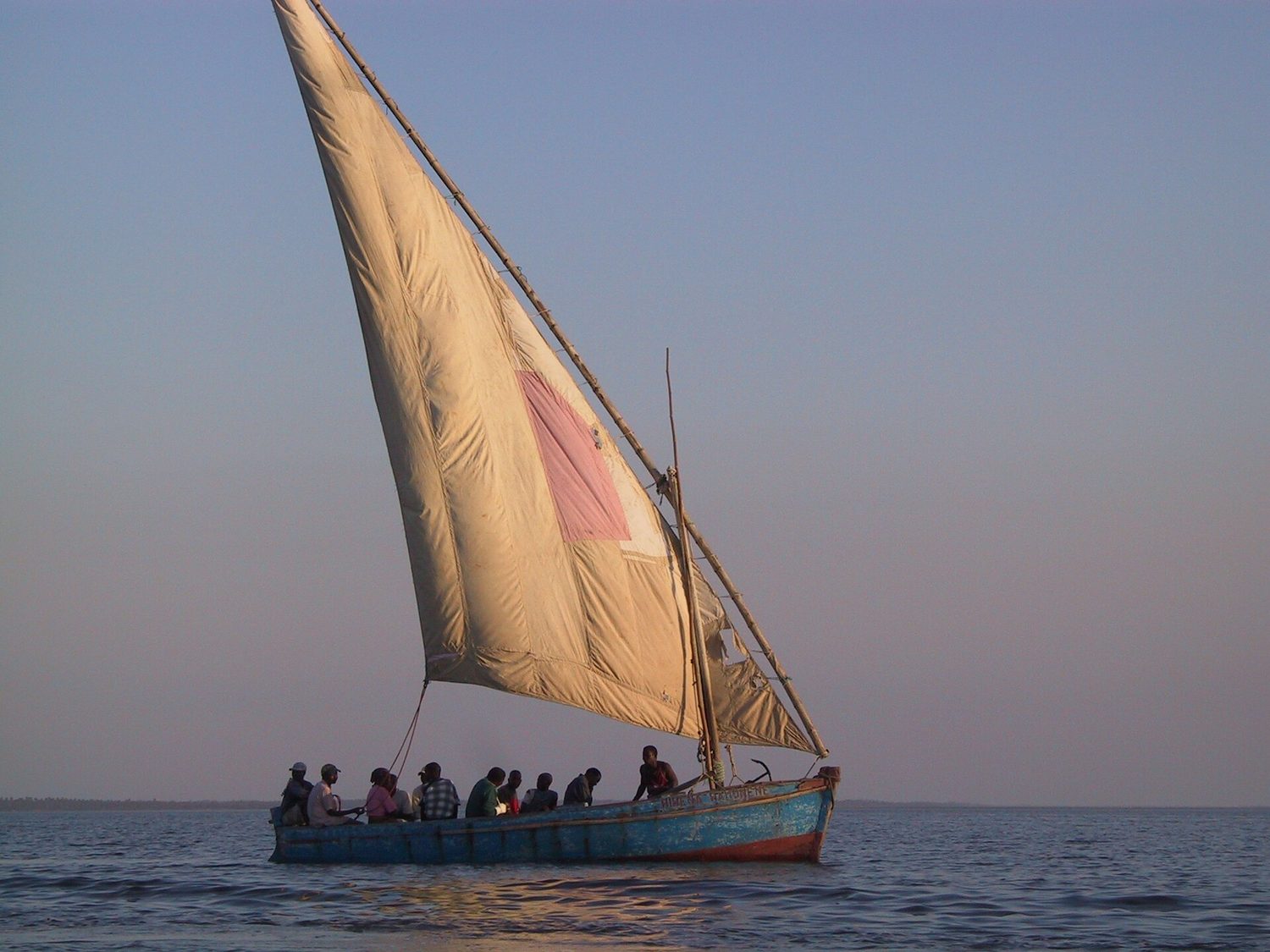
- The monsoon winds 季风 blew from the southwest in summer and the northeast in winter.
- Sailors could sail one way with one monsoon and return months later with the other.
Why were the monsoon winds so useful?
Difficulté 1/5 · 100 pièces + un petit bonus lors de la première réussite aujourd'hui
A reversing wind.
Instruments and ships
- The compass 指南针 from China and the astrolabe 星盘, improved in the Islamic world, helped sailors find direction and position.
- Arab dhows, Chinese junks and Indian ships carried cloth, spices, porcelain and gold.
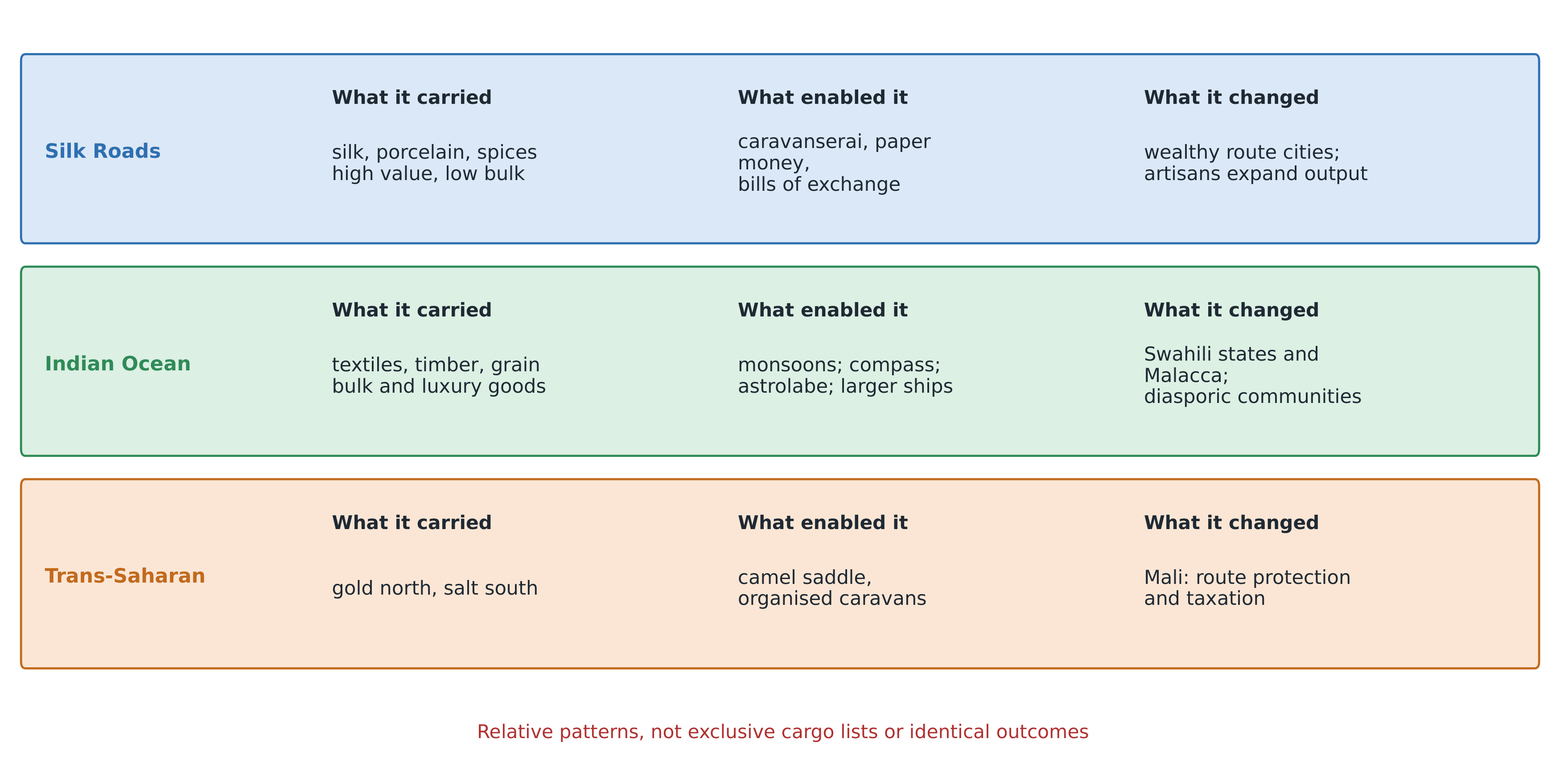
Cause, state, or cultural exchange?
Sort each item by its role in the Indian Ocean subtopic.
Match each to its role.
Difficulté 2/5 · 140 pièces + un petit bonus lors de la première réussite aujourd'hui
Instruments and ships.
Worked example: the network built states
- Malacca: the Sultanate of Malacca (founded about 1400) controlled the narrow strait between Sumatra and Malaya; every ship passing paid fees.
- Swahili coast: city-states such as Kilwa and Mombasa grew rich trading gold and ivory from the interior.
- Why: both sat at choke points or ends of trade routes, so trade gave them wealth and power.
Why did Malacca grow rich?
Difficulté 1/5 · 100 pièces + un petit bonus lors de la première réussite aujourd'hui
A choke point.
Merchants settled and mixed
- Arab and Persian merchants settled in East African and Indian ports, forming diasporic communities 侨民社区.
- Mixing with local people produced the Swahili language and culture — Bantu in grammar, with many Arabic words.
Match each to its category.
Difficulté 2/5 · 140 pièces + un petit bonus lors de la première réussite aujourd'hui
Three categories.
Zheng He as state power
- The voyages of Zheng He showed Ming power and brought tribute; they were not mainly for trade.
- After 1433, the Ming turned inward, but private Chinese merchants kept trading.
Zheng He's voyages did not create the Indian Ocean network. It already existed: merchants of many peoples had been using the monsoons for centuries.
Zheng He created the Indian Ocean network.
Difficulté 1/5 · 100 pièces + un petit bonus lors de la première réussite aujourd'hui
It already existed.
From 1200 to 1450, the monsoon winds, the compass and the astrolabe drove Indian Ocean trade. It built states such as Malacca and the Swahili city-states, created diasporic communities and new cultures, and was visited by Zheng He's huge Ming fleets.
Explain how the Indian Ocean trade network grew and what it produced.
Causation.