Cálculos de energía de enlace
Introducido| English | Significado |
|---|---|
| chemical bonds/ˈkemɪkl bɒndz/ | enlaces químicos |
| bond energies/bɒnd ˈenədʒiz/ | energías de enlace |
| endothermic/ˌendəʊˈθɜːmɪk/ | endotérmico |
| exothermic/eɡzəˈðɜːmɪk/ | exotérmico |
Energy in the bonds
- Where does a reaction's energy actually come from? From breaking and making chemical bonds 化学键.
- We can calculate the overall energy change from bond energies 键能.
Romper enlaces químicos:
Dificultad 1/5 · 100 monedas + un pequeño bono en el primer intento de hoy
Romper enlaces requiere energía entrada.
Formar enlaces químicos absorbe energía.
Dificultad 1/5 · 100 monedas + un pequeño bono en el primer intento de hoy
Falso. Formar enlaces libera energía (exotérmico); romper enlaces absorbe energía (endotérmico).
Breaking and making bonds
- Breaking bonds absorbs energy (endothermic 吸热反应).
- Making bonds releases energy (exothermic 放热反应).
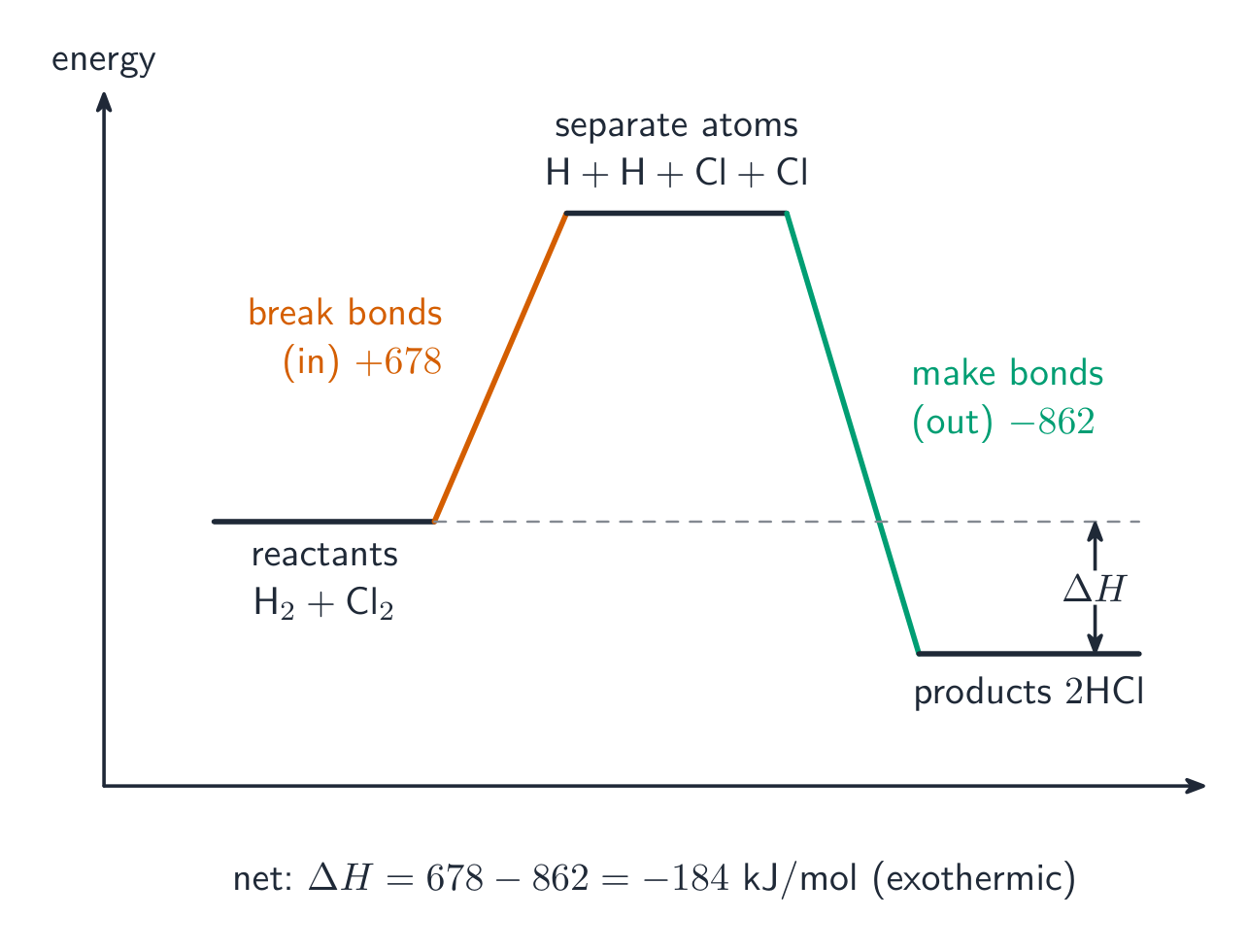
Breaking bonds takes energy in; making bonds gives energy out; the difference is the enthalpy change
Los enlaces rotos necesitan 500 kJ; los enlaces formados liberan 700 kJ. ¿Cuál es el cambio energético (kJ)?
Dificultad 2/5 · 140 monedas + un pequeño bono en el primer intento de hoy
500 − 700 = −200 kJ.
Cambio energético = energía para romper enlaces − energía liberada ______ enlaces.
Dificultad 1/5 · 100 monedas + un pequeño bono en el primer intento de hoy
Roto menos formado da el cambio total.
The energy change
- Energy change = energy to break bonds − energy released making bonds.
- A negative answer means the reaction is exothermic; positive means endothermic.
Worked example. Bonds broken need 600 kJ; bonds made release 800 kJ. Energy change = 600 − 800 = −200 kJ. Negative, so the reaction is exothermic.
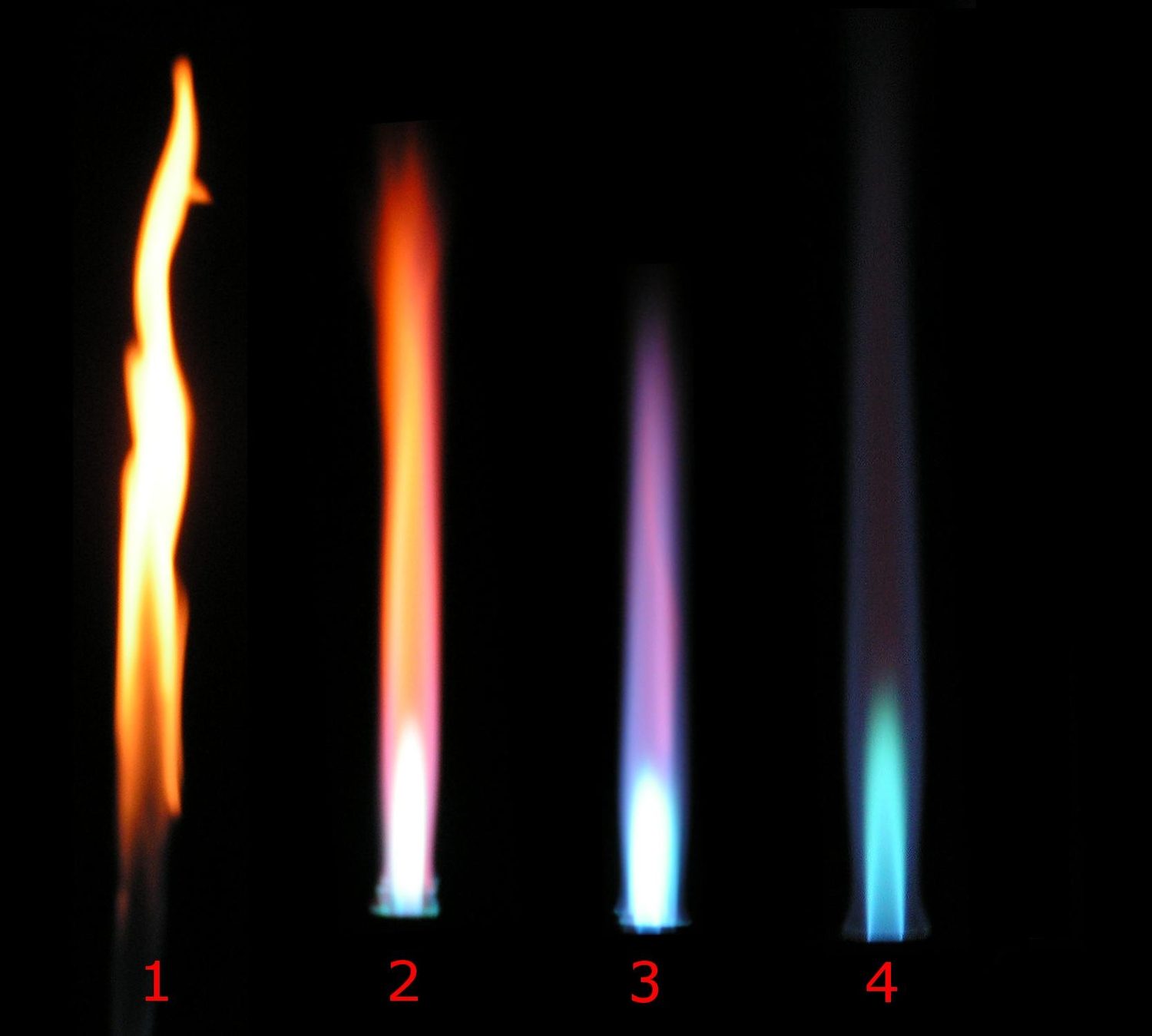
Breaking and making bonds transfers energy; the flame supplies it here
Leer el perfil energético
Romper enlaces requiere energía ENTRADA; formar enlaces libera energía SALIDA. Si se libera más de la absorbida, la reacción es exotérmica y ΔH es negativo — los productos se sitúan por debajo de los reactivos.
Un cambio energético negativo significa que la reacción es:
Dificultad 1/5 · 100 monedas + un pequeño bono en el primer intento de hoy
Negativo = energía liberada = exotérmico.
Why the sign matters
- A negative energy change = energy released = exothermic.
- A positive energy change = energy absorbed = endothermic.
Breaking bonds takes energy in; making bonds gives energy out. Students often get this backwards. If more energy is released (making) than used (breaking), the reaction is exothermic overall.
You've got it
- breaking bonds absorbs energy; making bonds releases energy
- energy change = bonds broken − bonds made
- negative = exothermic; positive = endothermic
Write from the data given
- Breaking bonds takes in 400 kJ.
- Making bonds releases 250 kJ. The lesson case of 500 broken and 700 made is minus 200.
¿Cuál es el cambio energético y si la reacción es exo o endo?
El cambio de energía es la energía absorbida para romper enlaces menos la energía liberada al formar enlaces.
¿Cuál es el cambio de energía?
Dificultad 1/5 · 100 monedas + un pequeño bono en el primer intento de hoy
400 menos 250 es igual a más 150.