Physical and chemical changes · Cambios físicos y químicos
| English | Español |
|---|---|
| physical change/ˈfɪzɪkl tʃeɪndʒ/ | cambio físico |
| chemical change/ˈkemɪkl tʃeɪndʒ/ | cambio químico |
| precipitate/prɪˈsɪpɪteɪt/ | precipitado |
Two kinds of change
- Melting ice and burning paper are both "changes" — but only one makes a new substance.
- Chemists distinguish physical changes 物理变化 from chemical changes 化学变化.
Dos tipos de cambio
- El hielo que se derrite y el papel que se quema son ambos "cambios", pero solo uno da lugar a una nueva sustancia.
- Los químicos distinguen entre cambios físicos 物理变化 y cambios químicos 化学变化.
A physical change: · Un cambio físico:
Physical changes keep the same substance. · Los cambios físicos mantienen la misma sustancia.
Melting is a physical change because the substance stays the same. · La fusión es un cambio físico porque la sustancia permanece igual.
Melted ice is still water — reversible. · El hielo derretido sigue siendo agua — es reversible.
Physical changes
- A physical change does not make a new substance, and is usually reversible.
- Changes of state (melting, boiling) and dissolving are physical changes.
Iron rusting is a chemical change, forming a new substance
Cambios físicos
- Un cambio físico no produce una nueva sustancia y suele ser reversible.
- Los cambios de estado (fusión, ebullición) y la disolución son cambios físicos.

El óxido de hierro es un cambio químico, ya que forma una nueva sustancia
Physical change vs chemical change · Cambio físico vs. cambio químico
Step through the difference. A physical change makes no new substance and is usually easy to reverse; a chemical change makes a new substance and is hard to undo. · Repasa la diferencia. Un cambio físico no produce una nueva sustancia y suele ser fácil de revertir; un cambio químico produce una nueva sustancia y es difícil de deshacer.
Which is a chemical change? · ¿Cuál es un cambio químico?
Burning makes new substances — chemical. · La combustión produce nuevas sustancias — es químico.
Which can be signs of a chemical change? (Select all that apply.) · ¿Cuáles pueden ser señales de un cambio químico? (Selecciona todas las que correspondan.)
A shape change alone is physical. · Un cambio de forma solo es físico.
A chemical change always produces at least one ______ substance. · Un cambio químico siempre produce al menos una sustancia ______.
New substances mark a chemical change. · Las nuevas sustancias marcan un cambio químico.
Chemical changes
- A chemical change makes one or more new substances, and is usually hard to reverse.
- Signs include a colour change, a gas, a precipitate 沉淀, or a temperature change.
Potassium manganate(VII) makes a deep purple solution
Cambios químicos
- Un cambio químico produce una o más nuevas sustancias, y suele ser difícil de revertir.
- Las señales incluyen un cambio de color, la formación de un gas, un precipitado 沉淀 o un cambio de temperatura.
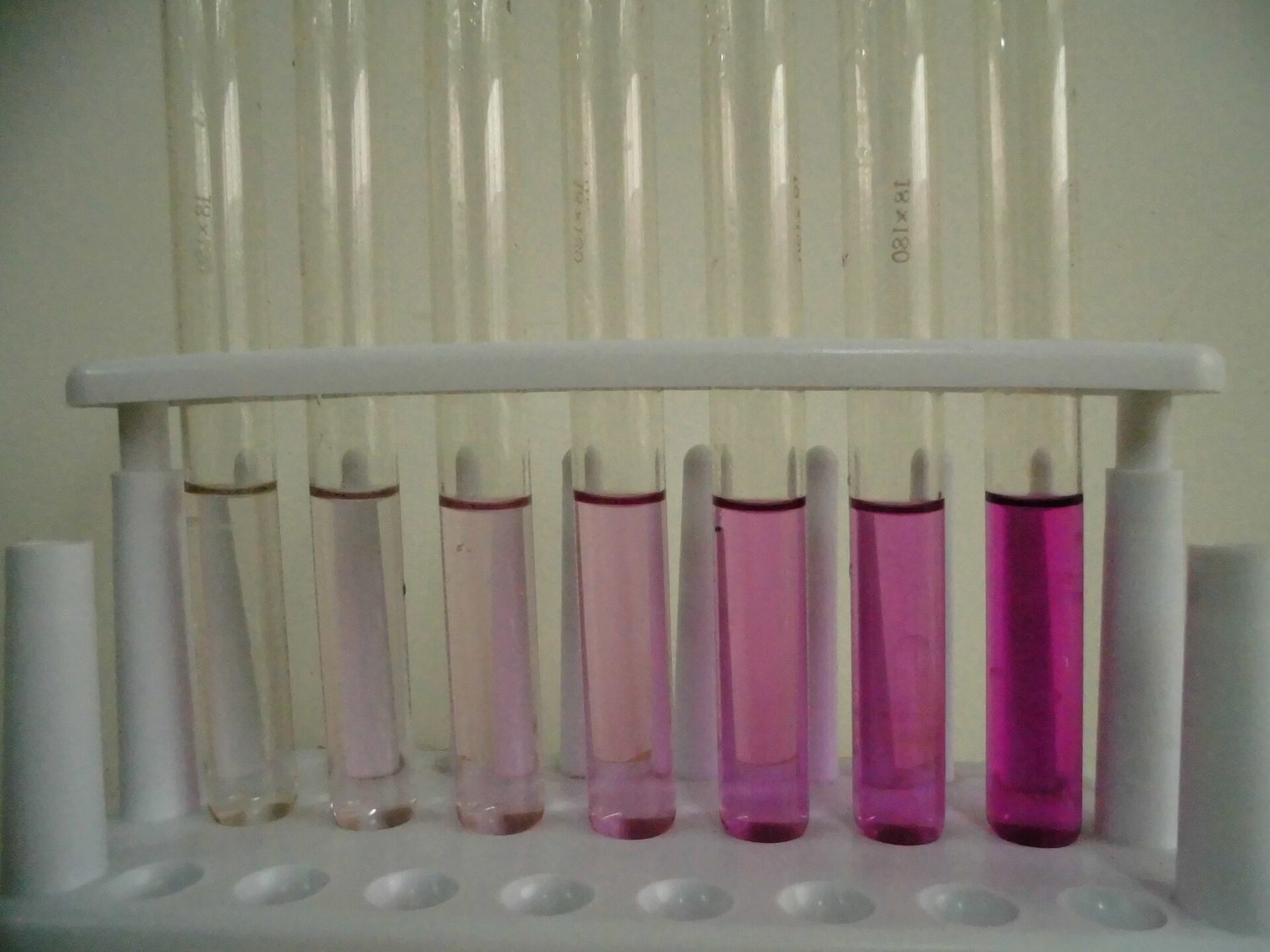
El permanganato de potasio produce una solución de color púrpura intenso
Telling them apart
- Physical: same substance, reversible (frozen water melts back to water).
- Chemical: new substance formed, often not reversible (burnt wood can't un-burn).
Worked example. Melting candle wax is physical — it's still wax and re-solidifies. Burning the wick is chemical — new gases form and you can't get the wax back.
Diferenciarlos
- Físico: misma sustancia, reversible (el agua congelada se derrite y vuelve a ser agua).
- Químico: se forma una nueva sustancia, a menudo irreversible (la madera quemada no puede volver a ser madera).
Ejemplo resuelto. Derretir la cera de una vela es físico — sigue siendo cera y se solidiza nuevamente. Quemar la mecha es químico — se forman nuevos gases y no se puede recuperar la cera.
You've got it
- a physical change makes no new substance and is usually reversible (melting, dissolving)
- a chemical change makes a new substance and is usually hard to reverse (burning)
- signs of chemical change: new colour, gas, precipitate or temperature change
Lo has entendido
- un cambio físico no produce una nueva sustancia y suele ser reversible (fusión, disolución)
- un cambio químico produce una nueva sustancia y suele ser difícil de revertir (combustión)
- señales de un cambio químico: nuevo color, gas, precipitado o cambio de temperatura