Monetary policy · Política monetaria
| English | Español |
|---|---|
| central bank/ˈsentrəl bæŋk/ | banco central |
| interest rates/ˈɪntrest reɪts/ | tasas de interés |
| monetary policy/ˈmʌnɪtəri ˈpɒlɪsi/ | política monetaria |
| money supply/ˈmʌni səˈplaɪ/ | oferta monetaria |
| inflation target/ɪnˈfleɪʃn ˈtɑːɡɪt/ | objetivo de inflación |
| transmission mechanism/trænˈsmɪʃn ˈmekənɪzəm/ | mecanismo de transmisión |
| quantitative easing/ˈkwɒntɪteɪtɪv ˈiːzɪŋ/ | aflojamiento cuantitativo |
The most powerful number in the economy
- When a central bank 中央银行 nudges interest rates 利率, mortgages, business loans and savings all move — and with them, spending across the whole economy.
- Monetary policy 货币政策 — controlling interest rates and the money supply 货币供给 — is the main day-to-day tool for hitting the inflation target 通胀目标.
El número más poderoso de la economía
- Cuando un banco central ajusta las tasas de interés, hipotecas, préstamos empresariales y ahorros se ven afectados — y con ellos, el gasto en toda la economía.
- La política monetaria — controlar las tasas de interés y la oferta monetaria — es la principal herramienta diaria para alcanzar el objetivo de inflación.
Monetary policy is set by the central bank, whereas fiscal policy is set by the government. · La política monetaria es establecida por el banco central, mientras que la política fiscal es establecida por el gobierno.
Central bank = monetary (rates); government = fiscal (spending/taxes). · Banco central = monetaria (tasas); gobierno = fiscal (gasto/imposición).
The central bank and interest rates
- An independent central bank sets the base interest rate to meet an inflation target (often ~2%).
- Raise rates → borrowing dearer, saving more attractive → spending falls (contractionary).
- Cut rates → borrowing cheaper → spending rises (expansionary).
A central bank, like the Bank of England, sets the interest rate, the main tool of monetary policy
El banco central y las tasas de interés
- Un banco central independiente fija la tasa de interés base para cumplir con un objetivo de inflación (habitualmente ~2%).
- Elevar las tasas → el crédito resulta más caro, ahorrar es más atractivo → disminuye el gasto (contracciónista).
- Reducir las tasas → el crédito resulta más barato → aumenta el gasto (expansionista).

Un banco central, como el Banco de Inglaterra, fija la tasa de interés, principal herramienta de la política monetaria
Monetary policy shifts AD · Los cambios en la política monetaria desplazan la DA
Changing interest rates moves aggregate demand. Lower rates → more borrowing and spending → AD shifts right. · Cambiar las tasas de interés mueve la demanda agregada. Tasas más bajas → más endeudamiento y gasto → la DA se desplaza a la derecha.
Monetary policy is mainly conducted by changing: · La política monetaria se realiza principalmente cambiando:
The central bank uses interest rates and the money supply; spending/taxes are fiscal policy. · El banco central utiliza las tasas de interés y la oferta monetaria; el gasto/imposición es política fiscal.
Cutting interest rates tends to: · Reducir las tasas de tienda tiende a:
Cheaper borrowing and lower saving rewards boost consumption and investment → AD right. · El endeudamiento más barato y menores rendimientos del ahorro impulsan el consumo y la inversión → DA a la derecha.
To reduce high inflation, a central bank would typically: · Para reducir una alta inflación, un banco central típicamente:
Higher rates cool borrowing and spending, reducing demand-pull inflation. · Las tasas más altas enfriarían el endeudamiento y el gasto, reduciendo la inflación impulsada por la demanda.
The transmission mechanism 传导机制
- Lower rates → cheaper loans + lower saving reward → more consumption and investment → AD shifts right.
- A weaker currency (from lower rates) also boosts net exports.
Lower interest rates raise consumption and investment, shifting AD right toward higher output.
El mecanismo de transmisión
- Tasas bajas → créditos más baratos + menor rentabilidad del ahorro → mayor consumo e inversión → la DA se desplaza a la derecha.
- Una divisa más débil (por tasas bajas) también impulsa las exportaciones netas.
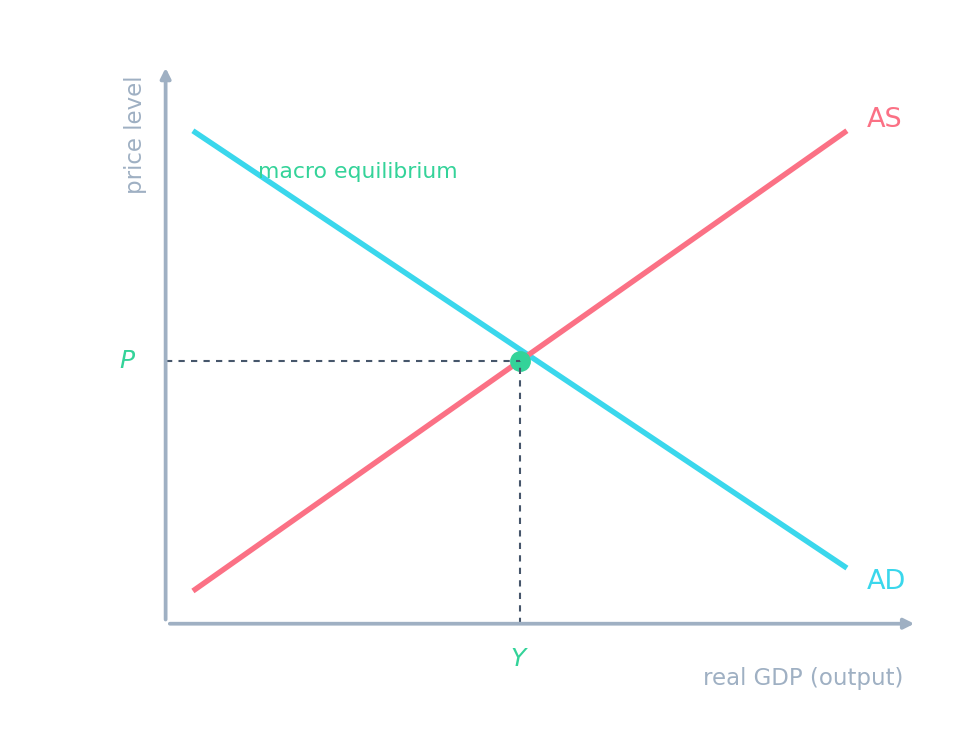
Las tasas de interés más bajas aumentan el consumo y la inversión, desplazando la DA a la derecha hacia una mayor producción.
Quantitative easing 量化宽松
- When rates are already near zero, the bank can use quantitative easing (QE) — creating money to buy bonds, lowering long-term rates and boosting lending.
Monetary ≠ fiscal. Monetary policy is the central bank (interest rates, money supply); fiscal policy is the government (spending, taxes). Exam answers must keep them separate.
How a higher interest rate works through to slow inflation
Aflojamiento cuantitativo
- Cuando las tasas ya están cerca de cero, el banco puede aplicar aflojamiento cuantitativo (AC) — creando dinero para comprar bonos, reduciendo las tasas a largo plazo e impulsando el crédito.
Monetario ≠ fiscal. La política monetaria la aplica el banco central (tasas de interés, oferta monetaria); la política fiscal la aplica el gobierno (gasto público, impuestos). Las respuestas de examen deben mantenerlas separadas.

Cómo una tasa de interés más alta actúa para frenar la inflación
Creating money to buy bonds when rates are near zero is called quantitative ______. · Crear dinero para comprar bonos cuando las tasas están cerca de cero se denomina relajación cuantitativa ______.
Quantitative easing (QE) lowers long-term rates and boosts lending. · La relajación cuantitativa (QE) reduce las tasas a largo plazo e impulsa los préstamos.
You've got it
- monetary policy = the central bank setting interest rates / money supply for the inflation target
- lower rates → more borrowing/spending → AD right; higher rates restrain AD
- QE (creating money to buy bonds) is used when rates are near zero
Lo has entendido
- política monetaria = el banco central fijando tasas de interés / oferta monetaria para el objetivo de inflación
- tasas bajas → más endeudamiento/gasto → DA a la derecha; tasas altas restringen la DA
- AC (crear dinero para comprar bonos) se utiliza cuando las tasas están cerca de cero