have got
Introducedالتعبير عن امتلاكك
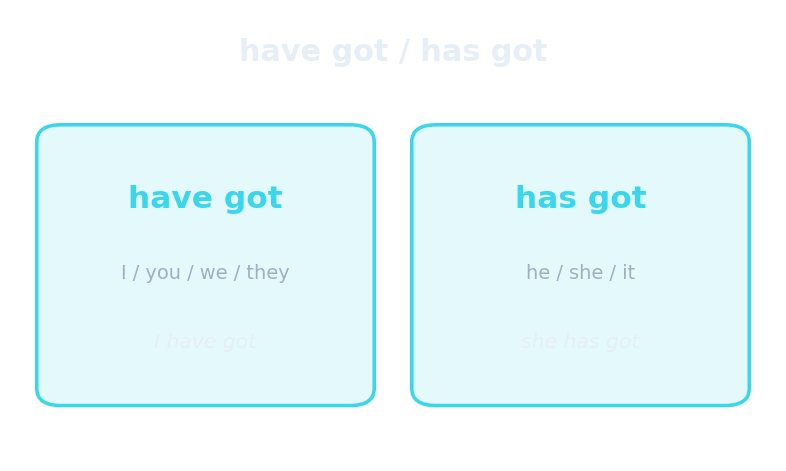
- have got تعني "have" — وتوضح ما تملكه أو صفاتك.
- I have got a bike. She has got brown hair.
- شائعة جدًا في الإنجليزية البريطانية اليومية.
I have got a bike. My dog has got my shoe.
have got / has got
- I / you / we / they → have got.
- he / she / it → has got.
- الصيغ المختصرة: I've got, she's got, they've got.
استكشف
have got أم has got؟
he / she / it → has got؛ الجميع الآخر → have got.
تدريب
اختر: He ___ got دراجة جديدة.
he / she / it → has got: "He has got a new bike."
تدريب
أكمل: I ___ got أختين.
I / you / we / they → have got: "I have got two sisters."
تدريب
ترجم إلى الإنجليزية: 她有一双蓝眼睛。
she → has got: "She has got blue eyes."
النفي
- haven't got / hasn't got.
- I haven't got a pen. He hasn't got a car.
- تعني "don't have / doesn't have".
تدريب
هل هذا صحيح؟ "She hasn't got a car."
has not got → hasn't got. صحيح.
الأسئلة
- ضع Have / Has قبل الفاعل: Have you got a minute? Has she got a dog?
- الإجابات المختصرة: Yes, I have. / No, she hasn't.
أخطاء شائعة
- ❌ She have got long hair. → ✓ She has got long hair.
- ❌ Do you have got a pen? → ✓ Have you got a pen?
- ❌ Yes, I have got. → ✓ Yes, I have. — الإجابات المختصرة تنتهي عند have / has.
تدريب
رتب الكلمات لتكوين سؤال.
السؤال يبدأ بـ Have / Has: "Has your sister got a bike?"
تدريب
إجابة مختصرة: "Have you got a pen?" — "Yes, I ___."
الإجابات المختصرة تتوقف عند have / has — بدون "got".
Key idea
- have got (I/you/we/they) · has got (he/she/it) = "have".
- النفي: haven't got / hasn't got.
- السؤال: Have / Has قبل الفاعل.
تدريب
اكتب جملة واحدة عن شيء تملكه، باستخدام "have got" أو "has got".
مثال: "I have got a little dog."