خطة التعلم الخاصة بك · متابعة · مراجعة →
Present simple — everyday habits
مُقدَّميبقى موقعك المحفوظ في هذا المتصفح. لا يكتمل استئناف الموقع الدرس أو الإجابة على أسئلته.
 6:15
اللغة الإنجليزية أ1 · المضارع البسيط
المضارع البسيط هو زمن الأشياء التي تكون دائمًا صحيحة: العادات، الروتين، والحقائق. أمشي إلى المدرسة. تشرق الشمس من الشرق. قتي نام عشرين…
سرد باللغة الإنجليزية · ترجمة نصية بالإنجليزية و中文 يمكنك التبديل بينهما
في هذا الدرس
| English |
|---|
| habit/ˈhæbɪt/ |
| every day/ˈevrɪ deɪ/ |
| usually/ˈjuːʒuːəli/ |
المضارع البسيط: الروتين والحقائق
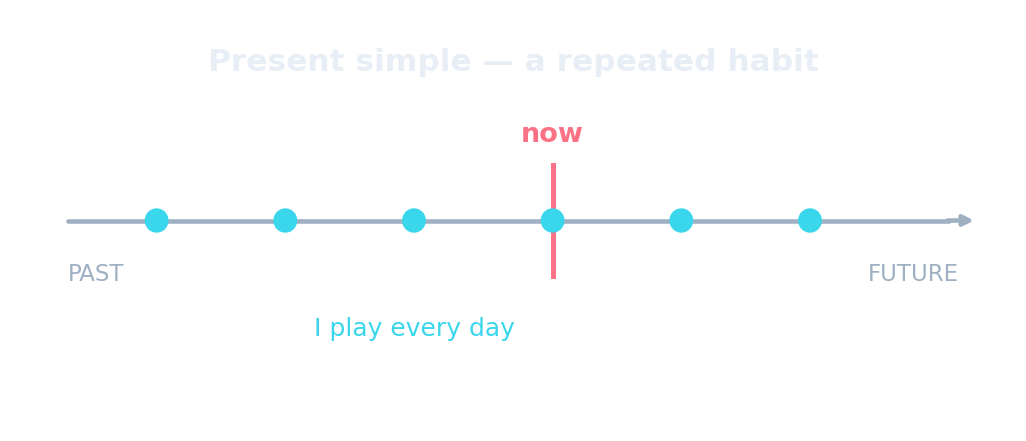
- النتيجة: وصف روتين أو حالة، وجعل سؤال نفي أو كامل، وتقديم إجابة قصيرة. ابدأ بـ be؛ نمط السؤال الخاص به مختلف عن نمط do/does الذي يتم تدرب عليه هنا.
- يمكن للزمن المضارع البسيط أن يصف العادات، والروتين، والحالات: I walk on Sundays. I like tea. الحاجة إلى العادة لا تعني أنها تحدث كل يوم. I get up at seven. The sun rises in the east. هذه بعض استخدامات الشكل، وليست استخدامه الوحيد.
I drink tea every day. The tea does not get a day off.
الفعل الأصلي، و -s لـ he / she / it
- في هذه الأنماط الفعلية المثبتة، I / you / we / they استخدم الصيغة الأساسية: I play. We work. اسم واحد أو شيء واحد عادة ما يأخذ صيغة الشخص الثالث: He plays. Mina works. The bus stops here.
- احفظ الشكل، بما في ذلك التغييرات الإملائية: go → goes; watch → watches; study → studies; have → has. تنطبق هذه الأشكال على الأمثلة المثبتة هنا؛ be وcan لديهما أنماط أخرى.
- “Salma works here” يشير إلى شخص واحد. “Salma and Kim work here” يشير إلى اثنين، مثل “they”. اختر للموضوع الكامل، وليس فقط الاسم الأخير.
- “study → studies” يغير حرف ساكن + y. “play → plays” يحافظ على y بعد حرف متحرك. “have → has” يتغير بشكل مختلف؛ لا تطبق نهاية إملائية واحدة على كل فعل.
Does the verb need -s?
These positive play/work examples use plays/works with he/she/it, and play/work with the other shown pronouns. One name follows the singular pattern too; be, can and questions have other forms.
Choose: He ___ football every day.
الصعوبة 1/5 · 100 عملة + مكافأة صغيرة عند الإنجاز الأول اليوم
In this positive play example, “he” takes the third-person form “plays”: He plays football. Other verbs can form it differently, such as “have → has”.
Use the present simple for her usual routine: She ___ (go) to school by bus.
الصعوبة 1/5 · 100 عملة + مكافأة صغيرة عند الإنجاز الأول اليوم
The requested present-simple third-person form is goes. Learn this spelling with the example; it is not a rule for every verb or every sentence containing she.
Translate into English: 我喜欢茶。
الصعوبة 3/5 · 200 عملة + مكافأة صغيرة عند الإنجاز الأول اليوم
I → base verb: “I like tea.” (not “I likes tea”)
Use the present simple in this positive statement: Omar and Eva ___ (work) here.
الصعوبة 1/5 · 100 عملة + مكافأة صغيرة عند الإنجاز الأول اليوم
The subject “Omar and Eva” names two people, like “they”. Use the base form “work” for the whole plural subject, not a singular form for the last name only.
النفي: don't / doesn't
- استخدم don’t مع I / you / we / they واستخدم doesn’t مع he / she / it أو اسم واحد في إطارات الأفعال الرئيسية هذه: I don’t eat meat. He doesn’t like tea.
- بعد don’t / doesn’t، استخدم الفعل الرئيسي الأساسي. النفي يغير ما تقوله الجملة؛ لا تغير عن طريق الخطأ شخصه أو مرجع الوقت الخاص به.
- “Ken likes apples” تصبح “Ken doesn’t like apples”. “doesn’t” تحمل بالفعل صيغة الغائب، لذا الفعل الرئيسي هو “like”، وليس “likes”.
- “She has a bike” تصبح “She doesn’t have a bike”. استخدم القاعد “have” بعد does؛ فإن الإثبات “has” لا يبقى في ذلك الموقع.
Is this correct? “He doesn't likes tea.”
الصعوبة 1/5 · 100 عملة + مكافأة صغيرة عند الإنجاز الأول اليوم
After doesn't, use the base verb: “He doesn't like tea.”
Make “Rae plays chess on Mondays” negative in the present simple.
الصعوبة 1/5 · 100 عملة + مكافأة صغيرة عند الإنجاز الأول اليوم
Rae names one person, so use “doesn’t” and the base main verb “play”. The third-person form is carried by does, not repeated on plays.
Choose the present-simple negative of “Mira has a bag”.
الصعوبة 1/5 · 100 عملة + مكافأة صغيرة عند الإنجاز الأول اليوم
After “doesn’t”, use the base form “have”. “has” fits the positive statement, not the main verb after does.
الأسئلة: Do / Does …؟
- أسئلة نعم/لا الكاملة العادية مع أفعال مثل like/live تستخدم Do / Does قبل الفاعل وفعل رئيسي قاعدي: Do you speak English? Does she live here?
- الإطارات الأخرى تعمل بشكل مختلف: Is she tired? Can she swim? Who lives here? مع can، استخدم فعلاً قاعدياً مثل “swim“؛ لا تجبر كل سؤال على إطار do/does.
- “Mina drives to work” تصبح “Does Mina drive to work?“. الإجابة يمكن أن تكون “Yes, she does“ أو “No, she doesn’t“. طابق الرد على الشخص وما إذا كانت الإجابة نعم أم لا.
- في “Who lives here?“، “who“ تشير إلى الشخص الذي يعيش هنا، لذا يستخدم هذا السؤال العادي المحايد مباشرة “lives“. قارن بـ “Who does she visit?“: “she“ هو الفاعل، بينما “who“ تسأل عن أي شخص تزوره.
Turn “Sam walks to school” into a full ordinary yes/no question.
الصعوبة 1/5 · 100 عملة + مكافأة صغيرة عند الإنجاز الأول اليوم
Use “Does” before the single-person subject and keep “walk” in its base form. Do not put the third-person ending on both verbs.
Ask which person lives on this road. Choose the ordinary neutral subject question.
الصعوبة 1/5 · 100 عملة + مكافأة صغيرة عند الإنجاز الأول اليوم
“Who” asks about the subject here, so the ordinary question directly uses “lives”. This does not mean every question containing who has the same structure.
أخطاء شائعة
- تفضيل مباشر هنا، استخدم “I like English very much“ أو “I very much like English“، وليس “I very like English“. المشكلة هي “very“ وحدها قبل “like“، وليست كل عبارة تحتوي على verb قريب جداً.
- ❌ “He go to school“ → ✓ “He goes to school“ في هذه الجملة الإثباتية الروتينية. بعد does، سيكون الفعل الرئيسي بدلاً من ذلك “go“.
- “Do you like tea?“ هو سؤال كامل. “You like tea?“ شائع أيضاً في المحادثات، على سبيل المثال للدهشة أو التأكيد. هنا تتطلب المهام نمط do/does الكامل.
Match the verb to its he / she form.
الصعوبة 2/5 · 140 عملة + مكافأة صغيرة عند الإنجاز الأول اليوم
The supplied forms are “watch → watches” and “go → goes”. “study → studies” changes consonant + y; “play → plays” keeps y after a vowel. Learn the forms in context rather than applying one spelling ending to every verb.
For a straightforward statement meaning “I like music a lot”, which of these supplied sentences uses the natural pattern?
الصعوبة 1/5 · 100 عملة + مكافأة صغيرة عند الإنجاز الأول اليوم
I like music very much is natural. I very much like music is another natural order, though it is not one of these choices. The problem in I very like music is very alone before like, not a ban on every very phrase near a verb.
- هنا نمارس الروتينات والحالات والوصف الحقائقى في المضارع البسيط. لا يشترط أن يحدث الروتين كل يوم، وللهذا الشكل استخدامات أخرى أيضاً.
- اختر الصيغة للموضوع الكامل وإطار الجملة. في هذه الجمل الإثباتية ذات الفعل الرئيسي، يأخذ الاسم المفرد صيغة الغائب؛ بعد do/does، استخدم فعلاً رئيسياً قاعدياً.
- Be, can وأسئلة الموضوع العادية يمكنها استخدام إطارات أخرى. جرب الممارسة الجديدة أدناه، ثم استمر مع can: ability and requests. هذه الأنشطة لا تشهد على الكفاءة المستقلة أو الأداء الشفوي.
تم إعادة التحقق من إرشادات الاستخدام 21 أكتوبر 2026: British Council, present simple. فحوصات المصدر المحلي؛ مراجعة اللغة المستقلة والإجابة والمتعلم قيد الانتظار.
Write one English present-simple sentence about a daily routine of yours or an imaginary person. The routine happens every day; you do not have to include those exact words.
الصعوبة 3/5 · 200 عملة + مكافأة صغيرة عند الإنجاز الأول اليوم
Example: “I get up at seven every day.”
اتبع الموضوع الكامل
- العناصر التالية تستخدم أشخاصاً وجماهير وروتينيات جديدة. حدد من يقوم بالفعل قبل اختيار صيغة الفعل الإيجابية.
- احتفظ بإطار المضارع البسيط المطلوب. كلمة تسمية لشخص آخر أو مكان لاحقاً في الجملة لا تحل محل الفاعل.
Use one present-simple word for the usual routine: My brother ___ (cook) on Sundays.
الصعوبة 1/5 · 100 عملة + مكافأة صغيرة عند الإنجاز الأول اليوم
My brother is one person. The positive statement uses the third-person form “cooks”.
Use the present simple for this usual arrangement: Anna and Lee ___ (share) a desk at school.
الصعوبة 1/5 · 100 عملة + مكافأة صغيرة عند الإنجاز الأول اليوم
The complete subject names two people. Use base “share” for that plural group, rather than choosing for the last name alone.
Use one present-simple word for the regular arrival: Our train ___ (arrive) at nine every morning.
الصعوبة 1/5 · 100 عملة + مكافأة صغيرة عند الإنجاز الأول اليوم
Our train is one train, so the positive statement uses “arrives”. Keep the regular arrival time.
You are addressing one person. Use the present simple: You ___ (write) to your friend every week.
الصعوبة 1/5 · 100 عملة + مكافأة صغيرة عند الإنجاز الأول اليوم
“you” uses base “write” even with one listener. The number of listeners does not turn you into a third-person singular subject.
Use one present-simple word for the routine: She ___ (have) breakfast at six.
الصعوبة 1/5 · 100 عملة + مكافأة صغيرة عند الإنجاز الأول اليوم
The positive third-person form of have is “has”. It is not made by simply adding s to have.
Two brothers share this routine. Complete the present-simple statement: They ___ (study) in the evening.
الصعوبة 1/5 · 100 عملة + مكافأة صغيرة عند الإنجاز الأول اليوم
“they” uses the base form “study”. “studies” would fit a third-person singular subject in a positive statement.
Use one present-simple word for a repeated activity: Ari ___ (try) a new game each weekend.
الصعوبة 1/5 · 100 عملة + مكافأة صغيرة عند الإنجاز الأول اليوم
Ari names one person. The consonant before y changes the third-person spelling to “tries”.
Use the present simple for this preference: He ___ (enjoy) music.
الصعوبة 1/5 · 100 عملة + مكافأة صغيرة عند الإنجاز الأول اليوم
A vowel comes before y in enjoy. Keep y and add s for this positive he statement: “enjoys”.
Choose a full present-simple negative about Rin’s habit.
الصعوبة 1/5 · 100 عملة + مكافأة صغيرة عند الإنجاز الأول اليوم
One person uses “doesn’t” followed by base “drink”. Do not use drinks after doesn’t or don’t with Rin in this target.
Choose do or does for the present-simple negative: My sister ___ not use this computer.
الصعوبة 1/5 · 100 عملة + مكافأة صغيرة عند الإنجاز الأول اليوم
My sister is one person. Use “does not use” with a base main verb, rather than choosing do for the nearby word my.
اختر الإطار الكامل
- اقرأ ما إذا كانت المهمة تطلب نفياً، سؤالاً عاماً كاملاً، أو إجابة مختصرة. الفعل الرئيسي بعد do/does يحتاج إلى صيغة قاعدية.
- تحقق من المعنى المقصود بالإضافة إلى القواعد. لا يمكن استبدال رد بالنفي برد إثبات لمجرد تطابق فعله.
Choose a complete present-simple negative for the speaker’s usual routine.
الصعوبة 1/5 · 100 عملة + مكافأة صغيرة عند الإنجاز الأول اليوم
“I” uses “don’t” followed by the base “visit”. Do not add a third-person ending to either form in this sentence.
Choose a full present-simple negative about Maya.
الصعوبة 1/5 · 100 عملة + مكافأة صغيرة عند الإنجاز الأول اليوم
Use “doesn’t have” with the one-person subject. The main verb after does is base have; time is the thing she lacks in this new context.
Choose Do or Does to start the full present-simple question: ___ they eat lunch at school?
الصعوبة 1/5 · 100 عملة + مكافأة صغيرة عند الإنجاز الأول اليوم
Use “Do” with they and the base eat: “Do they eat lunch at school?”
Choose the full ordinary present-simple question about your uncle’s routine.
الصعوبة 1/5 · 100 عملة + مكافأة صغيرة عند الإنجاز الأول اليوم
Your uncle names one person, so use does before it and base sing after it. Choose for the whole noun phrase, not for your as if it were the pronoun you.
Ask whether Leah is your teacher. Choose the complete ordinary question.
الصعوبة 1/5 · 100 عملة + مكافأة صغيرة عند الإنجاز الأول اليوم
This identity description uses be. Put is before Leah: “Is Leah your teacher?” Do not add do/does to that frame.
You want to know which person teaches English. Choose the ordinary neutral subject question.
الصعوبة 1/5 · 100 عملة + مكافأة صغيرة عند الإنجاز الأول اليوم
“Who” stands for the person doing the teaching here. Use “teaches” directly in this ordinary subject question; does teaches would duplicate the third-person forms.
Someone asks “Does Ben read at night?” Ben reads at night. Choose the complete positive short answer.
الصعوبة 1/5 · 100 عملة + مكافأة صغيرة عند الإنجاز الأول اليوم
The question uses does for Ben. The matching positive short answer is “Yes, he does”. Keep does matched to he and keep the positive meaning.
Someone asks “Do your friends use this library?” None of them do. Choose the complete negative short answer for that group.
الصعوبة 1/5 · 100 عملة + مكافأة صغيرة عند الإنجاز الأول اليوم
The phrase “your friends” names a plural group, represented by they. Use “No, they don’t” to give the supplied negative meaning.
Routine card — person: Lin; activity: call a friend; time: Fridays only. Choose a complete present-simple statement keeping those facts.
الصعوبة 1/5 · 100 عملة + مكافأة صغيرة عند الإنجاز الأول اليوم
The Friday-only routine does not mean every day. Lin is one person, so the positive form is “calls”. Keep both that form and the supplied time limit.
Ask about Mira’s ability to cook using can. Choose the complete ordinary question.
الصعوبة 1/5 · 100 عملة + مكافأة صغيرة عند الإنجاز الأول اليوم
Can has its own question frame: “Can Mira cook?” Do not add does, and use the base cook after can. This contrast does not assess spoken ability.
نقل: استخدم ملفاً جديداً
- احتفظ بالمعلومات المقدمة حول الشخص والمجموعة والزمن في بطاقة السفر والملف الشخصي. لا تخترع روتينًا مختلفًا لتجنب استمارة صعبة.
- اكتب العبارات الإنجليزية والسؤال الكامل قبل الكشف عن النموذج. قارن الصيغة الإيجابية بالفعل الجذري بعد does/doesn’t؛ قد تتناسب الصياغة الطبيعية المكافئة مع السياق.
A travel card says: Eli and I usually take the train; we do not cycle. Choose two present-simple statements preserving those facts.
الصعوبة 1/5 · 100 عملة + مكافأة صغيرة عند الإنجاز الأول اليوم
The complete subject “Eli and I” refers to two people, like “we”. Use base “take” in the positive statement and “don’t cycle” for the stated negative habit. Keep both the train and no-cycling facts.
Nia lives near the park and does not work on Saturdays. Choose a full question about the first fact and a negative keeping the second.
الصعوبة 1/5 · 100 عملة + مكافأة صغيرة عند الإنجاز الأول اليوم
Nia is one person. Does introduces the question, doesn’t introduces the negative, and both take a base main verb: live/work. Keep the park and Saturday facts.
Use this imaginary profile: Nora works in a library on Saturdays; Nora does not go to school on Sundays. Write two English statements and one full Does-question about the library routine.
Compare the subject, verb frame and supplied facts. Revise a mismatch. The model is one possible response, not automatic writing or speaking assessment.
العودة والإصلاح
- غداً، اختر روتيناً مختلفاً. اكتب جملة إيجابية، وحولها إلى negativa، وطرح سؤالاً كاملاً. حاول الاسترجاع قبل إعادة القراءة؛ إنه يحتوي على ممارسة مألوفة وليس تقييماً جديداً.
- أصلح كلتا الجملتين الأخيرتين، ثم واصل مع can: ability and requests. وزّع الدراسة عبر جلسات إذا كان ذلك مفيداً؛ نطاق التخطيط مؤقت حتى يتم رصد توقيت المتعلم.
For a full ordinary present-simple question, is “Does she has a class on Friday?” correct?
الصعوبة 1/5 · 100 عملة + مكافأة صغيرة عند الإنجاز الأول اليوم
Use the base have after does: “Does she have a class on Friday?” The positive statement “She has a class on Friday” is a different frame.
Repair these two English sentences, keeping have and ride as the main verbs and the Monday reference: Does she has a bike? She doesn’t rides it on Mondays.
Compare the subject, verb frame and supplied facts. Revise a mismatch. The model is one possible response, not automatic writing or speaking assessment.