Skip to content · ⁨الانتقال إلى المحتوى⁩

Cognition · ⁨معالجة معرفية⁩

AP Psychology · ⁨علم النفس (AP)⁩ · Topic 2 · ⁨الموضوع 2⁩

Video lesson for this topic · ⁨درس فيديو لهذا الموضوع⁩ Open the video page · ⁨افتح صفحة الفيديو⁩
17:54

معالجة معرفية

انظر إلى جملة ينقصها حرف وتقرأها anyway. لم يكن أحد ليخبرك ما هو الحرف. قدمه دماغك، فوراً، دون أن يسأل…

English narration · English + 中文 subtitles burned in · ⁨سرد باللغة الإنجليزية · ترجمة مدمجة بالإنجليزية + الصينية⁩

2.1

Perception · ⁨الإدراك⁩

Syllabus · ⁨المنهج⁩
English

Learning Objective 2.1.A: Explain how internal and external factors influence perception.

  • 2.1.A.1 Perception is influenced by whether one primarily relies on external sensory information (bottom-up processing) or internal prior expectations (top-down processing).
  • 2.1.A.2 Schemas and perceptual sets are internal factors that filter perceptions of the world.
  • 2.1.A.3 Contexts, experiences, and cultural experiences and expectations are external factors that filter perceptions of the world.
  • 2.1.A.4 Perceptual principles proposed by Gestalt psychology (closure, figure and ground, proximity, and similarity) help explain how humans organize their perceptual world.
  • 2.1.A.5 Attention is an interaction of sensation and perception that is affected by internal and external processes.
    • 2.1.A.5.i Some experiences of attention can be selective, such as with the cocktail party effect, where people attend to mentions of their names or specific topics in loud or distracting environments.
    • 2.1.A.5.ii Inattention can lead to a type of “blindness” to aspects of the environment. Change blindness occurs when changes to the environment are not perceived due to inattention.

Learning Objective 2.1.B: Explain how visual perceptual processes produce correct or incorrect interpretations of stimuli.

  • 2.1.B.1 Binocular depth cues of retinal disparity (the difference between the images projecting onto the retina) and convergence (the merging of the retinal images by the brain) utilize images from each eye to provide perception of depth.
  • 2.1.B.2 Monocular depth cues (relative clarity, relative size, texture gradient, linear perspective, and interposition) give the illusion of depth on flat or two-dimensional surfaces.
    • Exclusion Statement: The AP Psychology Exam will only address the listed monocular depth cues in EK 2.1.B.2.
  • 2.1.B.3 Visual perceptual constancies maintain the perception of an object even when the images of the object in the visual field change.
  • 2.1.B.4 Apparent movement can be visually perceived even when objects are not actually moving.
العربية

الهدف التعليمي 2.1.A: اشرح كيف تؤثر العوامل الداخلية والخارجية على الإدراك.

  • 2.1.A.1 يتأثر الإدراك بما إذا كان الشخص يعتمد أساسًا على المعلومات الحسية الخارجية (المعالجة من الأسفل للأعلى) أو التوقعات السابقة الداخلية (المعالجة من الأعلى للأسفل).
  • 2.1.A.2 النماذج الذهنية ومجموعات الإدراك هي عوامل داخلية تصفي إدراك العالم.
  • 2.1.A.3 السياقات والتجارب والتجارب الثقافية والتوقعات هي عوامل خارجية تصفي إدراك العالم.
  • 2.1.A.4 تساعد مبادئ الإدراك المقترحة من قبل علم النفس الجسالت (الإغلاق، الشكل والخلفية، القرب، والتشابه) في شرح كيفية تنظيم البشر لعالمهم الإدراكي.
  • 2.1.A.5 الانتباه هو تفاعل بين الإحساس والإدراك يتأثر بالعمليات الداخلية والخارجية.
    • 2.1.A.5.i يمكن أن تكون بعض تجارب الانتباه انتقائية، مثل تأثير حفلة الكوكتيل، حيث يركز الأشخاص على ذكر أسمائهم أو مواضيع محددة في بيئات صاخبة أو مشتتة للأنظار.
    • 2.1.A.5.ii يمكن أن يؤدي عدم الانتباه إلى نوع من "العمى" تجاه جوانب البيئة. يحدث العمى للتغيير عندما لا تُدرَك التغييرات في البيئة بسبب عدم الانتباه.

الهدف التعليمي 2.1.B: اشرح كيف تنتج العمليات الإدراكية البصرية تفسيرات صحيحة أو خاطئة للمثيرات.

  • 2.1.B.1 إشارات عمق ثنائية العينين، وهي التباين الشبكي (الفرق بين الصور الممشطة على الشبكية) والتقارب (اندماج الصور الشبكية بواسطة الدماغ)، تستخدم صورًا من كل عين لتقديم إدراك للعمق.
  • 2.1.B.2 إشارات عمق أحادية العين (الوضوح النسبي، الحجم النسبي، تدرج الملمس، المنظور الخطي، والتداخل) تعطي وهمًا بالعمق على الأسطح المسطحة أو ثنائية الأبعاد.
    • عبارة الاستبعاد: لن يتناول امتحان علم النفس AP سوى إشارات عمق أحادية العين المدرجة في EK 2.1.B.2.
  • 2.1.B.3 ثوابت الإدراك البصري تحافظ على إدراك الجسم حتى عندما تتغير صور الجسم في المجال البصري.
  • 2.1.B.4 يمكن إدراك الحركة الظاهرية بصريًا حتى عندما لا تتحرك الأجسام فعليًا.
Source: College Board AP Course and Exam Description · ⁨المصدر: وصف دورة وامتحان College Board AP⁩

English

Unit 1 ended with sensation, the detection of a stimulus. Perception 知觉 is what the brain does next: it organises and interprets that information. The same signal can be perceived in more than one way.

Two directions of processing work together:

  • Bottom-up processing 自下而上加工 starts from the raw sensory information and builds upwards.
  • Top-down processing 自上而下加工 starts from what you already expect and know.

Internal filters shape perception. A schema 图式 is a mental framework built from past experience. A perceptual set 知觉定势 is a readiness to see something in a particular way. External filters matter too: context 情境 and cultural expectations change what people report seeing.

Gestalt psychology 格式塔心理学 described how the brain groups parts into wholes: closure 闭合 (filling in gaps), figure and ground 图形与背景 (separating an object from its background), proximity 邻近性 (grouping things that are close), and similarity 相似性 (grouping things that look alike).

Attention 注意 sits between sensation and perception. It is limited, so some information is lost:

  • Selective attention 选择性注意 focuses on one input. The cocktail party effect 鸡尾酒会效应 is hearing your own name across a noisy room.
  • Inattentional blindness 无意视盲 is failing to see something visible because attention was elsewhere; change blindness 变化盲视 is failing to notice that something has changed.
العربية

انتهت الوحدة 1 بـالإحساس (sensation)، وهو كشف المحفز. الإدراك (Perception) هو ما يفعله الدماغ بعد ذلك: فهو ينظم تلك المعلومات ويترجمها. يمكن إدراك نفس الإشارة بطرق متعددة.

اتجاهان من المعالجة يعملان معاً:

  • المعالجة من الأسفل إلى الأعلى تبدأ من المعلومات الحسية الخام وتبني للأعلى.
  • المعالجة من الأعلى إلى الأسفل تبدأ مما تتوقعه وتعرفه مسبقًا.

الفلاتر الداخلية تشكل الإدراك. المخطط الذهني (Schema) هو إطار ذهني مبني من الخبرة السابقة. الاستعداد الإدراكي (Perceptual set) هو الاستعداد لرؤية شيء بطريقة معينة. الفلاتر الخارجية مهمة أيضًا: السياق والتوقعات الثقافية تغير ما يقرره الناس رؤيته.

علم النفس الجستالت وصف كيف يجمع الدماغ الأجزاء في كلٍ واحد: الإغلاق (Closure) (ملء الفراغات)، الشكل والخلفية (Figure and ground) (فصل الجسم عن الخلفية)، القرب (Proximity) (تجميع الأشياء القريبة)، والتشابه (Similarity) (تجميع الأشياء المتشابهة).

الانتباه يقع بين الإحساس والإدراك. وهو محدود، لذا تُفقَد بعض المعلومات:

  • الانتباه الانتقائي يركز على مدخل واحد. تأثير حفلة الكوكتيل هو سماع اسمك عبر غرفة صاخبة.
  • عمى عدم الانتباه (Inattentional blindness) هو فشل رؤية شيء مرئي لأن الانتباه كان في مكان آخر؛ عمى التغير (Change blindness) هو فشل ملاحظة أن شيئًا ما قد تغير.
Vocabulary · ⁨مفردات⁩ Train · ⁨تدريب⁩
English العربية
Perception/pəˈsepʃn/ الإدراك
Bottom-up processing/ˈbɒtəm ʌp ˈprəʊsesɪŋ/ المعالجة من الأسفل إلى الأعلى
Top-down processing/tɒp daʊn ˈprəʊsesɪŋ/ المعالجة من الأعلى إلى الأسفل
schema/ˈskiːmə/ المخطط
perceptual set/pəˈseptʃuːəl set/ الإعداد الإدراكي
context/ˈkɒntekst/ سياقه
Gestalt psychology/ɡəʃˈtɑːlt saɪˈkɒlədʒi/ علم النفس الغشتالتي
closure/ˈkləʊʒə/ الإغلاق
figure and ground/ˈfɪɡə ænd ɡraʊnd/ الشكل والخلفية
proximity/prɒkˈsɪmɪti/ القرب
similarity/ˌsɪmɪˈlærɪti/ التشابه
Attention/əˈtenʃn/ الانتباه
Selective attention/sɪˈlektɪv əˈtenʃn/ الانتباه الانتقائي
cocktail party effect/ˈkɒkteɪl ˈpɑːti ɪˈfekt/ تأثير حفلة الكوكتيل
Inattentional blindness/ɪnəˈtenʃənl ˈblaɪndnəs/ عمى عدم الانتباه
change blindness/tʃeɪndʒ ˈblaɪndnəs/ عمى التغير
2.1

Depth, Constancy, and Movement · ⁨العمق، الثبات، والحركة⁩

Syllabus · ⁨المنهج⁩
English

Learning Objective 2.1.A: Explain how internal and external factors influence perception.

  • 2.1.A.1 Perception is influenced by whether one primarily relies on external sensory information (bottom-up processing) or internal prior expectations (top-down processing).
  • 2.1.A.2 Schemas and perceptual sets are internal factors that filter perceptions of the world.
  • 2.1.A.3 Contexts, experiences, and cultural experiences and expectations are external factors that filter perceptions of the world.
  • 2.1.A.4 Perceptual principles proposed by Gestalt psychology (closure, figure and ground, proximity, and similarity) help explain how humans organize their perceptual world.
  • 2.1.A.5 Attention is an interaction of sensation and perception that is affected by internal and external processes.
    • 2.1.A.5.i Some experiences of attention can be selective, such as with the cocktail party effect, where people attend to mentions of their names or specific topics in loud or distracting environments.
    • 2.1.A.5.ii Inattention can lead to a type of “blindness” to aspects of the environment. Change blindness occurs when changes to the environment are not perceived due to inattention.

Learning Objective 2.1.B: Explain how visual perceptual processes produce correct or incorrect interpretations of stimuli.

  • 2.1.B.1 Binocular depth cues of retinal disparity (the difference between the images projecting onto the retina) and convergence (the merging of the retinal images by the brain) utilize images from each eye to provide perception of depth.
  • 2.1.B.2 Monocular depth cues (relative clarity, relative size, texture gradient, linear perspective, and interposition) give the illusion of depth on flat or two-dimensional surfaces.
    • Exclusion Statement: The AP Psychology Exam will only address the listed monocular depth cues in EK 2.1.B.2.
  • 2.1.B.3 Visual perceptual constancies maintain the perception of an object even when the images of the object in the visual field change.
  • 2.1.B.4 Apparent movement can be visually perceived even when objects are not actually moving.
العربية

الهدف التعليمي 2.1.A: اشرح كيف تؤثر العوامل الداخلية والخارجية على الإدراك.

  • 2.1.A.1 يتأثر الإدراك بما إذا كان الشخص يعتمد أساسًا على المعلومات الحسية الخارجية (المعالجة من الأسفل للأعلى) أو التوقعات السابقة الداخلية (المعالجة من الأعلى للأسفل).
  • 2.1.A.2 النماذج الذهنية ومجموعات الإدراك هي عوامل داخلية تصفي إدراك العالم.
  • 2.1.A.3 السياقات والتجارب والتجارب الثقافية والتوقعات هي عوامل خارجية تصفي إدراك العالم.
  • 2.1.A.4 تساعد مبادئ الإدراك المقترحة من قبل علم النفس الجسالت (الإغلاق، الشكل والخلفية، القرب، والتشابه) في شرح كيفية تنظيم البشر لعالمهم الإدراكي.
  • 2.1.A.5 الانتباه هو تفاعل بين الإحساس والإدراك يتأثر بالعمليات الداخلية والخارجية.
    • 2.1.A.5.i يمكن أن تكون بعض تجارب الانتباه انتقائية، مثل تأثير حفلة الكوكتيل، حيث يركز الأشخاص على ذكر أسمائهم أو مواضيع محددة في بيئات صاخبة أو مشتتة للأنظار.
    • 2.1.A.5.ii يمكن أن يؤدي عدم الانتباه إلى نوع من "العمى" تجاه جوانب البيئة. يحدث العمى للتغيير عندما لا تُدرَك التغييرات في البيئة بسبب عدم الانتباه.

الهدف التعليمي 2.1.B: اشرح كيف تنتج العمليات الإدراكية البصرية تفسيرات صحيحة أو خاطئة للمثيرات.

  • 2.1.B.1 إشارات عمق ثنائية العينين، وهي التباين الشبكي (الفرق بين الصور الممشطة على الشبكية) والتقارب (اندماج الصور الشبكية بواسطة الدماغ)، تستخدم صورًا من كل عين لتقديم إدراك للعمق.
  • 2.1.B.2 إشارات عمق أحادية العين (الوضوح النسبي، الحجم النسبي، تدرج الملمس، المنظور الخطي، والتداخل) تعطي وهمًا بالعمق على الأسطح المسطحة أو ثنائية الأبعاد.
    • عبارة الاستبعاد: لن يتناول امتحان علم النفس AP سوى إشارات عمق أحادية العين المدرجة في EK 2.1.B.2.
  • 2.1.B.3 ثوابت الإدراك البصري تحافظ على إدراك الجسم حتى عندما تتغير صور الجسم في المجال البصري.
  • 2.1.B.4 يمكن إدراك الحركة الظاهرية بصريًا حتى عندما لا تتحرك الأجسام فعليًا.
Source: College Board AP Course and Exam Description · ⁨المصدر: وصف دورة وامتحان College Board AP⁩

English

To perceive a three-dimensional world from a flat retinal image, the brain uses depth cues 深度线索.

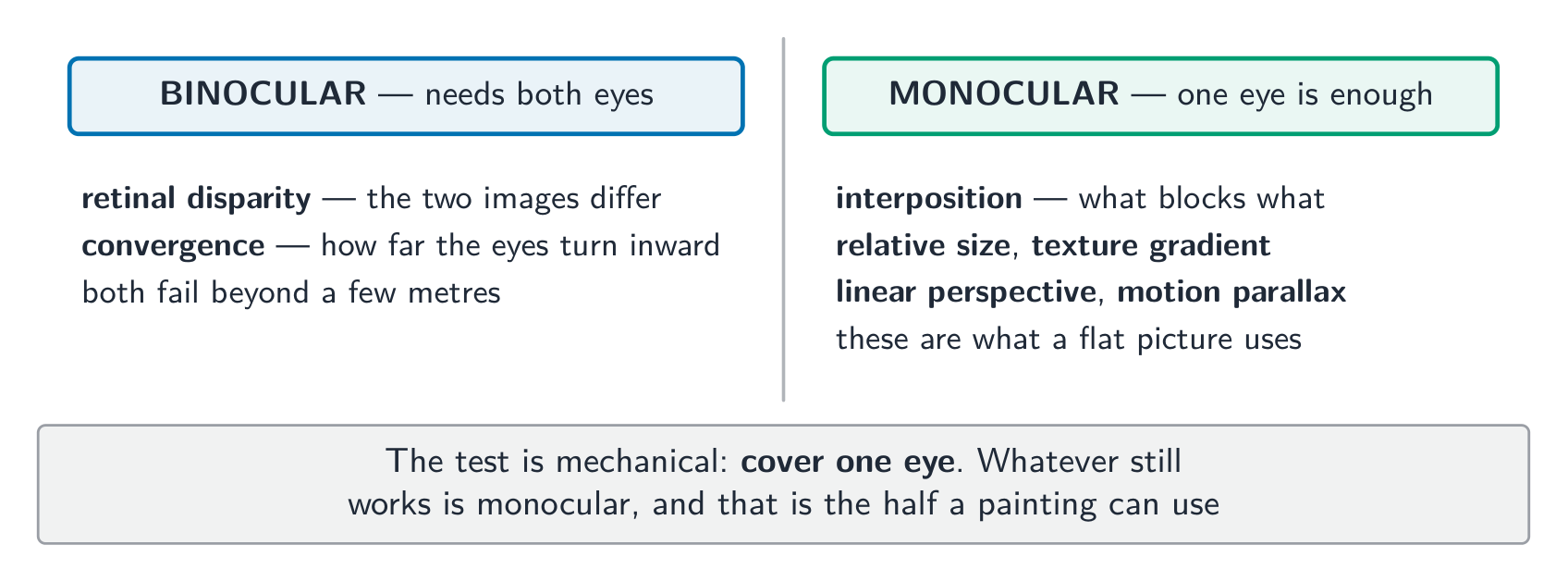
Binocular cues 双眼线索 need both eyes. Retinal disparity 视网膜像差 is the small difference between the two images; the greater the difference, the closer the object. Convergence 辐辏 is the inward turn of the eyes for near objects.

Monocular cues 单眼线索 work with one eye: relative clarity 相对清晰度, relative size 相对大小, texture gradient 纹理梯度, linear perspective 线条透视, and interposition 遮挡 (a nearer object blocks a further one).

Perceptual constancy 知觉恒常性 keeps an object looking the same even when its retinal image changes - a door stays rectangular as it swings open. The brain can also perceive apparent movement 似动 when nothing actually moves, which is why a series of still frames looks like a film.

العربية

لإدراك عالم ثلاثي الأبعاد من صورة شبكية مسطحة، يستخدم الدماغ مؤشرات العمق (Depth cues).

مؤشرات العيون المزدوجة تتطلب كلا العينين. الاختلاف الشبكي (Retinal disparity) هو الفرق الصغير بين الصورتين؛ كلما زاد الفرق، كان الجسم أقرب. التقارب (Convergence) هو الانعطاف الداخلي للعينين للأجسام القريبة.

مؤشرات العين الواحدة تعمل بعين واحدة: الوضوح النسبي، الحجم النسبي، تدرج الملمس، المنظور الخطي، والتداخل (Interposition) (جسم قريب يحجب جسماً أبعد).

الثبات الإدراكي (Perceptual constancy) يحافظ على بقاء الجسم يبدو كما هو حتى عندما تتغير صورته الشبكية - تظل الباب مستطيلًا أثناء فتحه. يمكن للدماغ أيضًا إدراك الحركة الظاهرية عندما لا يتحرك شيء فعليًا، ولهذا السبب تبدو سلسلة من اللقطات الساكنة كفيلم.

غطِ عيناً واحدة: أي شيء لا يزال يعمل فهو مؤشر للعين الواحدة
Vocabulary · ⁨مفردات⁩ Train · ⁨تدريب⁩
English العربية
depth cues/depθ kjuːz/ مؤشرات العمق
Binocular cues/bɪˈnɒkjʊlə kjuːz/ مؤشرات ثنائية العين
Retinal disparity/ˈretɪnl dɪˈspærɪti/ اختلاف الشبكية
Convergence/kənˈvɜːdʒəns/ التقارب
Monocular cues/mɒˈnəʊkjʊlə kjuːz/ مؤشرات أحادية العين
relative clarity/ˈrelətɪv ˈklærɪti/ الوضوح النسبي
relative size/ˈrelətɪv saɪz/ الحجم النسبي
texture gradient/ˈtekstʃə ˈɡreɪdɪənt/ تدرج النسيج
linear perspective/ˈlɪnɪə pəˈspektɪv/ المنظور الخطي
interposition/ˌɪntəpəˈzɪʃn/ التداخل
Perceptual constancy/pəˈseptʃuːəl ˈkɒnstənsi/ ثبات الإدراك
apparent movement/əˈpærənt ˈmuːvmənt/ الحركة الظاهرية
2.2

Thinking and Problem-Solving · ⁨التفكير وحل المشكلات⁩

Syllabus · ⁨المنهج⁩
English

Learning Objective 2.2.A: Explain how psychological concepts and theories account for thinking, problem-solving, judgment, and decision-making.

  • 2.2.A.1 Concepts form the basis of thought. Prototypes are the ideal example for any given concept.
  • 2.2.A.2 People form and modify schemas, or frameworks for thinking, through assimilation (taking in new information but not changing the schema in light of it) and accommodation (taking in new information and changing the schema to incorporate the new information).
  • 2.2.A.3 Algorithms address problems by attempting all possible solutions until the correct one is found.
  • 2.2.A.4 Heuristics address problems by using mental shortcuts to make judgments. Using heuristics can lead to errors in judgment when decisions are made according to prior expectations or stereotypes (representativeness heuristic) or recalling the first or most vivid example that comes to mind (availability heuristic).
  • 2.2.A.5 Decision making can be influenced by prior experiences that were successful (mental set) or circumstances surrounding a decision (priming and framing).
  • 2.2.A.6 Cognitive processes such as gambler’s fallacy and sunk-cost fallacy can hinder people from making good decisions.
  • 2.2.A.7 Executive functions are cognitive processes that allow individuals to generate, organize, plan, and carry out goal-directed behaviors and experience critical thinking.
  • 2.2.A.8 Creativity is a way of thinking that includes generating novel ideas and engaging in divergent (versus convergent) thinking. Creative thinking is hindered by functional fixedness.
العربية

الهدف التعليمي 2.2.A: اشرح كيف تفسر المفاهيم والنظريات النفسية التفكير، وحل المشكلات، والأحكام، واتخاذ القرارات.

  • 2.2.A.1 تشكل المفاهيم أساس التفكير. النماذج الأولية هي المثال المثالي لأي مفهوم محدد.
  • 2.2.A.2 يشكل الناس ويعدلون النماذج الذهنية، أو أطر التفكير، من خلال الامتصاص (استيعاب معلومات جديدة دون تغيير النموذج الذهني بناءً عليها) والاستيعاب (استيعاب معلومات جديدة وتغيير النموذج الذهني لاستيعاب المعلومات الجديدة).
  • 2.2.A.3 الخوارزميات تعالج المشاكل بمحاولة جميع الحلول الممكنة حتى يتم العثور على الحل الصحيح.
  • 2.2.A.4 المؤهلات تعالج المشاكل باستخدام اختصارات عقلية لإصدار الأحكام. يمكن أن يؤدي استخدام المؤهلات إلى أخطاء في الحكم عند اتخاذ القرارات وفقًا للتوقعات السابقة أو التنميطات (مؤهل التمثيلية) أو استرجاع المثال الأول أو الأكثر وضوحًا الذي يتبادر إلى الذهن (مؤهل الإتاحة).
  • 2.2.A.5 يمكن أن تتأخذ القرارات بتجارب سابقة ناجحة (إعداد ذهني) أو الظروف المحيطة بالقرار (التنشيط والإطار).
  • 2.2.A.6 يمكن للعمليات المعرفية مثل خطأ القمار وخطء التكلفة الغارقة أن تعيق الأشخاص عن اتخاذ قرارات جيدة.
  • 2.2.A.7 الوظائف التنفيذية هي عمليات معرفية تسمح للأفراد بتوليد وتنظيم وتخطيط وتنفيذ سلوكيات موجهة نحو الأهداف وتجربة التفكير النقدي.
  • 2.2.A.8 الإبداع هو طريقة تفكير تتضمن توليد أفكار جديدة والمشاركة في التفكير المتباعد (عكس التفكير المتقارب). يعيق التفكير الإبداعي الثبات الوظيفي.

Source: College Board AP Course and Exam Description · ⁨المصدر: وصف دورة وامتحان College Board AP⁩

English

Concepts 概念 are the basis of thought, and a prototype 原型 is the best example of a concept. People build and change schemas through assimilation 同化 (fitting new information into an existing schema) and accommodation 顺应 (changing the schema to fit new information).

Two ways to solve a problem:

  • An algorithm 算法 tries every possible solution and is guaranteed to work, but is slow.
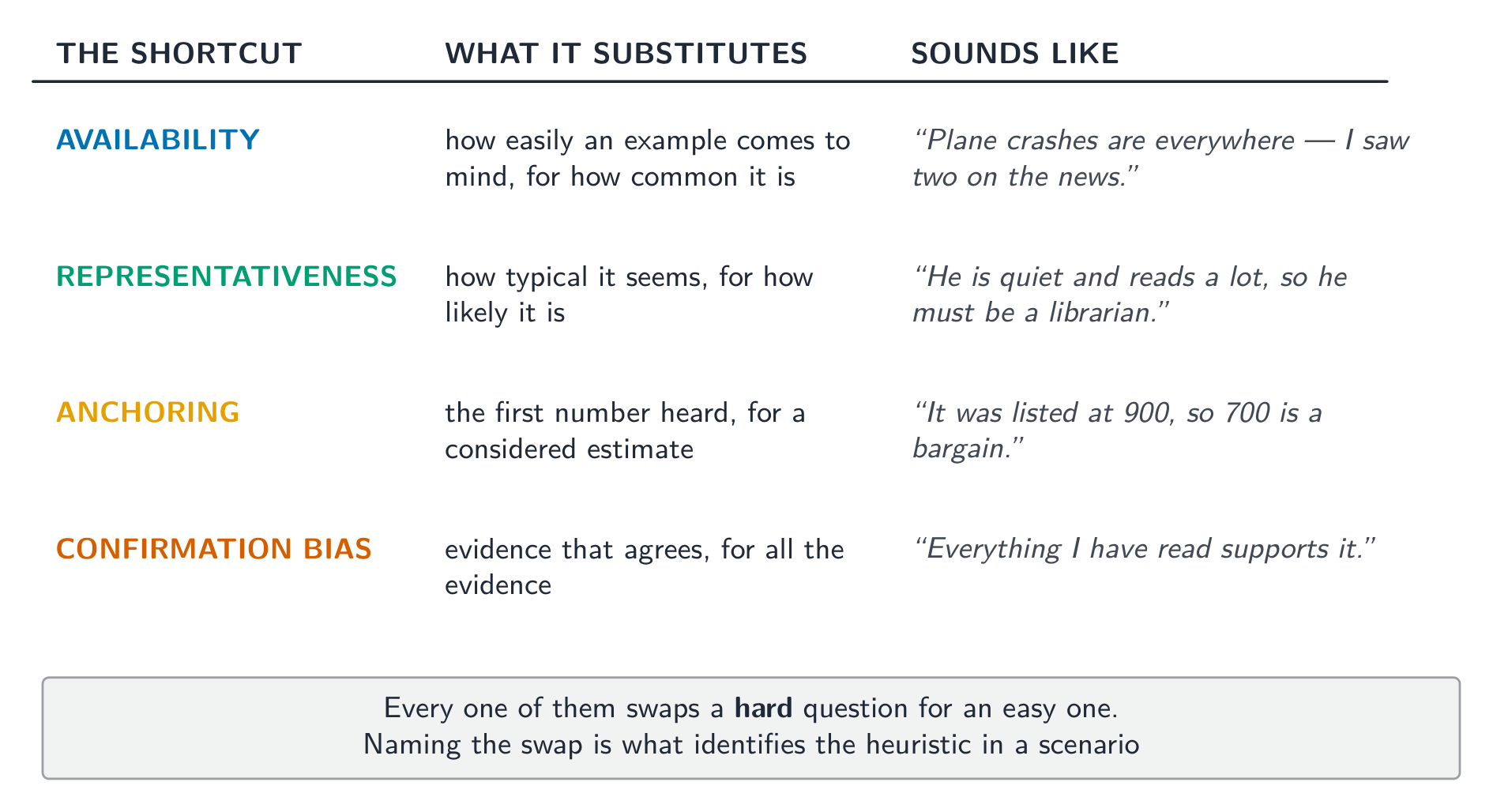
  • A heuristic 启发式 is a mental shortcut. It is fast but can lead to error - the representativeness heuristic 代表性启发式 judges by how well something matches a prototype, and the availability heuristic 可得性启发式 judges by how easily examples come to mind.

Thinking can also get stuck. A mental set 心向 is the tendency to repeat a solution that worked before. Functional fixedness 功能固着 is seeing an object only in its usual use. The gambler's fallacy 赌徒谬误 (believing a run must end) and the sunk-cost fallacy 沉没成本谬误 (continuing because of what is already spent) both hinder good decisions.

Executive functions 执行功能 let people generate, organise, plan, and carry out goals. Creativity 创造力 involves divergent thinking 发散思维 (generating many ideas) rather than convergent thinking 聚合思维 (narrowing to one answer).

العربية

المفاهيم (Concepts) هي أساس الفكر، والنموذج الأولي (Prototype) هو أفضل مثال على المفهوم. يبني الناس ويغيرون المخططات الذهنية من خلال الامتصاص (Assimilation) (دمج معلومات جديدة في مخطط ذهني موجود) والتكيف (Accommodation) (تغيير المخطط الذهني ليناسب المعلومات الجديدة).

طريقتان لحل مشكلة:

  • الخوارزمية (Algorithm) تجرب كل حل ممكن ومضمونة عملها، لكنها بطيئة.
  • الاستدعاء الذهني (Heuristic) هو اختصار ذهني. إنه سريع لكن قد يؤدي إلى خطأ - استدعاء التمثيلية (Representativeness heuristic) يحكم بناءً على مدى تطابق الشيء مع النموذج الأولي، واستدعاء التوفر (Availability heuristic) يحكم بناءً على سهولة ظهور الأمثلة في الذهن.

يمكن أن يتعطل التفكير أيضًا. الإعداد الذهني (Mental set) هو الميل لتكرار حل نجح سابقًا. التصلب الوظيفي (Functional fixedness) هو رؤية الجسم فقط في استخدامه المعتاد. وهم القمار (Gambler's fallacy) (اعتقاد أن السلسلة يجب أن تنتهي) ووهم التكلفة الغارقة (Sunk-cost fallacy) (الاستمرار بسبب ما تم إنفاقه بالفعل) يعيقان اتخاذ قرارات جيدة.

الوظائف التنفيذية (Executive functions) تسمح للناس بتوليد وتنظيم وتخطيط وتنفيذ الأهداف. الإبداع يتضمن التفكير المتفرع (Divergent thinking) (توليد العديد من الأفكار) بدلاً من التفكير المتصاعد/المتقارب (Convergent thinking) (الضيق نحو إجابة واحدة).

كل اختصار استبدل سؤالاً صعباً بآخر أسهل
Explore · ⁨استكشف⁩

Name the shortcut in each scenario · ⁨سمِّ القالب المختصر في كل سيناريو⁩

Every heuristic swaps a hard question for an easy one — and naming the swap is what identifies it. · ⁨كل قالب مختصر يستبدل سؤالاً صعباً بآخر سهل — وتسمية الاستبدال هي ما يحدده.⁩

Vocabulary · ⁨مفردات⁩ Train · ⁨تدريب⁩
English العربية
Concepts/ˈkɒnsepts/ المفاهيم
prototype/ˈprəʊtəʊtaɪp/ نموذج أولي
assimilation/əˌsɪmɪˈleɪʃn/ الامتزاج الثقافي
accommodation/əˌkɒməˈdeɪʃn/ التكيف
algorithm/ˈælɡərɪθəm/ خوارزمية
heuristic/hjuːˈrɪstɪk/ خوارزمية استدلالية (heuristic)
representativeness heuristic/ˌreprɪˈzentətɪvnəs hjuːˈrɪstɪk/ استدعاء التمثيلية
availability heuristic/əˌveɪləˈbɪlɪti hjuːˈrɪstɪk/ استدعاء التوافر
mental set/ˈmentl set/ الإطار الذهني
Functional fixedness/ˈfʌŋkʃənl ˈfɪkstnəs/ الصلابة الوظيفية
gambler's fallacy/ˈɡæmbləz ˈfæləsi/ وهم القمار
sunk-cost fallacy/sʌŋk kɒst ˈfæləsi/ وهم التكلفة الغارقة
Executive functions/eɡˈzekjuːtɪv ˈfʌŋkʃnz/ الوظائف التنفيذية
Creativity/kriːˌeɪˈtɪvɪti/ الإبداع
divergent thinking/daɪˈvɜːdʒənt ˈθɪŋkɪŋ/ التفكير المتباعد
convergent thinking/kənˈvɜːdʒənt ˈθɪŋkɪŋ/ التفكير المتقارب
2.3

Memory Systems · ⁨أنظمة الذاكرة⁩

Syllabus · ⁨المنهج⁩
English

Learning Objective 2.3.A: Explain how the types, structures, and processes of memory work.

  • 2.3.A.1 Memories for learned knowledge, events, and experiences are differentiated by how they are processed by, stored in, and retrieved by the brain.
    • 2.3.A.1.i Explicit memory is a type of memory that is more easily described or explained to others. Types of explicit memory include episodic and semantic.
    • 2.3.A.1.ii Implicit memory is more challenging to describe or explain to others. Procedural memory is a type of implicit memory for procedures and processes.
    • 2.3.A.1.iii Prospective memory is a type of memory related to future actions.
  • 2.3.A.2 Long-term potentiation, a process by which synaptic connections between neurons become stronger with frequent activation, is a biological process for memory.
  • 2.3.A.3 The working memory model examines how our primary memory system—working memory— engages in a dynamic interaction with several components, namely the central executive, phonological loop, and visuospatial sketchpad, to process information into long-term memory.
  • 2.3.A.4 The multi-store model proposes three interacting systems (sensory memory [including iconic and echoic memory], short-term memory, and long-term memory) that information must pass through to be remembered. This model focuses on the impact of automatic and effortful processing on memory encoding, storage, and retrieval.
  • 2.3.A.5 The levels of processing model proposes that memory is encoded on three levels from shallowest to deepest: structural, phonemic, and semantic.
العربية

الهدف التعليمي 2.3.A: اشرح كيف تعمل أنواع وهياكل وعملات الذاكرة.

  • 2.3.A.1 تُصنف ذكريات المعرفة المكتسبة والأحداث والتجارب حسب كيفية معالجتها وتخزينها واسترجاعها بواسطة الدماغ.
    • 2.3.A.1.i الذاكرة الصريحة هي نوع من الذاكرة أسهل في الوصف أو الشرح للآخرين. تشمل أنواع الذاكرة الصريحة الذاكرة السردية والذكرة الدلالية.
    • 2.3.A.1.ii الذاكرة الضمنية أكثر صعوبة في الوصف أو الشرح للآخرين. الذاكرة الإجرائية هي نوع من الذاكرة الضمنية للإجراءات والعمليات.
    • 2.3.A.1.iii الذاكرة المستقبلية هي نوع من الذاكرة يتعلق بالأفعال المستقبلية.
  • 2.3.A.2 التقوية طويلة الأمد، وهي عملية تصبح فيها الاتصالات المشبكية بين الخلايا العصبية أقوى مع التنشيط المتكرر، هي عملية بيولوجية للذاكرة.
  • 2.3.A.3 ي فحص نموذج الذاكرة العاملة كيف يتفاعل نظامنا الأساسي للذاكرة—الذاكرة العاملة—ديناميكيًا مع عدة مكونات، وهي المدير المركزي، والدائرة الصوتية، والمخطط البصري-المكاني، لمعالجة المعلومات ونقلها إلى الذاكرة طويلة المدى.
  • 2.3.A.4 يقترح النموذج متعدد المخازن ثلاثة أنظمة متفاعلة (الذاكرة الحسية [بما في ذلك الذاكرة الأيقونية والذاكرة الصدى]، والذاكرة قصيرة المدى، والذاكرة طويلة المدى) التي يجب أن تمر خلالها المعلومات لتتم تذكرها. يركز هذا النموذج على تأثير المعالجة التلقائية والمثابرة على ترميز المعلومات وتخزينها واسترجاعها.
  • 2.3.A.5 يقترح نموذج مستويات المعالجة أن الذاكرة يتم ترميزها على ثلاثة مستويات من الأسطح إلى الأعماق: هيكلي، صوتي، ودلالي.

Source: College Board AP Course and Exam Description · ⁨المصدر: وصف دورة وامتحان College Board AP⁩

English

Memory is divided by how information is processed.

Explicit memory 外显记忆 can be described to others. It splits into episodic memory 情景记忆 (personal events) and semantic memory 语义记忆 (facts). Implicit memory 内隐记忆 is harder to describe, and includes procedural memory 程序性记忆 (skills such as riding a bike). Prospective memory 前瞻记忆 is remembering to do something later.

Long-term potentiation 长时程增强 is the biological basis: synaptic connections grow stronger with repeated use.

Three models are examinable:

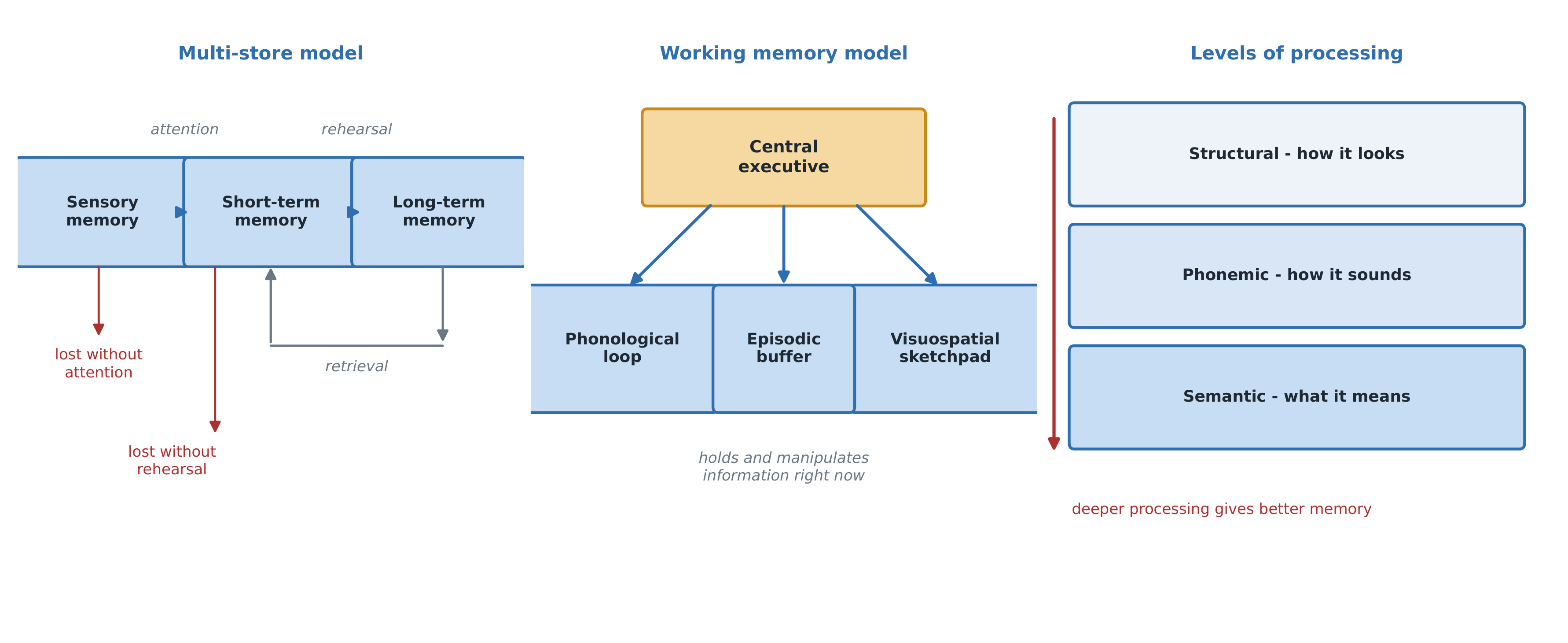
  • The multi-store model 多重存储模型 proposes sensory memory 感觉记忆 (including iconic 图像记忆 and echoic 声像记忆 stores), short-term memory 短时记忆, and long-term memory 长时记忆.
  • The working memory model 工作记忆模型 treats the middle stage as active, not a waiting room. It has a phonological loop 语音回路, a visuospatial sketchpad 视空间模板, and a central executive 中央执行系统.
  • The levels of processing model 加工水平模型 says deeper processing gives better memory: shallow processing of appearance, then sound, then deep processing of meaning.
العربية
ثلاثة نماذج للذاكرة جنبًا إلى جنب: تدفق متعدد المتجر، مكونات الذاكرة العاملة، ومقياس عمق المعالجة
النماذج الثلاثة للذاكرة التي يتم اختبارها: تتدفق المعلومات عبر المتاجر، وتُحتفظ بها بنشاط في الذاكرة العاملة، ويتم تذكرها بشكل أفضل عند معالجتها بعمق

تنقسم الذاكرة حسب كيفية معالجة المعلومات.

الذاكرة الصريحة (Explicit memory) يمكن وصفها للآخرين. تنقسم إلى الذاكرة السردية (Episodic memory) (الأحداث الشخصية) والذاكرة الدلالية (Semantic memory) (الحقائق). الذاكرة الضمنية (Implicit memory) أصعب في الوصف، وتشمل الذاكرة الإجرائية (Procedural memory) (المهارات مثل ركوب الدراجة). الذاكرة المستقبلية (Prospective memory) هي التذكر للقيام بشيء لاحقًا.

التعزيز الطويل الأمد (Long-term potentiation) هو الأساس البيولوجي: تتحول الروابط المشبكية أقوى مع الاستخدام المتكرر.

ثلاثة نماذج قابلة للاختبار:

  • النموذج متعدد المتاجر (Multi-store model) يقترح الذاكرة الحسية (بما فيها المتاجر الأيقونية (Iconic) والصوتية (Echoic))، والذاكرة قصيرة المدى، والذاكرة طويلة المدى.
  • نموذج الذاكرة العاملة (Working memory model) يعامل المرحلة الوسطى بأنها نشطة، وليست غرفة انتظار. يحتوي على الحلقة الصوتية (Phonological loop)، والمسودة البصرية-المكانية (Visuospatial sketchpad)، والمدير المركزي (Central executive).
  • نموذج مستويات المعالجة (Levels of processing model) يقول إن المعالجة العميقة تعطي ذاكرة أفضل: المعالجة السطحية (Shallow processing) للمظهر، ثم الصوت، ثم المعالجة العميقة (Deep processing) للمعنى.
Vocabulary · ⁨مفردات⁩ Train · ⁨تدريب⁩
English العربية
Explicit memory/ekˈsplɪsɪt ˈmeməri/ الذاكرة الصريحة
episodic memory/ˌepɪˈsɒdɪk ˈmeməri/ الذاكرة الحسية
semantic memory/səˈmæntɪk ˈmeməri/ الذاكرة الدلالية
Implicit memory/ɪmˈplɪsɪt ˈmeməri/ الذاكرة الضمنية
procedural memory/prəˈsiːdʒərəl ˈmeməri/ الذاكرة الإجرائية
Prospective memory/prəˈspektɪv ˈmeməri/ الذاكرة المستقبلية
Long-term potentiation/lɒŋ tɜːm pəˌtenʃɪˈeɪʃn/ تقوية طويلة الأمد
multi-store model/ˈmʌlti stɔː ˈmɒdl/ نموذج المتجر المتعدد
sensory memory/ˈsensəri ˈmeməri/ الذاكرة الحسية
iconic/aɪˈkɒnɪk/ أيقوني
echoic/eˈkəʊɪk/ صدى
short-term memory/ʃɔːt tɜːm ˈmeməri/ الذاكرة قصيرة المدى
long-term memory/lɒŋ tɜːm ˈmeməri/ الذاكرة طويلة المدى
working memory model/ˈwɜːkɪŋ ˈmeməri ˈmɒdl/ نموذج الذاكرة العاملة
phonological loop/ˌfɒnəˈlɒdʒɪkl luːp/ الحلقة الصوتية
visuospatial sketchpad/ˌvɪsjuːəˈspeɪʃl ˈsketʃpæd/ لوحة الرسم المكانية البصرية
central executive/ˈsentrəl eɡˈzekjuːtɪv/ المدير المركزي
levels of processing model/ˈlevlz ɒv ˈprəʊsesɪŋ ˈmɒdl/ نموذج مستويات المعالجة
2.4 2.5

Encoding and Storing · ⁨الترميز والتخزين⁩

Syllabus · ⁨المنهج⁩
English

Learning Objective 2.4.A: Explain how different encoding processes work to get information into memory.

  • 2.4.A.1 Encoding involves processes and strategies to get information into memory. How information is encoded can determine how effectively information is stored and retrieved.
  • 2.4.A.2 Mnemonic devices, such as method of loci, are processes that aid in encoding information into working and long-term memory.
  • 2.4.A.3 Encoding can be improved by the process of grouping information together into meaningful chunks (“chunking”), categories, or hierarchies.
  • 2.4.A.4 The spacing effect is a process that can cause significant differences in encoding and memory consolidation depending on whether the information is encoded all at once (massed practice) or distributed over time (distributed practice).
  • 2.4.A.5 Encoding processes can be affected by the order of how the information is presented, called the serial position effect. The serial position effect predicts that information presented at the beginning of a list (primacy effect) or the end of a list (recency effect) will be more memorable than information presented in the middle of a list.
العربية

هدف التعلم 2.4.A: اشرح كيف تعمل عمليات الترميز المختلفة لإدخال المعلومات إلى الذاكرة.

  • 2.4.A.1 يتضمن الترميز عمليات واستراتيجيات لإدخال المعلومات إلى الذاكرة. يمكن أن يحدد طريقة ترميز المعلومات مدى فعالية تخزينها واسترجاعها.
  • 2.4.A.2 الأجهزة السنية، مثل طريقة المواقع، هي عمليات تساعد في ترميز المعلومات في الذاكرة العاملة وطويلة المدى.
  • 2.4.A.3 يمكن تحسين الترميز من خلال عملية تجميع المعلومات معًا في كتل ذات معنى ("التقطيع")، أو فئات، أو تسلسلات هرمية.
  • 2.4.A.4 تأثير التباعد هو عملية قد تسبب اختلافات كبيرة في الترميز وتثبيت الذاكرة اعتمادًا على ما إذا كانت المعلومات يتم ترميزها دفعة واحدة (التدريب المكثف) أم موزعة عبر الوقت (التدريب الموزع).
  • 2.4.A.5 يمكن أن تتأثر عمليات الترميز بترتيب تقديم المعلومات، وهو ما يسمى بتأثير الموقع التسلسلي. يتنبأ تأثير الموقع التسلسلي بأن المعلومات المقدمة في بداية القائمة (تأثير الأولوية) أو في نهايتها (تأثير الحداثة) ستكون أكثر قابلية للتذكر من المعلومات المقدمة في وسط القائمة.
English

Learning Objective 2.5.A: Explain how memory storage processes retain information in memory.

  • 2.5.A.1 Sensory memory, short-term memory, working memory, and long-term memory are processes that differ in storage duration, capacity, and content.
  • 2.5.A.2 Storage may be prolonged by rehearsing information over time (maintenance rehearsal). Rehearsing information over time in ways that promote meaning (elaborative rehearsal) helps with memory retention.
  • 2.5.A.3 Some people demonstrate highly superior autobiographical memory which may indicate that there are biological processes for superior memory storage. Autobiographical memory may also explain why memories connected to our own lives or selves are more memorable.
  • 2.5.A.4 Storage processes may be negatively affected by physical impairment and developmental limitations, such as amnesia (retrograde and anterograde), Alzheimer’s disease, and infantile amnesia.
العربية

هدف التعلم 2.5.A: اشرح كيف تحافظ عمليات تخزين الذاكرة على المعلومات في الذاكرة.

  • 2.5.A.1 الذاكرة الحسية، والذاكرة قصيرة المدى، والذاكرة العاملة، والذاكرة طويلة المدى هي عمليات تختلف في مدة التخزين والسعة والمحتوى.
  • 2.5.A.2 قد يتم تمديد التخزين عن طريق تكرار المعلومات على مدى الوقت (التكرار التحفظي). يساعد تكرار المعلومات على مدى الوقت بطريقة تعزز المعنى (التكرار الموسع) على الحفاظ على الذاكرة.
  • 2.5.A.3 يظهر بعض الأشخاص ذاكرة سيرة ذاتية فائقة بشكل ملحوظ، مما قد يشير إلى وجود عمليات بيولوجية لتخزين الذاكرة الفائق. قد تفسر الذاكرة السيرة الذاتية أيضًا لماذا تكون الذكريات المرتبطة بحياةنا أو بأنفسنا أكثر قابلية للتذكر.
  • 2.5.A.4 قد تتأثر عمليات التخزين سلبًا بالاضطراب الجسدي والقيود التنموية، مثل العمى (الرجعي والأمامي)، ومرض الزهايمر، وعمى الرضع.

Source: College Board AP Course and Exam Description · ⁨المصدر: وصف دورة وامتحان College Board AP⁩

English

Encoding 编码 gets information into memory, and how you encode changes how well you remember.

  • Mnemonic devices 记忆术 such as the method of loci 位置法 aid encoding.
  • Chunking 组块 groups items into meaningful units, which raises how much short-term memory can hold.
  • The spacing effect 间隔效应 shows that spreading study over time beats massed practice 集中练习 (cramming).
  • The serial position effect 系列位置效应 means items at the start (primacy 首因效应) and end (recency 近因效应) of a list are remembered best.

Storage differs by system. Maintenance rehearsal 保持性复述 repeats information to hold it; elaborative rehearsal 精细复述 links it to what you already know and works better.

A few people show highly superior autobiographical memory 超常自传体记忆, which suggests biological differences. Storage can also be impaired: Alzheimer's disease 阿尔茨海默病 and infantile amnesia 婴儿期遗忘 both limit what can be stored or recovered.

العربية

الترميز (Encoding) إدخال المعلومات في الذاكرة، وكيف تقوم بالترميز يغير مدى قدرتك على التذكر.

  • الأدوات الإشارية (Mnemonic devices) مثل طريقة المواقع (Method of loci) تساعد في الترميز.
  • التجميع (Chunking) يجمع العناصر في وحدات ذات معنى، مما يرفع الكمية التي يمكن للذاكرة قصيرة المدى حملها.
  • تأثير التباعد (Spacing effect) يظهر أن توزيع الدراسة عبر الوقت يتفوق على الممارسة المكثفة (Massed practice) (الحشو).
  • تأثير الموقع التسلسلي (Serial position effect) يعني أن العناصر في البداية (الأولوية Primacy) والنهاية (الحداثة Recency) من القائمة تُتذكر بشكل أفضل.

يختلف التخزين حسب النظام. التكرار التحفظي (Maintenance rehearsal) يعيد المعلومات لإبقائها؛ التكرار التفصيلي (Elaborative rehearsal) يربطها بما تعرفه مسبقًا ويعمل بشكل أفضل.

بعض الأشخاص يُظهرون ذاكرة حيوية فائقة (Highly superior autobiographical memory)، مما يشير إلى اختلافات بيولوجية. يمكن أيضًا أن تتضرر الذاكرة: مرض آلزهايمر ونسيان الرضع (Infantile amnesia) يحدان من ما يمكن تخزينه أو استرجاعه.

Vocabulary · ⁨مفردات⁩ Train · ⁨تدريب⁩
English العربية
Encoding/enˈkəʊdɪŋ/ التشفير
Mnemonic devices/nɪˈmɒnɪk dɪˈvaɪsɪz/ أدوات ذاكرة
method of loci/ˈmeθəd ɒv ˈləʊsaɪ/ طريقة المواقع
Chunking/ˈtʃʌŋkɪŋ/ التجميع
spacing effect/ˈspeɪsɪŋ ɪˈfekt/ تأثير المسافة الزمنية
massed practice/mæst ˈpræktɪs/ التدريب المكثف
serial position effect/ˈsɪərɪəl pəˈzɪʃn ɪˈfekt/ تأثير الموقع التسلسلي
primacy/ˈpraɪməsi/ التفوق
recency/rɪˈsensi/ الحداثة
Maintenance rehearsal/ˈmeɪntənəns rɪˈhɜːsl/ التكرار التحفظي
elaborative rehearsal/ɪˈlæbrətɪv rɪˈhɜːsl/ التكرار الموسع
highly superior autobiographical memory/ˈhaɪli suːˈpɪərɪə ˌɔːtəʊˌbaɪəˈɡræfɪkl ˈmeməri/ ذاكرة السيرة الذاتية فائقة التميز
Alzheimer's disease/ˈæltsaɪməz dɪˈziːz/ مرض آلزهايمر
infantile amnesia/ˈɪnfəntaɪl æmˈniːzɪə/ نسيان الرضع
2.6 2.7

Retrieving and Forgetting · ⁨الاسترجاع والنسيان⁩

Syllabus · ⁨المنهج⁩
English

Learning Objective 2.6.A: Explain how memory retrieval processes get information out of memory.

  • 2.6.A.1 The process of memory retrieval occurs through recall (remembering without cues) or recognition (which relies on retrieval cues).
  • 2.6.A.2 The process of memory retrieval can be enhanced when people are in the same environmental space (context-dependent memory), mood (mood-congruent memory), or physical state (state-dependent memory) as they were when they encoded the information to be retrieved.
  • 2.6.A.3 Successful retrieval is more likely when using retrieval practice processes, including testing effect and metacognition.
العربية

هدف التعلم 2.6.A: اشرح كيف تحصل عمليات استرجاع الذاكرة على المعلومات من الذاكرة.

  • 2.6.A.1 يحدث عملية استرجاع الذاكرة من خلال الاسترجاع (التذكر بدون مؤشرات) أو التعرف (والذي يعتمد على مؤشرات الاسترجاع).
  • 2.6.A.2 يمكن تعزيز عملية استرجاع الذاكرة عندما يكون الناس في نفس الفضاء البيئي (ذاكرة تعتمد على السياق)، أو الحالة المزاجية (ذاكرة متناسقة مع المزاج)، أو الحالة الجسدية (ذاكرة تعتمد على الحالة) التي كانوا عليها عند ترميز المعلومات المراد استرجاعها.
  • 2.6.A.3 يكون الاسترجاع الناجح أكثر احتمالًا عند استخدام عمليات التدريب على الاسترجاع، بما في ذلك تأثير الاختبار والتأمل المعرفي.
English

Learning Objective 2.7.A: Explain possible reasons why memory failure or errors may occur.

  • 2.7.A.1 The forgetting curve shows that time is a significant factor in forgetting. Forgetting occurs rapidly after initial learning and levels off over time.
  • 2.7.A.2 Many memories are difficult to retrieve due to encoding failure, interference (proactive or retroactive), or inadequate retrieval (i.e., tip-of-the-tongue phenomenon).
  • 2.7.A.3 Psychodynamic theorists believe that information or memories can be forgotten to defend the ego from distress (repression).
  • 2.7.A.4 The accuracy of memories may be affected by the misinformation effect, source amnesia, or constructive memory (via memory consolidation and imagination inflation).
العربية

هدف التعلم 2.7.A: اشرح الأسباب المحتملة لحدوث فشل الذاكرة أو الأخطاء.

  • 2.7.A.1 يُظهر منحنى النسيان أن الوقت عامل مهم في النسيان. يحدث النسيان بسرعة بعد التعلم الأولي ثم يستقر بمرور الوقت.
  • 2.7.A.2 يصعب استرجاع الكثير من الذكريات بسبب فشل الترميز، أو التداخل (الإيجابي أو السلبي)، أو عدم كفاءة الاسترجاع (أي ظاهرة طرف اللسان).
  • 2.7.A.3 يعتقد المنظرون الديناميكيون النفسيون أن المعلومات أو الذكريات يمكن نسيانها للدفاع عن الذات عن طريق الإجهاد (الكبت).
  • 2.7.A.4 قد تتأثر دقة الذكريات بتأثير المعلومات المضللة، أو عمى المصدر، أو الذاكرة البنائية (من خلال تثبيت الذاكرة وانفجار الخيال).

Source: College Board AP Course and Exam Description · ⁨المصدر: وصف دورة وامتحان College Board AP⁩

English

Retrieval takes two forms: recall 回忆 (producing information without cues) and recognition 再认 (identifying it among options). Recognition is easier, which is why a multiple-choice question feels easier than an essay.

Retrieval improves with matching conditions. Context-dependent memory 情境依存记忆 works better in the same place; state-dependent memory 状态依存记忆 works better in the same physical state; mood-congruent memory 心境一致性记忆 recalls material matching your current mood. Practising retrieval helps too - the testing effect 测试效应 shows that testing yourself beats rereading.

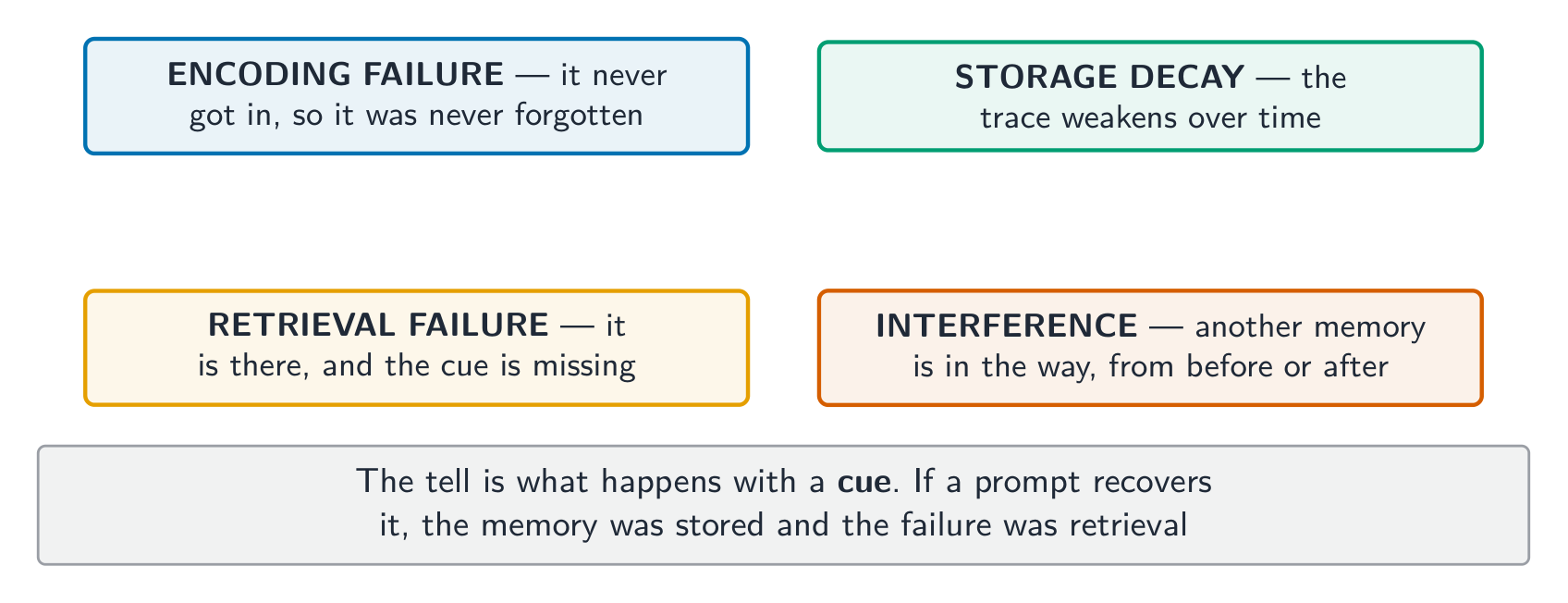
Forgetting has several causes. The forgetting curve 遗忘曲线 shows loss is fastest right after learning. Encoding failure 编码失败 means it never got in. Interference 干扰 can be proactive 前摄干扰 (old learning blocks new) or retroactive 倒摄干扰 (new blocks old). Retrieval failure 提取失败 includes the tip-of-the-tongue phenomenon 舌尖现象.

Memory is also reconstructive 重构的, not a recording. The misinformation effect 错误信息效应 occurs when later information changes what a person remembers. Source amnesia 来源遗忘 is remembering the information but not where it came from.

Worked example (a real AP exam question). The 2025 Article Analysis Question presented a study in which participants read a summary containing 20%, 50% or 80% misleading sentences, then answered questions about a video. Correct responses fell from 74% (low misinformation) to 63% (high). One part asked students to "Explain how at least one of the research findings supports or refutes the misinformation effect." A full-mark answer states the finding and connects it to the concept: "Participants in the high misinformation condition answered 63% correctly compared with 74% in the low condition. Because exposure to more misleading detail lowered accuracy, the finding supports the misinformation effect, in which information received after an event changes the memory of it." Notice the shape: quote the data, then name the concept the data supports. A restated definition with no number does not answer Explain.

العربية

الاسترجاع يأخذ شكلين: الاستذكار (Recall) (إنتاج معلومات بدون مؤشرات) والتعرف (Recognition) (تحديدها ضمن خيارات). التعرف أسهل، ولهذا يبدو امتحان الاختيار من متعدد أسهل من المقال.

يتحسن الاسترجاع مع تطابق الظروف. يعمل الذاكرة المعتمدة على السياق بشكل أفضل في نفس المكان؛ وتعمل الذاكرة المعتمدة على الحالة بشكل أفضل في نفس الحالة الجسدية؛ بينما تستذكر الذاكرة المتوافقة مع المزاج مواد تتوافق مع مزاجك الحالي. والممارسة للاسترجاع مفيدة أيضًا - حيث يُظهر تأثير الاختبار أن اختبار نفسك يتفوق على إعادة القراءة.

للا forgetting (النسيان) أسباب متعددة. تُظهر منحنى النسيان أن الفقد يحدث بسرعة أكبر مباشرة بعد التعلم. تعني فشل التشفير أنه لم يدخل أصلاً إلى الذاكرة. يمكن أن تكون التداخلات استباقية (يُحجب التعلم القديم الجديد) أو ارتجاعية (الجديد يُحجب القديم). تشمل فشل الاسترجاع ظاهرة حافة اللسان.

الذاكرة أيضًا إعادة بناء، وليست تسجيلًا. يحدث تأثير المعلومات المضللة عندما تقوم معلومات لاحقة بتغيير ما يتذكره الشخص. نسيان المصدر هو تذكر المعلومات دون تذكر مصدرها.

مثال محلول (سؤال حقيقي من امتحان AP). طرحت سؤال تحليل المقال لعام 2025 دراسة قرأ فيها المشاركين ملخصًا يحتوي على جمل مضللة بنسبة 20% أو 50% أو 80%, ثم أجابوا عن أسئلة حول فيديو. انخفضت الإجابات الصحيحة من 74% (ضدض information مضللة منخفضة) إلى 63% (عالية). طلبت إحدى الأجزاء من الطلاب "شرح كيف يدعم أحد نتائج البحث أو ينكر تأثير المعلومات المضللة." إجابة الدرجة الكاملة توضح النتيجة وتربطها بالمفهوم: "أجاب المشاركون في حالة المعلومات المضللة العالية 63% مقارنة بـ 74% في الحالة المنخفضة. وبما أن التعرض لمزيد من التفاصيل المضللة قلل الدقة، فإن النتيجة تدعم تأثير المعلومات المضللة، الذي يتم فيه تغيير الذاكرة بسبب معلومات تم تلقيها بعد الحدث." لاحظ البنية: اقتبس البيانات، ثم سمِّ المفهوم الذي تدعمه البيانات. التعريف المعاد صياغته بدون رقم لا يجيب على سؤال اشرح.

أربعة أنواع مختلفة من الفشل، جميعها أبلغت عن نسيان - الدلالة تكمن في ما تفعله الإشارة المحفزة
Explore · ⁨استكشف⁩

Diagnose which stage the memory failed at · ⁨اشخص في أي مرحلة فشل الذاكرة⁩

Four different failures are all reported as forgetting. The tell is what happens when a cue is given. · ⁨أربعة أنواع مختلفة من الفشل تُبلَّغ جميعاً نسياناً. الدليل هو ما يحدث عند تقديم محفز.⁩

Vocabulary · ⁨مفردات⁩ Train · ⁨تدريب⁩
English العربية
recall/ˈriːkɔːl/ استرجاع
recognition/ˌrekəɡˈnɪʃn/ التعرف
Context-dependent memory/ˈkɒntekst dɪˈpendənt ˈmeməri/ ذاكرة مرتبطة بالسياق
state-dependent memory/steɪt dɪˈpendənt ˈmeməri/ الذاكرة المعتمدة على الحالة
mood-congruent memory/muːd ˈkɒŋɡruːənt ˈmeməri/ الذاكرة المتوافقة مع الحالة المزاجية
testing effect/ˈtestɪŋ ɪˈfekt/ تأثير الاختبار
forgetting curve/fəˈɡetɪŋ kɜːv/ منحنى النسيان
Encoding failure/enˈkəʊdɪŋ ˈfeɪlɪə/ فشل التشفير
Interference/ˌɪntəˈfɪərəns/ التداخل
proactive/prəʊˈæktɪv/ استباقي
retroactive/ˌretrəʊˈæktɪv/ عكسي
Retrieval failure/rɪˈtriːvl ˈfeɪlɪə/ فشل الاسترجاع
tip-of-the-tongue phenomenon/tɪp ɒvðə tʌŋ fɪˈnɒmɪnən/ ظاهرة طرف اللسان
reconstructive/ˌriːkənˈstrʌktɪv/ إعادة البناء
misinformation effect/ˌmɪsɪnfəˈmeɪʃn ɪˈfekt/ تأثير المعلومات المضللة
Source amnesia/sɔːs æmˈniːzɪə/ نسيان المصدر
intelligence/ɪnˈtelɪdʒəns/ الذكاء
Spearman's g/ˈspɪəmənz dʒiː/ عامل g لسبيرمان
fluid intelligence/ˈfluːɪd ɪnˈtelɪdʒəns/ الذكاء السائل
crystallised intelligence/ˈkrɪstəlaɪzd ɪnˈtelɪdʒəns/ الذكاء المتبلور
intelligence quotient (IQ)/ɪnˈtelɪdʒəns ˈkwəʊʃənt/ مؤشر الذكاء (IQ)
normal curve/ˈnɔːml kɜːv/ المنحنى الطبيعي
psychometric principles/ˌsaɪkəʊˈmetrɪk ˈprɪnsɪplz/ المبادئ السيكومترية
Standardization/ˌstændədaɪˈzeɪʃn/ التوحيد
Validity/væˈlɪdɪti/ الصلاحية
Construct validity/ˈkɒnstrʌkt væˈlɪdɪti/ صحة البناء
predictive validity/prɪˈdɪktɪv væˈlɪdɪti/ الصحة التنبؤية
2.8

Intelligence and Testing · ⁨الذكاء والاختبارات⁩

Syllabus · ⁨المنهج⁩
English

Learning Objective 2.8.A: Explain how modern and historical theories describe intelligence.

  • 2.8.A.1 Throughout history, consensus about how to define and measure intelligence continues to be elusive and can be subject to bias. Researchers debate whether intelligence is a general ability (called g) or is comprised of multiple abilities.

Learning Objective 2.8.B: Explain how intelligence is measured.

  • 2.8.B.1 Early formal intelligence tests yielded an intelligence quotient (IQ), which divided mental age by chronological age. In modern times, IQ scores are often used to identify students for educational services.
    • Exclusion Statement: Labeling or describing cognitive abilities and disabilities are outside the scope of the AP Psychology Exam.
  • 2.8.B.2 All psychological assessments, including intelligence tests, should adhere to sound psychometric principles to be considered useful.
    • 2.8.B.2.i A test is said to be standardized when it is administered using consistent procedures and environments.
    • 2.8.B.2.ii A test is considered valid if it measures what it is designed to measure. Types of validity include construct and predictive.
    • 2.8.B.2.iii A test is considered reliable if it yields similar results each time it is administered. Types of reliability include test-retest and split-half.
  • 2.8.B.3 Researchers strive to develop assessments of intelligence that are socio-culturally responsive to reduce stereotype threat and potential inequity that may occur due to stereotype lift.

Learning Objective 2.8.C: Explain how systemic issues relate to the quantitative and qualitative uses of intelligence assessments.

  • 2.8.C.1 IQ scores across much of the world have generally increased over time (Flynn Effect) due to societal factors, such as higher socioeconomic status and access to better health care and better nutrition.
  • 2.8.C.2 IQ scores tend to vary more within a group than between groups. Personal and sociocultural biases can impact the interpretation of individual IQ scores and the score’s relationship with other outcomes. Poverty, discrimination, and educational inequities can negatively influence intelligence scores of individuals and societal groups around the world.
  • 2.8.C.3 Scores from intelligence tests have been used to limit access to jobs, military ranks, educational institutions, and immigration to the US.

Learning Objective 2.8.D: Explain how academic achievement is measured and experienced as compared to intelligence.

  • 2.8.D.1 Some academic tests attempt to measure what someone knows (achievement tests) or predict how someone will perform in the future (aptitude tests).
  • 2.8.D.2 People’s beliefs about whether intelligence is fixed from birth (fixed mindset) or malleable due to experience (growth mindset) can affect academic achievement.
العربية

هدف التعلم 2.8.A: اشرح كيف تصف النظريات الحديثة والتاريخية الذكاء.

  • 2.8.A.1 على مر التاريخ، لا يزال الإجماع حول كيفية تعريف القياس الذكاء صعب الوصول إليه ويمكن أن يخضع للتحيز. يناقش الباحثون ما إذا كان الذكاء قدرة عامة (تسمى g) أم يتكون من قدرات متعددة.

هدف التعلم 2.8.B: اشرح كيف يتم قياس الذكاء.

  • 2.8.B.1 أنتجت الاختبارات الرسمية المبكرة لمعايير الذكاء نسبة ذكاء (IQ)، والتي قُسمت فيها العمر العقلي على العمر الزمني. في العصر الحديث، تُستخدم غالبًا درجات IQ لتحديد الطلاب الذين يحتاجون إلى خدمات تعليمية.
    • بيان الاستبعاد: تصنيف أو وصف القدرات والإعاقات المعرفية خارج نطاق امتحان علم النفس AP.
  • 2.8.B.2 يجب أن تمتثل جميع التقييمات النفسية، بما في ذلك اختبارات الذكاء، لمبادئ نفسومترية سليمة لتكون مفيدة.
    • 2.8.B.2.i يُقال إن الاختبار موحد عندما يتم تطبيقه باستخدام إجراءات وبيئات متسقة.
    • 2.8.B.2.ii يُعتبر الاختبار صالحًا إذا كان يقيس ما صُمم لقياسه. تشمل أنواع الصلاحية الصلاحية الإنشائية والتنبؤية.
    • 2.8.B.2.iii يُعتبر الاختبار موثوقًا إذا أعطى نتائج مماثلة في كل مرة يتم فيها إجراؤه. تشمل أنواع الموثوقية اختبار إعادة الاختبار والنصفين.
  • 2.8.B.3 يسعى الباحثون إلى تطوير اختبارات ذكاء تكون حساسة للسياق الاجتماعي-الثقافي لتقليل تهديد التمييز النمطي وعدم المساواة المحتملة التي قد تنتج عن الرفع النمطي.

هدف التعلم 2.8.C: اشرح كيف ترتبط القضايا النظامية بالاستخدامات الكمية والنوعية لاختبارات الذكاء.

  • 2.8.C.1 ارتفعت درجات الذكاء (مؤشر فلوين) بشكل عام عبر معظم أنحاء العالم مع مرور الوقت بسبب عوامل اجتماعية، مثل ارتفاع المستوى socioeconomic والوصول إلى رعاية صحية أفضل وتغذية أفضل.
  • 2.8.C.2 تميل درجات الذكاء إلى التباين أكثر داخل المجموعة منها بين المجموعات. يمكن أن تؤثر التحيزات الشخصية والاجتماعية-الثقافية على تفسير درجات الذكاء الفردية وعلاقتها بنتائج أخرى. يمكن للفقر والتمييز وعدم المساواة التعليمية أن يؤثر سلبًا على درجات الذكاء للأفراد والمجموعات المجتمعية حول العالم.
  • 2.8.C.3 استُخدمت نتائج اختبارات الذكاء لتقييد الوصول إلى الوظائف، الرتب العسكرية، المؤسسات التعليمية، والهجرة إلى الولايات المتحدة.

هدف التعلم 2.8.D: اشرح كيف يتم قياس الإنجاز الأكاديمي وتجربته مقارنة بالذكاء.

  • 2.8.D.1 تحاول بعض الاختبارات الأكاديمية قياس ما يعرفه الشخص (اختبارات الإنجاز) أو التنبؤ بكيفية أداء الشخص مستقبلاً (اختبارات القدرات).
  • 2.8.D.2 يمكن أن تؤثر معتقدات الأشخاص حول ما إذا كان الذكاء ثابتاً منذ الولادة (عقلية ثابتة) أم قابلاً للتغير بسبب الخبرة (عقلية النمو) على الإنجاز الأكاديمي.

Source: College Board AP Course and Exam Description · ⁨المصدر: وصف دورة وامتحان College Board AP⁩

English

Psychologists still disagree about how to define intelligence 智力. Spearman's g 一般智力因素 proposes one general ability; other theories propose several, including fluid intelligence 流体智力 (reasoning with novel problems, which declines with age) and crystallised intelligence 晶体智力 (accumulated knowledge, which does not).

Early tests produced an intelligence quotient (IQ) 智商 by dividing mental age by chronological age. Modern scores are compared with a normal curve 正态曲线 of the population.

Any psychological assessment must meet psychometric principles 心理测量学原则:

  • Standardization 标准化 - the test is given under consistent procedures and scored against a comparison group.
  • Validity 效度 - it measures what it claims to. Construct validity 构念效度 and predictive validity 预测效度 are both examinable.
  • Reliability 信度 - it gives similar results each time, checked by test-retest reliability 重测信度 and split-half reliability 分半信度.

IQ scores have risen worldwide over generations (the Flynn effect 弗林效应), which points to societal rather than biological causes. Scores vary more within groups than between them, and stereotype threat 刻板印象威胁 can lower performance when a person fears confirming a negative stereotype about their group.

العربية

لا يزال علماء النفس يختلفون حول كيفية تعريف الذكاء. يقترح g لـ Spearman قدرة عامة واحدة؛ تقترح نظريات أخرى قدرات متعددة، بما في ذلك الذكاء السائل (الاستدلال على مشاكل جديدة، والذي يتناقص مع العمر) والذكاء المتصلب (المعرفة المتراكمة، التي لا تتناقص).

أنتجت الاختبارات المبكرة مؤشر ذكاء (IQ) بقسمة العمر العقلي على العمر الزمني. تُقارن الدرجات الحديثة بـ منحنى طبيعي للسكان.

يجب أن يلبي أي تقييم نفسي مبادئ القياس النفسي:

  • التوحيد القياسي - يتم إعطاء الاختبار تحت إجراءات متسقة ويتم تصحيحه مقابل مجموعة مقارنة.
  • الصحة (الصلاحية) - يقيس ما يدعي قياسه. صحة البناء وصحة التنبؤ كلاهما مدرج في الامتحانات.
  • الثبات - يعطي نتائج مماثلة في كل مرة، ويتم التحقق منه بواسطة ثبات إعادة الاختبار وثبات الشق-نصف. (split-half reliability)

ارتفعت درجات الذكاء (IQ) في جميع أنحاء العالم عبر الأجيال (تأثير فلين)، مما يشير إلى أسباب اجتماعية بدلاً من بيولوجية. تتفاوت الدرجات أكثر داخل المجموعات منها بينها، ويمكن أن يؤدي تهديد النمط الذهني إلى انخفاض الأداء عندما يخشى الشخص تأكيد نمط ذهني سلبي حول مجموعته.

Vocabulary · ⁨مفردات⁩ Train · ⁨تدريب⁩
English العربية
Reliability/rɪˌlaɪəˈbɪlɪti/ موثوقية
test-retest reliability/test rɪˈtest rɪˌlaɪəˈbɪlɪti/ موثوقية الاختبار-إعادة الاختبار
split-half reliability/splɪt hɑːf rɪˌlaɪəˈbɪlɪti/ موثوقية النصف-النصف
Flynn effect/flɪn ɪˈfekt/ تأثير فلين
stereotype threat/ˈsterɪəʊtaɪp θret/ تهديد القالب النمطي
2.8

Exam tips · ⁨نصائح للامتحان⁩

English
  • Keep sensation and perception apart: detecting is sensation, interpreting is perception.
  • Bottom-up starts with the stimulus; top-down starts with expectation. Say which the scenario shows.
  • Learn the interference pair by direction: proactive means old material acts forward onto new.
  • For encoding questions, name a specific strategy - chunking, spacing, elaborative rehearsal - not "studying harder".
  • On testing questions, separate reliability from validity. A test can be reliable and still measure the wrong thing.
  • When data are given, quote a figure before naming the concept. Findings-based parts award the link between the number and the term.
العربية
  • حافظ على الفصل بين الإحساس والإدراك: الكشف هو إحساس، والتفسير هو إدراك.
  • يبدأ من الأسفل للأعلى بالمحفز؛ يبدأ من الأعلى للأسفل بالتوقع. حدد أيهما يظهر في السيناريو.
  • احفظ زوج التداخلات حسب الاتجاه: الاستباقي يعني أن المواد القديمة تعمل للأمام نحو الجديدة.
  • لأسئلة التشفير، اذكر استراتيجية محددة - التجميع، التباعد، التكرار التفصيلي - وليس "الدراسة بجدّية أكبر".
  • في أسئلة الاختبار، افصل بين الثبات والصحة. يمكن للاختبار أن يكون ثابتًا ولا يزال يقيس شيئًا خاطئًا.
  • عند تقديم بيانات، اقتبس رقماً قبل تسمية المفهوم. تُمنح الأجزاء القائمة على النتائج ارتباط الرقم بالمصطلح.

Interactive lessons on this topic · ⁨دروس تفاعلية حول هذا الموضوع⁩

Work through it step by step, with instant-check exercises. · ⁨ا-working عليه خطوة بخطوة، مع تمارين تحقق فوري.⁩

Past Papers · ⁨أوراق الامتحانات السابقة⁩

More topics in AP Psychology · ⁨علم النفس (AP)⁩ · ⁨المزيد من المواضيع في AP Psychology · ⁨علم النفس (AP)⁩⁩

Log in or create account · ⁨تسجيل الدخول أو إنشاء حساب⁩

IGCSE, A-Level & AP