Skip to content · ⁨الانتقال إلى المحتوى⁩

Line and Mark-Making · ⁨الخط والرسم بالعلامة⁩

AP Drawing · ⁨الرسم (AP)⁩ · Topic 1 · ⁨الموضوع 1⁩

Video lesson for this topic · ⁨درس فيديو لهذا الموضوع⁩ Open the video page · ⁨افتح صفحة الفيديو⁩
7:44

الخط والرسم بالعلامة

انظر إلى هذه الرسومات الثلاث. لا طلاء. لا ألوان. فقط قلم رصاص، وقلام، وإبرة على لوحة معدنية. كل ظل يمكنك رؤيته هنا مبني من علامات: خطوط…

English narration · English + 中文 subtitles burned in · ⁨سرد باللغة الإنجليزية · ترجمة مدمجة بالإنجليزية + الصينية⁩

1.1

Line Quality · ⁨جودة الخط⁩

Syllabus · ⁨المنهج⁩
English

Focus: Line quality is how a line looks and feels — the first drawing skill the AP rubric names is mark-making.

  • A line can be thick or thin, dark or light, smooth or rough, fast or slow.
  • Weighted line changes thickness along its length: press harder where a form turns away or carries weight.
  • Confident lines are drawn from the shoulder and elbow, not only the fingers.
  • Lost-and-found lines fade out and reappear — the viewer's eye completes the edge.
  • Line direction carries feeling: horizontal is calm, vertical is firm, diagonal is active.
  • Examiners read line quality instantly — scratchy, timid lines and one confident stroke tell different stories.
العربية

التركيز: جودة الخط هي كيفية ظهور الخط وشعوره — المهارة الرسومية الأولى التي يذكرها تقييم AP هي إنشاء العلامات (mark-making).

  • يمكن أن يكون الخط سميكًا أو رفيعًا، داكنًا أو فاتحًا، ناعمًا أو خشنًا، سريعًا أو بطيئًا.
  • الخط الموزون (Weighted line) يتغير سمكه على طول طوله: اضغط بقوة أكبر حيث يدور الشكل بعيدًا أو يحمل وزنًا.
  • الخطوط الواثقة ترسم من الكتف والمرفق، وليس فقط من الأصابع.
  • الخطوط المفقودة والموجودة (Lost-and-found lines) تتلاشى وتظهر مجددًا — عين المشاهد تكمل الحافة.
  • اتجاه الخط ينقل الإحساس: الأفقي هادئ، والعمودي ثابت، والمائل نشط.
  • يقرأ الممتحنون جودة الخط فورًا — الخطوط الخشنة والجبانة وضربة واحدة واثقة تحكي قصصًا مختلفة.

Source: College Board AP Course and Exam Description · ⁨المصدر: وصف دورة وامتحان College Board AP⁩

English

Line quality 线条质感 is how a line looks and feels. The AP Drawing rubric names mark-making 笔触 first in its list of drawing skills, and line is the most basic mark.

  • A line can be thick or thin, dark or light, smooth or rough, fast or slow.
  • A weighted line 轻重线条 changes thickness along its length. Press harder where a form turns away from the light or carries weight.
  • Lost-and-found lines 虚实线条 fade out and come back. The viewer's eye completes the missing edge.
  • Confident lines come from the shoulder and elbow, not only the fingers.

Line direction carries feeling: horizontal lines feel calm, vertical lines feel firm, and diagonal lines feel active. Examiners read line quality instantly, so practise until your lines look decided, not timid.

العربية

جودة الخط هي كيف يبدو الخط ويشعر به. يُسمي مقياس رسم AP تشكيل العلامات أولاً في قائمته لمهارات الرسم، والخط هو أبسط علامة.

  • يمكن أن يكون الخط سميكًا أو رفيعًا، داكنًا أو فاتحًا، ناعمًا أو خشنًا، سريعًا أو بطيئًا.
  • الخط الموزون يتغير سماكة على طول طوله. اضغط بقوة أكبر حيث يلتوي الشكل بعيدًا عن الضوء أو يحمل وزناً.
  • الخطوط المفقودة والموجودة تتلاشى وتعود. يكمل عين المشاهد الحافة المفقودة.
  • الخطوط الواثقة تأتي من الكتف والمرفق، وليس فقط الأصابع.
جودة الخط: خطوط متساوية وموزونة ومفقودة-موجودة وتعبيرية مقارنة
نفس الحافة مرسومة بأربع طرق: خط متساوٍ، خط موزون، خط مفقود-موجود، وخط سريع تعبير

اتجاه الخط يحمل مشاعر: الخطوط الأفقية تشعر بالهدوء، الخطوط الرأسية تشعر بالإصرار، والخطوط القطرية تشعر بالنشاط. يقرأ الممتحنون جودة الخط فورًا، لذا تدرب حتى تبدو خطوطك حاسمة، ليست مترددة.

Vocabulary · ⁨مفردات⁩ Train · ⁨تدريب⁩
English العربية
line quality/laɪn ˈkwɒlɪti/ جودة الخط
mark-making/mɑːk ˈmeɪkɪŋ/ إنشاء العلامات
weighted line/ˈweɪtɪd laɪn/ خط موزون
lost-and-found lines/lɒst ænd faʊnd laɪnz/ خطوط المفقود والموجود
contour line/ˈkɒntʊə laɪn/ خط محدد
blind contour/blaɪnd ˈkɒntʊə/ التخطيط بالملمس العمياء
cross-contour lines/krɒs ˈkɒntʊə laɪnz/ خطوط عبر المنحنيات
gesture drawing/ˈdʒestʃə ˈdrɔːɪŋ/ الرسم بالإيماءات
line of action/laɪn ɒv ˈækʃn/ خط الفعل
1.2

Contour Drawing · ⁨رسم المسار⁩

Syllabus · ⁨المنهج⁩
English

Focus: Contour drawing follows the edges of a form slowly and carefully — it trains eye-hand coordination.

  • A contour line traces the outer edge and the inner edges (folds, creases, overlaps) of a subject.
  • In blind contour you draw without looking at the paper — pure observation practice.
  • Cross-contour lines travel across the surface of a form, like latitude lines on a globe, and describe volume.
  • Draw slowly: match the speed of your eye moving along the edge with the speed of your pencil.
  • Overlapping contours (one edge passing in front of another) create instant depth.
  • Contour studies make strong Sustained Investigation process pages — they show observation skill.
العربية

التركيز: الرسم التحتيطي يتبع حواف الشكل ببطء ودقة — إنه يدرب التنسيق بين العين واليد.

  • الخط التحتيطي يتتبع الحافة الخارجية والحواف الداخلية (الطي، التجاعيد، التداخل) لموضوع الرسم.
  • في الرسم التحتيطي الأعمى (blind contour)، ترسم دون النظر إلى الورق — تمرين صافي للملاحظة.
  • الخطوط التحتيطية المتقاطعة (Cross-contour lines) تمتد عبر سطح الشكل، مثل خطوط العرض على الكرة الأرضية، وتصف الحجم.
  • ارسم ببطء: طابق سرعة عينك وهي تتحرك على طول الحافة مع سرعة قلم الرصاص.
  • الحواف المتداخلة (حيث تمر حافة أمام أخرى) تخلق عمقًا فوريًا.
  • الدراسات التحتيطية تجعل صفحات التحقيق المستدام قوية — فهي تظهر مهارة الملاحظة.

Source: College Board AP Course and Exam Description · ⁨المصدر: وصف دورة وامتحان College Board AP⁩

English

A contour line 轮廓线 traces the edges of a form — the outer edge and the inner edges made by folds, creases, and overlaps. Contour drawing is slow, careful looking.

  • Match the speed of your eye moving along the edge with the speed of your pencil.
  • In blind contour 盲画轮廓 you draw without looking at the paper. It feels strange, but it trains pure observation.
  • Cross-contour lines 横截轮廓线 travel across the surface of a form, like latitude lines on a globe. They describe volume, not edges.
  • Overlapping contours create instant depth: one edge passing in front of another says "this is closer".

Contour studies make strong process pages for the Sustained Investigation because they show real observation skill.

العربية

خط المسار يتتبع حواف الشكل - الحافة الخارجية والحواف الداخلية التي تصنعها الطيات والثنيات والتداخلات. رسم المسار هو نظر بطيء وحذر.

  • طابق سرعة عينك وهي تتحرك على الحافة مع سرعة قلم الرصاص.
  • في رسم المسار الأعمى ترسم دون النظر إلى الورقة. يبدو غريبًا، لكنه يدرب على الملاحظة الصافية.
  • خطوط المسار المتقاطعة تنتقل عبر سطح الشكل، مثل خطوط العرض على الكرة الأرضية. تصف الحجم، وليس الحواف.
  • تداخل المسارات يخلق عمقًا فوريًا: حافة تمر أمام أخرى تقول "هذا أقرب".

دراسات المسار تجعل صفحات عملية قوية للتحقيق المستمر لأنها تظهر مهارة ملاحظة حقيقية.

إيماءة ومسار من دراسة أستاذ: يسجل الخط الشكل في نظرة مستمرة
1.3

Gesture Drawing · ⁨رسم الإيماءة⁩

Syllabus · ⁨المنهج⁩
English

Focus: Gesture drawing captures the energy, movement, and weight of a subject in seconds — before any detail.

  • A gesture drawing takes 30 seconds to 3 minutes; it looks for the action line running through the pose.
  • Draw the whole subject at once — big loose lines from the shoulder — never one polished corner.
  • Look for the line of action first: one curve that summarises the pose's movement.
  • Gesture is about what the subject is doing, not what it looks like.
  • Daily gesture pages build speed and confidence, and they photograph well as process evidence.
  • Long drawings usually start as a gesture: energy first, structure second, detail last.
العربية

التركيز: رسم الإيماءات يلتقط الطاقة والحركة والوزن لموضوع الرسم في ثوانٍ — قبل أي تفاصيل.

  • يأخذ رسم الإيماءات من 30 ثانية إلى 3 دقائق؛ ويبحث عن الخط الحركي الذي يمر عبر الوضعية.
  • ارسم الموضوع بأكمله دفعة واحدة — خطوط كبيرة غير منظمة من الكتف — ولا ترسم زاوية واحدة مصقولة.
  • ابحث أولاً عن خط الحركة: منحنى واحد يلخص حركة الوضعية.
  • الإيماء يتعلق بـ ماذا يفعل الموضوع، وليس بما يبدو عليه.
  • صفحات رسم الإيماءات اليومية تبني السرعة والثقة، وتُصور جيدًا كدليل على العملية.
  • عادة ما تبدأ الرسومات الطويلة كمسح إيماء: طاقة أولاً، هيكلاً ثانياً، تفاصيل أخيراً.

Source: College Board AP Course and Exam Description · ⁨المصدر: وصف دورة وامتحان College Board AP⁩

English

Gesture drawing 动态速写 captures the energy, movement, and weight of a subject in seconds — before any detail.

  • A gesture drawing takes 30 seconds to 3 minutes. Draw the whole subject at once with big, loose lines.
  • Look for the line of action 动势线 first: one curve that summarises the movement of the pose.
  • Gesture asks what the subject is doing, not what it looks like.
  • Long drawings usually start as a gesture: energy first, structure second, detail last.

Daily gesture pages build speed and confidence, and they photograph well as evidence of practice.

العربية

رسم الإيماءة يأسر الطاقة والحركة والوزن للموضوع في ثوانٍ - قبل أي تفاصيل.

  • يأخذ رسم الإيماءة 30 ثانية إلى 3 دقائق. ارسم الموضوع بالكامل مرة واحدة بخطوط كبيرة وفضفاضة.
  • ابحث عن خط الحركة أولاً: منحنى واحد يلخص حركة الوضعية.
  • الإيماءة تسأل ماذا يفعل الموضوع، لا كيف يبدو.
  • عادة ما تبدأ الرسومات الطويلة كمسح إيماء: طاقة أولاً، هيكلاً ثانياً، تفاصيل أخيراً.

صفحات الإيماءة اليومية تبني السرعة والثقة، وتصوّر جيدًا كدليل على الممارسة.

الإيماءة تأسر الحركة في بضعة خطوط قبل بدء التفاصيل
1.4

Hatching and Cross-Hatching · ⁨التظليل والتظليل المتقاطع⁩

Syllabus · ⁨المنهج⁩
English

Focus: Hatching builds value with parallel lines; cross-hatching layers a second direction on top.

  • Closer, darker lines read as darker value; wider spacing reads as lighter value.
  • Cross-hatching adds layers at new angles — each layer deepens the tone step by step.
  • Curve the hatch lines around the form (cross-contour hatching) so the shading also describes volume.
  • Keep a consistent angle inside one plane; change angle when the plane changes — edges stay crisp.
  • Pen-and-ink drawing depends on hatching because ink has no grey — value comes only from line density.
  • Hatching shows control of mark-making and light and shade, two named AP drawing skills, in one technique.
العربية

التركيز: التظليل بالخطوط (Hatching) يبني القيمة بخطوط متوازية؛ التظليل المتقاطع (cross-hatching) يضيف طبقة ثانية فوقها.

  • الخطوط الأقرب والأغمق تُقرأ كقيمة أغمق؛ والمسافات الواسعة تُقرأ كقيمة أخف.
  • التظليل المتقاطع يضيف طبقات بزوايا جديدة — كل طبقة تعمق النغمة خطوة بخطوة.
  • قم بثني خطوط التظليل حول الشكل (تظليل متقاطع تحتطي) بحيث تصف التظليل أيضًا الحجم.
  • حافظ على زاوية متسقة داخل مستوى واحد؛ غيّر الزاوية عندما يتغير المستوى — ستبقى الحواف حادة.
  • يعتمد الرسم بالقلم والحبر على التظليل لأن الحبر ليس رماديًا — تأتي القيمة فقط من كثافة الخط.
  • يُظهر التظليل بالخطوط التحكم في صنع العلامات والضوء والظل، وهما مهارتان من مهارات الرسم AP مذكور اسمهما، في تقنية واحدة.

Source: College Board AP Course and Exam Description · ⁨المصدر: وصف دورة وامتحان College Board AP⁩

English
Building value with marks

Hatching 排线 builds tone with parallel lines. Cross-hatching 交叉排线 layers a second set of lines at a new angle on top.

  • Closer, darker lines read as darker value 明度; wider spacing reads as lighter value.
  • Each cross-hatched layer deepens the tone step by step — build darkness gradually.
  • Curve the lines around the form (cross-contour hatching) so the shading also describes volume.
  • Keep one angle inside one plane; change the angle when the plane changes, and edges stay crisp.
  • Pen-and-ink drawing depends on hatching, because ink has no grey: value comes only from line density.
العربية
بناء القيمة بالعلامات

التظليل يبني النبرة مع خطوط متوازية. التظليل المتقاطع يضيف طبقة ثانية من الخطوط بزاوية جديدة فوق الأولى.

رسم تفصيلي لأستاذ قديم ليدين مضغوطتين معًا، مصمم بخطوط حبر دقيقة كثيفة على ورق أزرق رمادي
بنى دورير هذه الأيدي من خلال التظليل المتوازي الدقيق والتظليل المتقاطع؛ حيث تتقارب الخطوط وتتقاطع، يتدرج اللون إلى الظل وتتحول العلامات المسطحة إلى شكل دائري
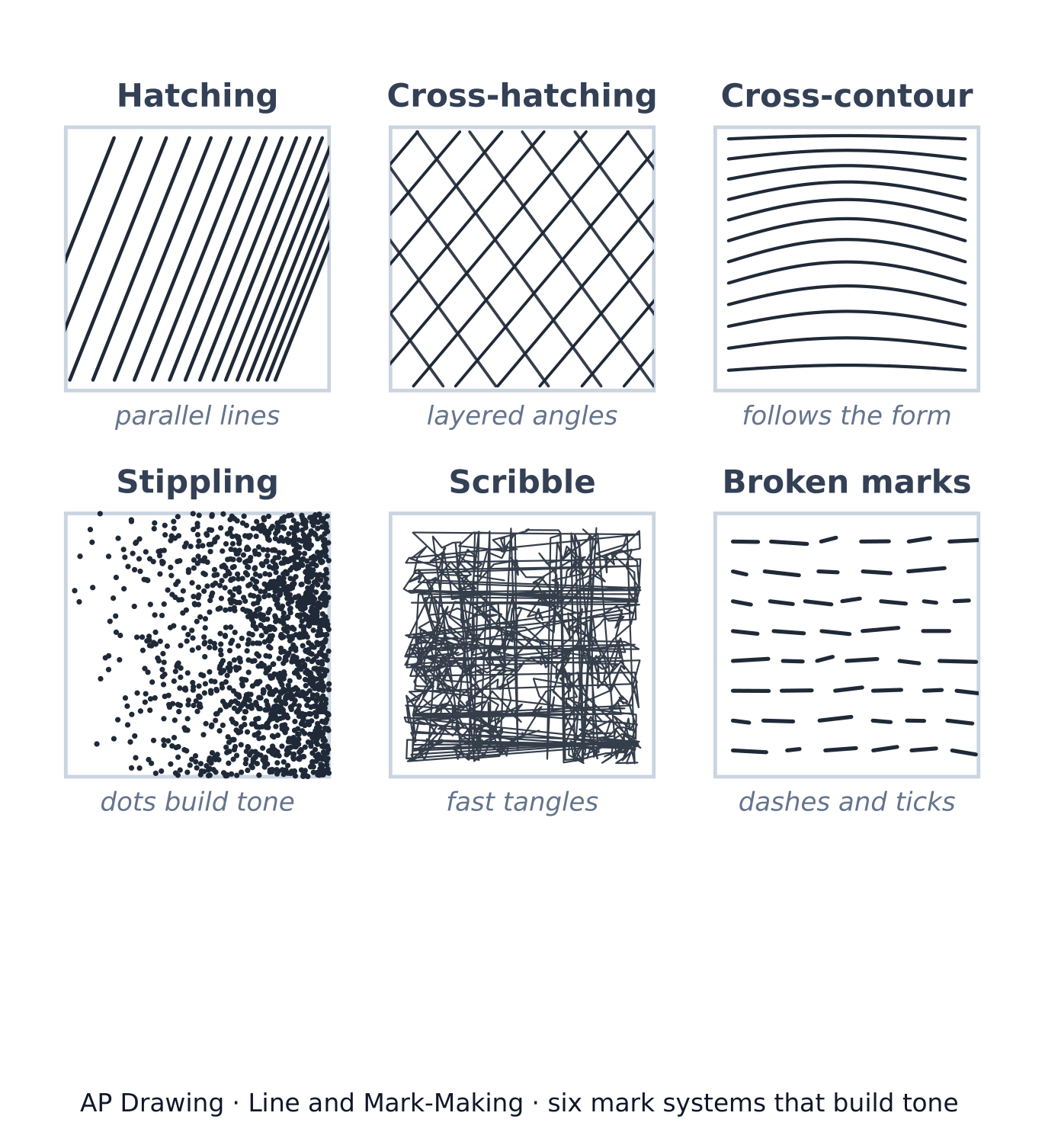
أنظمة الست علامات: التظليل، التظليل المتقاطع، تظليل الخطوط المحورية، النقش، التشكيش، والعلامات المكسورة
ست طرق لبناء الظل باستخدام العلامات؛ فالعلامات الأقرب والكثيفة تُقرأ كقيمة أغمق
  • الخطوط الأقرب والأغمق تُقرأ كقيمة أغمق؛ والمسافات الواسعة تُقرأ كقيمة أخف.
  • كل طبقة متقاطعة تعمق الظل خطوة بخطوة — بنِ الظل تدريجيًا.
  • قم ب-curvature للخطوط حول الشكل (التظليل بالخطوط المحورية) حتى يصف التظليل أيضًا الحجم.
  • حافظ على زاوية واحدة داخل المستوى الواحد؛ غيّر الزاوية عندما يتغير المستوى، وبقيت الحواف حادة.
  • يعتمد الرسم بالحبر والقلم على التظليل، لأن الحبر ليس له رمادي: القيمة تأتي فقط من كثافة الخط.
Explore · ⁨استكشف⁩

Which mark system is it? · ⁨أي نظام علامات هو هذا؟⁩

Hatching uses parallel lines, cross-hatching layers a second angle, stippling builds tone from dots, and scribble uses fast tangles. Naming mark systems helps you choose and describe your own. · ⁨التظليل الخطي يستخدم خطوطاً متوازية، والتظليل المتقاطع يطبق طبقة ثانية بزاوية، والنقش النقطي يبني النبرة من النقاط، والخط السريع يستخدم التشابك السريع. يساعد تسمية أنظمة العلاماتك على اختيارها ووصف الخاصة بك.⁩

Vocabulary · ⁨مفردات⁩ Train · ⁨تدريب⁩
English العربية
hatching/ˈhætʃɪŋ/ التظليل الخطي
cross-hatching/krɒs ˈhætʃɪŋ/ التظليل المتقاطع
value/ˈvæljuː/ القيمة
stippling/ˈstɪplɪŋ/ التنقيط
scribble/ˈskrɪbl/ شخبطة
additive/ˈædɪtɪv/ إضافي
subtractive/sʌbˈtræktɪv/ طرحي
surface/ˈsɜːfɪs/ سطحية
actual texture/ˈæktʃuːəl ˈtekstʃə/ ملمس فعلي
implied texture/ɪmˈplaɪd ˈtekstʃə/ ملمس ضمني
frottage/ˈfrɒtɪdʒ/ الفروتاج
tooth/tuːθ/ الأسنان (ملمس السطح)
expressive lines/ekˈspresɪv laɪnz/ خطوط تعبيرية
distortion/dɪˈstɔːʃn/ التشويه
voice/vɔɪs/ الصوت
1.5

Stippling, Scribbling, and Alternative Marks · ⁨النقش، التشكيش، والعلامات البديلة⁩

Syllabus · ⁨المنهج⁩
English

Focus: Beyond hatching there is a whole vocabulary of marks — dots, scribbles, dashes, smears — each with its own texture and speed.

  • Stippling builds tone from dots: dense dots read dark, sparse dots read light — slow but very controllable.
  • Scribble (or scumbled) marks are fast tangles of line — lively, good for fur, foliage, and energy.
  • Dashes, ticks, and broken marks suggest texture without outlining every detail.
  • Marks can be additive (adding material) or subtractive (lifting material out with an eraser).
  • Try one subject rendered in four different mark systems — a classic experimentation page.
  • A personal mark vocabulary is part of your artistic voice — examiners look for it across the portfolio.
العربية

التركيز: ما وراء التظليل بالخطوط يوجد مفردات كاملة من العلامات — نقاط، تدوينات، شرطات، طمس — كل منها له ملمس وسرعة خاصة به.

  • النقطية (Stippling) تبني النغمة من النقاط: النقاط الكثيفة تُقرأ داكنة، والنقاط المتناثرة تُقرأ فاتحة — بطيء لكن قابل للتحكم بشكل كبير.
  • علامات التدوين (Scribble) أو التشويش هي تشابك سريع للخطوط — حيوية، مناسبة للفراء والأوراق والطاقة.
  • الشرائط، العلامات القصيرة، والعلامات المتقطعة توحي بالملمس دون تحديد كل التفاصيل.
  • يمكن أن تكون العلامات إضافية (إضافة مادة) أو طرحية (رفع المادة باستخدام ممحاة).
  • جرب موضوعًا واحدًا مُصوّرًا بأربعة أنظمة علامات مختلفة — صفحة كلاسيكية للتجريب.
  • مفردات العلامات الشخصية هي جزء من صوتك الفني — يبحث المصححون عليها عبر المحفظة.

Source: College Board AP Course and Exam Description · ⁨المصدر: وصف دورة وامتحان College Board AP⁩

English

Beyond hatching there is a whole vocabulary of marks — dots, tangles, dashes, smears — each with its own texture and speed.

  • Stippling 点画 builds tone from dots: dense dots read dark, sparse dots read light. Slow, but very controllable.
  • Scribble 乱线 marks are fast tangles of line — lively and good for fur, foliage, and energy.
  • Dashes, ticks, and broken marks suggest texture without outlining every detail.
  • Marks can be additive 加法 (putting material on) or subtractive 减法 (lifting material off with an eraser).
  • A classic experimentation page: one subject rendered in four different mark systems.
العربية

بeyond التظليل يوجد مفردوم كامل من العلامات — نقاط، متشابكات، شقوق، طمس — لكل منها ملمس وسرعة خاصة بها.

  • النقش يبني الظل من النقاط: النقاط الكثيفة تُقرأ داكنة، والنقاط المتفرقة تُقرأ فاتحة. بطيء، لكنه قابل للتحكم جيدًا جدًا.
  • علامات التشكيش هي متشابكات سريعة من الخطوط — حيوية ومناسبة للفراء والأوراق والطاقة.
  • الشرائط، العلامات القصيرة، والعلامات المتقطعة توحي بالملمس دون تحديد كل التفاصيل.
  • يمكن أن تكون العلامات إضافة (وضع مادة) أو نقصية (رفع المادة بممحاة).
  • صفحة تجريبية كلاسيكية: موضوع واحد مُصوَّر بأربعة أنظمة علامات مختلفة.
1.6

Texture and Surface · ⁨الملمس والسطح⁩

Syllabus · ⁨المنهج⁩
English

Focus: Surface is a named AP drawing skill: how the drawing's physical texture and the depicted texture work together.

  • Actual texture is the real surface of the work (rough paper, layered charcoal, collage); implied texture is drawn illusion.
  • Frottage (rubbing over a textured surface) transfers real texture into a drawing.
  • Paper tooth (roughness) changes every mark: the same pencil reads differently on smooth and rough paper.
  • Contrast of textures — smooth skin against rough cloth — makes both read more strongly.
  • Build texture with the logic of the material: short strokes for fur, long strokes for hair, broken marks for stone.
  • Describing texture convincingly is visual evidence of observation and material control.
العربية

التركيز: السطح مهارة رسم AP مذكورة اسمها: كيف يعمل الملمس الفعلي للرسم والملمس المُصوّر معًا.

  • الملمس الحقيقي هو السطح الفعلي للعمل (ورق خشن، فحم طبقي، كولاج)؛ أما الملمس الضمني فهو وهم مرسوم.
  • الفروتاج (الاحتكاك فوق سطح ذي ملمس) ينقل الملمس الحقيقي إلى الرسم.
  • خشن الورق (الأسنان) يغير كل علامة: نفس القلم يعطي نتائج مختلفة على الورق أملس وخشن.
  • تضاد الملمسات — الجلد الناعم مقابل القماش الخشن — يجعل كلاهما يُقرأ بشكل أقوى.
  • بنا الملمس بمنطق المادة: ضربات قصيرة للفراء، ضربات طويلة للشعر، علامات مكسورة للحجر.
  • وصف الملمس بإقناع هو دليل بصري على الملاحظة和控制 المواد.

Source: College Board AP Course and Exam Description · ⁨المصدر: وصف دورة وامتحان College Board AP⁩

English

Surface 画面质感 is a named AP drawing skill: the physical texture of the drawing and the drawn illusion of texture work together.

  • Actual texture 实际肌理 is the real surface of the work — rough paper, layered charcoal, collage. Implied texture 视觉肌理 is drawn illusion.
  • Frottage 拓印法 (rubbing over a textured surface) transfers real texture into a drawing.
  • Paper tooth 纸纹 changes every mark: the same pencil reads differently on smooth and rough paper.
  • Contrast of textures — smooth skin against rough cloth — makes both read more strongly.
  • Build texture with the logic of the material: short strokes for fur, long strokes for hair, broken marks for stone.
العربية

السطح مهارة رسم AP معروفة: الملمس الفعلي للرسم والوهم المرسوم للملمس يعملان معًا.

  • الملمس الفعلي هو السطح الحقيقي للعمل — ورق خشن، فحم متعدد الطبقات، كولاج. الملمس الضمني هو وهم مرسوم.
  • الفروتاج (الاحتكاك فوق سطح ذي ملمس) ينقل الملمس الحقيقي إلى الرسم.
  • أسنان الورق تغير كل علامة: نفس القلم يُقرأ بشكل مختلف على الورق الناعم والخشن.
  • تضاد الملمسات — الجلد الناعم مقابل القماش الخشن — يجعل كلاهما يُقرأ بشكل أقوى.
  • بنا الملمس بمنطق المادة: ضربات قصيرة للفراء، ضربات طويلة للشعر، علامات مكسورة للحجر.
1.7

Expressive Mark-Making · ⁨صنع العلامات التعبيرية⁩

Syllabus · ⁨المنهج⁩
English

Focus: Marks carry emotion: the same subject drawn with angry, calm, or nervous marks tells three different stories.

  • Expressive lines exaggerate speed, pressure, and direction to communicate feeling, not just describe form.
  • Käthe Kollwitz's heavy charcoal and Egon Schiele's tense contours show how marks are the meaning.
  • Choose the mark to match the idea: soft graphite for quiet subjects, aggressive ink for conflict.
  • Distortion and exaggeration are legitimate drawing decisions when they serve intent — 'accurate' is not the only goal.
  • The AP rubric rewards ideas made visual: expressive marks link technique to meaning.
  • Test the same composition in two mark styles and write one sentence on which supports your inquiry better.
العربية

التركيز: تحمل العلامات عاطفة: نفس الموضوع مرسوم بعلامات غاضبة، هادئة، أو متوترة يحكي ثلاث قصص مختلفة.

  • الخطوط التعبيرية تُبالغ في السرعة والضغط والاتجاه لتوصيل الشعور، وليس فقط لوصف الشكل.
  • الفحم الثقيل لكاثي كولفيتش والحدود المشددة لإيجون شيليه يظهران كيف أن العلامات هي المعنى.
  • اختر العلامة لتناسب الفكرة: جرافيت ناعم للمواضيع الهادئة، وحبر عدواني للصراع.
  • التشويه والمبالغة قرارات رسم مشروعة عندما تخدم الغرض — 'الدقة' ليست الهدف الوحيد.
  • مقياس تقييم AP يكافئ الأفكار التي صارت مرئية: العلامات التعبيرية تربط التقنية بالمعنى.
  • اختبر نفس التركيب بأسلوبين مختلفين من العلامات واكتب جملة واحدة حول أيهما يدعم استقصائك بشكل أفضل.

Source: College Board AP Course and Exam Description · ⁨المصدر: وصف دورة وامتحان College Board AP⁩

English

Marks carry emotion. The same subject drawn with angry, calm, or nervous marks tells three different stories.

  • Expressive lines 表现性线条 exaggerate speed, pressure, and direction to communicate feeling, not just to describe form.
  • Käthe Kollwitz's heavy charcoal and Egon Schiele's tense contours show how the marks themselves carry the meaning.
  • Choose the mark to match the idea: soft graphite for quiet subjects, aggressive ink for conflict.
  • Distortion 变形 and exaggeration are legitimate drawing decisions when they serve your intent — "accurate" is not the only goal.
  • A personal mark vocabulary is part of your artistic voice 个人风格. Examiners look for it across the whole portfolio.
العربية

العلامات تحمل مشاعر. نفس الموضوع المرسوم بعلامات غاضبة، هادئة، أو عصبية يحكي ثلاث قصص مختلفة.

  • الخطوط التعبيرية تبالغ في السرعة والضغط والاتجاه لتعبر عن الإحساس، لا لوصف الشكل فحسب.
  • الفحم الثقيل لكاثه كولفيتش والخطوط المشدودة لإيجون شيمليه يظهران كيف تحمل العلامات نفسها المعنى.
  • اختر العلامة لتناسب الفكرة: جرافيت ناعم للمواضيع الهادئة، وحبر عدواني للصراع.
  • التشويه والمبالغة قرارات رسم مشروعة عندما تخدم نيتك — "الدقة" ليست الهدف الوحيد.
  • مفردوم علامتك الشخصية جزء من صوتك الفني. يبحث المصححون عليه عبر المحفظة كاملة.
1.7

Exam tips · ⁨نصائح للامتحان⁩

English
  • Line quality is judged at a glance — one page of confident, varied strokes tells a scorer more than an hour of timid rendering. Warm up before every serious drawing.
  • Show the systems, not just the results: a portfolio image of hatching, stippling, and cross-contour studies is direct visual evidence of the mark-making skill the rubric names.
  • Photograph marks close up. A detail shot of your best passage of marks proves a skill that a full view only suggests.
  • Blind contour and gesture pages belong in your process images — they show observation and practice, exactly what the Sustained Investigation rubric asks to see.
  • Match marks to meaning in your written evidence: one sentence like "scratchy graphite lines echo the anxiety of exam season" links technique to idea, which is what scorers reward.
العربية
  • جودة الخط تُحكم عليها بنظرة واحدة — صفحة واحدة من ضربات واثقة ومتنوعة تخبر المصحح أكثر من ساعة من التصوير الخائف. تدفئ قبل كل رسم جاد.
  • أظهر الأنظمة، وليس النتائج فقط: صورة محفظة للتظليل، النقش، ودراسات الخطوط المحورية هي دليل بصري مباشر على مهارة صنع العلامات التي يذكرها المعيار.
  • صور العلامات عن قرب. لقطة تفصيلية لأفضل ممر لعلاماتك تثبت مهارة تقترحها النظرة الكاملة فقط.
  • صفحات الخط المحوري الأعمى والحركة تنتمي إلى صور عملية — فهي تظهر الملاحظة والممارسة، بالضبط ما يطلبه معيار التحقيقات المستدامة رؤيته.
  • طابق العلامات بالمعنى في أدلتك المكتوبة: جملة واحدة مثل "الخطوط الرقيقة بقلم الرصاص تعكس قلق موسم الامتحانات" تربط التقنية بالفكرة، وهو ما يكافئه المصححون.

Interactive lessons on this topic · ⁨دروس تفاعلية حول هذا الموضوع⁩

Work through it step by step, with instant-check exercises. · ⁨ا-working عليه خطوة بخطوة، مع تمارين تحقق فوري.⁩

More topics in AP Drawing · ⁨الرسم (AP)⁩ · ⁨المزيد من المواضيع في AP Drawing · ⁨الرسم (AP)⁩⁩

Log in or create account · ⁨تسجيل الدخول أو إنشاء حساب⁩

IGCSE, A-Level & AP