Economic growth · 经济增长
| English | 中文 | Pinyin · 拼音 |
|---|---|---|
| business cycle/ˈbɪznəs ˈsaɪkl/ | 经济周期 | jīng jì zhōu qī |
| economic growth/ˌiːkəˈnɒmɪk ɡrəʊθ/ | 经济增长 | jīng jì zēng zhǎng |
| real GDP/rɪəl ˌdʒiː diː ˈpiː/ | 实际GDP | shí jì GDP |
| inflation/ɪnˈfleɪʃn/ | 通货膨胀 | tōng huò péng zhàng |
| living standards/ˈlɪvɪŋ ˈstændədz/ | 生活水平 | shēng huó shuǐ píng |
| recession/rɪˈseʃn/ | 衰退 | shuāi tuì |
| inequality/ɪniːˈkwɒlɪti/ | 不平等 | bù píng děng |
Booms, busts and the cycle
- Economies don't grow at a steady pace — they speed up, overheat, slow down, and recover, again and again.
- This rhythm is the business cycle 经济周期, and growth is its long-run trend.
繁荣、萧条和周期
- 经济不以稳定的速度增长——它们加速、过热、放缓和复苏,一次又一次。
- 这个节奏是经济周期(business cycle),而增长是它的长期趋势。
Economic growth is measured by an increase in: · 经济增长由以下的增加衡量:
Growth is a rise in real GDP — output adjusted for inflation. · 增长是实际 GDP 的上升——经通货膨胀调整的产出。
What economic growth 经济增长 is
- Economic growth = an increase in a country's real GDP 实际GDP (the total value of output, adjusted for inflation 通货膨胀).
- Sustained growth raises average incomes and living standards 生活水平.
Investment in new buildings and machines adds to a country's capital and drives economic growth
经济增长是什么
- 经济增长(economic growth)= 一个国家的实际 GDP(real GDP,产出的总价值,经通货膨胀调整)的增加。
- 持续的增长提高平均收入和生活水平。

对新建筑和机器的投资增加一个国家的资本并驱动经济增长
Economic growth · 经济增长
Growth shifts the whole frontier outward — the economy can now produce more of both goods. · 增长使整个前沿向外移动——经济现在能生产更多两种物品。
A recession is usually defined as: · 一次衰退通常被定义为:
Two quarters of falling real GDP signals a recession. · 两个季度的实际 GDP 下降标志一次衰退。
The repeated pattern of booms and recessions is the business . · 繁荣和衰退的重复模式是经济。
Output cycles around the rising long-run trend. · 产出围绕上升的长期趋势循环。
The business cycle
- Output swings through boom → slowdown → recession 衰退 → recovery, around the rising trend.
- A recession is two quarters in a row of falling real GDP.
Real output cycles through booms and recessions while the long-run trend rises.
经济周期
- 产出经历繁荣 → 放缓 → 衰退 → 复苏,围绕上升的趋势。
- 一次衰退(recession)是连续两个季度的实际 GDP 下降。
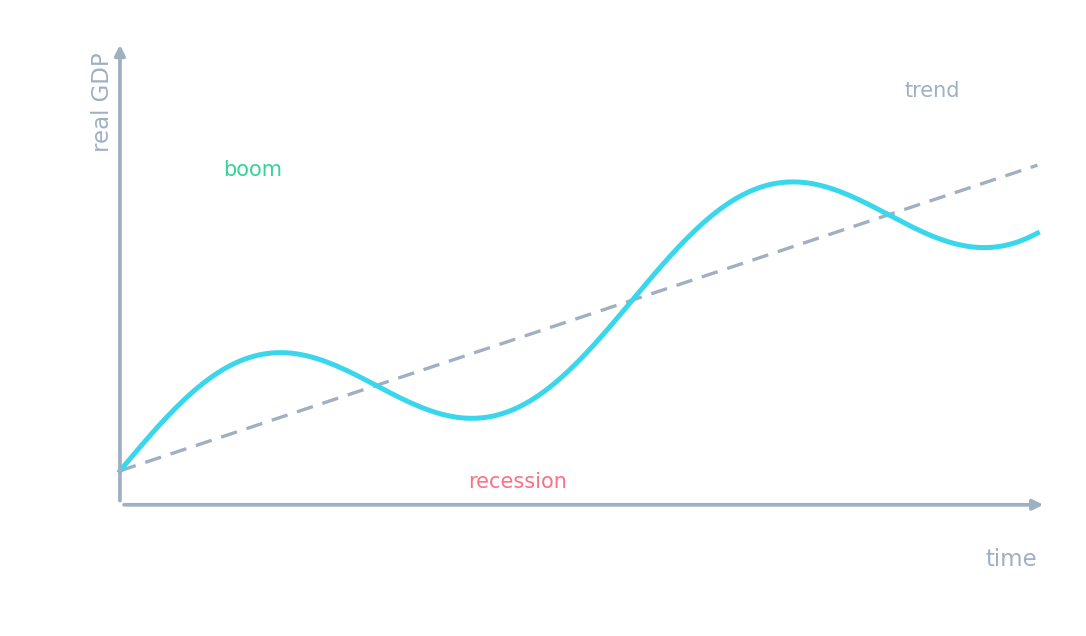
实际产出经历繁荣和衰退,而长期趋势上升。
Real GDP strips out the effect of inflation. · 实际 GDP 剔除通货膨胀的影响。
Real GDP measures actual output, not just higher prices. · 实际 GDP 衡量实际产出,不只是更高的价格。
Which are potential costs of economic growth? (Select all that apply.) · 哪些是经济增长的潜在成本?(选择所有适用的。)
Higher incomes is a benefit; the others can be costs. · 更高的收入是一个收益;其他的能是成本。
Costs and benefits of growth
- Benefits: higher incomes, more jobs, better public services.
- Costs: possible inflation, inequality 不平等, and environmental damage.
Growth means real GDP, not just bigger numbers. If prices rise 5% and output figures rise 5%, real output hasn't grown at all. Always strip out inflation.
增长的成本和收益
- 收益:更高的收入、更多的工作、更好的公共服务。
- 成本:可能的通货膨胀、不平等和环境破坏。
增长意味着实际 GDP,不只是更大的数字。 如果价格上涨 5% 且产出数字上升 5%,实际产出根本没有增长。总是剔除通货膨胀。
You've got it
- economic growth = a rise in real GDP → higher living standards
- the business cycle: boom → slowdown → recession → recovery
- growth brings higher incomes but risks inflation and environmental cost
你掌握了
- 经济增长 = 实际 GDP 的上升 → 更高的生活水平
- 经济周期:繁荣 → 放缓 → 衰退 → 复苏
- 增长带来更高的收入但有通货膨胀和环境成本的风险