Carboxylic acids · 羧酸
| English | 中文 | Pinyin · 拼音 |
|---|---|---|
| carboxylic acid/ˌkɑːbəkˈsɪlɪk ˈæsɪd/ | 羧酸 | suō suān |
| ethanoic acid/ˌeθəˈnəʊɪk ˈæsɪd/ | 乙酸 | yǐ suān |
| weak acids/wiːk ˈæsɪdz/ | 弱酸 | ruò suān |
| esters/ˈestəz/ | 酯 | zhǐ |
The sour family
- The sharp taste of vinegar comes from a carboxylic acid 羧酸.
- They are a homologous series with the –COOH functional group.
酸味的族
- 醋的尖锐味道来自一种羧酸(carboxylic acid)。
- 它们是一个有 –COOH 官能团的同系列。
The functional group of carboxylic acids is: · 羧酸的官能团是:
Carboxylic acids contain –COOH. · 羧酸含有 –COOH。
The carboxylic acid found in vinegar is: · 在醋中发现的羧酸是:
Ethanoic acid (CH₃COOH) is in vinegar. · 乙酸(CH₃COOH)在醋中。
The carboxylic acid functional group is written –. · 羧酸官能团写作 –。
It is the carboxyl group. · 它是羧基。
The carboxylic acid family
- Carboxylic acids contain the –COOH functional group.
- Example: ethanoic acid 乙酸 (CH₃COOH), the acid in vinegar.
Carboxylic acids share the –COOH (carboxyl) functional group, as in ethanoic acid
羧酸族
- 羧酸含有 –COOH 官能团。
- 例子:乙酸(ethanoic acid,CH₃COOH),醋中的酸。
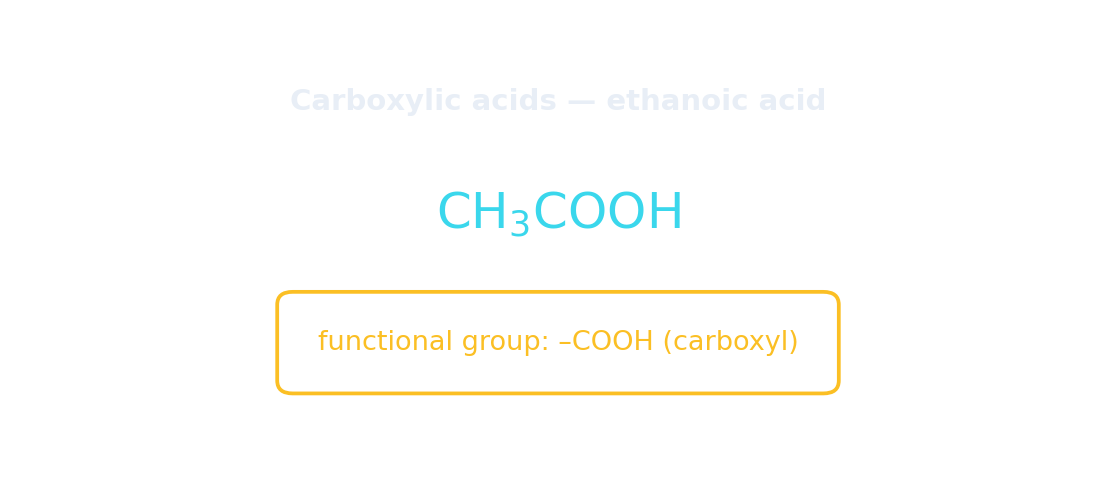
羧酸共享 –COOH(羧基)官能团,如乙酸
A weak acid's pH · 弱酸的 pH
Carboxylic acids are weak acids — they only partly ionise, so they sit just below pH 7. Slide the scale to see where they fall. · 羧酸是弱酸——它们只部分电离,所以位于 pH 7 稍下方。滑动标度看它们落在哪里。
Carboxylic acids are described as weak acids because they: · 羧酸被描述为弱酸,因为它们:
Weak means partly ionised, not dilute. · 弱意味着部分电离,不是稀。
Match each carboxylic-acid fact. · 匹配每个羧酸的事实。
Carboxylic acids contain –COOH, are weak acids, and fizz with carbonates. · 羧酸含有 –COOH,是弱酸,并与碳酸盐起泡。
Weak acids 弱酸
- Carboxylic acids are weak acids: they only partly ionise in water.
- They still show typical acid reactions, just less vigorously than strong acids.
A carboxylic acid and an alcohol react to make an ester and water
弱酸
- 羧酸是弱酸(weak acids):它们在水中只部分电离。
- 它们仍然显示典型的酸反应,只是比强酸不那么剧烈。
A carboxylic acid reacts with an alcohol to form a sweet-smelling: · 一种羧酸与一种醇反应形成一种有甜味的:
Acid + alcohol → ester. · 酸 + 醇 → 酯。
Reactions
- They react with metals (→ salt + hydrogen) and carbonates (→ salt + water + CO₂).
- They react with alcohols to form sweet-smelling esters 酯.
Carboxylic acids are weak acids. Unlike hydrochloric acid (strong, fully ionised), they only partly ionise — so they react more gently. "Weak" describes ionisation, not concentration.
反应
- 它们与金属反应(→ 盐 + 氢)和碳酸盐反应(→ 盐 + 水 + CO₂)。
- 它们与醇反应形成有甜味的酯(esters)。
羧酸是弱酸。 不像盐酸(强,完全电离),它们只部分电离——所以它们反应得更温和。"弱"描述电离,不是浓度。
You've got it
- carboxylic acids have the –COOH group (e.g. ethanoic acid in vinegar)
- they are weak acids (only partly ionise) but show typical acid reactions
- they react with metals, carbonates, and with alcohols to form esters
你掌握了
- 羧酸有 –COOH 基团(例如醋中的乙酸)
- 它们是弱酸(只部分电离)但显示典型的酸反应
- 它们与金属、碳酸盐反应,并与醇反应形成酯