| English | 释义 | 拼音 |
|---|---|---|
| noble gases/ˈnəʊbl ˈɡæsɪz/ | 稀有气体 | xī yǒu qì tǐ |
| inert/ɪˈnɜːt/ | 惰性 | duò xìng |
| full outer shell/fʊl ˈaʊtə ʃel/ | 满外层 | mǎn wài céng |
| monatomic/ˌmɒnəˈtɒmɪk/ | 单原子 | dān yuán zǐ |
The unreactive Group 0
- At the far right of the table sits a group that barely reacts at all.
- These are the noble gases 稀有气体 (Group 0), famous for being inert 惰性.
Noble gas lab
Classify noble gas uses by the property that makes them useful.
Noble gases are unreactive because they have:
难度 1/5 · 今日首次完成可获 100 金币及少量额外奖励
A full outer shell is very stable.
Other elements react in order to reach a full, stable outer shell like the noble gases.
难度 1/5 · 今日首次完成可获 100 金币及少量额外奖励
A full shell is the stable arrangement elements aim for.
The noble gases are found in Group ______ of the Periodic Table.
难度 1/5 · 今日首次完成可获 100 金币及少量额外奖励
Group 0 (sometimes called Group VIII).
Why they are unreactive
- Noble gases have a full outer shell 满外层 of electrons.
- A full shell is very stable, so they have no need to gain, lose or share electrons.
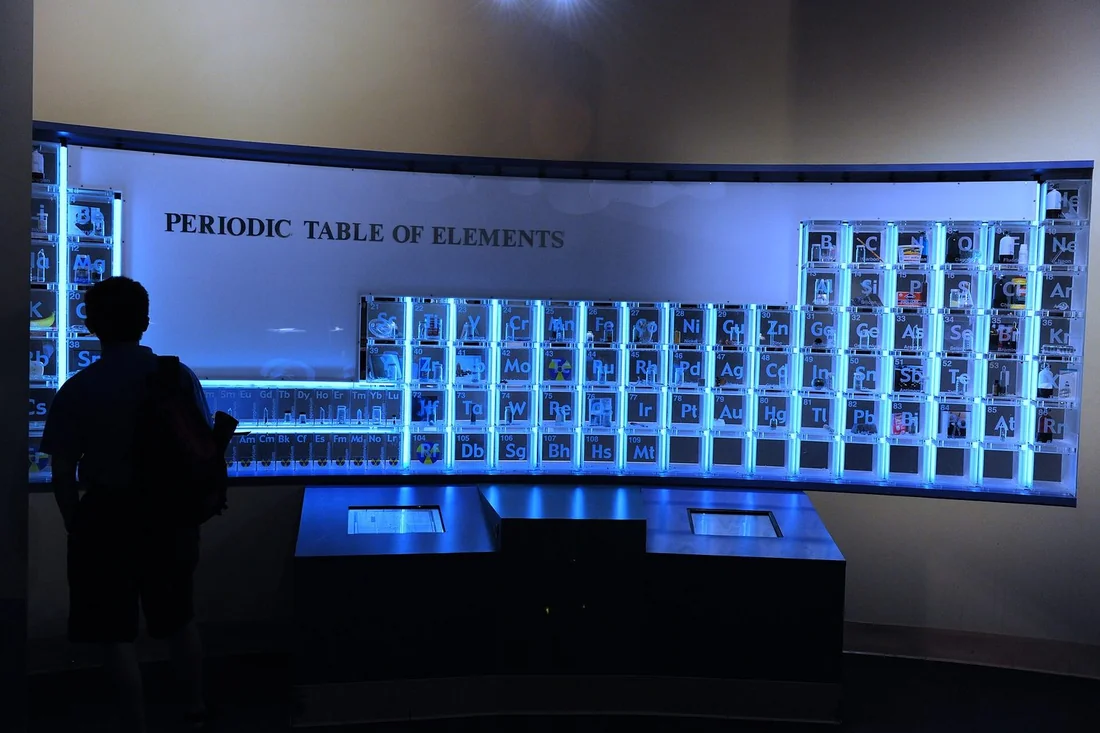
The noble gases (Group 0) fill the far-right column of the periodic table
Noble gases exist as:
难度 1/5 · 今日首次完成可获 100 金币及少量额外奖励
They do not bond, so they are monatomic.
Properties
- They are colourless gases that exist as single atoms (monatomic 单原子).
- They are non-flammable and chemically very unreactive.
Helium is used in balloons because it is:
难度 1/5 · 今日首次完成可获 100 金币及少量额外奖励
Low density lifts; inertness makes it safe.
Uses
- Helium is used in balloons and airships (less dense than air, non-flammable).
- Argon fills light bulbs; neon glows in signs — uses that rely on their inertness.
A full outer shell means stability. The noble gases are unreactive precisely because their outer shell is already full. Other elements react in order to reach this same stable arrangement.
Worked example: predicting xenon
Going down Group 0, boiling points: helium −269 °C, neon −246 °C, argon −186 °C, krypton −153 °C. Predict the state and reactivity of xenon at room temperature.
- The boiling points rise down the group, as the atoms get larger. Xenon comes after krypton, so its boiling point is higher, about −110 °C, but still far below room temperature (20 °C). Xenon is a gas.
- Xenon has a full outer shell like the rest of Group 0, so it is unreactive and exists as single atoms. The density also rises down the group, so xenon is much denser than helium.
Radon is below xenon in Group 0. Its boiling point is most likely:
难度 1/5 · 今日首次完成可获 100 金币及少量额外奖励
Boiling point rises down Group 0, so radon boils higher than xenon (it is about −62 °C, still a gas at room temperature).
Argon (2,8,8) is used in light bulbs because its full outer shell means it does not react with the hot filament.
难度 1/5 · 今日首次完成可获 100 金币及少量额外奖励
An inert gas stops the hot metal filament reacting, as it would with oxygen.
You've got it
- noble gases (Group 0) have a full outer shell, so they are inert (unreactive)
- they are colourless, monatomic gases
- uses rely on inertness: helium (balloons), argon (bulbs), neon (signs)
Write from this case
- Helium, neon and argon are noble gases.
- Their atoms have full outer shells and they exist as single atoms.
How does boiling point change from helium to argon?
Stronger forces between larger atoms raise the boiling point.
How do noble-gas boiling points change down the group?
难度 1/5 · 今日首次完成可获 100 金币及少量额外奖励
Larger atoms are attracted to each other more strongly.