Rate of reaction and collision theory · 反应速率与碰撞理论
| English | 中文 | Pinyin · 拼音 |
|---|---|---|
| rate of reaction/reɪt ɒv rɪˈækʃn/ | 反应速率 | fǎn yìng sù lǜ |
| collision theory/kəˈlɪʒn ˈθɪəri/ | 碰撞理论 | pèng zhuàng lǐ lùn |
| surface area/ˈsɜːfɪs ˈeərɪə/ | 表面积 | biǎo miàn jī |
How fast does it react?
- Some reactions are over in a flash; others take years. The rate of reaction 反应速率 measures the speed.
- It is explained by how often particles collide.
它反应得多快?
- 一些反应一瞬间就结束;其他的要数年。反应速率(rate of reaction)测量速度。
- 它由粒子多频繁地碰撞(collide)来解释。
For a reaction to happen, particles must: · 要让一个反应发生,粒子必须:
Collisions need at least the activation energy. · 碰撞需要至少活化能。
Collision theory 碰撞理论
- For particles to react, they must collide with enough energy (the activation energy).
- The more frequent and energetic the collisions, the faster the reaction.
A catalyst lowers the activation energy so more collisions succeed; the enthalpy change is unchanged
碰撞理论
- 要让粒子反应,它们必须以足够的能量(活化能)碰撞。
- 碰撞越频繁和越有能量,反应越快。

一个催化剂降低活化能,所以更多碰撞成功;焓变不变
Rate from a gas-volume graph · 从气体体积图求速率
The gradient of the volume–time curve is the rate; it is steepest at the start and flattens as reactants run out. · 体积–时间曲线的梯度就是速率;开始时最陡,随着反应物耗尽而变平。
Rate of reaction · 反应速率
conc = c₀·bᵗ · 浓度 = c₀·bᵗ
Concentration · 浓度 falls over time — fast at first, then slower. · 浓度随时间下降——起初快,然后更慢。
Which increase the rate of reaction? (Select all that apply.) · 哪些增加反应速率?(选择所有适用的。)
Lower temperature slows the rate. · 更低的温度减慢速率。
Higher temperature speeds up a reaction because particles: · 更高的温度加快一个反应,因为粒子:
Faster particles collide more frequently and energetically. · 更快的粒子更频繁、更有能量地碰撞。
Breaking a solid into smaller pieces increases its ______ area, speeding the reaction. · 把一个固体打破成更小的块增加它的______积,加快反应。
More surface area means more collisions. · 更多的表面积意味着更多的碰撞。
What speeds up a reaction
- Higher temperature: particles move faster, colliding more often and harder.
- Higher concentration / pressure: more particles in a space → more collisions.
- Smaller pieces (more surface area 表面积): more particles exposed to collide.
Breaking a solid into a powder exposes much more surface, so the reaction is faster
A steeper curve means a faster rate; both level off when the reaction finishes.
什么加快一个反应
- 更高的温度:粒子移动更快,更频繁、更猛地碰撞。
- 更高的浓度/压强:一个空间中更多粒子 → 更多碰撞。
- 更小的块(更多表面积):更多粒子暴露来碰撞。

把一个固体打碎成粉末暴露出多得多的表面,所以反应更快
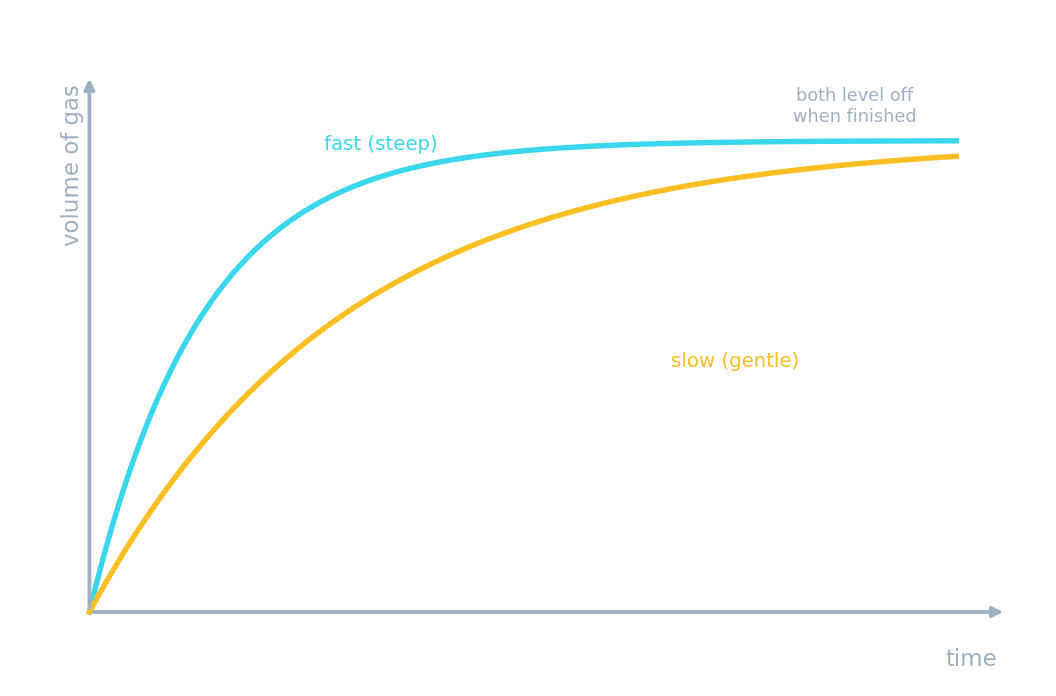
一条更陡的曲线意味着一个更快的速率;两者都在反应结束时趋平。
Collision theory in action · 碰撞理论在行动
Watch the particles collide. Heat speeds them up so they collide more often and harder; more particles or a catalyst give more successful collisions — the rate climbs. · 观察粒子碰撞。热加速它们,所以它们更频繁、更猛地碰撞;更多粒子或一个催化剂给出更多成功的碰撞——速率攀升。
On a graph of product against time, a steeper line means a faster reaction. · 在一张产物对时间的图上,一条更陡的线意味着一个更快的反应。
Steeper = more product per unit time = faster. · 更陡 = 每单位时间更多产物 = 更快。
Measuring rate
- Measure how fast a product forms (e.g. gas volume) or a reactant is used up over time.
- A steeper graph line means a faster rate.
Rate is about collision frequency and energy. Anything that makes particles collide more often or with more energy speeds the reaction up. The graph levels off when a reactant runs out.
测量速率
- 测量一个产物形成(例如气体体积)或一个反应物被用完有多快,随时间。
- 一条更陡的图线意味着一个更快的速率。
速率关乎碰撞频率和能量。 任何使粒子更频繁或以更多能量碰撞的东西都加快反应。图在一个反应物用完时趋平。
You've got it
- collision theory: particles must collide with enough energy to react
- rate increases with temperature, concentration/pressure, surface area
- measure rate by product formed or reactant used over time; steeper = faster
你掌握了
- 碰撞理论:粒子必须以足够的能量碰撞才能反应
- 速率随温度、浓度/压强、表面积增加
- 通过随时间形成的产物或用完的反应物测量速率;更陡 = 更快