| English | 释义 | 拼音 |
|---|---|---|
| finance/ˈfaɪnæns/ | 资金 | zī jīn |
| start-up capital/stɑːt ʌp ˈkæpɪtl/ | 启动资金 | qǐ dòng zī jīn |
| working capital/ˈwɜːkɪŋ ˈkæpɪtl/ | 营运资金 | yíng yùn zī jīn |
| retained profit/rɪˈteɪnd ˈprɒfɪt/ | 留存利润 | liú cún lì rùn |
| overdrafts/ˈəʊvədræfts/ | 透支 | tòu zhī |
| share issues/ʃeə ˈɪʃuːz/ | 发行股票 | fā xíng gǔ piào |
| trade credit/treɪd ˈkredɪt/ | 贸易信贷 | mào yì xìn dài |
| grants/ɡrænts/ | 补助金 | bǔ zhù jīn |
Money to start and grow
- You can't open a shop, buy stock or pay staff without money — finance 资金.
- Knowing why a business needs finance and where to get it is essential.
融资来源实验
Choose the best type of finance by time, risk and ownership.
Capital needed to finance day-to-day business operations is called:
难度 1/5 · 今日首次完成可获 100 金币及少量额外奖励
Working capital finances day-to-day operations and equals current assets minus current liabilities. It includes stock and receivables, so it is not the same as cash available today.
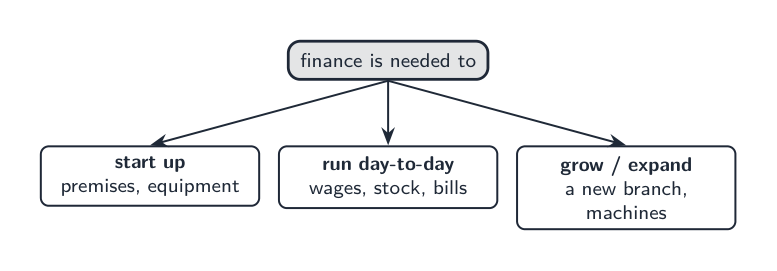
Why businesses need finance
- Start-up capital 启动资金: premises, equipment, first stock.
- Working capital 营运资金: day-to-day cash for wages and suppliers.
- Growth: expansion, new products or machinery.
Which is an internal source of finance?
难度 1/5 · 今日首次完成可获 100 金币及少量额外奖励
Retained profit comes from within the business.
A bank loan is an ______ source of finance.
难度 1/5 · 今日首次完成可获 100 金币及少量额外奖励
External finance comes from outside the business.
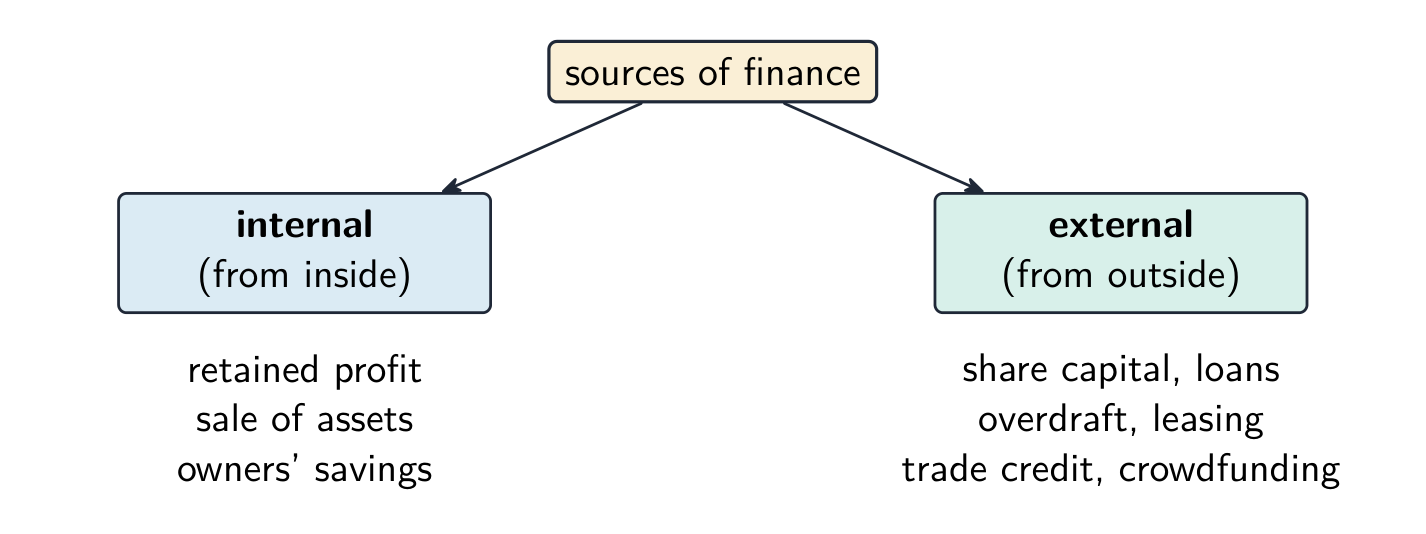
Internal and external sources
- Internal: retained profit 留存利润, selling assets, owner's savings. No interest.
- External: bank loans, overdrafts 透支, share issues 发行股票, trade credit 贸易信贷, grants 补助金.
Which is a short-term source of finance?
难度 1/5 · 今日首次完成可获 100 金币及少量额外奖励
Overdrafts and trade credit are short-term.
A long-term asset such as a factory is best funded with a bank overdraft.
难度 1/5 · 今日首次完成可获 100 金币及少量额外奖励
False. An overdraft is short-term finance. A long-term asset should be funded with long-term finance, such as a loan or share capital.
Short-term vs long-term
- Short-term (overdraft, trade credit): for day-to-day cash needs.
- Long-term (loans, shares): for big, lasting investments.
Match the source to the need. Funding a long-term machine with a short-term overdraft is risky; using a 10-year loan for this week's wages is wasteful. The term of finance should fit its purpose.
Worked example: matching finance to the need
A small bakery needs (a) £2,000 to pay suppliers this month while waiting for a big customer to pay, and (b) £60,000 for a new oven that will last ten years. Suggest a source for each.
- (a) An overdraft or trade credit: short-term, flexible, and only used for a few weeks, so the interest cost stays small.
- (b) A long-term bank loan repaid over several years, or retained profit if the bakery has saved enough. Using an overdraft here would be risky, because the bank can ask for it back at short notice.
Which is an internal source of finance?
难度 1/5 · 今日首次完成可获 100 金币及少量额外奖励
Retained profit comes from inside the business, so there is no interest to pay.
A sole trader can raise finance by selling shares.
难度 1/5 · 今日首次完成可获 100 金币及少量额外奖励
Only companies have shares to sell.
You've got it
- finance is needed for start-up, working capital and growth
- sources are internal (retained profit) or external (loans, shares)
- match short-term sources to short-term needs, long-term to long-term
Write from an 8-year machine
- A machine will be used for 8 years.
- Fund it with a long-term source. A one-month overdraft does not match that life.
A business wants to buy a machine it will use for 8 years. Why is a long-term loan or retained profit a better match than a one-month overdraft?
The life of the finance should match the life of the need. Short-term cash is for day-to-day costs.
How should the 8-year machine be financed?
难度 1/5 · 今日首次完成可获 100 金币及少量额外奖励
An asset used for 8 years needs a long-term source. An overdraft is meant for a short cash gap.