Costs, scale of production and break-even · 成本、生产规模与盈亏平衡
| English | 中文 | Pinyin · 拼音 |
|---|---|---|
| total cost/ˈtəʊtl kɒst/ | 总成本 | zǒng chéng běn |
| fixed costs/fɪkst kɒsts/ | 固定成本 | gù dìng chéng běn |
| variable costs/ˈveərɪəbl kɒsts/ | 可变成本 | kě biàn chéng běn |
| economies of scale/ɪˈkɒnəmiz ɒv skeɪl/ | 规模经济 | guī mó jīng jì |
| average cost/ˈævrɪdʒ kɒst/ | 平均成本 | píng jūn chéng běn |
| contribution/ˌkɒntrɪˈbjuːʃn/ | 贡献 | gòng xiàn |
| break-even output/breɪk ˈiːvən ˈaʊtpʊt/ | 盈亏平衡产量 | yíng kuī píng héng chǎn liàng |
| margin of safety/ˈmɑːdʒɪn ɒv ˈseɪfti/ | 安全边际 | ān quán biān jì |
Costs, scale and the break-even point
- Before a business can price its product or judge profit, it must understand its costs.
- A key tool is the break-even point — the sales level where the business stops making a loss.
成本、规模与盈亏平衡点
- 在一个企业能给它的产品定价或判断利润之前,它必须理解它的成本(costs)。
- 一个关键工具是盈亏平衡点(break-even point)——企业停止亏损的销售水平。
Which is a fixed cost? · 哪个是一个固定成本?
Rent does not change with output — a fixed cost. · 租金不随产出变化——一个固定成本。
Fixed, variable and total costs 总成本
- Fixed costs 固定成本 don't change with output: rent, salaries.
- Variable costs 可变成本 rise with output: materials, power.
- Total cost = fixed + variable. Larger scale can bring economies of scale 规模经济 (lower average cost 平均成本).
Fixed, variable and total cost as output rises
固定、可变与总成本
- 固定成本(fixed costs)不随产出变化:租金、薪水。
- 可变成本(variable costs)随产出上升:材料、电力。
- 总成本 = 固定 + 可变。更大的规模能带来规模经济(更低的平均成本)。

随着产出上升的固定、可变和总成本
Break-even · 盈亏平衡
Break-even · 盈亏平衡点 is where total revenue · 收入 crosses total cost · 成本. · 盈亏平衡是总收入穿过总成本的地方。
Selling price is 12 and variable cost per unit is 8. What is the contribution per unit? · 售价是 12,每单位可变成本是 8。每单位边际贡献是多少?
Contribution = 12 − 8 = 4. · 边际贡献 = 12 − 8 = 4。
Fixed costs are 1,600 and contribution per unit is 4. What is the break-even output (units)? · 固定成本是 1,600,每单位边际贡献是 4。盈亏平衡产量(单位)是多少?
Break-even = 1,600 ÷ 4 = 400 units. · 盈亏平衡 = 1,600 ÷ 4 = 400 单位。
At the break-even point, the business makes: · 在盈亏平衡点,企业:
Revenue exactly equals total cost. · 收入恰好等于总成本。
Contribution 贡献 and break-even
- Contribution per unit = selling price − variable cost per unit.
- Break-even output 盈亏平衡产量 = fixed costs ÷ contribution per unit. At this point, revenue = total cost.
Below break-even the business makes a loss; above it, a profit.
边际贡献与盈亏平衡
- 每单位边际贡献(contribution per unit)= 售价 − 每单位可变成本。
- 盈亏平衡产量 = 固定成本 ÷ 每单位边际贡献。在这一点,收入 = 总成本。
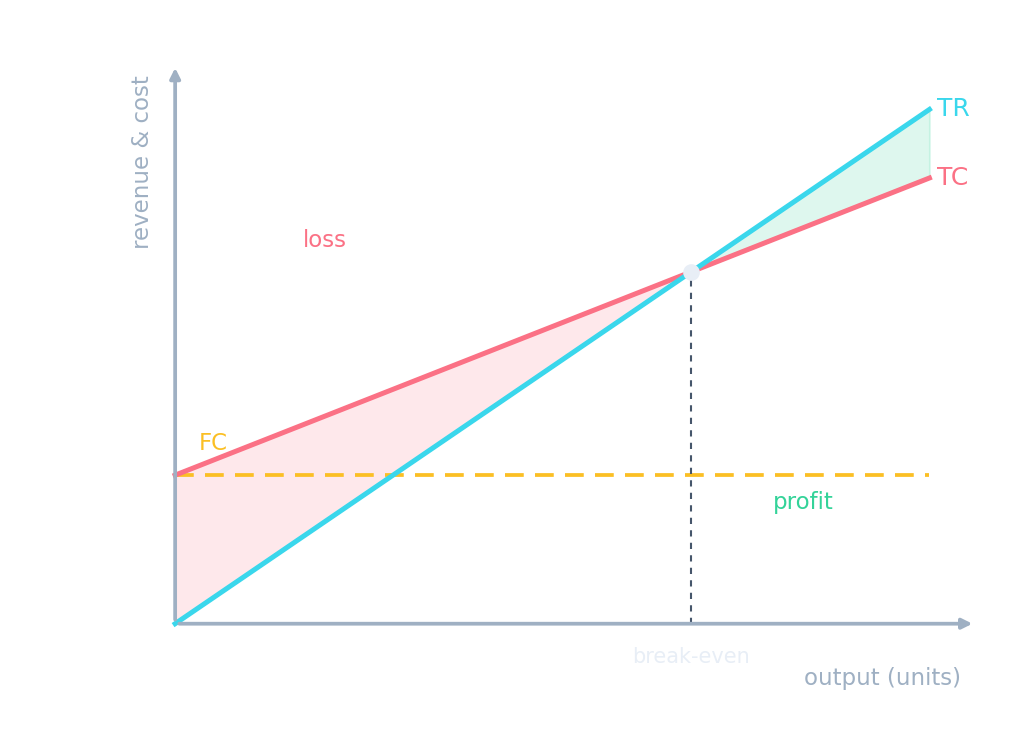
在盈亏平衡之下企业亏损;在它之上,盈利。
Actual output minus break-even output is the margin of ______. · 实际产量减去盈亏平衡产量是______边际。
It shows how far sales can fall before a loss. · 它显示在亏损之前销售能下降多少。
Margin of safety 安全边际
- Margin of safety = actual output − break-even output.
- It shows how far sales can fall before the business makes a loss.
Worked example. Price 10, variable cost 6 → contribution = 4. Fixed costs 2,000 → break-even = 2,000 ÷ 4 = 500 units. Selling 700 gives a margin of safety of 200 units.
The break-even point is where total revenue equals total cost
安全边际
- 安全边际(margin of safety)= 实际产量 − 盈亏平衡产量。
- 它显示在企业亏损之前销售能下降多少。
例题。 价格 10,可变成本 6 → 边际贡献 = 4。固定成本 2,000 → 盈亏平衡 = 2,000 ÷ 4 = 500 单位。卖出 700 给出 200 单位的安全边际。
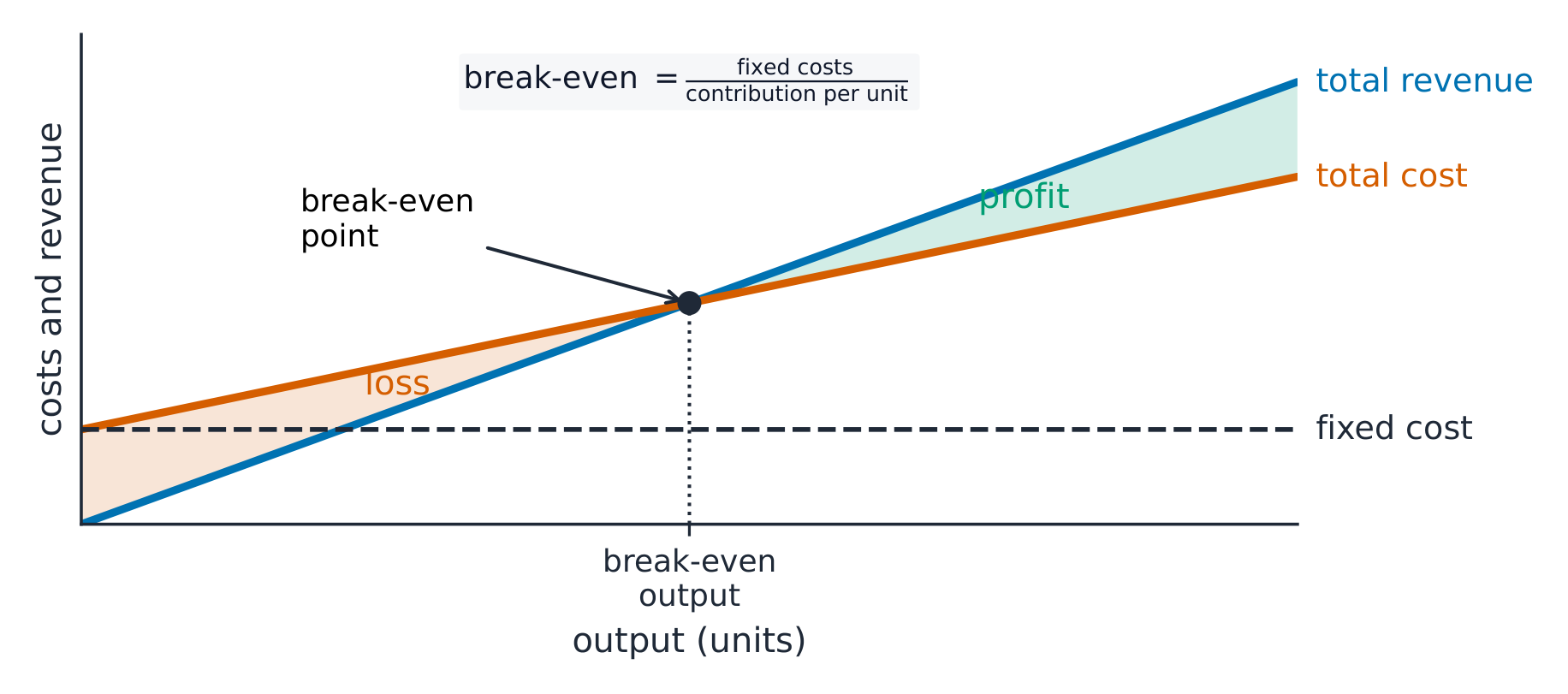
盈亏平衡点是总收入等于总成本的地方
You've got it
- total cost = fixed + variable; larger scale can lower average cost
- contribution = price − variable cost per unit; break-even = fixed costs ÷ contribution
- margin of safety = actual − break-even output
你掌握了
- 总成本 = 固定 + 可变;更大的规模能降低平均成本
- 边际贡献 = 价格 − 每单位可变成本;盈亏平衡 = 固定成本 ÷ 边际贡献
- 安全边际 = 实际 − 盈亏平衡产量