Achieving quality production · 实现优质生产
| English | 中文 | Pinyin · 拼音 |
|---|---|---|
| reputation/ˌrepjuːˈteɪʃn/ | 声誉 | shēng yù |
| quality/ˈkwɒlɪti/ | 质量 | zhì liàng |
| quality control/ˈkwɒlɪti kənˈtrəʊl/ | 质量控制 | zhì liàng kòng zhì |
| quality assurance/ˈkwɒlɪti əˈʃʊərəns/ | 质量保证 | zhì liàng bǎo zhèng |
| inspecting/ɪnˈspektɪŋ/ | 检验 | jiǎn yàn |
| loyalty/ˈlɔɪəlti/ | 忠诚度 | zhōng chéng dù |
| quality marks/ˈkwɒlɪti mɑːks/ | 质量标志 | zhì liàng biāo zhì |
Getting it right every time
- One faulty product can lose a customer for life and harm a business's reputation 声誉.
- Quality 质量 means meeting the standard customers expect — consistently.
每次都做对
- 一个有缺陷的产品能永远失去一个顾客并损害一个企业的声誉。
- 质量(quality)意味着始终如一地达到顾客期望的标准。
Quality methods lab · 质量方法实验室
Compare quality approaches by when they prevent or find faults. · 通过预防或发现缺陷的时间点来比较质量方法。
Quality control mainly involves: · 质量控制主要涉及:
QC inspects the end product. · 质量控制(QC)检验最终产品。
Quality assurance focuses on: · 质量保证专注于:
QA designs quality in so faults do not occur. · 质量保证(QA)在设计阶段就植入质量以防止缺陷发生。
Building quality into every stage of production is quality . · 在生产每个阶段植入质量即为质量。
Assurance prevents faults; control inspects for them. · 保证预防缺陷;控制检查缺陷。
Quality control 质量控制 vs quality assurance 质量保证
- Quality control (QC): inspecting 检验 finished products to catch faults at the end.
- Quality assurance (QA): building quality into every stage so faults don't happen.
Quality control checks at the end; quality assurance builds quality into every stage
质量控制对质量保证
- 质量控制(quality control,QC):在最后检查成品以捕捉缺陷。
- 质量保证(quality assurance,QA):把质量建进每个阶段,使缺陷不发生。
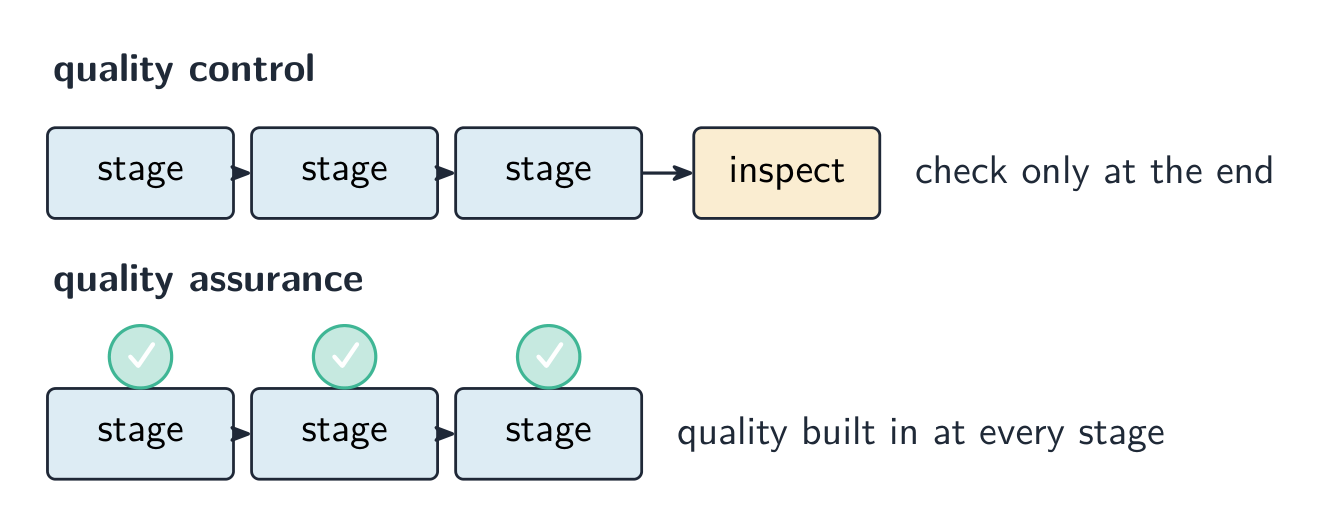
质量控制在最后检查;质量保证把质量建进每个阶段
Why does quality matter to a business? (Select all that apply.) · 为什么质量对企业很重要?(选择所有适用项。)
Quality builds reputation and loyalty and cuts waste; it does not raise material costs. · 质量建立声誉和忠诚度并减少浪费;不会提高材料成本。
Why quality matters
- High quality builds reputation, customer loyalty 忠诚度, and lets a firm charge more.
- Poor quality causes returns, complaints, lost customers and wasted materials.
Worked example. A bakery that checks ingredients, ovens and packaging at every step (QA) wastes less than one that only inspects finished loaves at the end (QC) — because faults are caught before more are made.
为什么质量重要
- 高质量建立声誉、顾客忠诚度,并让一个公司能收取更多费用。
- 低质量造成退货、投诉、失去顾客和浪费材料。
例题。 一家在每一步检查原料、烤箱和包装的面包店(QA)比一家只在最后检查成品面包的(QC)浪费更少——因为缺陷在更多被制造之前就被捕捉。
Preventing faults (assurance) is usually cheaper than inspecting them out at the end (control). · 预防缺陷(保证)通常比在末端检查剔除缺陷(控制)更便宜。
Prevention avoids making defective output. · 预防避免了产生次品产出。
Quality and small vs large firms
- Small firms rely on personal care and reputation.
- Large firms use systems and standards (e.g. quality marks 质量标志) to keep quality consistent across many sites.
Quality control catches faults; quality assurance prevents them. QC inspects at the end, when waste is already made. QA builds quality in from the start — usually cheaper.
质量与小公司对大公司
- 小公司依靠个人的用心和声誉。
- 大公司使用系统和标准(例如质量标志)在许多场所保持质量一致。
质量控制捕捉缺陷;质量保证预防它们。 QC 在最后检查,那时浪费已经产生。QA 从一开始就把质量建进去——通常更便宜。
You've got it
- quality control inspects finished output; quality assurance builds quality into every stage
- good quality builds reputation and loyalty; poor quality causes waste and lost customers
- prevention (assurance) is usually cheaper than inspection (control)
你掌握了
- 质量控制检查成品;质量保证把质量建进每个阶段
- 良好的质量建立声誉和忠诚度;低质量造成浪费和失去顾客
- 预防(保证)通常比检查(控制)更便宜