Production of goods and services · 商品和服务的生产
| English | 中文 | Pinyin · 拼音 |
|---|---|---|
| production/prəˈdʌkʃn/ | 生产 | shēng chǎn |
| inputs/ˈɪnpʊts/ | 投入 | tóu rù |
| outputs/ˈaʊtpʊts/ | 产出 | chǎn chū |
| productivity/ˌprɒdəkˈtɪvɪti/ | 生产率 | shēng chǎn lǜ |
| job production/dʒɒb prəˈdʌkʃn/ | 单件生产 | dān jiàn shēng chǎn |
| batch production/bætʃ prəˈdʌkʃn/ | 批量生产 | pī liàng shēng chǎn |
| flow production/fləʊ prəˈdʌkʃn/ | 流水线生产 | liú shuǐ xiàn shēng chǎn |
| lean production/liːn prəˈdʌkʃn/ | 精益生产 | jīng yì shēng chǎn |
| waste/weɪst/ | 浪费 | làng fèi |
| just-in-time/dʒʌst ɪn taɪm/ | 准时制 | zhǔn shí zhì |
Making the product
- Turning raw materials into finished goods (or delivering a service) is production 生产 — the heart of operations.
- How a business produces affects its cost, quality and speed.
制造产品
- 把原材料变成成品(或提供一项服务)是生产(production)——运营的核心。
- 一个企业如何生产影响它的成本、质量和速度。
6 workers produce 300 units a day. What is productivity (units per worker)? · 6 个工人一天生产 300 单位。生产率(每个工人的单位)是多少?
300 ÷ 6 = 50 units per worker. · 300 ÷ 6 = 每个工人 50 单位。
Inputs 投入 to outputs 产出
- Production turns inputs (materials, labour, machines) into outputs (goods or services).
- Productivity 生产率 = output per worker — a key measure of efficiency.
The three methods of production
从投入到产出
- 生产把投入(inputs,材料、劳动、机器)变成产出(outputs,商品或服务)。
- 生产率(productivity)= 每个工人的产出——效率的一个关键衡量指标。
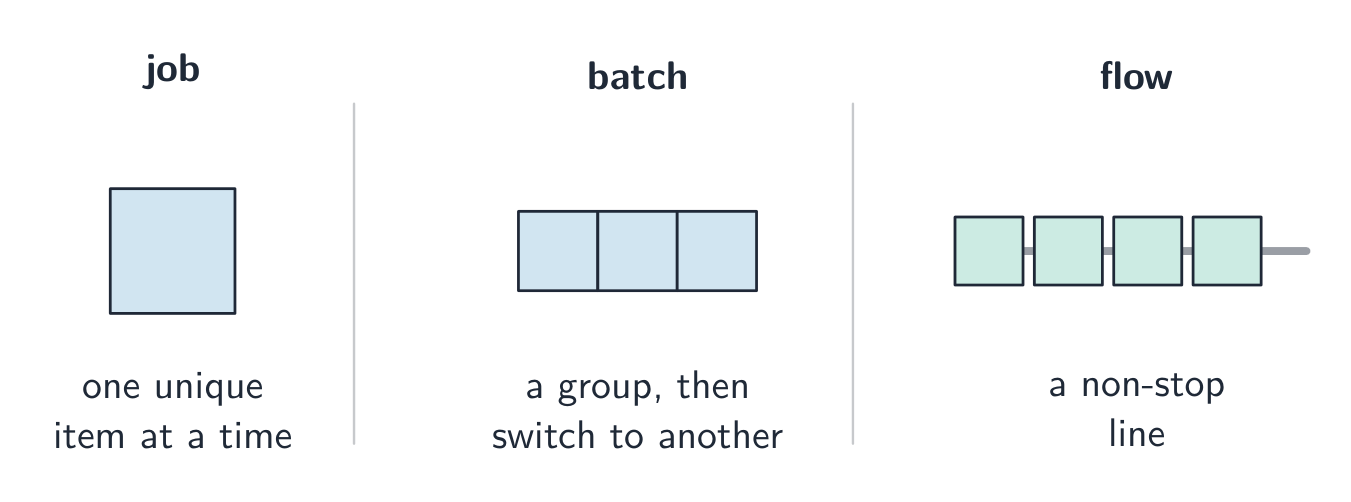
三种生产方法
Methods of production · 生产方法
A business picks job, batch or flow production to suit its product and order size. · 一个企业选择单件、批量或流水线生产以适合它的产品和订单规模。
Making a single, unique product to order is: · 按订单制造一个单一的、独特的产品是:
Job production makes one bespoke item at a time. · 单件生产一次制造一个定制的物品。
Continuous mass production on an assembly line is: · 在一条装配线上连续大规模生产是:
Flow production runs continuously at low unit cost. · 流水线生产以低单位成本连续运行。
Methods of production
- Job production 单件生产: one unique item at a time (a wedding cake). High quality, high cost.
- Batch production 批量生产: groups of identical items in stages (loaves of bread).
- Flow production 流水线生产: continuous mass production on a line (bottled drinks). Low unit cost.
Worked example. 5 workers make 200 units a day → productivity = 200 ÷ 5 = 40 units per worker. A new machine lifts output to 300 with the same 5 workers → productivity rises to 60.
A car assembly line: making many identical products on a moving line
生产方法
- 单件生产(job production):一次一个独特的物品(一个婚礼蛋糕)。高质量,高成本。
- 批量生产(batch production):分阶段成组的相同物品(一条条面包)。
- 流水线生产(flow production):在一条生产线上连续大规模生产(瓶装饮料)。单位成本低。
例题。 5 个工人一天制造 200 单位 → 生产率 = 200 ÷ 5 = 每个工人 40 单位。一台新机器把产出提升到 300,用同样的 5 个工人 → 生产率上升到 60。

一条汽车装配线:在一条移动的生产线上制造许多相同的产品
Just-in-time production aims to hold as little stock as possible. · 准时制生产旨在持有尽可能少的库存。
JIT brings materials in only as needed, cutting storage costs. · JIT 只按需引入材料,削减仓储成本。
Production that aims to cut all forms of waste is called ______ production. · 旨在削减各种形式浪费的生产被称为______生产。
Lean production minimises waste while keeping quality. · 精益生产在保持质量的同时最小化浪费。
Lean production 精益生产
- Lean production cuts waste 浪费 of all kinds (time, materials, stock) while keeping quality.
- Just-in-time 准时制 (JIT) keeps almost no stock; materials arrive as needed.
精益生产
- 精益生产(lean production)削减各种浪费(时间、材料、库存),同时保持质量。
- 准时制(just-in-time,JIT)几乎不保留库存;材料按需到达。
You've got it
- production turns inputs into outputs; productivity = output per worker
- methods: job (one-off), batch (groups), flow (continuous mass)
- lean production cuts waste; JIT holds almost no stock
你掌握了
- 生产把投入变成产出;生产率 = 每个工人的产出
- 方法:单件(一次性)、批量(成组)、流水线(连续大规模)
- 精益生产削减浪费;JIT 几乎不持有库存