| English | 释义 | 拼音 |
|---|---|---|
| habitats/ˈhæbɪtæts/ | 栖息地 | qī xī dì |
| habitat destruction/ˈhæbɪtæt dɪˈstrʌkʃn/ | 栖息地破坏 | qī xī dì pò huài |
| biodiversity/ˌbaɪəʊdaɪˈvɜːsɪti/ | 生物多样性 | shēng wù duō yàng xìng |
| deforestation/diːˌfɒrɪˈsteɪʃn/ | 森林砍伐 | sēn lín kǎn fá |
| soil erosion/sɔɪl ɪˈrəʊʒn/ | 土壤侵蚀 | tǔ rǎng qīn shí |
| extinct/ekˈstɪŋkt/ | 灭绝的 | miè jué de |
Losing the living world
- As humans take more land for farms, cities and roads, wild habitats 栖息地 disappear.
- This habitat destruction 栖息地破坏 is a major threat to biodiversity 生物多样性.
Habitat destruction chain
See how removing habitat causes a chain of ecological effects.
Deforestation is the:
难度 1/5 · 今日首次完成可获 100 金币及少量额外奖励
Deforestation removes forests.
Habitat destruction reduces:
难度 1/5 · 今日首次完成可获 100 金币及少量额外奖励
It reduces the variety of living things.
What is lost
- Deforestation 森林砍伐 clears forests for timber, farming and building.
- It destroys habitats, reduces biodiversity, and threatens species with extinction.
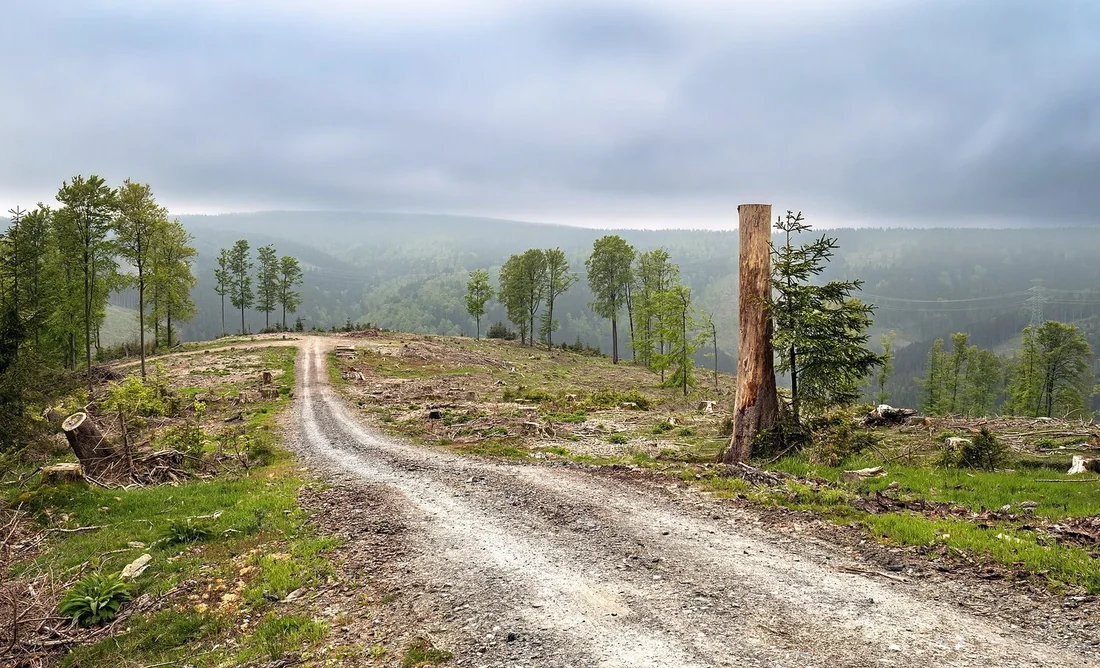
Clearing forest destroys habitats and reduces biodiversity
Which are effects of deforestation? (Select all that apply.)
难度 2/5 · 今日首次完成可获 140 金币及少量额外奖励
Deforestation reduces biodiversity, not increases it.
Wider effects of deforestation
- Fewer trees means less photosynthesis, so more carbon dioxide stays in the air.
- It also causes soil erosion 土壤侵蚀 and disturbs the water cycle.
An extinct species can recover once its habitat is protected.
难度 1/5 · 今日首次完成可获 100 金币及少量额外奖励
False. Extinction is permanent: once the last individual dies, the species is gone. Protection can only save species that still survive.
The variety of different species in an area is called ______.
难度 1/5 · 今日首次完成可获 100 金币及少量额外奖励
High biodiversity keeps ecosystems stable.
Why habitats matter
- Biodiversity keeps ecosystems stable and provides food, medicines and resources.
- Once a species is extinct 灭绝的, it is gone forever.
Extinction is permanent. Habitat destruction can wipe out species we depend on — for food, medicine or a stable ecosystem — and unlike a damaged habitat, an extinct species can never be brought back.
Worked example: a hillside is cleared
A forest on a steep hillside is cut down for timber and the land is left bare. Predict three effects over the next few years.
- Soil erosion: no roots hold the soil, so heavy rain washes it downhill; the land loses nutrients and becomes poor for farming. Rivers below fill with silt, and flooding is more likely because less water is taken up.
- Less biodiversity: animals lose their habitats and food. More carbon dioxide in the air: the trees no longer take it in by photosynthesis, and any wood that is burned or rots releases it.
Which process is reduced most directly when a forest is cleared?
难度 1/5 · 今日首次完成可获 100 金币及少量额外奖励
Fewer trees means less photosynthesis, removing less CO₂.
Replanting trees after logging helps reduce soil erosion and restores habitats over time.
难度 1/5 · 今日首次完成可获 100 金币及少量额外奖励
New roots hold the soil and the growing forest provides food and shelter again.
You've got it
- habitat destruction (e.g. deforestation) reduces biodiversity and causes extinction
- it lowers photosynthesis (more CO₂), erodes soil, and disturbs the water cycle
- biodiversity keeps ecosystems stable; extinction is permanent
Write from a cleared forest
- A large forest is cut down.
- Several species that lived only there disappear.
How does this change carbon dioxide, and why is extinction different from a fall in numbers?
Fewer leaves mean less carbon dioxide taken in.
Why can deforestation raise carbon dioxide in the air?
难度 1/5 · 今日首次完成可获 100 金币及少量额外奖励
Lost leaves mean lost carbon dioxide uptake.