Controlling body temperature · 控制体温
| English | 中文 | Pinyin · 拼音 |
|---|---|---|
| thermoregulation/ˌθɜːməʊˌreɡjʊˈleɪʃn/ | 体温调节 | tǐ wēn tiáo jié |
| sweating/ˈswetɪŋ/ | 出汗 | chū hàn |
| vasodilation/ˌvæsədɪˈleɪʃn/ | 血管舒张 | xuè guǎn shū zhāng |
| shivering/ˈʃɪvərɪŋ/ | 颤抖 | chàn dǒu |
| vasoconstriction/ˌvæsəkənˈstrɪkʃn/ | 血管收缩 | xuè guǎn shōu suō |
Staying at 37 °C
- Your enzymes work best at about 37 °C, so your body works hard to hold that temperature.
- This is thermoregulation 体温调节, controlled by the skin and brain.
保持在 37 °C
- 你的酶在大约 37 °C 时工作得最好,所以你的身体努力保持那个温度。
- 这是体温调节(thermoregulation),由皮肤和脑控制。
When you are too hot, the body responds by: · 当你太热时,身体的反应是:
Sweating and vasodilation lose heat. · 出汗和血管舒张失去热量。
Sweating cools you because: · 出汗使你凉爽,因为:
Evaporation removes heat from the skin. · 蒸发从皮肤移除热量。
When you're too hot
- Sweating 出汗: water evaporates from the skin, taking heat away.
- Vasodilation 血管舒张: blood vessels near the skin widen, so more heat is lost.
Body temperature is held near 37°C by negative feedback
当你太热时
- 出汗:水从皮肤蒸发,带走热量。
- 血管舒张(vasodilation):皮肤附近的血管变宽,所以更多的热量流失。
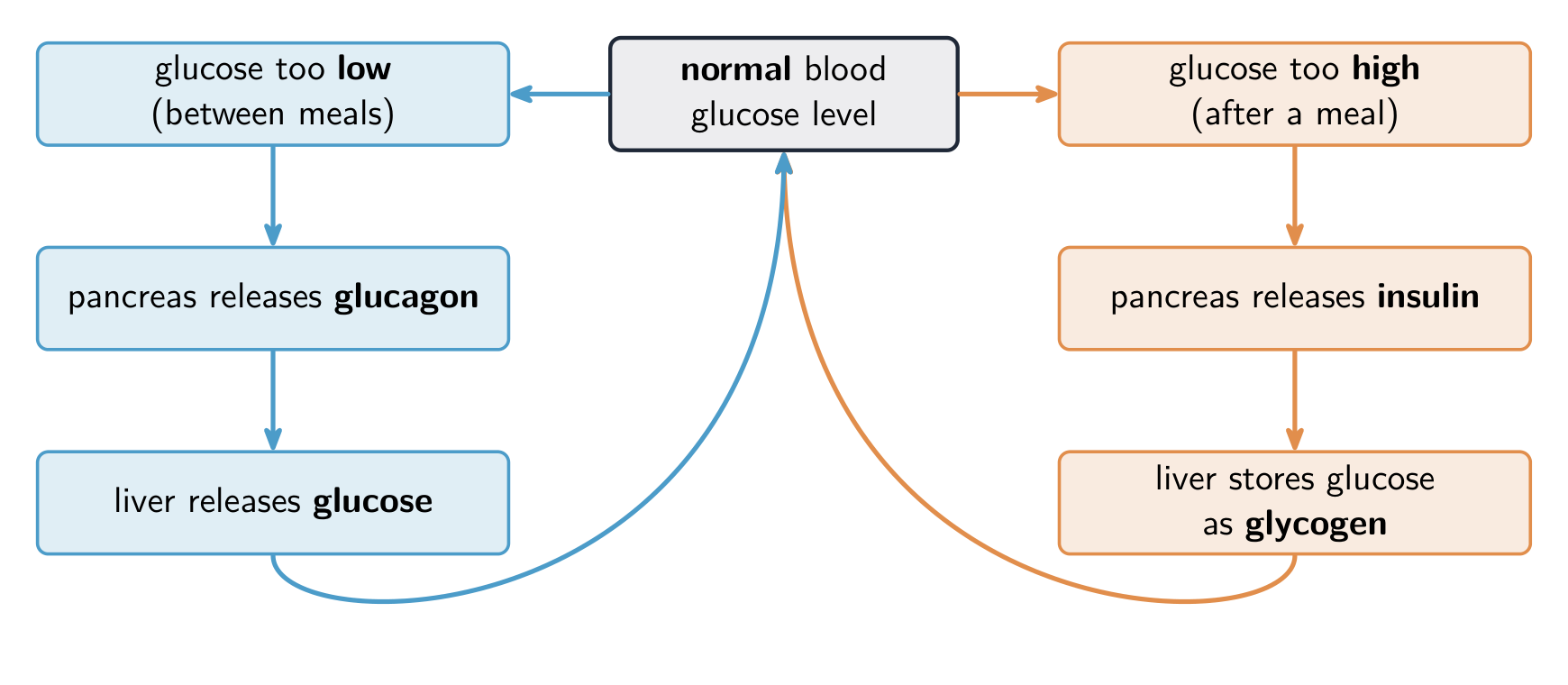
体温靠负反馈保持在 37°C 附近
Controlling body temperature · 控制体温
sweat ↓ · shiver ↑ · 出汗 ↓ · 颤抖 ↑
Body temperature returns to 37 °C: too hot → sweat; too cold → shiver. · 体温返回 37 °C:太热 → 出汗;太冷 → 颤抖。
When you are too cold, the body responds by: · 当你太冷时,身体的反应是:
Shivering generates heat; vasoconstriction keeps it. · 颤抖产生热量;血管收缩保留它。
Rapid muscle contractions that release heat when you are cold are called . · 当你冷时释放热量的快速肌肉收缩叫做。
Shivering generates heat from respiration. · 颤抖从呼吸作用产生热量。
When you're too cold
- Shivering 颤抖: muscles contract rapidly, releasing heat from respiration.
- Vasoconstriction 血管收缩: skin blood vessels narrow, so less heat is lost.
当你太冷时
- 颤抖:肌肉快速收缩,从呼吸作用释放热量。
- 血管收缩(vasoconstriction):皮肤血管变窄,所以更少的热量流失。
Normal human body temperature is about how many °C? · 正常人体温度大约是多少 °C?
About 37 °C — the optimum for enzymes. · 大约 37 °C——对酶的最适值。
Negative feedback again
- The brain detects the change and triggers the opposite response.
- This negative feedback keeps body temperature close to 37 °C.
Vasodilation doesn't move the vessels — it widens them. The blood vessels near the skin surface widen (dilate) to lose heat, or narrow (constrict) to keep it. They don't actually move up or down.
又是负反馈
- 脑检测到变化并触发相反的反应。
- 这种负反馈把体温保持在接近 37 °C。
血管舒张不移动血管——它使它们变宽。 皮肤表面附近的血管变宽(舒张)以失去热量,或变窄(收缩)以保留它。它们实际上不向上或向下移动。
You've got it
- the body holds about 37 °C (best for enzymes) by negative feedback
- too hot: sweating and vasodilation (lose heat)
- too cold: shivering and vasoconstriction (keep heat)
你掌握了
- 身体通过负反馈保持大约 37 °C(对酶最好)
- 太热:出汗和血管舒张(失去热量)
- 太冷:颤抖和血管收缩(保留热量)