| English | 释义 | 拼音 |
|---|---|---|
| factory | 工厂 | gōng chǎng |
Iron smelted with coal, 1709
- In 1709, at Coalbrookdale in Shropshire, England, the ironmaster Abraham Darby succeeded in smelting iron with coke — coal baked to remove impurities — instead of charcoal from wood. England's forests were shrinking and charcoal was costly, but England had huge coal deposits. Cheap iron made with coal later built steam engines, rails and bridges, including the world's first iron bridge, near the same works, in 1779.
- Industrialisation began in Britain in the 18th century because several conditions came together there at once.
Why was smelting iron with coke important?
难度 1/5 · 今日首次完成可获 100 金币及少量额外奖励
Coal replaced shrinking forests.
Preconditions, not one cause
- Britain had coal and iron, rivers and ports, improved farming, capital to invest, and laws that protected property and inventions.
- None of these alone was enough; together they made Britain first.
Which were preconditions for British industrialisation?
难度 2/5 · 今日首次完成可获 140 金币及少量额外奖励
Several conditions together.
Geography and energy
- Coal lay close to the surface and near rivers and the sea, so it was cheap to move.
- The steam engine turned coal into power: James Watt's improved engine (patented 1769) used about a quarter of the coal of earlier engines.
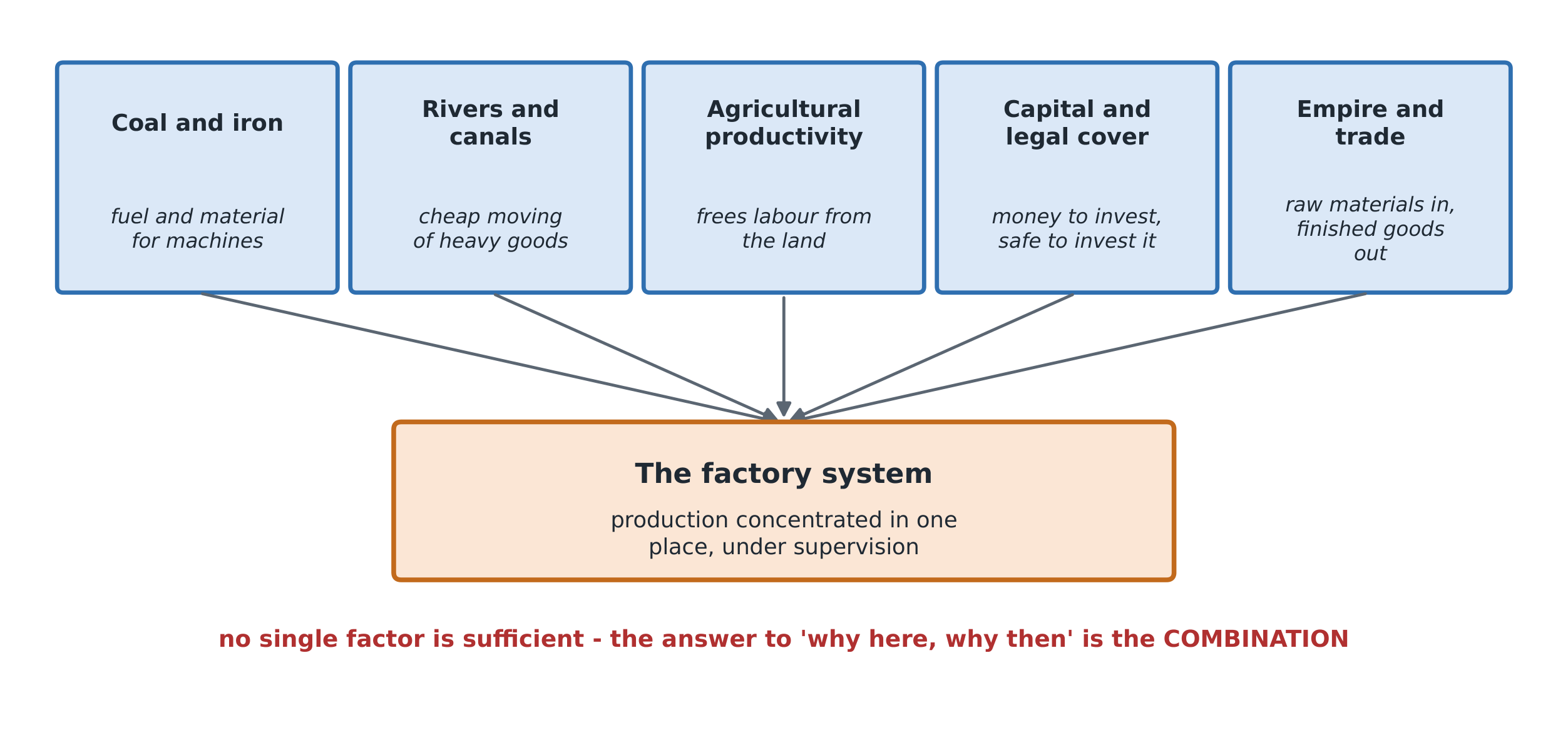
Assemble the conditions for industry
The CED names a variety of factors, and no single one is sufficient.
Watt's engine used about a quarter of the coal of earlier engines. If an old engine used 100 tonnes, how many tonnes would Watt's use?
难度 2/5 · 今日首次完成可获 140 金币及少量额外奖励
100 ÷ 4.
Worked example: coal as the energy
- Known: British coal output was about 3 million tonnes in 1700 and about 30 million tonnes by 1830.
- Method: 30 ÷ 3 = 10.
- Effect: ten times as much energy powered steam engines in mines, mills and later railways — far more than wood, wind or water could supply.
Coal output rose from about 3 to about 30 million tonnes. How many times as much?
难度 2/5 · 今日首次完成可获 140 金币及少量额外奖励
30 ÷ 3.
Farming improved first
- Enclosure of open fields and new crops, such as turnips and clover, raised food output.
- Fewer farm workers were needed, so people moved to towns and factories.
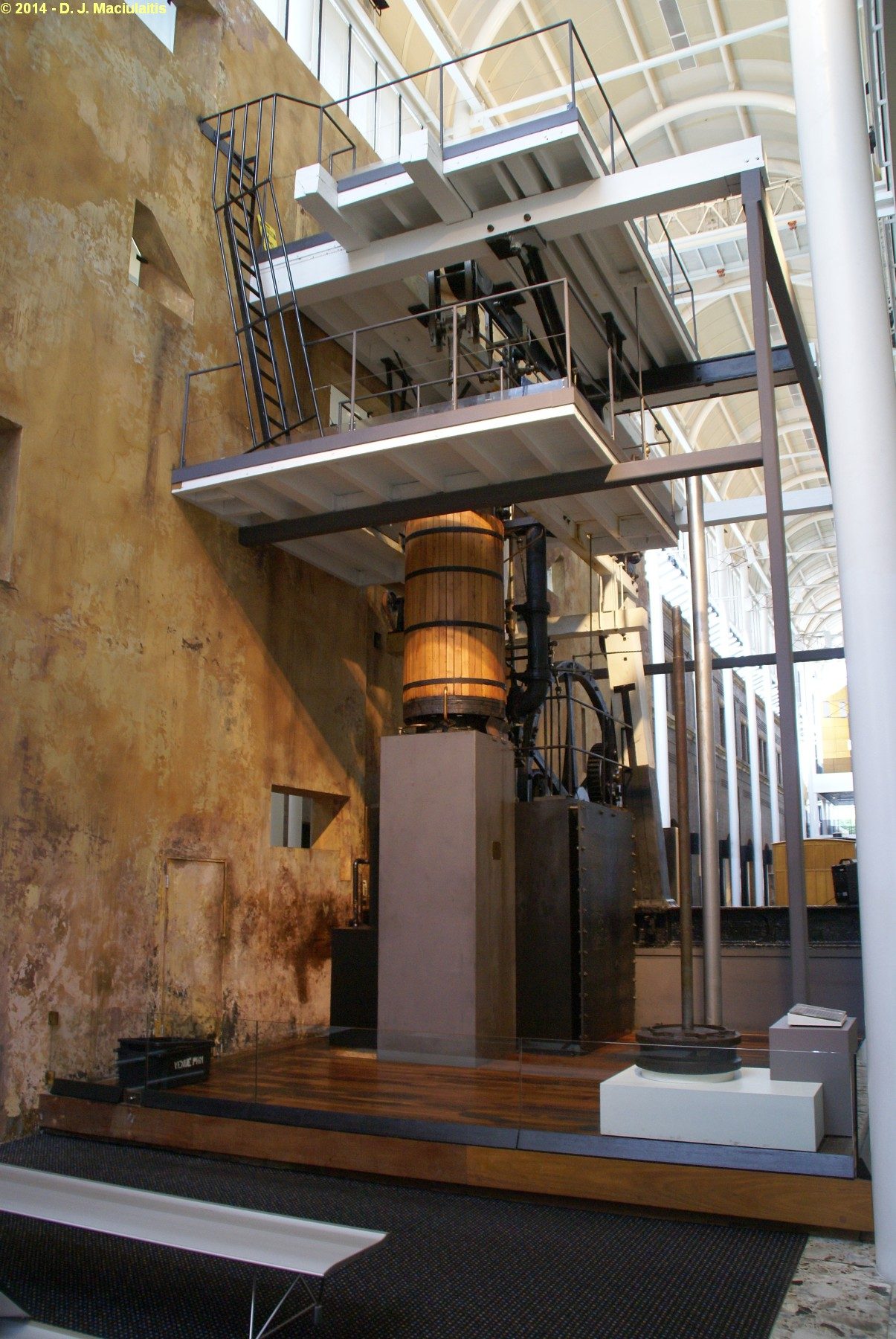
Law, capital and the factory
- Banks and merchants who had grown rich from Atlantic trade invested in industry; patents protected inventors.
- Richard Arkwright's mill at Cromford (1771) brought machines and workers together in one factory 工厂 system.
Put these in order.
难度 3/5 · 今日首次完成可获 200 金币及少量额外奖励
1709, 1769, 1771, 1779.
Coal alone did not cause industrialisation. China also had coal, but in places far from its economic centres; Britain had coal near rivers, ports, capital and markets.
Coal alone caused industrialisation.
难度 1/5 · 今日首次完成可获 100 金币及少量额外奖励
Location, capital and markets mattered.
Industry began in Britain because coal, iron, rivers and ports, better farming, capital and protective laws all came together. Coke-smelted iron (1709), Watt's steam engine (1769) and Arkwright's factory (1771) turned these conditions into an industrial revolution.
Explain why industrialisation began in Britain.
Causation.