Government macroeconomic policy objectives · 政府宏观经济政策目标
| English | 中文 | Pinyin · 拼音 |
|---|---|---|
| price stability/praɪs stəˈbɪlɪti/ | 物价稳定 | wù jià wěn dìng |
| balance of payments/ˈbæləns ɒv ˈpeɪmənts/ | 国际收支 | guó jì shōu zhī |
| equity/ˈekwɪti/ | 公平 | gōng píng |
| trade-offs/treɪd ɒfs/ | 权衡取舍 | quán héng qǔ shě |
Juggling four balls at once
- A finance minister can rarely fix everything at once: chase growth and inflation creeps up; tame inflation and jobs are lost.
- Real policy is about prioritising among competing objectives — and accepting that hitting one may mean missing another.
同时玩四个球
- 一个财政部长很少能一次修复一切:追逐增长而通货膨胀悄悄上升;驯服通货膨胀而工作被失去。
- 真实的政策关乎在竞争的目标之间排定优先次序——并接受达到一个可能意味着错失另一个。
Macro objective lab · 宏观目标实验室
Classify policy examples by the macroeconomic objective they target. · 根据政策示例所针对的宏观经济目标对其进行分类。
Which set best lists the main macroeconomic objectives? · 哪一组最能列出主要宏观经济目标?
These four (plus equity and the environment) are the standard objectives. · 这四个(加上公平和环境)是标准目标。
The objectives, recapped
- Growth, low unemployment, price stability 物价稳定, and a sound balance of payments 国际收支 — plus equity 公平 and the environment.
- At any moment, a government weighs which matters most given the state of the economy.
Central banks, such as the European Central Bank, are a main tool of macroeconomic policy
目标,回顾
- 增长、低失业、价格稳定和健全的国际收支——加上公平和环境。
- 在任何时刻,一个政府权衡鉴于经济的状态哪个最重要。

中央银行,如欧洲中央银行,是宏观经济政策的一个主要工具
In a deep recession, a government would most likely prioritise: · 在严重衰退期间,政府最可能优先考虑:
When output and jobs are falling, reviving growth and employment comes first. · 当产出和就业下降时,恢复增长和就业是首要任务。
Pursuing faster growth can conflict with controlling inflation. · 追求更快增长可能与控制通胀发生冲突。
A booming economy can overheat, pushing up prices — a classic conflict. · 经济过热会导致物价上涨——这是典型的冲突。
Match each objective pair to the conflict between them. · 将每对目标与其之间的冲突匹配。
Improving one objective often worsens another. · 改善一个目标往往会恶化另一个目标。
Why they conflict
- Growth vs inflation/BoP: a boom can overheat prices and suck in imports.
- Inflation vs unemployment: cooling inflation with high rates can raise joblessness.
- Growth vs environment: faster output can mean more pollution.
The main macroeconomic objectives often pull against each other, so hitting one can mean missing another
Priorities shift with the cycle. In a recession, governments prioritise growth and jobs; when inflation is high, they switch to price stability — the same objectives, reordered.
The Laffer curve
为什么它们冲突
- 增长对通货膨胀/国际收支:一个繁荣能使价格过热并吸入进口。
- 通货膨胀对失业:用高利率冷却通货膨胀能提高失业。
- 增长对环境:更快的产出能意味着更多污染。

主要的宏观经济目标常常互相拉扯,所以达到一个可能意味着错失另一个
优先次序随周期转变。 在一个衰退中,政府优先考虑增长和工作;当通货膨胀高时,他们切换到价格稳定——相同的目标,重新排序。
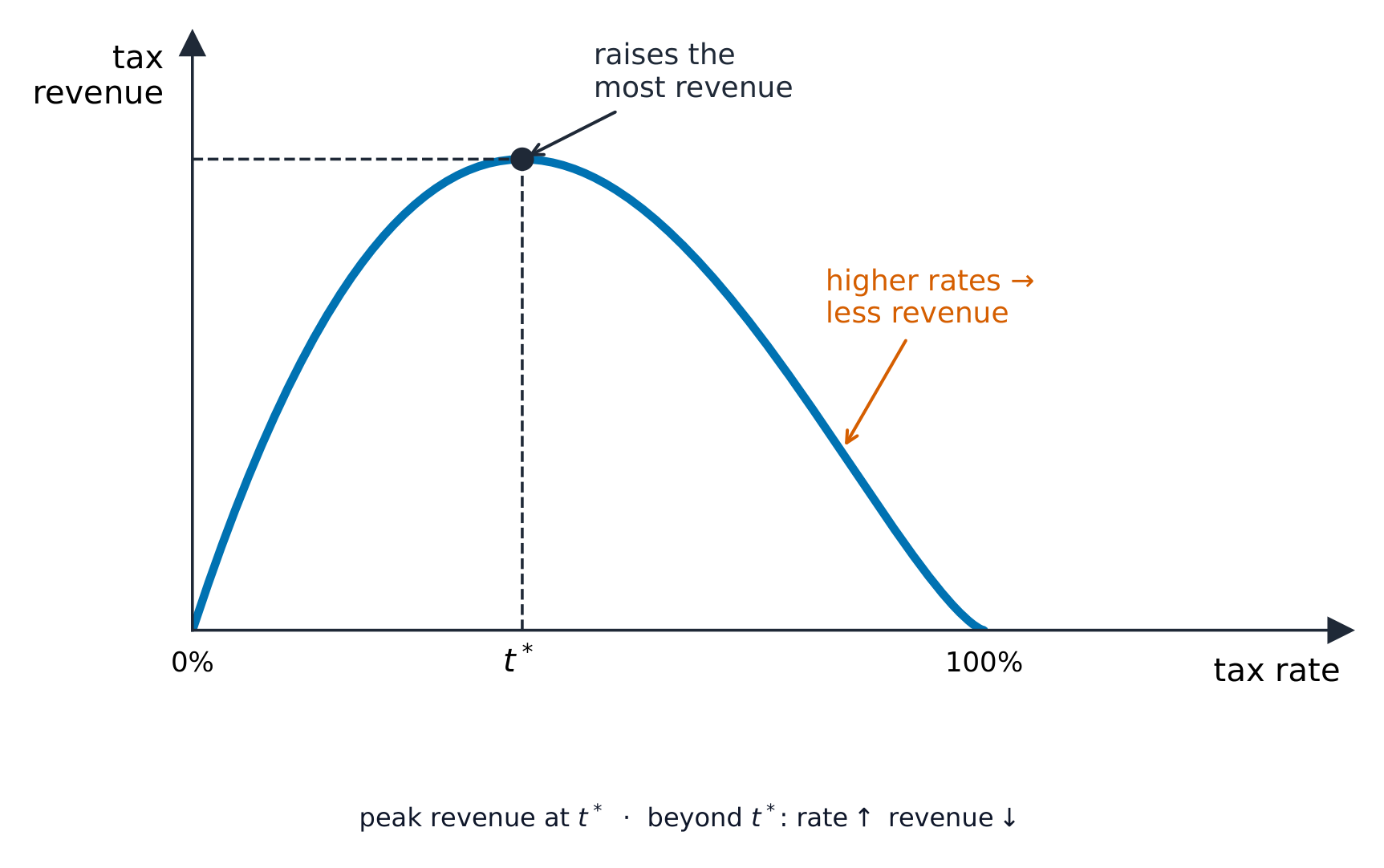
拉弗曲线
Because objectives conflict, policy always involves making . · 由于目标存在冲突,政策制定始终涉及做出。
No policy improves every objective at once. · 没有政策能同时改善所有目标。
Making the trade-offs 权衡取舍
- Good policy states the objective, picks the tool best suited to it, and accepts the cost to other objectives.
- There is no policy that improves everything at once — economics is the study of these trade-offs.
Government borrowing raises interest rates and crowds out private investment
做出权衡
- 好的政策陈述目标,挑选最适合它的工具,并接受给其他目标的成本。
- 没有政策能一次改善一切——经济学是这些权衡的研究。
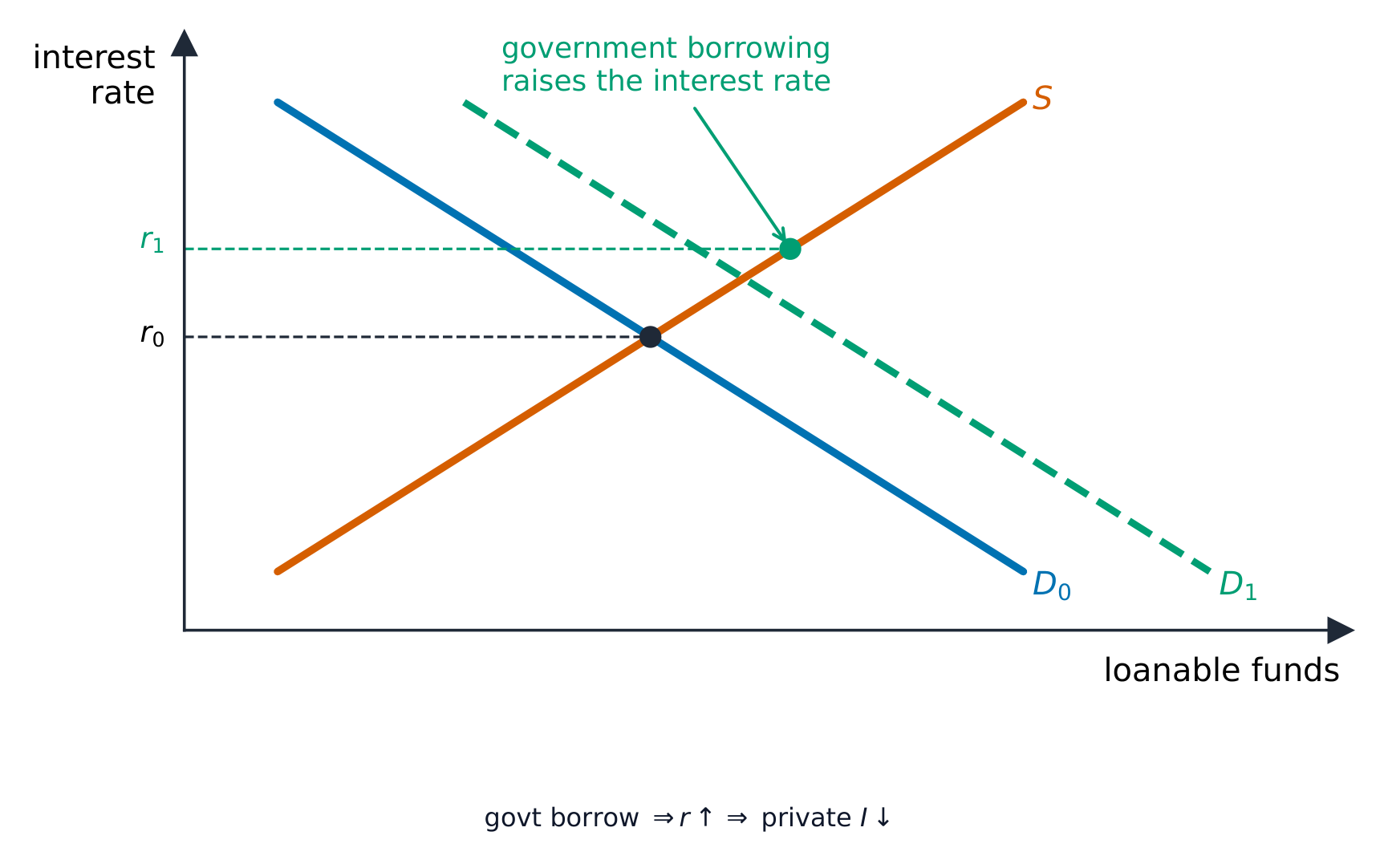
政府借款提高利率并挤出私人投资
You've got it
- objectives: growth, low unemployment, price stability, balance of payments (+ equity, environment)
- they conflict (growth vs inflation; inflation vs unemployment; growth vs environment)
- policy means prioritising and accepting trade-offs, reordered as the economy changes
你掌握了
- 目标:增长、低失业、价格稳定、国际收支(+ 公平、环境)
- 它们冲突(增长对通货膨胀;通货膨胀对失业;增长对环境)
- 政策意味着排定优先次序并接受权衡,随经济变化而重新排序