Links between macroeconomic problems · 宏观经济问题之间的联系
| English | 中文 | Pinyin · 拼音 |
|---|---|---|
| unemployment/ʌnemˈplɔɪmənt/ | 失业 | shī yè |
| inflation/ɪnˈfleɪʃn/ | 通货膨胀 | tōng huò péng zhàng |
| Phillips curve/ˈfɪlɪps kɜːv/ | 菲利普斯曲线 | fēi lì pǔ sī qū xiàn |
| current account/ˈkʌrənt əˈkaʊnt/ | 经常账户 | jīng cháng zhàng hù |
| natural rate/ˈnætʃərəl reɪt/ | 自然失业率 | zì rán shī yè lǜ |
When fixing one problem creates another
- Cut unemployment 失业 by boosting demand — and watch inflation 通货膨胀 rise. The big macro problems are linked, not independent.
- Seeing these links is what separates a sophisticated answer from a naive one.
当修复一个问题制造另一个时
- 通过提振需求削减失业——然后看着通货膨胀上升。大的宏观问题是相互联系的,不是独立的。
- 看到这些联系是一个老练的答案与一个天真的答案的区别。
Macro objective lab · 宏观目标实验室
Classify policy examples by the macroeconomic objective they target. · 根据政策示例所针对的宏观经济目标对其进行分类。
The Phillips curve shows a short-run trade-off between: · 菲利普斯曲线显示了______之间的短期权衡:
Lower unemployment tends to come with higher inflation in the short run. · 短期内,降低失业往往伴随着更高的通胀。
The curve showing the inflation–unemployment trade-off is named after ______. · 显示通胀与失业之间权衡关系的曲线以______命名。
The Phillips curve. · 菲利普斯曲线。
The Phillips curve 菲利普斯曲线
- The Phillips curve captures the short-run trade-off between unemployment and inflation: push unemployment down and inflation tends to rise.
Lower unemployment comes at the cost of higher inflation — the short-run Phillips trade-off.
菲利普斯曲线
- 菲利普斯曲线(Phillips curve)抓住失业与通货膨胀之间的短期权衡:把失业压下去,通货膨胀往往上升。
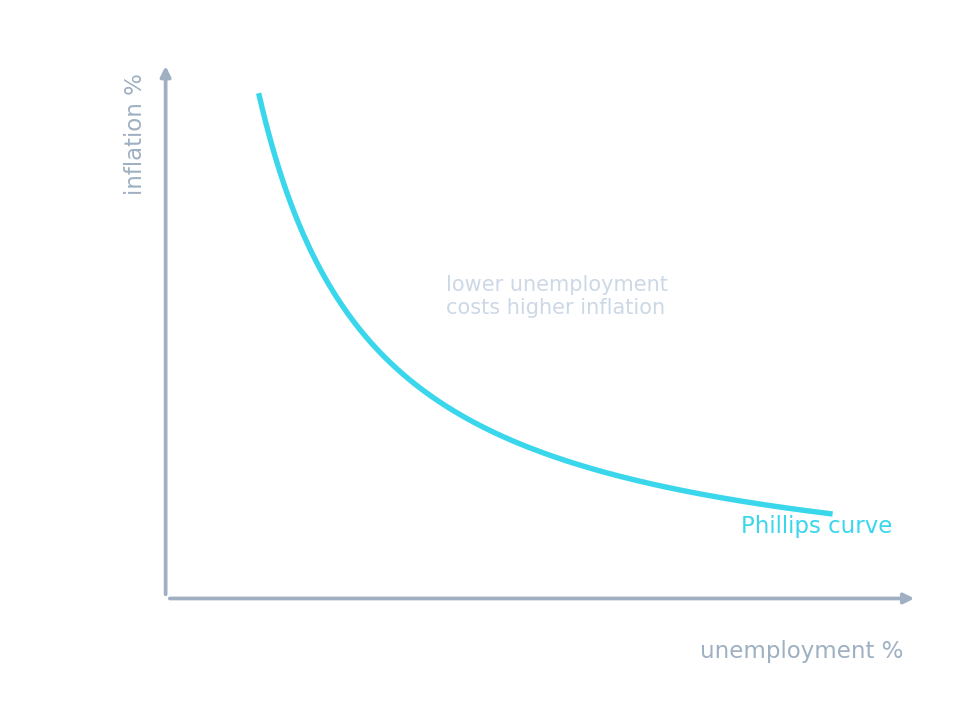
更低的失业以更高的通货膨胀为代价——短期的菲利普斯权衡。
Rapid economic growth can worsen the current account because it: · 快速经济增长可能会恶化经常账户,因为它:
Higher incomes raise import spending, widening a trade deficit. · 收入提高会增加进口支出,扩大贸易逆差。
Many economists argue the unemployment–inflation trade-off holds only in the short run. · 许多经济学家认为失业-通胀权衡仅在短期内成立。
In the long run unemployment tends back to its natural rate regardless of inflation. · 从长远来看,无论通胀如何,失业率都会回归自然率。
Match each pair of linked problems. · 将每对相互关联的问题进行匹配。
Solving one problem often aggravates another. · 解决一个问题往往会加剧另一个问题。
Other links
- Growth vs inflation: rapid growth can be inflationary if supply can't keep up.
- Growth vs current account 经常账户: a boom sucks in imports, worsening the trade balance.
- Growth vs environment: more output can mean more pollution and resource use.
The long-run twist. Many economists argue the Phillips trade-off holds only in the short run; in the long run, unemployment returns to its natural rate 自然失业率 whatever the inflation rate.
The four macroeconomic objectives
其他联系
- 增长对通货膨胀:如果供给跟不上,快速增长能是通货膨胀性的。
- 增长对经常账户:一个繁荣吸入进口,恶化贸易平衡。
- 增长对环境:更多产出能意味着更多污染和资源使用。
长期的转折。 许多经济学家主张菲利普斯权衡只在短期成立;在长期,无论通货膨胀率如何,失业都回到它的自然率。
Why it matters
- A policy aimed at one problem (e.g. cutting inflation) has side effects on others (e.g. raising unemployment) — which is why evaluation is essential.
为什么它重要
- 一项针对一个问题(例如削减通货膨胀)的政策对其他问题有副作用(例如提高失业)——这就是为什么评估至关重要。
You've got it
- macro problems are linked: the Phillips curve trades unemployment against inflation
- growth conflicts with inflation, the current account, and the environment
- the short-run trade-off may vanish in the long run (natural rate of unemployment)
你掌握了
- 宏观问题是相互联系的:菲利普斯曲线用失业换通货膨胀
- 增长与通货膨胀、经常账户和环境冲突
- 短期权衡在长期可能消失(失业的自然率)