Labour market forces and intervention · 劳动市场力量与介入
| English | 中文 | Pinyin · 拼音 |
|---|---|---|
| minimum wage/ˈmɪnɪməm weɪdʒ/ | 最低工资 | zuì dī gōng zī |
| price floor/praɪs flɔː/ | 价格下限 | jià gé xià xiàn |
| surplus of labour/ˈsɜːpləs ɒv ˈleɪbə/ | 劳动力过剩 | láo dòng lì guò shèng |
| monopsony/ˈmɒnəʊpsəni/ | 买方垄断 | mǎi fāng lǒng duàn |
| trade unions/treɪd ˈjuːnɪənz/ | 工会 | gōng huì |
| elastic/ɪˈlæstɪk/ | 富有弹性 | fù yǒu tán xìng |
When the labour market is interfered with
- Left alone, the labour market sets a wage — but governments impose minimum wages 最低工资, unions push for more, and some employers hold all the power.
- These forces push wages away from the free-market level, for better or worse.
当劳动市场被干预时
- 不被打扰时,劳动市场决定一个工资——但政府强加最低工资,工会推动更多,而有些雇主握有全部力量。
- 这些力量把工资推离自由市场水平,无论好坏。
A minimum wage set above the equilibrium wage can cause: · 一个定在均衡工资之上的最低工资能造成:
A binding price floor leaves quantity supplied above quantity demanded — excess labour. · 一个生效的价格下限留下供给量高于需求量——过度劳动。
A minimum wage is a price ______ in the labour market. · 一个最低工资是劳动市场中的一个价格______。
It sets a legal minimum (a floor) below which wages cannot fall. · 它设定一个法定的最低值(一个下限),工资不能跌破它。
Minimum wage
- A minimum wage is a price floor 价格下限 in the labour market: set above equilibrium, it raises pay for those in work.
- But it can cause a surplus of labour 劳动力过剩 (unemployment) if set too high — the classic trade-off.
A minimum wage above equilibrium lifts pay but can leave more workers seeking jobs than firms want — a surplus.
最低工资
- 一个最低工资(minimum wage)是劳动市场中的一个价格下限:定在均衡之上,它为在工作的人提高报酬。
- 但如果定得太高,它能造成一个劳动的过剩(失业)——经典的权衡。

一个均衡之上的最低工资提升报酬,但能留下比企业想要的更多的工人寻找工作——一个过剩。
The labour market · 劳动力市场
Wages are a price too: the demand for labour meets its supply to set the wage and employment — a minimum wage or union can shift it. · 工资也是一种价格:劳动力的需求与供给相遇,决定工资和就业——最低工资或工会会使它移动。
A monopsony in the labour market is a single dominant: · 劳动市场中的一个买方垄断是一个单一占主导的:
A monopsony is one big employer; it can push wages below the competitive level. · 一个买方垄断是一个大雇主;它能把工资压到竞争水平之下。
Trade unions use collective bargaining to try to raise wages and improve conditions. · 工会用集体谈判来试图提高工资和改善条件。
Unions bargain on behalf of members for better pay and conditions. · 工会代表成员为更好的报酬和条件谈判。
Unions and monopsony 买方垄断
- Trade unions 工会 bargain collectively to raise wages and improve conditions.
- A monopsony is a single dominant buyer of labour (e.g. the only big employer in a town), which can push wages below the competitive level.
- A union facing a monopsony can sometimes raise wages without cutting jobs.
A competitive labour market sets the wage where demand meets supply
工会与买方垄断
- 工会(trade unions)集体谈判以提高工资和改善条件。
- 一个买方垄断(monopsony)是劳动的一个单一占主导的买方(例如一个城镇中唯一的大雇主),它能把工资压到低于竞争水平。
- 一个面对买方垄断的工会有时能不削减工作就提高工资。
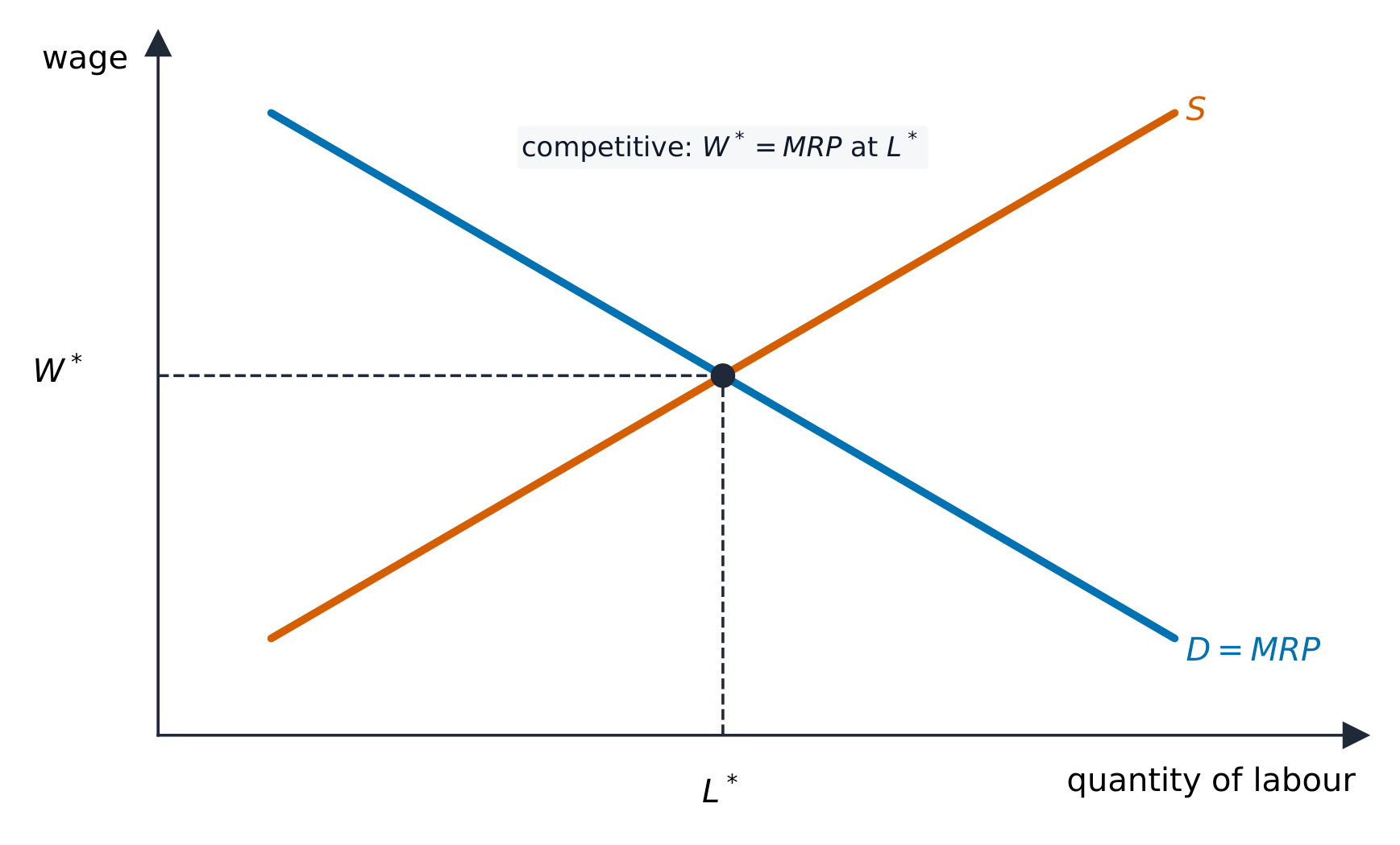
一个竞争的劳动市场在需求与供给相遇之处决定工资
A minimum wage causes less unemployment when labour demand is: · 当劳动需求是以下时,一个最低工资造成更少的失业:
Inelastic labour demand means firms cut few jobs when the wage rises. · 非弹性的劳动需求意味着工资上升时企业削减很少的工作。
Evaluating intervention
- Minimum wages reduce poverty and exploitation but risk unemployment; their effect depends on how elastic 富有弹性 labour demand is.
A minimum wage is a price floor. It only bites when set above the equilibrium wage; below it, the market wage already exceeds the minimum and nothing changes.
评估介入
- 最低工资减少贫困和剥削但有失业的风险;它们的效果取决于劳动需求多么弹性。
一个最低工资是一个价格下限。 它只在定于均衡工资之上时才咬住;低于它,市场工资已经超过最低值,什么都不变。
You've got it
- a minimum wage (price floor above equilibrium) raises pay but can cause a labour surplus
- trade unions bargain for higher wages; a monopsony (sole buyer) pushes wages down
- the employment effect depends on the elasticity of labour demand
你掌握了
- 一个最低工资(均衡之上的价格下限)提高报酬但能造成劳动过剩
- 工会为更高的工资谈判;一个买方垄断(唯一买方)把工资压下去
- 就业效果取决于劳动需求的弹性