Equity and redistribution · 公平与再分配
| English | 中文 | Pinyin · 拼音 |
|---|---|---|
| equity/ˈekwɪti/ | 公平 | gōng píng |
| equality/iːˈkwɒlɪti/ | 平等 | píng děng |
| horizontal equity/ˌhɒrɪˈzɒntl ˈekwɪti/ | 横向公平 | héng xiàng gōng píng |
| vertical equity/ˈvɜːtɪkl ˈekwɪti/ | 纵向公平 | zòng xiàng gōng píng |
| Lorenz curve/ˈlɒrənts kɜːv/ | 洛伦兹曲线 | luò lún zī qū xiàn |
| Gini coefficient/ˈdʒiːni ˌkəʊɪˈfɪʃənt/ | 基尼系数 | jī ní xì shù |
| progressive taxes/prəˈɡresɪv ˈtæksɪz/ | 累进税 | lèi jìn shuì |
Fair shares?
- Should everyone get the same, or what they earn, or enough to live on? "Fairness" in economics splits into two ideas.
- Governments redistribute to narrow the gap — but every transfer has a cost.
公平的份额?
- 每个人应该得到相同的,还是他们赚的,还是足以生活的?经济学中的"公平"分成两个想法。
- 政府再分配以缩小差距——但每一次转移都有一个成本。
Inequality policy route · 不平等等政策途径
Follow how policy can change disposable income and opportunity. · 遵循政策如何改变可支配收入和机会。
Equity in economics means: · 经济学中的公平意味着:
Equity = fairness; equality = the same for everyone. They are not identical. · 公平=公正性;平等=对每个人都是一样的。两者并不相同。
Taxing those who can afford to pay more is an example of ______ equity. · 向有能力支付更多的人征税是______公平的例子。
Vertical equity: the better-off contribute more. · 垂直公平:条件较好的人贡献更多。
Equity 公平 vs equality 平等
- Equality = everyone gets the same. Equity = what is fair (which may not be equal).
- Horizontal equity 横向公平: treat those in the same situation alike. Vertical equity 纵向公平: those who can pay more, do (progressive tax).
Equality gives everyone the same share; equity gives a fair share, which may not be equal
The Lorenz curve 洛伦兹曲线 and Gini coefficient 基尼系数 measure inequality
公平对平等
- 平等(equality)= 每个人得到相同的。公平(equity)= 什么是公正的(它可能不平等)。
- 横向公平(horizontal equity):平等对待处于相同情况的人。纵向公平(vertical equity):能付更多的人,就付更多(累进税)。

平等给每个人相同的份额;公平给一个公正的份额,它可能不平等
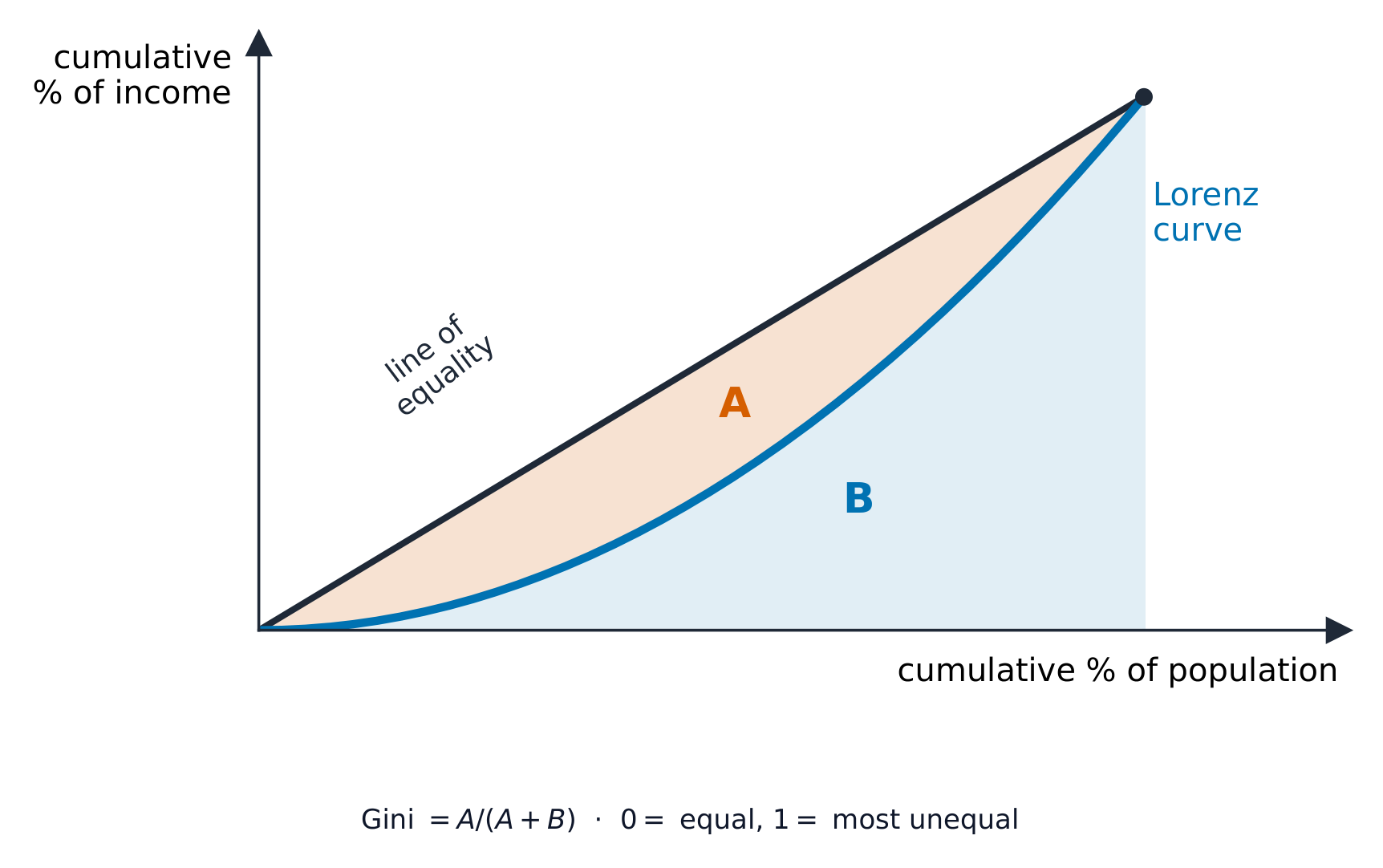
洛伦兹曲线和基尼系数测量不平等
A Gini coefficient closer to 1 indicates: · 基尼系数越接近1表示:
Gini runs 0 (equal) to 1 (one person has everything). · 基尼系数范围为0(绝对平等)到1(一人拥有全部财富)。
Measuring the gap
- The Lorenz curve and Gini coefficient measure how unequally income is shared (0 = equal, 1 = one person has all).
The more the Lorenz curve bows below the line of equality, the higher the Gini — and the more unequal the distribution.
测量差距
- 洛伦兹曲线和基尼系数测量收入分享得多么不平等(0 = 平等,1 = 一个人拥有全部)。
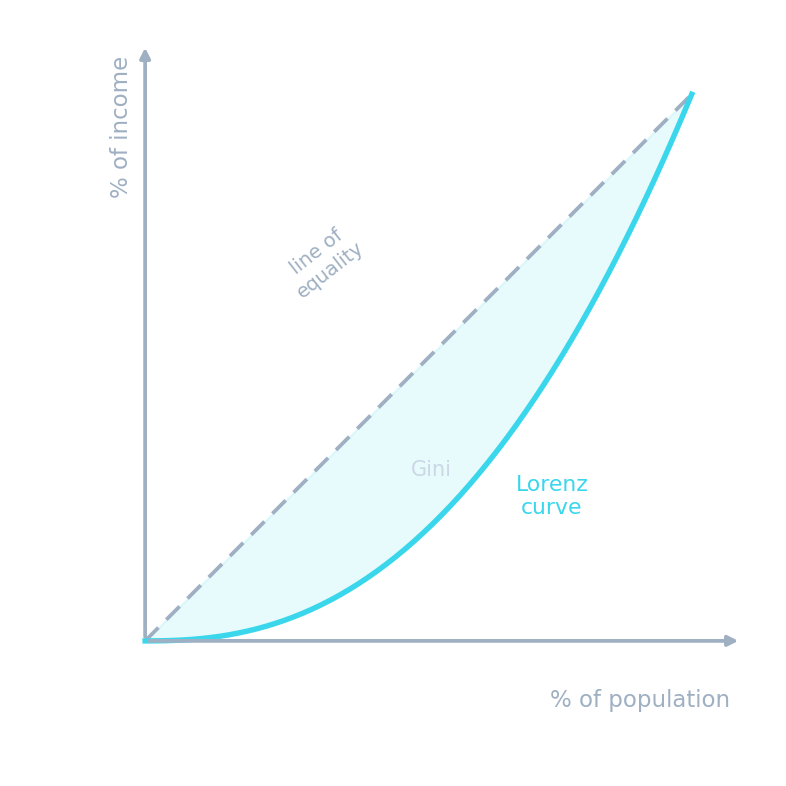
洛伦兹曲线越向平等线之下弯曲,基尼越高——分布就越不平等。
Bend the Lorenz curve · 弯曲洛伦兹曲线
Drag each economy's top-20% income share. The curve that hugs the line of equality has the lower Gini — and the quintile chips show what that society looks like in numbers. · 拖动每个经济体前20%人口的收入份额。紧贴平等线的曲线具有较低的基尼系数——五等分芯片展示了该社会的具体人数分布。
Heavy redistribution can reduce incentives to work — the equity-efficiency trade-off. · 过度的再分配可能会削弱工作积极性——这是公平与效率之间的权衡。
High taxes/benefits can blunt incentives, trading some efficiency for greater equity. · 高税收/福利可能会削弱激励,以牺牲部分效率换取更大的公平。
Match each redistribution tool to how it works. · 将每种再分配工具与其运作方式匹配。
Taxes, transfers and human-capital spending narrow the income gap. · 税收、转移支付和人力资本支出可以缩小收入差距。
Redistribution and its cost
- Tools: progressive taxes 累进税, benefits/transfers, and spending on health and education.
- The catch: heavy redistribution can blunt incentives to work and invest — the equity-efficiency trade-off.
Equity is not equality. Aiming for perfect equality can be inefficient and is rarely the goal; most policy targets a fairer distribution while preserving incentives.
A minimum wage above equilibrium causes unemployment
再分配及其成本
- 工具:累进税、福利/转移支付,以及对医疗和教育的支出。
- 难题:沉重的再分配能钝化工作和投资的激励——公平-效率权衡。
公平不是平等。 追求完全平等能是低效的,而且很少是目标;大多数政策瞄准一个更公平的分配,同时保留激励。

一个高于均衡的最低工资造成失业
You've got it
- equality = the same for all; equity = fair (horizontal + vertical)
- inequality is measured by the Lorenz curve and Gini (0 equal → 1 unequal)
- redistribute with progressive tax + transfers + spending, mindful of the equity-efficiency trade-off
你掌握了
- 平等 = 对所有人相同;公平 = 公正(横向 + 纵向)
- 不平等由洛伦兹曲线和基尼测量(0 平等 → 1 不平等)
- 用累进税 + 转移支付 + 支出再分配,留意公平-效率权衡