Policies to correct market failure · 纠正市场失灵的政策
| English | 中文 | Pinyin · 拼音 |
|---|---|---|
| subsidies/ˈsʌbsɪdiz/ | 补贴 | bǔ tiē |
| indirect taxes/ɪndaɪˈrekt ˈtæksɪz/ | 间接税 | jiàn jiē shuì |
| negative externalities/ˈneɡətɪv ekˈstɜːnælɪtiz/ | 负外部性 | fù wài bù xìng |
| positive externalities/ˈpɒzɪtɪv ekˈstɜːnælɪtiz/ | 正外部性 | zhèng wài bù xìng |
| regulation/ˌreɡjʊˈleɪʃn/ | 管制 | guǎn zhì |
| tradable permits/ˈtreɪdəbl ˈpɜːmɪts/ | 可交易许可证 | kě jiāo yì xǔ kě zhèng |
| state provision/steɪt prəˈvɪʒn/ | 政府提供 | zhèng fǔ tí gōng |
The government's toolkit for market failure
- Once you've spotted a market failure, the question is what to do about it — tax it, subsidise it, regulate it, or provide it directly?
- Each tool has strengths and pitfalls; the skill is matching the policy to the failure.
政府应对市场失灵的工具包
- 一旦你发现一个市场失灵,问题是对它做什么——对它征税、补贴它、监管它,还是直接供给它?
- 每个工具有优点和陷阱;技巧是把政策与失灵匹配。
To correct a negative externality, a government would typically use a: · 为纠正一个负外部性,一个政府通常会用一个:
A tax raises the price and cuts the over-produced quantity toward the optimum. · 一项税提高价格并把过度生产的数量削减到最优。
Subsidies are used to encourage goods with positive externalities, like vaccines. · 补贴被用来鼓励有正外部性的商品,像疫苗。
Subsidies lower price and raise consumption of under-provided merit goods. · 补贴降低价格并提高供给不足的优值物品的消费。
Taxes and subsidies 补贴
- Indirect taxes 间接税 on goods with negative externalities 负外部性 (carbon tax, sugar tax) raise price and cut output toward the social optimum.
- Subsidies for goods with positive externalities 正外部性 (vaccines, public transport) lower price and raise consumption.
A tax set to the external cost shifts the market toward the social optimum — closing the welfare loss.
税收与补贴
- 对有负外部性的商品的间接税(碳税、糖税)提高价格并把产出削减到社会最优。
- 对有正外部性的商品的补贴(疫苗、公共交通)降低价格并提高消费。
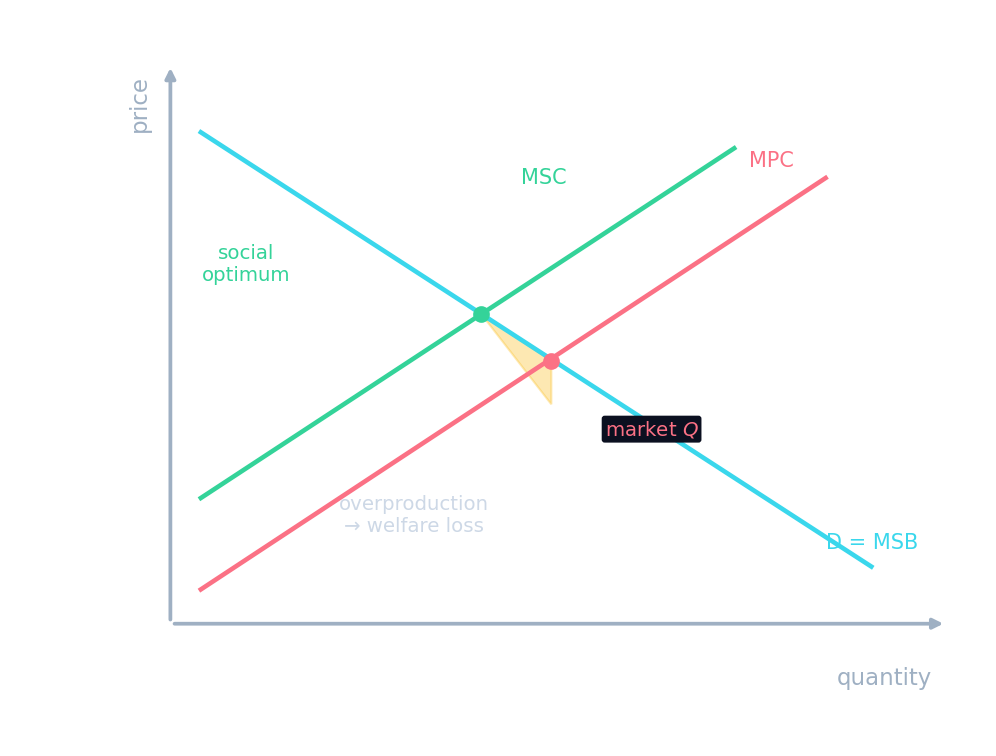
一项定为外部成本的税把市场推向社会最优——弥合福利损失。
When a market fails · 当市场失灵
An externality · 外部性 (like pollution) means the market price ignores a real cost — output ends up above the efficient level. Add the external cost to see the gap. · 外部性(如污染)意味着市场价格忽略了一项真实成本——产出最终高于有效水平。加上外部成本看那个缺口。
Tradable pollution permits work by: · 可交易的污染许可证通过以下起作用:
A cap-and-trade system limits total emissions and prices them via a permit market. · 一个总量管制与交易系统限制总排放并通过一个许可证市场给它们定价。
Regulation 管制, permits and provision
- Regulation: rules and limits (emissions caps, bans, age limits).
- Tradable permits 可交易许可证: a cap on total pollution, with permits firms can buy and sell — a market-based fix.
- State provision 政府提供: the government supplies public/merit goods directly (defence, schooling).
Income inequality: informal settlements sit close to wealthier districts in many cities
监管、许可证与供给
- 监管(regulation):规则和限制(排放上限、禁令、年龄限制)。
- 可交易许可证(tradable permits):对总污染的一个上限,加上企业能买卖的许可证——一个基于市场的修复。
- 国家供给(state provision):政府直接供给公共/优值物品(国防、教育)。

收入不平等:在许多城市,非正式住区紧挨着更富裕的地区
Match each policy to the failure it tackles. · 把每项政策与它应对的失灵配对。
Tax curbs negative externalities; subsidy boosts positive ones; provision supplies public goods. · 税抑制负外部性;补贴提振正外部性;供给提供公共物品。
Evaluating policies
- Judge each by effectiveness (does it hit the optimum?), cost, administrative feasibility, and unintended consequences (e.g. a black market, or government failure).
No policy is free. Taxes are hard to set exactly; subsidies cost the taxpayer; regulation needs enforcement. Always weigh the cure against its own costs.
A progressive tax takes a higher rate from higher incomes
评估政策
- 用有效性(它达到最优吗?)、成本、行政可行性和意外后果(例如黑市,或政府失灵)来判断每一项。
没有政策是免费的。 税很难精确设定;补贴让纳税人付出代价;监管需要执行。总是把疗法与它自身的成本权衡。
A policy can backfire through government ______ (unintended consequences that worsen welfare). · 一项政策能通过政府______(恶化福利的意外后果)而适得其反。
Government failure: intervention that does more harm than good. · 政府失灵:弊大于利的介入。
You've got it
- tax negative externalities; subsidise positive ones; toward the social optimum
- regulation, tradable permits, and state provision are further tools
- evaluate by effectiveness, cost, feasibility and unintended consequences
你掌握了
- 对负外部性征税;补贴正外部性;朝向社会最优
- 监管、可交易许可证和国家供给是进一步的工具
- 用有效性、成本、可行性和意外后果来评估