Supply-side policy · 供给侧政策
| English | 中文 | Pinyin · 拼音 |
|---|---|---|
| productivity/ˌprɒdəkˈtɪvɪti/ | 生产率 | shēng chǎn lǜ |
| supply-side policies/səˈplaɪ saɪd ˈpɒlɪsiz/ | 供给侧政策 | gōng jǐ cè zhèng cè |
| aggregate supply/ˈæɡrɪɡeɪt səˈplaɪ/ | 总供给 | zǒng gōng jǐ |
| market-based/ˈmɑːkɪt beɪst/ | 市场化的 | shì chǎng huà de |
| interventionist/ˌɪntəˈvenʃənɪst/ | 干预主义的 | gān yù zhǔ yì de |
| deregulate/diːˈreɡjʊleɪt/ | 放松管制 | fàng sōng guǎn zhì |
| infrastructure/ˈɪnfrəstrʌktʃə/ | 基础设施 | jī chǔ shè shī |
Growing the economy's capacity
- Fiscal and monetary policy manage demand. But to raise an economy's long-run potential, you must improve its supply — its productivity 生产率 and capacity.
- Supply-side policies 供给侧政策 aim to shift aggregate supply 总供给 to the right.
增长经济的产能
- 财政和货币政策管理需求。但要提高一个经济的长期潜力,你必须改善它的供给——它的生产率和产能。
- 供给侧政策(supply-side policies)旨在把总供给右移。
Supply-side policies aim to: · 供给侧政策旨在:
They raise productivity and capacity, shifting AS right. · 它们提高生产率和产能,把 AS 右移。
A successful rightward shift of AS can raise output AND lower the price level. · 一个成功的 AS 向右移动能提高产出并降低价格水平。
Unlike demand-side policy, supply-side success eases inflation while raising output. · 不像需求侧政策,供给侧的成功在提高产出的同时缓解通货膨胀。
Shifting AS right
- Supply-side policies raise productivity and the quantity/quality of factors, shifting AS right.
- The prize: more output with lower inflation — the best of both worlds, if it works.
A rightward AS shift raises real GDP while easing the price level — unlike demand-side policy.
把 AS 右移
- 供给侧政策提高生产率和要素的数量/质量,把 AS 右移。
- 奖赏:更多产出加更低通货膨胀——两全其美,如果它起作用。
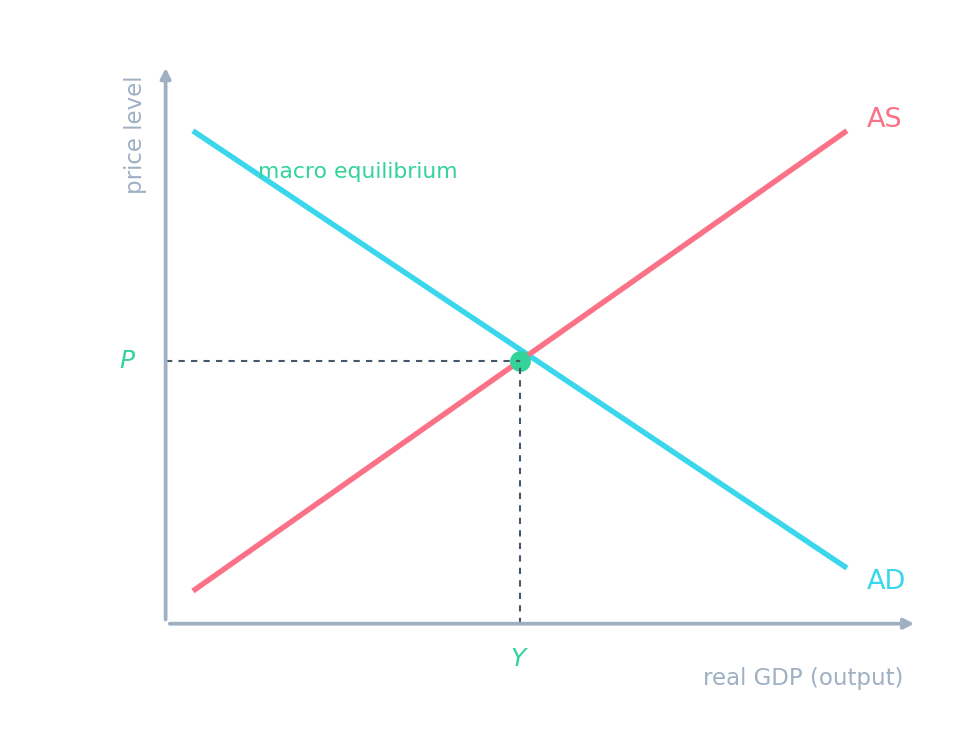
一个向右的 AS 移动提高实际 GDP 同时缓解价格水平——不像需求侧政策。
Supply-side policy shifts AS · 供给侧政策移动 AS
Supply-side policies raise the economy's productive capacity — aggregate supply (AS) shifts right, lowering the price level at higher output. · 供给侧政策提高经济的生产能力——总供给(AS)右移,在更高的产出下降低价格水平。
Which is a market-based supply-side policy? · 哪个是一项基于市场的供给侧政策?
Tax cuts/deregulation are market-based; building schools is interventionist. · 减税/放松管制是基于市场的;建学校是干预主义的。
Classify each supply-side policy. · 给每项供给侧政策分类。
Market-based frees up markets; interventionist has the government build capacity. · 基于市场放开市场;干预主义让政府建立产能。
Market-based 市场化的 vs interventionist 干预主义的
- Market-based: cut income/corporation tax, deregulate 放松管制, reduce union power, trim benefits — free up markets.
- Interventionist: government spending on education, training, infrastructure 基础设施 and R&D — build capacity directly.
Supply-side policy shifts LRAS right: more output, lower prices
基于市场对干预主义
- 基于市场(market-based):削减所得税/公司税,放松管制,减少工会力量,削减补助——放开市场。
- 干预主义(interventionist):政府在教育、培训、基础设施和研发上支出——直接建立产能。

供给侧政策把 LRAS 右移:更多产出、更低价格
A drawback of supply-side policy is that it works ______ (over years, not months). · 供给侧政策的一个弊端是它起作用______(数年,不是数月)。
Education, infrastructure and R&D take years to raise capacity. · 教育、基础设施和研发需要数年来提高产能。
The long game
- Supply-side policies work slowly (years), and some (like tax cuts) can worsen inequality or cost revenue.
- But they are the only route to sustained growth without inflation.
Supply-side shifts AS, not AD. Don't confuse it with fiscal stimulus: cutting taxes to boost demand is fiscal; cutting taxes to improve incentives and productivity is supply-side.
长期博弈
- 供给侧政策起作用缓慢(数年),且有些(像减税)能恶化不平等或损失收入。
- 但它们是没有通货膨胀的持续增长的唯一途径。
供给侧移动 AS,不是 AD。 别把它与财政刺激混淆:削减税收以提振需求是财政的;削减税收以改善激励和生产率是供给侧的。
You've got it
- supply-side policy raises productivity/capacity → shifts AS right (more output, lower inflation)
- market-based (tax cuts, deregulation) vs interventionist (education, infrastructure)
- it works slowly but is the route to sustained non-inflationary growth
你掌握了
- 供给侧政策提高生产率/产能 → 把 AS 右移(更多产出、更低通货膨胀)
- 基于市场(减税、放松管制)对干预主义(教育、基础设施)
- 它起作用缓慢但是通往持续的非通货膨胀增长的途径