The reasons for international trade · 国际贸易的理由
| English | 中文 | Pinyin · 拼音 |
|---|---|---|
| specialise/ˈspeʃəlaɪz/ | 专业化 | zhuān yè huà |
| comparative advantage/kəmˈpærətɪv ədˈvæntɪdʒ/ | 比较优势 | bǐ jiào yōu shì |
| absolute advantage/ˈæbsəluːt ədˈvæntɪdʒ/ | 绝对优势 | jué duì yōu shì |
| opportunity cost/ɒpəˈtjuːnɪti kɒst/ | 机会成本 | jī huì chéng běn |
| over-specialisation/ˈəʊvə ˌspeʃəlaɪˈzeɪʃn/ | 过度专业化 | guò dù zhuān yè huà |
Why countries trade
- No country makes everything itself — Japan imports food, Saudi Arabia imports cars, everyone imports something.
- Trade lets each country specialise 专业化 in what it does relatively best, so the world produces more in total. The logic is comparative advantage 比较优势.
为什么国家交易
- 没有国家自己制造一切——日本进口食品,沙特阿拉伯进口汽车,每个人都进口某种东西。
- 贸易让每个国家专业化于它相对最擅长的,所以世界总共生产更多。这个逻辑是比较优势(comparative advantage)。
Absolute vs comparative advantage
- Absolute advantage 绝对优势: a country can produce a good using fewer resources than another.
- Comparative advantage: a country can produce a good at a lower opportunity cost 机会成本 than another — this is what drives trade, even if one country is better at everything.
A container port: international trade moves goods between countries in huge volumes
绝对优势对比较优势
- 绝对优势(absolute advantage):一个国家能用比另一个更少的资源生产一种商品。
- 比较优势(comparative advantage):一个国家能以比另一个更低的机会成本生产一种商品——这是驱动贸易的因素,即使一个国家在一切上都更好。

一个集装箱港口:国际贸易以巨大的量在国家之间移动商品
Why countries trade · 为什么国家交易
Each country specialises where its opportunity cost is lowest, then trades — both can consume beyond their own frontier. · 每个国家在其机会成本最低之处专业化,然后交易——两者都能消费超出它们自己的边界。
Comparative advantage is based on which country has the lower: · 比较优势基于哪个国家有更低的:
Comparative advantage compares opportunity costs, not absolute resource use. · 比较优势比较机会成本,不是绝对的资源使用。
A country can have a comparative advantage in a good even if another country has an absolute advantage in everything. · 一个国家能在一种商品上有比较优势,即使另一个国家在一切上有绝对优势。
Comparative advantage depends on relative opportunity cost, so trade still benefits both. · 比较优势取决于相对机会成本,所以贸易仍使两者获益。
Match each term to its meaning. · 把每个术语与它的含义配对。
Absolute = fewer resources; comparative = lower opportunity cost; specialise accordingly. · 绝对 = 更少的资源;比较 = 更低的机会成本;据此专业化。
Gains from specialisation
- Each country specialises where its opportunity cost is lowest, then trades.
- Total world output rises, and both countries can consume beyond their own production possibilities.
Opportunity cost. If a country can make 10 units of wheat or 5 of cloth with the same resources, the opportunity cost of 1 cloth is 2 wheat. It should specialise where its opportunity cost is lower than its trading partner's.
Comparative advantage from differently-sloped PPCs
来自专业化的收益
- 每个国家在其机会成本最低之处专业化,然后交易。
- 世界总产出上升,且两个国家都能消费超出它们自己的生产可能性。
机会成本。 如果一个国家能用相同的资源制造 10 单位小麦或 5 单位布,那么 1 布的机会成本是 2 小麦。它应该在它的机会成本低于其贸易伙伴之处专业化。
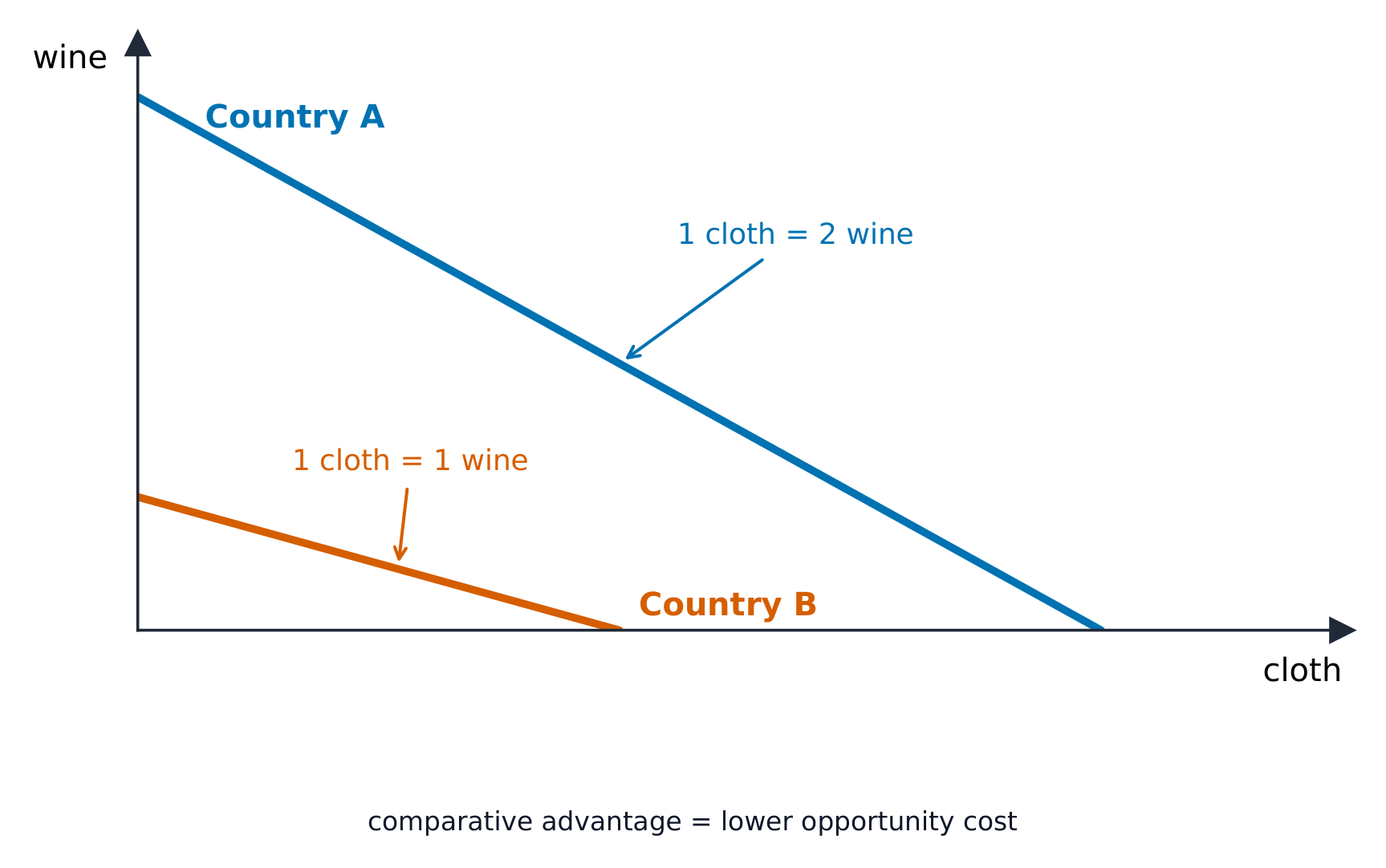
来自不同斜率 PPC 的比较优势
A country can make 10 units of wheat OR 5 units of cloth with the same resources. What is the opportunity cost of 1 unit of cloth (in wheat)? · 一个国家能用相同的资源制造 10 单位小麦或 5 单位布。1 单位布的机会成本(以小麦计)是多少?
10 wheat ÷ 5 cloth = 2 wheat per cloth. · 10 小麦 ÷ 5 布 = 每布 2 小麦。
Countries should specialise where their ______ cost is lowest, then trade. · 国家应该在它们的______成本最低之处专业化,然后交易。
Specialise by comparative (opportunity-cost) advantage. · 按比较(机会成本)优势专业化。
Limits and assumptions
- The gains assume no/low transport costs, few trade barriers, and that countries can actually switch resources.
- Over-specialisation 过度专业化 brings risks: dependence on one industry, and vulnerability to price swings.
限制与假设
- 这些收益假设没有/低运输成本、很少贸易壁垒,以及国家能实际转换资源。
- 过度专业化带来风险:对一个产业的依赖,以及对价格波动的脆弱性。
You've got it
- absolute advantage = fewer resources; comparative advantage = lower opportunity cost
- countries gain by specialising where opportunity cost is lowest, then trading
- gains assume low barriers/transport costs; over-specialisation carries risk
你掌握了
- 绝对优势 = 更少的资源;比较优势 = 更低的机会成本
- 国家通过在机会成本最低之处专业化然后交易而获益
- 收益假设低壁垒/运输成本;过度专业化带有风险