Protectionism · 保护主义
| English | 中文 | Pinyin · 拼音 |
|---|---|---|
| protectionist/prəˈtekʃənɪst/ | 贸易保护主义的 | mào yì bǎo hù zhǔ yì de |
| tariff/ˈtærɪf/ | 关税 | guān shuì |
| quota/ˈkwəʊtə/ | 配额 | pèi é |
| subsidy/ˈsʌbsɪdi/ | 补贴 | bǔ tiē |
| infant industries/ˈɪnfənt ˈɪndʌstriz/ | 幼稚产业 | yòu zhì chǎn yè |
| dumping/ˈdʌmpɪŋ/ | 倾销 | qīng xiāo |
| retaliation/rɪˌtælɪˈeɪʃn/ | 报复 | bào fù |
| world welfare/wɜːld ˈwelfeə/ | 世界福利 | shì jiè fú lì |
Walls around a market
- Governments often shield home industries from foreign competition — with taxes on imports, limits on quantities, or subsidies to local firms.
- These protectionist 贸易保护主义的 tools help some, hurt others, and almost always reduce total welfare.
一个市场周围的墙
- 政府常常保护本国产业免受外国竞争——用对进口的税、对数量的限制,或给本地企业的补贴。
- 这些保护主义(protectionist)工具帮助一些人,伤害另一些人,而且几乎总是减少总福利。
A tariff is: · 一项关税是:
A tariff is an import tax; a quota is a quantity limit; a subsidy pays home firms. · 关税是一种进口税;配额是一个数量限制;补贴付钱给本国企业。
Match each protectionist tool to its definition. · 把每项保护主义工具与它的定义配对。
Three classic tools: tax, quantity limit, and producer support. · 三个经典工具:税、数量限制和生产者支持。
A physical limit on the quantity of a good that may be imported is called a . · 对可被进口的一种商品的数量的一个实物限制被称为一个。
A quota caps the import quantity (vs a tariff, which taxes it). · 一个配额限定进口数量(对比关税,它对其征税)。
The main tools
- Tariff 关税: a tax on imports — raises their price, cuts the quantity imported.
- Quota 配额: a physical limit on the quantity imported.
- Subsidy 补贴: payment to domestic firms so they can undercut imports.
A tariff lifts the price from the world price (Pw) to Pw + tariff, so consumers buy less and imports fall.
主要工具
- 关税(tariff):对进口的一种税——提高它们的价格,削减进口的数量。
- 配额(quota):对进口数量的一个实物限制。
- 补贴(subsidy):给国内企业的付款,使它们能压低进口的价格。
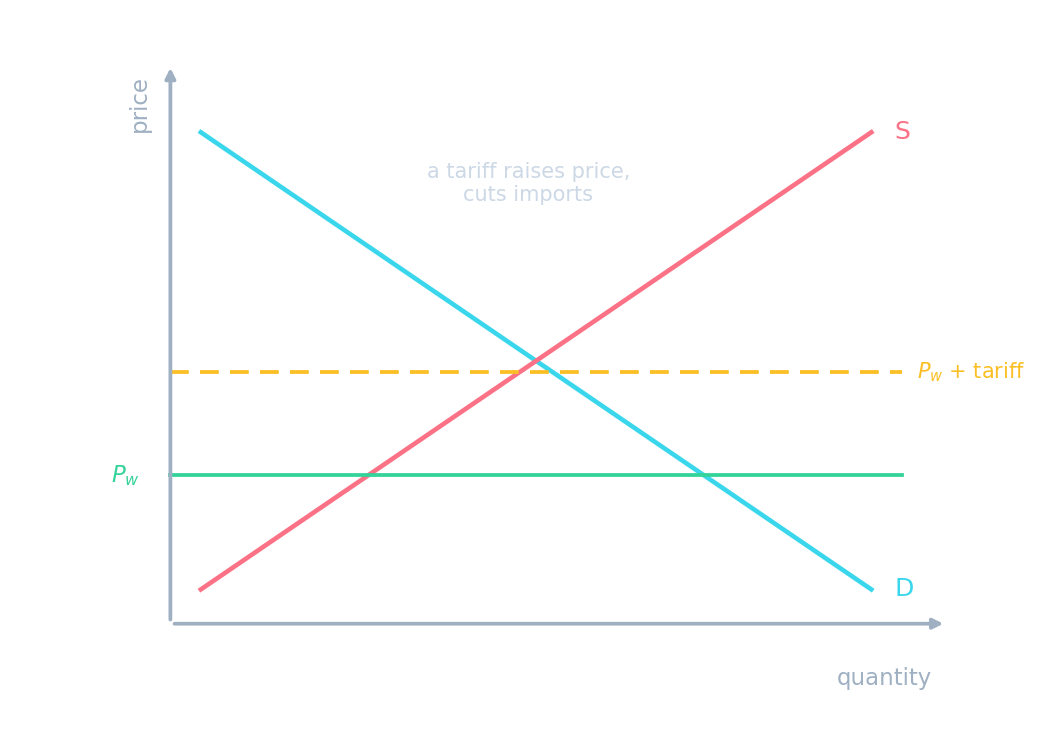
一项关税把价格从世界价格(Pw)抬高到 Pw + 关税,所以消费者买得更少且进口下降。
Protectionism in the market · 市场中的保护主义
A tariff or quota shifts effective supply and raises the domestic price, protecting home producers but costing consumers. Shift the lines to see it. · 一项关税或配额移动有效供给并提高国内价格,保护本国生产者但让消费者付出代价。移动这些线来看它。
The "infant industry" argument says protection should be used to: · "幼稚产业"论点说保护应被用来:
Temporary protection while a young industry achieves economies of scale. · 在一个年轻产业实现规模经济期间的临时保护。
Arguments for protection
- Protect infant industries 幼稚产业 until they can compete,
- guard against dumping 倾销 (foreign goods sold below cost),
- save jobs in declining industries, and raise government revenue (tariffs).
A tariff raises domestic supply, cuts demand, and shrinks imports
支持保护的论点
- 保护幼稚产业(infant industries)直到它们能竞争,
- 防范倾销(dumping,外国商品以低于成本出售),
- 拯救衰退产业中的工作,以及筹集政府收入(关税)。

一项关税提高国内供给,削减需求,并缩小进口
Protectionism tends to raise prices for domestic consumers. · 保护主义倾向于为国内消费者提高价格。
Tariffs and quotas reduce competition and raise prices. · 关税和配额减少竞争并提高价格。
Arguments against
- Higher prices and less choice for consumers,
- inefficiency (protected firms don't improve),
- risk of retaliation 报复 and trade wars,
- net loss of world welfare 世界福利 (lost gains from trade).
A tariff helps producers but hurts consumers more. Domestic firms and the government gain, but consumers lose more than that — leaving a net welfare loss.
Three tools of protection: tariffs, quotas and subsidies
反对的论点
- 对消费者的更高价格和更少选择,
- 低效(受保护的企业不改进),
- 报复(retaliation)和贸易战的风险,
- 世界福利的净损失(失去的贸易收益)。
一项关税帮助生产者但更多地伤害消费者。 国内企业和政府获益,但消费者损失得比那更多——留下一个净福利损失。
You've got it
- tools: tariff (import tax), quota (quantity limit), subsidy (to home firms)
- arguments for: infant industry, anti-dumping, jobs, revenue
- arguments against: higher prices, inefficiency, retaliation, net welfare loss
你掌握了
- 工具:关税(进口税)、配额(数量限制)、补贴(给本国企业)
- 支持的论点:幼稚产业、反倾销、工作、收入
- 反对的论点:更高价格、低效、报复、净福利损失