Monetary policy · 货币政策
| English | 中文 | Pinyin · 拼音 |
|---|---|---|
| central bank/ˈsentrəl bæŋk/ | 中央银行 | zhōng yāng yín háng |
| interest rates/ˈɪntrest reɪts/ | 利率 | lì lǜ |
| monetary policy/ˈmʌnɪtəri ˈpɒlɪsi/ | 货币政策 | huò bì zhèng cè |
| money supply/ˈmʌni səˈplaɪ/ | 货币供给 | huò bì gōng jǐ |
| inflation target/ɪnˈfleɪʃn ˈtɑːɡɪt/ | 通胀目标 | tōng zhàng mù biāo |
| transmission mechanism/trænˈsmɪʃn ˈmekənɪzəm/ | 传导机制 | chuán dǎo jī zhì |
| quantitative easing/ˈkwɒntɪteɪtɪv ˈiːzɪŋ/ | 量化宽松 | liàng huà kuān sōng |
The most powerful number in the economy
- When a central bank 中央银行 nudges interest rates 利率, mortgages, business loans and savings all move — and with them, spending across the whole economy.
- Monetary policy 货币政策 — controlling interest rates and the money supply 货币供给 — is the main day-to-day tool for hitting the inflation target 通胀目标.
经济中最强大的数字
- 当一家中央银行轻推利率时,抵押贷款、商业贷款和储蓄都移动——随之而来的是整个经济的支出。
- 货币政策(monetary policy)——控制利率和货币供给——是达成通货膨胀目标的主要日常工具。
Monetary policy is set by the central bank, whereas fiscal policy is set by the government. · 货币政策由中央银行设定,而财政政策由政府设定。
Central bank = monetary (rates); government = fiscal (spending/taxes). · 中央银行 = 货币(利率);政府 = 财政(支出/税收)。
The central bank and interest rates
- An independent central bank sets the base interest rate to meet an inflation target (often ~2%).
- Raise rates → borrowing dearer, saving more attractive → spending falls (contractionary).
- Cut rates → borrowing cheaper → spending rises (expansionary).
A central bank, like the Bank of England, sets the interest rate, the main tool of monetary policy
中央银行与利率
- 一家独立的中央银行(central bank)设定基准利率以达到一个通货膨胀目标(常常 ~2%)。
- 提高利率 → 借款更贵、储蓄更有吸引力 → 支出下降(紧缩性)。
- 削减利率 → 借款更便宜 → 支出上升(扩张性)。

一家中央银行,像英格兰银行,设定利率,货币政策的主要工具
Monetary policy shifts AD · 货币政策移动 AD
Changing interest rates moves aggregate demand. Lower rates → more borrowing and spending → AD shifts right. · 改变利率移动总需求。更低的利率 → 更多借款和支出 → AD 右移。
Monetary policy is mainly conducted by changing: · 货币政策主要通过改变以下来实施:
The central bank uses interest rates and the money supply; spending/taxes are fiscal policy. · 中央银行使用利率和货币供给;支出/税收是财政政策。
Cutting interest rates tends to: · 削减利率倾向于:
Cheaper borrowing and lower saving rewards boost consumption and investment → AD right. · 更便宜的借款和更低的储蓄回报提振消费和投资 → AD 右移。
To reduce high inflation, a central bank would typically: · 为减少高通货膨胀,一家中央银行通常会:
Higher rates cool borrowing and spending, reducing demand-pull inflation. · 更高的利率冷却借款和支出,减少需求拉动通货膨胀。
The transmission mechanism 传导机制
- Lower rates → cheaper loans + lower saving reward → more consumption and investment → AD shifts right.
- A weaker currency (from lower rates) also boosts net exports.
Lower interest rates raise consumption and investment, shifting AD right toward higher output.
传导机制
- 更低的利率 → 更便宜的贷款 + 更低的储蓄回报 → 更多消费和投资 → AD 右移。
- 一个更弱的货币(来自更低的利率)也提振净出口。
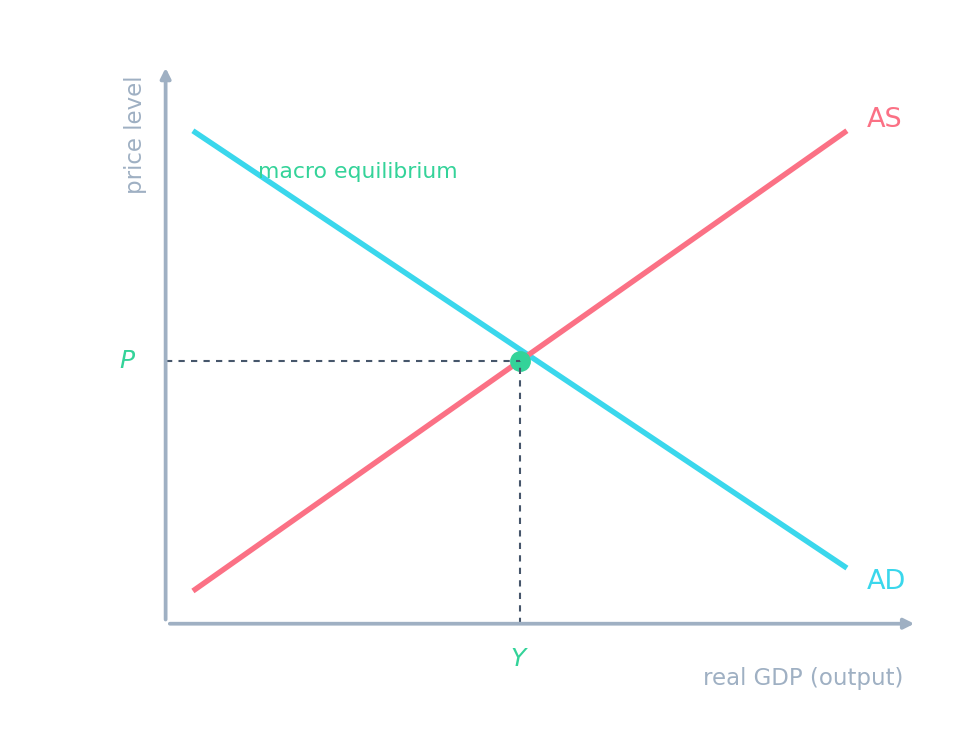
更低的利率提高消费和投资,把 AD 右移朝向更高的产出。
Quantitative easing 量化宽松
- When rates are already near zero, the bank can use quantitative easing (QE) — creating money to buy bonds, lowering long-term rates and boosting lending.
Monetary ≠ fiscal. Monetary policy is the central bank (interest rates, money supply); fiscal policy is the government (spending, taxes). Exam answers must keep them separate.
How a higher interest rate works through to slow inflation
量化宽松
- 当利率已经接近零时,银行能使用量化宽松(quantitative easing,QE)——创造货币来买债券,降低长期利率并提振放贷。
货币 ≠ 财政。 货币政策是中央银行(利率、货币供给);财政政策是政府(支出、税收)。考试答案必须把它们分开。

一个更高的利率如何传导以减缓通货膨胀
Creating money to buy bonds when rates are near zero is called quantitative . · 当利率接近零时创造货币来买债券被称为量化。
Quantitative easing (QE) lowers long-term rates and boosts lending. · 量化宽松(QE)降低长期利率并提振放贷。
You've got it
- monetary policy = the central bank setting interest rates / money supply for the inflation target
- lower rates → more borrowing/spending → AD right; higher rates restrain AD
- QE (creating money to buy bonds) is used when rates are near zero
你掌握了
- 货币政策 = 中央银行为通货膨胀目标设定利率/货币供给
- 更低的利率 → 更多借款/支出 → AD 右移;更高的利率抑制 AD
- QE(创造货币来买债券)在利率接近零时使用