Taxes and subsidies · 税收与补贴
| English | 中文 | Pinyin · 拼音 |
|---|---|---|
| indirect tax/ɪndaɪˈrekt tæks/ | 间接税 | jiàn jiē shuì |
| Pigouvian tax/pɪˈɡuːvɪən tæks/ | 庇古税 | bì gǔ shuì |
| social optimum/ˈsəʊʃl ˈɒptɪməm/ | 社会最优 | shè huì zuì yōu |
| subsidy/ˈsʌbsɪdi/ | 补贴 | bǔ tiē |
| incidence/ˈɪnsɪdəns/ | 税负归宿 | shuì fù guī sù |
| elasticity/ɪlæˈstɪsɪti/ | 弹性 | tán xìng |
Making the polluter pay
- If a factory's smoke harms others, why not add a tax equal to that harm? Suddenly the firm faces the full cost.
- Indirect taxes 间接税 and subsidies are the government's main tools for correcting externalities.
让污染者付费
- 如果一个工厂的烟雾伤害别人,为什么不加一项等于那个伤害的税?突然企业面对全部成本。
- 间接税(indirect taxes)和补贴(subsidies)是政府纠正外部性的主要工具。
An indirect tax on a good shifts the supply curve: · 对一个商品的间接税把供给曲线移到:
A tax raises firms' costs, reducing supply at every price — a leftward shift. · 一项税提高企业的成本,在每个价格上减少供给——一个左移。
A Pigouvian tax is set equal to the external cost to reach the social optimum. · 一项庇古税被定为等于外部成本以达到社会最优。
Setting the tax to the external cost internalises it, cutting output to the optimum. · 把税定为外部成本使它内部化,把产出削减到最优。
Indirect taxes
- An indirect tax (on a good, like fuel duty or VAT) raises firms' costs, shifting supply left and raising the price.
- A Pigouvian tax 庇古税 is set equal to the external cost, pushing output down to the social optimum 社会最优.
An indirect tax shifts supply left (here drawn as the shift between the two curves); a subsidy 补贴 shifts it right.
间接税
- 一项间接税(对一个商品,像燃油税或增值税)提高企业的成本,把供给左移并提高价格。
- 一项庇古税(Pigouvian tax)被定为等于外部成本,把产出推低到社会最优。
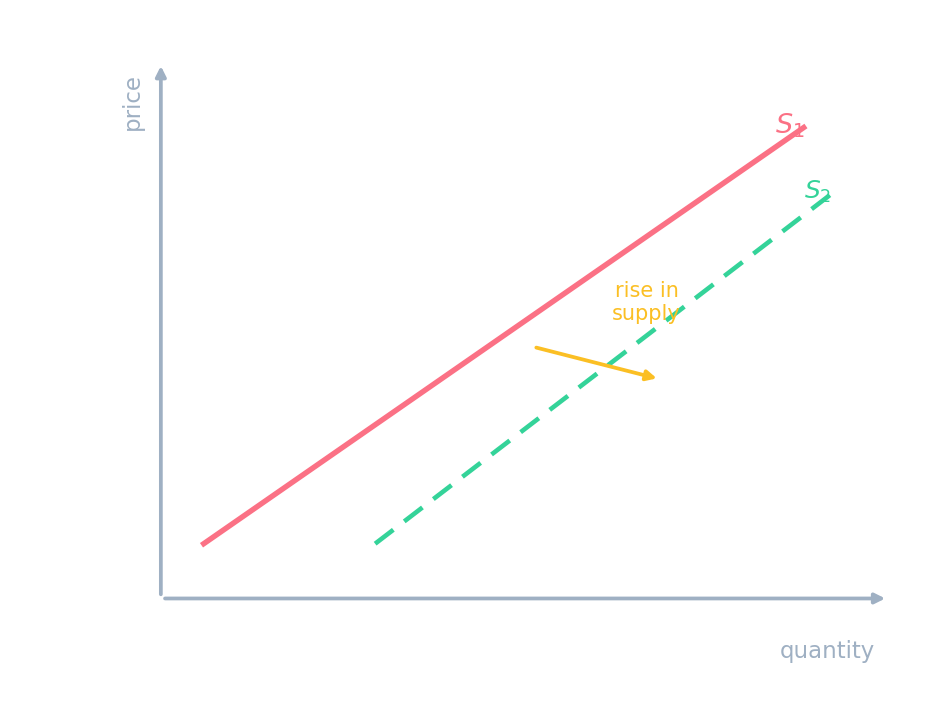
一项间接税把供给左移(这里画成两条曲线之间的移位);一项补贴把它右移。
Taxes & subsidies · 税收与补贴
A tax · 税 lifts the supply curve; the new crossing sets a higher price. · 一项税抬高供给曲线;新的交点决定一个更高的价格。
A subsidy to producers shifts supply right because it: · 给生产者的补贴把供给右移,因为它:
A subsidy lowers effective cost, so firms supply more at each price. · 一项补贴降低有效成本,所以企业在每个价格上供给更多。
Governments often pay a ______ to encourage merit goods like renewable energy. · 政府常常支付一项______来鼓励像可再生能源这样的优值物品。
A subsidy lowers cost and raises output of the merit good. · 一项补贴降低成本并提高优值物品的产出。
Subsidies
- A subsidy is a government payment to producers, lowering their costs and shifting supply right — encouraging output of merit goods (e.g. renewable energy).
A subsidy shifts supply down: lower price and higher quantity
补贴
- 一项补贴是一笔给生产者的政府付款,降低他们的成本并把供给右移——鼓励优值物品的产出(例如可再生能源)。

一项补贴把供给下移:更低的价格和更高的数量
When demand is inelastic, the burden of an indirect tax falls mainly on: · 当需求非弹性时,一项间接税的负担主要落在:
Inelastic demand means buyers keep buying, so the firm passes most of the tax on as a higher price. · 非弹性需求意味着买家继续买,所以企业把大部分税作为更高的价格转嫁出去。
Who really pays? (incidence 税负归宿)
- The incidence of a tax — who bears it — depends on elasticity 弹性:
- Demand inelastic → consumers bear most of the tax (price rises a lot).
- Demand elastic → producers bear most (they can't pass it on).
Tax revenue ≠ correcting the externality. A tax can raise revenue and cut output, but setting it exactly equal to the external cost (hard to measure) is what achieves the social optimum.
谁真正付费?(归宿)
- 一项税的归宿(incidence)——谁承担它——取决于弹性:
- 需求非弹性 → 消费者承担大部分税(价格上升很多)。
- 需求弹性 → 生产者承担大部分(他们不能把它转嫁)。
税收 ≠ 纠正外部性。 一项税能筹集收入并削减产出,但把它定为恰好等于外部成本(难以测量)才是实现社会最优的。
You've got it
- an indirect tax shifts supply left (raises price, cuts output); a subsidy shifts it right
- a Pigouvian tax set to the external cost reaches the social optimum
- tax incidence depends on elasticity: inelastic demand → consumers pay more
你掌握了
- 一项间接税把供给左移(提高价格、削减产出);一项补贴把它右移
- 一项定为外部成本的庇古税达到社会最优
- 税的归宿取决于弹性:非弹性需求 → 消费者付更多