Resource allocation in economic systems · 经济体制中的资源配置
| English | 中文 | Pinyin · 拼音 |
|---|---|---|
| economic system/ˌiːkəˈnɒmɪk ˈsɪstəm/ | 经济体制 | jīng jì tǐ zhì |
| market economy/ˈmɑːkɪt ɪˈkɒnəmi/ | 市场经济 | shì chǎng jīng jì |
| price mechanism/praɪs ˈmekənɪzəm/ | 价格机制 | jià gé jī zhì |
| command/kəˈmænd/ | 计划经济 | jì huà jīng jì |
| mixed economy/mɪkst ɪˈkɒnəmi/ | 混合经济 | hùn hé jīng jì |
| signalling/ˈsɪɡnəlɪŋ/ | 信号传递 | xìn hào chuán dì |
| rationing/ˈræʃənɪŋ/ | 配给 | pèi jǐ |
| externalities/ekˈstɜːnælɪtiz/ | 外部性 | wài bù xìng |
Who decides what gets made?
- In a Soviet factory, a planning committee set the targets. In a farmers' market, prices do. Most countries sit somewhere between.
- How an economy answers what, how, for whom defines its economic system 经济体制.
谁决定生产什么?
- 在一个苏联工厂里,一个计划委员会定目标。在一个农贸市场里,价格定目标。大多数国家位于两者之间的某处。
- 一个经济体如何回答什么、如何、为谁定义了它的经济体制(economic system)。
Three systems
- Market economy 市场经济: the price mechanism 价格机制 decides — private firms, consumer demand, no central plan.
- Command 计划经济 (planned) economy: the state decides what to produce and allocates resources.
- Mixed economy 混合经济: a blend — markets plus government intervention (the real world).
An open-pit copper mine: land includes the natural resources (minerals, oil, water) that firms extract
三种体制
- 市场经济(market economy):价格机制决定——私营企业、消费者需求、没有中央计划。
- 指令(计划)经济(command/planned economy):国家决定生产什么并分配资源。
- 混合经济(mixed economy):一种混合——市场加政府干预(现实世界)。

一个露天铜矿:土地包括企业开采的自然资源(矿物、石油、水)
Allocating scarce resources · 配置稀缺资源
An economy can't have more of everything: making more of one good means giving up some of another — the frontier's slope is that opportunity cost. · 一个经济体不可能样样都增多:多生产一种商品就要放弃一些另一种——边界的斜率就是那个机会成本。
In a market economy, resources are allocated mainly by: · 在一个市场经济中,资源主要由什么配置:
Markets use prices (the invisible hand); command economies use central planning. · 市场用价格(看不见的手);指令经济用中央计划。
Match each system to who decides. · 把每种体制与谁决定配对。
Market = prices; command = state; mixed = a blend (the real world). · 市场 = 价格;指令 = 国家;混合 = 一种混合(现实世界)。
The price mechanism
- In a market, price does three jobs at once — Adam Smith's "invisible hand":
- Signalling 信号传递 (a high price signals scarcity), incentive (high price rewards more supply), rationing 配给 (price allocates to those willing to pay).
Price does three jobs at once: signalling scarcity, giving an incentive to supply, and rationing the good
The price mechanism clears a market where supply meets demand — no planner required.
Shortage self-corrects. If price is below equilibrium, demand exceeds supply (a shortage); price rises, choking demand and drawing out supply until the market clears.
价格机制
- 在一个市场里,价格一次做三件工作——亚当·斯密的“看不见的手”:
- 信号(signalling,高价信号稀缺)、激励(incentive,高价奖励更多供给)、配给(rationing,价格分配给愿意付钱的人)。

价格一次做三件工作:发出稀缺信号、给出供给的激励,以及配给商品
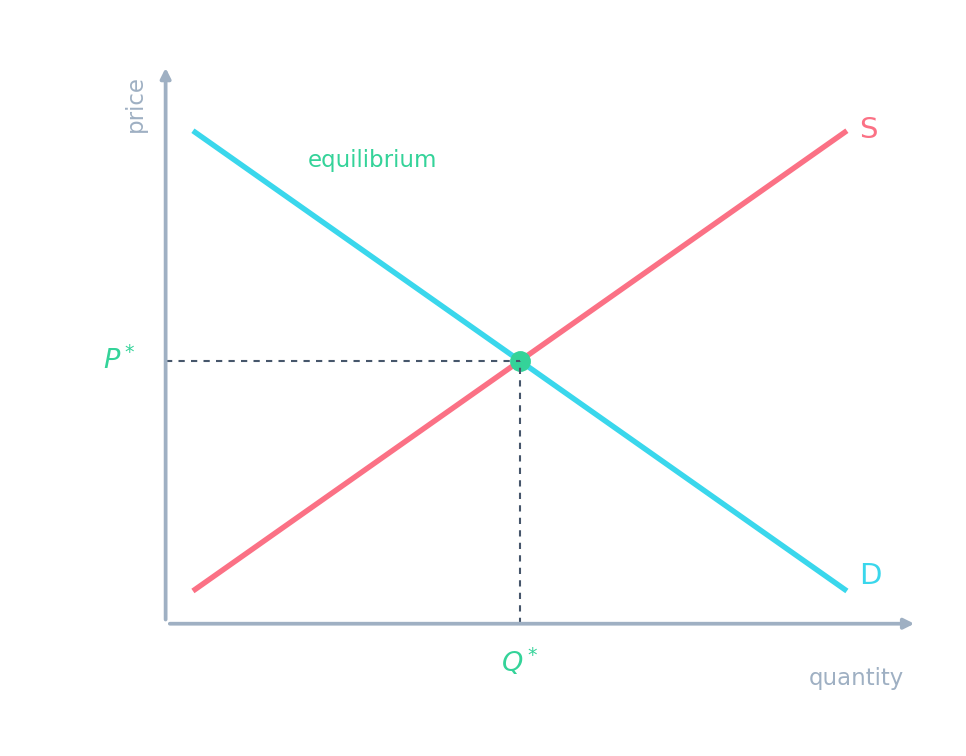
价格机制在供给遇到需求的地方出清一个市场——不需要计划者。
短缺自我纠正。 如果价格低于均衡,需求超过供给(一个短缺);价格上升,抑制需求并引出供给,直到市场出清。
A high price that encourages firms to supply more is the price acting as a(n): · 一个鼓励企业供给更多的高价是价格作为一个:
The three jobs of price are signalling, incentive and rationing; rewarding supply is the incentive function. · 价格的三件工作是信号、激励和配给;奖励供给是激励功能。
If the price is below equilibrium, there is a shortage and price tends to rise. · 如果价格低于均衡,有一个短缺,而价格倾向于上升。
Below equilibrium, demand exceeds supply → shortage → upward pressure on price until it clears. · 低于均衡,需求超过供给 → 短缺 → 价格的向上压力,直到它出清。
The three functions of the price mechanism are signalling, incentive and . · 价格机制的三个功能是信号、激励和。
Rationing allocates limited goods to those willing and able to pay. · 配给把有限的商品分配给愿意且能够付钱的人。
Strengths and weaknesses
- Markets: efficient, responsive — but ignore externalities 外部性, under-provide public goods, and can worsen inequality.
- Command: can provide for all and curb inequality — but lacks incentives, and planners lack the information prices carry.
Economic systems form a spectrum from a free market to full government planning
优势与劣势
- 市场:有效率、反应灵敏——但忽略外部性(externalities)、供给不足公共品,并能加剧不平等。
- 指令:能为所有人提供并抑制不平等——但缺乏激励,而且计划者缺乏价格携带的信息。

经济体制形成一个从自由市场到完全政府计划的光谱
You've got it
- market (price mechanism), command (state plans), mixed (both)
- price does three jobs: signalling, incentive, rationing
- markets are efficient but miss externalities/public goods; command lacks incentives + information
你掌握了
- 市场(价格机制)、指令(国家计划)、混合(两者)
- 价格做三件工作:信号、激励、配给
- 市场有效率但错过外部性/公共品;指令缺乏激励 + 信息